20 June 2026Focus · Latin America · South & Southeast Asia10 Items · 5 Translated · Shelf › · Archive ›
— The Dragoman's Note —
This week’s edition keeps returning to the same bargain: power survives by learning the language of public legitimacy. Latin American crime borrows influencers and corridos; lithium promoters turn Andean water fights into a development story; Russia launders a seized gold miner through loyal networks; Taiwan’s TPP talks institutional reform while Ko Wen-je’s legal exposure sets the clock. Even the cultural pieces work the same pressure from another angle: Etty Hillesum, Christiania smoke and Uketsu’s web-native horror all ask what happens when private language becomes public currency. Mexico is the pivot that makes the pattern plain: Sheinbaum’s left is managerial, feminist and nationalist at once, a politics that wants mass affect without surrendering technocratic control.
Influencers and Organized Crime: Identifying Patterns in Their Relationship
Social media influencers have become increasingly useful to organized crime as propagandists, recruiters, money-laundering conduits, and fraud facilitators, even as their proximity to criminal power leaves them exposed to its violence.
The Borrowed Halo
Latin American organized crime no longer only buys silence or fear; it borrows the attention machinery of influencers, corridos, luxury posts, livestreams, and platform fame. The useful distinction is between paid promotion, coerced proximity, laundering of status, and genuine social embeddedness around criminal economies.
Pardo, who earned a good living selling narco-branded caps and commissioned a narco corrido, a drug-trafficking ballad, about herself, is one of many social media influencers who have become an increasingly vital part of organized crime’s toolkit: facilitating money laundering, recruiting people into criminal armies, luring victims into f…
Why it leads: Influencers are no longer just decorating narco culture; they sell the merch, launder the money, recruit the foot soldiers, bait the victims, and sometimes become targets themselves.
Translated from EN/ES · yesterday · 3 min · Deep
The Brief
The Brief follows legitimacy as it changes costume: influencer fame, strategic patience, extraction media, loyalist asset transfers, labor law, party reform and translated unease all become ways of managing power in public.
India’s calm response to Trump-era insults is not sentimentality toward Washington; it is balance-of-power arithmetic. China, defense technology, capital flows, and the Indian elite’s strategic vocabulary keep the U.S. relationship useful even when the politics are ugly.
Despite such carelessness to its interests and pride, an explicitly nationalist Indian government is careful to avoid antagonizing the United States because India has no option other than to balance China. It is important to note that nothing has undermined this central purpose, though a lot of Trump’s actions have hurt Indian pride.
Lithium coverage in Latin America tracks prices, investment, and industrial promise far more than water, Indigenous consultation, or local ecological damage. The media system makes extraction legible as national development while the communities absorbing the costs appear late, thinly, or not at all.
This study examines how the Peruvian press covered lithium-related issues between 2018 and 2025, focusing on the symbolic construction of extractive technologies, particularly the processing of lepidolite for lithium carbonate production, within news discourse.
Бизнесмен Байсаров, связанный с Кадыровым и «Газпромбанком», получил крупную золотодобывающую компанию почти за полцены
A nationalized gold miner appears to have moved into the orbit of Ruslan Baysarov, with links to Kadyrov and Gazprombank, at a steep discount. The Russian state’s seizure-and-resale cycle looks less like anti-oligarch discipline than a mechanism for reallocating assets among loyal networks.
The state managed to sell the asset only on the fourth attempt, and at a deep discount. Baysarov’s structure paid 93.2 billion rubles for the gold-mining company, 57 percent of the initial price of 162 billion.
Why the court treated lunch-hour training as public-duty related
Issue
Ministry view
Court view
Timing
Lunch break
Rest time within workday
Exercise
Not a test event
Useful test preparation
Role
Administrative post
Firefighters rotate duties
A firefighter injured during lunchtime fitness training was ultimately treated as suffering a work-related injury because physical preparedness is part of the job even outside formal drill time. The legal boundary between private exercise and public duty bends when the employer depends on the worker’s body as operational equipment.
Can it really be said that such a firefighter’s decision to carve out part of his lunch hour for individual training, with a fitness test just around the corner, had nothing to do with public duty?
Sheinbaum’s appeal to the global left rests on an unusual combination: scientific-technocratic credentials, López Obrador’s mass political machine, and a feminist image that does not break with nationalist developmentalism. Mexico becomes a test case for whether left governance can look managerial without becoming post-political.
Pero el extenso perfil publicado esta semana por la periodista Rachel Nolan revela las tensiones profundas que definen su gobierno: la misma mujer que a los 15 años pasó su primera noche fuera de casa acompañando a madres de desaparecidos políticos, hoy encabeza un Estado al que organizaciones de derechos humanos acusan de obstaculizar la…
TPP proposals that critics say would benefit Ko Wen-je
Proposed change
Effect
Remove collusion grounds
Limits pre-trial detention
Forbid detention periods
Restricts custody practice
Ban night questioning
Limits prosecutor interrogations
Require defendant presence
Applies to unfavorable rulings
Taiwan’s TPP is accused of tailoring legal changes around Ko Wen-je’s corruption exposure, turning institutional reform into leader protection. The story is really about a young party’s dependence on a founder whose personal legal jeopardy can distort its legislative behavior.
The changes pushed for by the TPP are to the Criminal Code. Specifically, the changes would eliminate collusion–the possibility of destruction of evidence–as grounds for pre-trial detentions, as occurred to Ko. Detention periods would also be forbidden, and prosecutors would not be allowed to conduct interrogations at night.
In deze onzekere en bloeddorstige tijd is de zachte, onthechte blik van Etty Hillesum welkomer dan ooit
Etty Hillesum’s wartime diaries have returned because they offer a form of spiritual seriousness that refuses both revenge and denial. The renewed attention says as much about contemporary hunger for moral language as it does about Hillesum herself.
In the nearly five decades that have passed since the first revelation of her thought, and since she was almost immediately translated worldwide, attention to her has in no way slackened.
The Christiania memory opens onto smoke as atmosphere, self-deception, freedom, and evasion rather than as a simple drug anecdote. Its likely strength is the Jot Down mode: personal essay as social diagnosis, with the private scene used to expose a wider moral economy.
El corazón intelectual de la obra reside en sus escalas de daño, esos análisis multicriterio que Nutt diseñó junto a otros expertos para medir de forma objetiva el perjuicio real de cada sustancia.
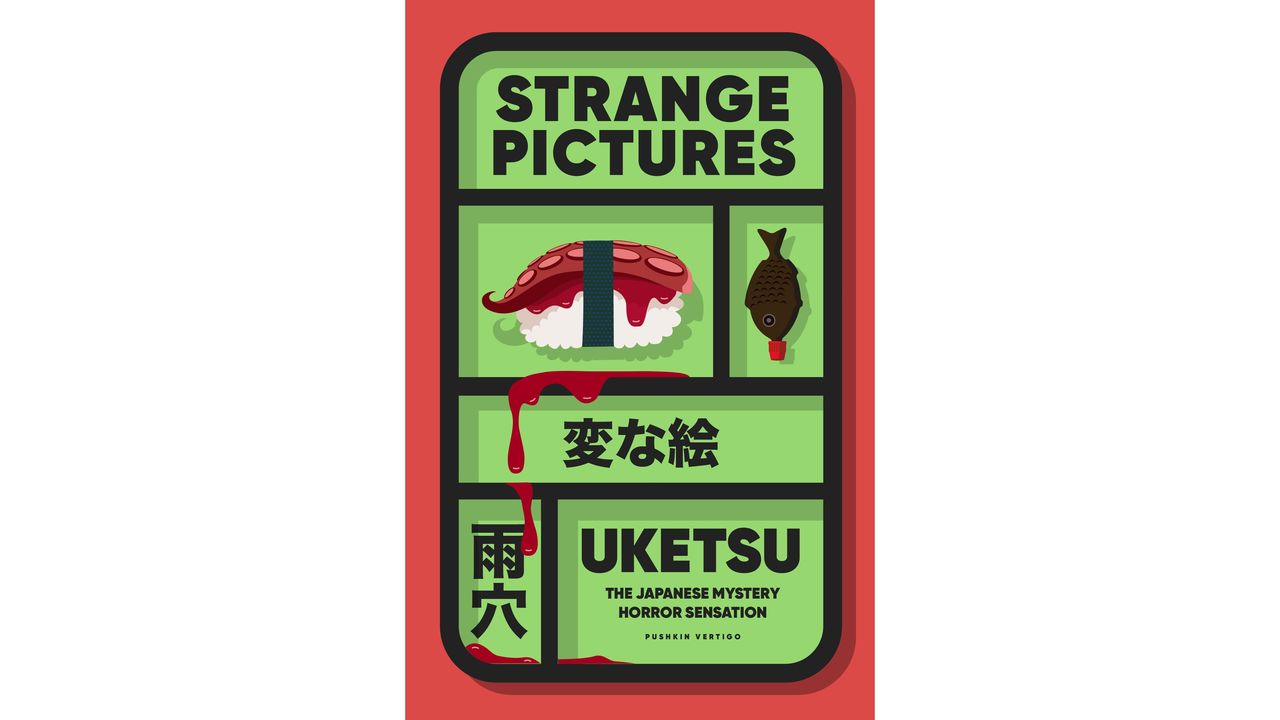
A Strange Twist of Fate: Translating Uketsu’s Eerie Worldview into English
Uketsu’s jump from masked internet creator to international mystery author depends on translating not just plot but interface, tone, and online eeriness. The translator’s problem is cultural as much as lexical: how to carry a Japanese web-native horror grammar into English without flattening it into genre product.
Uketsu’s YouTube channel has 2 million subscribers, and most of his videos have more than 5 million views. His masked face has appeared on magazine covers, in purikura photo booths, and even in the children’s cartoon Crayon Shinchan.
Translated from Japanese · 2d ago · 6 min · Skim
Deep Research
Deep Research tracks systems after their official story breaks: wars become production regimes, subsidies become political settlements, nuclear promises become accounting problems, and stages become machinery for deciding who counts as the public.
One fault line, many vantages
The War Has Become a System, Not a Front Line
The War Loom
Read together, the war looks less like a sequence of offensives than a set of linked production regimes: drones turn roads and trenches into a deep kill zone; Russian military spending buys loyalty and mobility in the periphery; sanctions push Moscow toward China without giving Beijing a reason to rescue it; the Black Sea becomes the regional container for all of it.
Укр · Ukrainian battlefield adaptation, via an EW company commander and Kyiv data-journalism outlet
«Ждуни» всюди, окопний РЕБ і міномети відмирають: як змінилася війна за рік
The front has stretched into a 15-20 km hunting zone: fiber-optic FPVs, ambush drones left waiting on roads and roofs, Starlink-linked ground robots, anti-drone nets and interceptor UAVs now decide logistics before infantry even appears. The old trench grammar is collapsing: forward EW no longer survives, mortars are fading, and soldiers live underground because any found position is usually a destroyed position. Fragments · Ukrainian
Ру · Russian independent economic analysis, focused on Moscow’s dependence on Beijing
Moscow’s China option is a trap, not a rescue plan: Beijing can keep selling Russia what it needs for war, but its larger bargain is with Washington and its own energy transition, not with Putin’s fiscal needs. Higher oil prices and more exports cannot fix Russia’s investment drought, logistics inflation, consumer squeeze or new vulnerability to Ukrainian strikes on refineries, transport and export infrastructure. Riddle Russia · Russian
En · Turkish academic / Abu Dhabi policy-institute view of the Black Sea rim
The Black Sea is treated as a regional security complex, not just a naval flank of the Ukraine war: Crimea, Abkhazia, Transnistria, energy routes, NATO deterrence, Turkey’s balancing role and Chinese commercial interest all sit in one basin. The useful move is geographic: the war’s maritime and energy stakes look different when the unit of analysis is the Black Sea rim rather than the Euro-Atlantic alliance alone. TRENDS Research & Advisory · English
One fault line, many vantages
The Balance of Power After the Axis Stopped Deterring
The useful fault line is not Israel versus Iran alone. Turkey wants Iran, Israel and the Gulf to exhaust one another; Gulf monarchies are competing with each other while asking for a regional security architecture; Lebanon exposes the cost of treating an armed social institution as a removable file in a U.S.-Israeli negotiation.
Tr · Turkish realist reading, from Ankara’s strategic anxiety about being next in line after Iran
Mehmet Akif Koç: Türkiye Ortadoğu’da, İran, İsrail ve Körfez Ülkelerinin birbirini dengelemesini ister
Koç reduces the regional order to four real actors: Turkey, Iran, Israel and the Gulf trio of Saudi Arabia, Qatar and the UAE. Turkey’s preferred Middle East is not ideological victory but managed exhaustion: no single pole, whether Iran after 2003 or Israel after October 7, should dominate the others. Daktilo 1984 · Turkish
ع · Qatari/Arab regional view, close to Gulf security fears but hostile to Israeli regional primacy
Iran’s forward-defense doctrine came from the Iran-Iraq war lesson that Tehran must fight on other people’s territory; in the latest war, that doctrine turned Gulf, Iraqi, Lebanese and even Turkish space into the battlefield. The route out is not another containment scheme but a political-security order that gives Iran a place without allowing armed penetration of its neighbors. مركز الجزيرة للدراسات · Arabic
Many tongues on one storm
When the Gas Rent Runs Out, Who Owns Bolivia?
Bolivia’s cheap fuel was never just an economic policy. Gas exports paid for dollars, subsidies, patronage, low electricity tariffs and a twenty-year political settlement; now production is falling, the old MAS coalition has splintered, and Rodrigo Paz has to remove the subsidy without losing the popular world that elected him.
Es · Bolivian civil-society energy policy diagnosis, written from La Paz with Raúl Velásquez/Jubileo’s sectoral data.
Bolivia’s worst energy crisis is treated as a policy architecture failure, not a bad-year shortage: rent-seeking, state-centric gas policy, blurred institutional roles, opaque data, collapsing reserves, weak contracts and distorted prices all reinforce one another. The useful part is the map of what has to change together: YPFB governance, exploration contracts, information access, pricing, markets and the fiscal bargain between state and company. Fundación Jubileo · Spanish
Es · Regional left-intellectual read of Bolivia’s class, race and electoral realignment after MAS.
Paz-Lara was not simply the old anti-MAS right returning in clean clothes. The ticket worked because Edman Lara gave a centrist elite candidate a cholo-popular vehicle: informal traders, El Alto voters and former MAS constituencies could abandon the exhausted national-popular project without handing power back to the Santa Cruz/Miami right they distrust. Nueva Sociedad · Spanish
Es · Bolivian political scientist writing from Sucre for a regional Latin American forum.
The current blockades are not just resistance to higher fuel prices. Paz doubled fuel prices after inheriting inflation, recession and shortages, then failed to build brokers into La Paz, El Alto and the organizations that had voted for him; the protest has pressure but no clear national project, which makes the crisis unstable rather than revolutionary. Latinoamérica 21 · Spanish
What they said would happen
Fukushima’s Afterlife: Retreat, Return, or Just an Aging Fleet?
Fukushima did not produce a clean global nuclear retreat; it killed the easy “renaissance” story in liberalized markets, pushed Germany out, froze Japan for a decade, and then returned as a narrower bargain over energy security, reactor aging, local consent, and who pays for delay. Scored against the record: Angela Merkel’s 2011 promise to end German nuclear by 2022 came true almost exactly, with the last reactors closing on April 15, 2023; Naoto Kan’s call for Japan to reduce and eventually eliminate nuclear dependence was half-right, because the 53% nuclear-by-2030 future vanished but Tokyo now again says “maximum use”; the IEA’s 2011 Low Nuclear Case warning that retreat would mean more fossil demand, higher security risk, and harder climate math was right for Japan’s import shock and partly for Europe; George Monbiot’s March 2011 claim that fossil replacement was the larger danger was directionally right, but not proof of a broad nuclear revival; John Rowe/Alexander Glaser/Mycle Schneider’s “renaissance is dead” camp has aged best outside China and Russia, though nuclear output hit a record in 2024 while its share stayed around 9%, far below the 1990s peak.
En · Tokyo-based renewable-energy policy institute, using reactor-by-reactor Japanese fleet arithmetic
Japan’s official comeback target collapses when each reactor is treated as a real asset with age, restart permissions, seismic review, local consent, antiterrorism works, and capacity factors. The useful mechanism is not sentiment after Fukushima, but administrative drag: even a pro-nuclear state cannot summon decades-old reactors back into reliable baseload on command. Renewable Energy Institute · English
日 · Japanese energy-policy establishment counterpoint, from a pro-restart economics and security frame
A pro-nuclear Japanese reading of the same turn: the removal of “reduce nuclear as much as possible” is treated as common sense once AI demand, industrial competitiveness, fuel imports, and decarbonization enter the equation. Its strongest point is also its weakness: policy language can change faster than siting, lawmaking, waste, and local trust. International Environment and Economy Institute · Japanese
Fr · French energy debate, via Reporterre interview mirrored by WNISR after the 2025 report
Schneider’s anti-renaissance case is strongest when it leaves slogans and follows capital, construction time, state ownership, weapons-adjacent supply chains, and solar deployment. France becomes the counterexample to its own myth: not a nimble nuclear future, but an old fleet, uncertified EPR2 plans, rising cost estimates, and solar arriving faster than reactors can be poured. Reporterre / World Nuclear Industry Status Report mirror · French
After the cameras left
Tunisia After the Coup: Rule by Vacancy, Boycott, and Poisoned Air
After 25 July 2021, Saied did not rebuild state capacity; he stripped out mediation. Elections became managed plebiscites, courts became empty offices and ministerial circulars, civic groups spend their days defending the right to exist, and Gabes found that “the people want” only counts when Carthage speaks it.
ع · Tunisian civil-society activist on a regional reform platform; close to opposition and civic-law debates.
The 2024 vote was locked before polling day: criminal-record paperwork, sponsorship geography, candidate prosecutions, and an ISIE appointed by Saied narrowed the race, then ignored administrative-court reinstatements. The ballot became a managed loyalty test; abstention, not the 90 percent score, is the real legitimacy number. Arab Reform Initiative · Arabic
Fr · Inside-baseball institutional reporting from Tunis, with magistrates explaining the mechanics of paralysis.
Judicial capture here is bureaucratic, not only spectacular: key posts in the Court of Cassation, Court of Accounts, and provisional judicial councils remain vacant, so the councils cannot legally meet and the justice ministry rules by circular. A system advertised as legal restoration runs through deliberate non-appointment. Nawaat · French
A standing interest, freshly read
Who Counts as the Public Once the Curtain Goes Up?
Theatre here is not a mirror held up to society; it is one of the machines that sorts society. These pieces track who gets to define “publicness,” whose canon counts as theory, how subsidy becomes access or patronage, and how platform outrage can turn a festival into attention infrastructure.
En · South Korean theatre workers, critics and organizers, via a local forum after the shutdown of a Seoul-funded criticism platform.
The Seoul Foundation’s closure of TheatreIn becomes a fight over gonggongseong: “publicness” gets redefined as broad, depoliticized consumer reach, making feminist, queer, disability, labor and small-theatre criticism look niche and expendable. The most useful mechanism is bureaucratic, not censorial: a public arts body can shrink the public sphere while claiming to serve all citizens. The Theatre Times · English
En · Iraqi theatre scholar-practitioner looking back at Basra, Baghdad and Western academic training from a comparative position.
Iraqi theatre’s dependence on Western quotation is a prestige economy: universities, criticism and productions place Aristotle, Brecht, Foucault or Beckett at the center while local forms enter as folklore. The damage is practical: theatre becomes legible to elites and foreign canons while ordinary Iraqi audiences are told their own stage languages are secondary. The Theatre Times · English
It · Italian theatre critic comparing national theatres by the actual route from public subsidy to a seat in the hall.
Italy’s public theatres talk access through youth and senior discounts, but the pricing architecture does class work: platform commissions, opaque disability booking, newsletter-only promotions, and almost no low-income tariffing. Turin’s ISEE-linked free and reduced subscriptions stand out because they treat access as income policy, not audience development copy. Teatro e Critica · Italian