Video: A Dialogue from the “Afkari” Series
The Stop Pollution-Gabès campaign shows how environmental injustice can transform a local health crisis into a sustained social movement and a new political language in post-2011 Tunisia.
فيديو: حوار من سلسلة "أفكاري"- تناقش الباحثة ملاك الأكحل مع الباحث ومؤلف الرقة الدكتور سفيان جاب الله مقدمة
Video: A dialogue from the “Afkari” series: researcher Malak Al-Akhal discusses the introduction with researcher and paper author Dr. Sufian Jaballah.
منذ إنشاء المجمع الكيميائي عام 1972، أصبحت قابس واحدةً من بؤر الصراع البيئي في تونس. فرسّخ التدهور التدريجي للواحات، وتلوث الهواء والبحر، وانتشار أمراض الجهاز التنفسي وحالات السرطان شعوراً لدى جزء من السكان بأنهم يعيشون في إقليم "مضحّى به" باسم نموذج تنموي فُرض من أعلى. وتغذي هذه الحالة شعوراً بالظلم البيئي وهشاشة اجتماعية، تتقاطع فيها القضايا الصحية والاقتصادية والإقليمية والرمزية.
Since the establishment of the chemical complex in 1972, Gabès has become one of Tunisia’s focal points of environmental conflict. The gradual degradation of the oases, the pollution of air and sea, and the spread of respiratory diseases and cancer cases have entrenched among part of the population a sense that they live in a territory “sacrificed” in the name of a development model imposed from above. This condition feeds a feeling of environmental injustice and social vulnerability, in which health, economic, regional, and symbolic questions intersect.
تندرج حوادث الاختناق الجماعي التي وقعت في خريف 2025، التي طالت التلاميذ خصوصاً، ضمن سياق هذه الأزمة طويلة الأمد، لكنها تتخذ شكل لحظة قطيعة: حدث يظهر ما كان محسوسًا بالفعل، ويحول خطرًا مزمنًا إلى موضوع نزاع عام. في هذه اللحظة بالذات، تنطلق حملة "أوقفوا التلوث – قابس" ، في تقاطع بين تعبئة المواطنين وإنتاج خطاب مضاد وتشكيك في النموذج الكيماوي - الصناعي السائد.
The mass suffocation incidents that occurred in the autumn of 2025, affecting pupils in particular, belong to the context of this long-term crisis, yet they take the form of a moment of rupture: an event that makes visible what was already felt and transforms a chronic danger into an object of public dispute. It is at precisely this moment that the “Stop Pollution - Gabès” campaign begins, at the intersection of citizen mobilization, the production of a counter-discourse, and the questioning of the prevailing chemical-industrial model.
يهدف هذا البحث التحليلي والنقدي إلى دراسة تأثير هذه الحملة في الصراع البيئي المحلي والثقافة الاحتجاجية التونسية. ويهدف إلى تحليل أشكال العمل والأطر والفاعلين وأنماط السياسة التي تُفعّلها، في سياق وطني يتسم بإغلاق المجال السياسي وإعادة تشكيل أساليب الاحتجاج.
This analytical and critical study aims to examine the impact of this campaign on the local environmental conflict and on Tunisian protest culture. It seeks to analyze the forms of action, frames, actors, and modes of politics it activates, in a national context marked by the closure of the political sphere and the reconfiguration of protest methods.
يمكن صياغة أسئلة البحث على النحو الآتي:
The research questions may be formulated as follows:
- كيف تحول حملة "أوقفوا التلوث – قابس" حادثة تلوث حادة إلى صراع اجتماعي-بيئي منظم؟
- How does the “Stop Pollution - Gabès” campaign transform an acute pollution incident into an organized socio-environmental conflict?
- ما هي أطر المشكلة، وما هي الأطراف المتعارضة، وما هي آفاق الحلول التي تتبنّاها، وما هي أساليب العمل التي تستخدمها؟
- What are the frames of the problem, what are the opposing parties, what horizons of solution does it adopt, and what methods of action does it use?
- كيف تعيد هذه الحملة تعريف أشكال التسييس في تونس بعد 2011، من خلال الطعن في نموذج التنمية أكثر من الطعن في الحكومة، وجعل المطالبة بهواء نقي وحياة خالية من السرطان لغة سياسية جديدة؟
- How does this campaign redefine forms of politicization in Tunisia after 2011, by challenging the development model more than the government, and by making the demand for clean air and a life free of cancer into a new political language?
Methodologyالمنهجية
يعتمد هذا المقال على مواد علمية وإعلامية وناشطية. فمن جهة، يستند إلى الأدبيات القائمة حول الأزمة البيئية في قابس من أجل تحديد موقع "حدث" عام 2025 في سياقه التجريبي والتاريخي. ومن جهةٍ أخرى، ترتكز التحليلات النوعية للمحتوى على مجموعة رقمية تتكون، أولاً، من 59 منشوراً/صورة مأخوذة من لقطات شاشة لصفحة Facebook Stop Pollution–Gabès (فترة أيلول/سبتمبر-تشرين الثاني/نوفمبر 2025، مجموعة جزئية)، وثانياً، من 22 منشوراً مأخوذاً من لقطات من حساب لينكدإن LinkedIn لأحد قادة الحركة. وتُستكمل هذه المجموعة بمجموعة فرعية من المواقف المؤسسية والإعلامية (خطب، بيانات، نداءات نقابية، صحافة). رُمّزت هذه المجموعة استنادًا إلى مساهمات علم اجتماع الحركات الاجتماعية (التأطير التشخيصي/الاستشرافي، سياسات الصراع، مظاهر القوة والتضامن WUNC displays، سجلات العمل)، وإلى علم الاجتماع السياسي لحملات الحركات الاجتماعية، بهدف إعادة تركيب تسلسل التعبئة، وتحديد الفاعلين والأطر المهيمنة، وفهم كيف تحولت سلسلة من حوادث الاختناق إلى صراع اجتماعي-بيئي منظم.
This article draws on scientific, media, and activist materials. On the one hand, it relies on the existing literature on the environmental crisis in Gabès in order to situate the “event” of 2025 in its empirical and historical context. On the other hand, the qualitative content analysis rests on a digital corpus composed, first, of 59 posts/images taken from screenshots of the Facebook page Stop Pollution-Gabès (September-November 2025, partial corpus), and second, of 22 posts taken from screenshots of the LinkedIn account of one of the movement’s leaders. This corpus is supplemented by a subset of institutional and media positions (speeches, statements, trade-union appeals, press coverage). The corpus was coded on the basis of contributions from the sociology of social movements (diagnostic/prognostic framing, contentious politics, WUNC displays, repertoires of action), and from the political sociology of social-movement campaigns, with the aim of reconstructing the sequence of mobilization, identifying the actors and dominant frames, and understanding how a series of suffocation incidents was transformed into an organized socio-environmental conflict.
Before the Event: What Research Tells Us About the Environmental Situation in Gabèsقبل الحدث: ما تقوله الأبحاث عن الوضع البيئي في قابس
قبل وقتٍ طويل من حملات التعبئة التي انطلقت عام 2025، كانت الأدبيات العلمية قد أثبتت بوضوح خطورة الأزمة البيئية في قابس وطابعها المزمن. يُظهر سعيد ولحمر أن إنشاء المجمع الكيميائي حوّل تدريجياً الواحة وساحلها إلى منطقة صناعية تعاني من تلوث جوي شديد، ما أدى إلى ارتفاع موثق في أمراض الجهاز التنفسي والأمراض الجلدية، فضلاً عن انخفاض ملحوظ في الزراعة الواحية والصيد البحري والسياحة. على الصعيد البحري، يثبت رباوي وآخرون ، استنادًا إلى تحليل أربع فصائل من الرخويات جُمعت من خليج قابس، وجود معدلات مرتفعة من تراكم المعادن الثقيلة (لا سيما الكادميوم والرصاص والزئبق)، مرتبطة بإلقاء الفوسفوجيبس في البحر، ومقترنة بتدهور مروج نبات بوسيدونيا أوشيانيكا البحرية، وهي نظام بيئي بحري رئيسي؛ تقدر هذه النفايات بنحو 10 ملايين طن من الفوسفوجيبس تُصرّف سنوياً في خليج قابس، ما يعطي فكرة عن حجم التلوث المزمن الذي يشكل بنية النظام البيئي والصراع الاجتماعي-البيئي المحلي. وبالتوازي، يكشف عطوي وأغوبي أن 41 في المئة من طبقة المياه الجوفية في جنوب قابس معرضة لخطر التلوث بدرجة عالية إلى عالية جدًا، بسبب تداخل الضغط الصناعي والاستغلال المفرط للمياه الجوفية وغياب الحماية الهيدروجيولوجية.
Long before the mobilizations launched in 2025, the scientific literature had clearly established the gravity and chronic character of the environmental crisis in Gabès. Saïd and Lahmar show that the establishment of the chemical complex gradually transformed the oasis and its coastline into an industrial zone suffering from severe air pollution, leading to a documented rise in respiratory and dermatological diseases, as well as a marked decline in oasis agriculture, fishing, and tourism. At the marine level, Rabaoui and others, on the basis of an analysis of four mollusk species collected from the Gulf of Gabès, demonstrate high rates of heavy-metal accumulation (especially cadmium, lead, and mercury), linked to the dumping of phosphogypsum into the sea, and associated with the degradation of Posidonia oceanica seagrass meadows, a key marine ecosystem; these wastes are estimated at around 10 million tons of phosphogypsum discharged annually into the Gulf of Gabès, giving a sense of the scale of the chronic pollution that structures the ecosystem and the local socio-environmental conflict. In parallel, Atoui and Agoubi reveal that 41 percent of the aquifer in southern Gabès is exposed to a high to very high risk of contamination, owing to the overlap of industrial pressure, the overexploitation of groundwater, and the absence of hydrogeological protection.
يحلل خليفي، عبر استبيان شمل 500 شخص ومقابلات معمقة، التصورات الاجتماعية للمخاطر المرتبطة بالتلوث الجوي في قابس في إطار نظرية مجتمع المخاطر (بيك). وتُبرز الدراسة وجود وعي صحي وبيئي قوي، وشعور بالظلم البيئي، واستجابات ملتبسة تجمع بين الاستسلام والمقاومة الرمزية وتطلعات إلى العدالة البيئية. وتشير النتائج الكمية إلى تباينات مكانية ملحوظة: ففي بوشمة، أبلغ 27,3 في المئة من المستجوبين عن حالات ربو (مقابل 10,5 في المئة في الزارات). وخلال ذروة ثاني أوكسيد الكبريت SO₂ في 6 أيار/مايو 2017 (التي سجلتها محطة متنقلة تابعة للوكالة الوطنية لحماية المحيط في شنتش، على بعد 4 كم من بوشمة)، أفاد 50 في المئة من الأشخاص المُستطلعين في المنطقة المعرضة لحدوث تهيجات في الجهاز التنفسي، وصرّح 40 في المئة من المجموعة نفسها بالتعرض لاضطرابات تنفسية أو نوبات اختناق (من بينهم خمسة تلاميذ)، بينما ذكر 8,3 في المئة منهم الحاجة إلى تدخل طبي (17 حالة استشفاء). ويخلص المؤلف إلى ضرورة اعتماد حوكمة بيئية تشاركية، وتخطيط عمراني يراعي المخاطر، وإدماج المعرفة غير المتخصصة، أي المستمدة من التجربة اليومية للسكان المعرضين (تصورات الروائح، نوبات الاختناق، وإيقاعات التلوث، مسارات التجنب، والآثار الصحية)، من أجل الحد من اللامساواة الاجتماعية - المكانية في التعرض للمخاطر.
Khelifi, through a survey of 500 people and in-depth interviews, analyzes social perceptions of the risks associated with air pollution in Gabès within the framework of risk-society theory (Beck). The study highlights a strong health and environmental awareness, a sense of environmental injustice, and ambiguous responses that combine resignation, symbolic resistance, and aspirations to environmental justice. The quantitative findings point to notable spatial disparities: in Bouchemma, 27.3 percent of respondents reported asthma cases (compared with 10.5 percent in Zarat). During the sulfur dioxide (SO₂) peak on May 6, 2017 (recorded by a mobile station belonging to the National Environmental Protection Agency in Chatt Essalam, 4 km from Bouchemma), 50 percent of those surveyed in the exposed area reported respiratory irritation, and 40 percent of the same group stated that they had experienced respiratory disorders or suffocation attacks (including five pupils), while 8.3 percent reported the need for medical intervention (17 hospitalizations). The author concludes that participatory environmental governance, risk-sensitive urban planning, and the incorporation of non-specialist knowledge, that is, knowledge derived from the everyday experience of exposed residents (perceptions of odors, suffocation episodes, pollution rhythms, avoidance routes, and health effects), are necessary in order to reduce socio-spatial inequalities in exposure to risk.
من جهة أخرى، في تحليلها للحركات البيئية بعد عام 2011، تُظهر روبير أن السلطات العامة في قابس رفضت لفترة طويلة الاعتراف بحجم الأضرار الصناعية المرتبطة بأنشطة معالجة الفوسفات، التي ينفذها بشكلٍ رئيسي المجمع الكيميائي التونسي (GCT). وتشير إلى أنه خلال الفترة المدروسة حال غياب الدراسات الوبائية المنهجية وقواعد البيانات الصحية الموحدة إقليمياً دون قياس عام وتراكمي وقابل للمقارنة لمدى انتشار الأمراض المنسوبة إلى النفايات الصناعية في قابس. غير أنه منذ 2023-2024، بدأت الأبحاث الطبية في توثيق، استنادًا إلى بيانات المستشفيات، الارتباطات بين التعرض لبعض الملوثات الجوية ومؤشرات الجهاز التنفسي. لا تزال هذه الأبحاث جزئية ومركزة على المستشفيات ومحدودة زمنياً، ولا تشكل (في هذه المرحلة) قاعدة وبائية إقليمية مستمرة تشمل جميع السكان، وتسمح بمقارنات متينة عبر الزمن وبين المناطق. في مواجهة التحركات المحلية والاعتصامات وإعاقة الإنتاج والإضرابات، اعتمد المجمع الكيميائي التونسي (GCT)، بدعم من المانحين الدوليين، سياسة تسمى بـ"التحديث البيئي"، تجمع بين التواصل مع الجمهور واللقاءات مع المجتمع المدني ومشاريع بيئية قُدّمت بوصفها تصالحية. ومع ذلك، توضح روبير أن هذه التدابير كانت محدودة الأثر، ولم تعالج الأسباب الهيكلية للتلوث. بالتوازي، تلجأ الدولة والشركات إلى تدابير تعويضية، لا سيما عبر شركات البيئة والزراعة والبستنة (SEPJ)، التي توفر فرص عمل أو مساعدات مادية لإزالة العقبات، على حساب زيادة اعتماد الاقتصاد المحلي على المجمع الصناعي. أخيرًا، تندرج مشاريع نقل وحدات معالجة الفوسفات إلى مناطق هامشية (منها منزل الحبيب) ضمن توجّه أوسع يتمثل في سحب المنشآت الملوثة من المراكز الحضرية وإعادة توطينها في مناطق هامشية. ويمكن عندئذٍ قراءة عمليات النقل هذه، في تحليل روبير، بوصفها "حلولاً مكانية" بالمعنى الذي يقصده ديفيد هارفي : ترتيبات مكانية هشّة تهدف إلى التغلب موقتًا على التناقضات التي تكشفها الصراعات البيئية، لكنها تتم على حساب تلويث أقاليم جديدة، يُحتمل أن تولّد، بدورها، موجات احتجاج جديدة.
For her part, in her analysis of environmental movements after 2011, Robert shows that public authorities in Gabès long refused to recognize the extent of the industrial damage linked to phosphate-processing activities, carried out mainly by the Tunisian Chemical Group (GCT). She notes that, during the period under study, the absence of systematic epidemiological studies and regionally unified health databases prevented any general, cumulative, and comparable measurement of the prevalence of diseases attributed to industrial waste in Gabès. Since 2023-2024, however, medical research has begun to document, on the basis of hospital data, correlations between exposure to certain airborne pollutants and respiratory indicators. This research remains partial, hospital-centered, and limited in time, and does not constitute, at this stage, a continuous regional epidemiological base covering the whole population and allowing robust comparisons across time and between areas. In the face of local mobilizations, sit-ins, production blockages, and strikes, the Tunisian Chemical Group (GCT), supported by international donors, adopted a policy known as “environmental upgrading,” combining public communication, meetings with civil society, and environmental projects presented as reconciliatory. Yet Robert makes clear that these measures had limited effect and did not address the structural causes of pollution. In parallel, the state and companies resort to compensatory measures, especially through the Environment, Planting, and Gardening Companies (SEPJ), which provide jobs or material assistance to remove obstacles, at the cost of increasing the dependence of the local economy on the industrial complex. Finally, projects to relocate phosphate-processing units to marginal areas (including Manzel El Habib) form part of a broader tendency to remove polluting facilities from urban centers and resettle them in peripheral territories. These relocations may then be read, in Robert’s analysis, as “spatial fixes” in David Harvey’s sense: fragile spatial arrangements intended temporarily to overcome the contradictions revealed by environmental conflicts, but carried out at the cost of polluting new territories, which may in turn generate new waves of protest.
وهكذا، قبل اندلاع الاحتجاجات بوقت طويل، تتفق هذه الدراسات على أن الأزمة البيئية في قابس بنيوية، موثقة ومزمنة، وتؤثر على الكائنات الحية وصحة الإنسان والموارد الطبيعية، في سياق تبقى فيه الحلول التقنية المحددة ضعيفة التنفيذ أو غير مطبقة أصلاً.
Thus, long before the outbreak of the protests, these studies agree that the environmental crisis in Gabès is structural, documented, and chronic, and that it affects living beings, human health, and natural resources, in a context where the identified technical solutions remain weakly implemented or not implemented at all.
The Catalyzing Event: A Moment of Divisionالحدث المُحفز: لحظة الانقسام
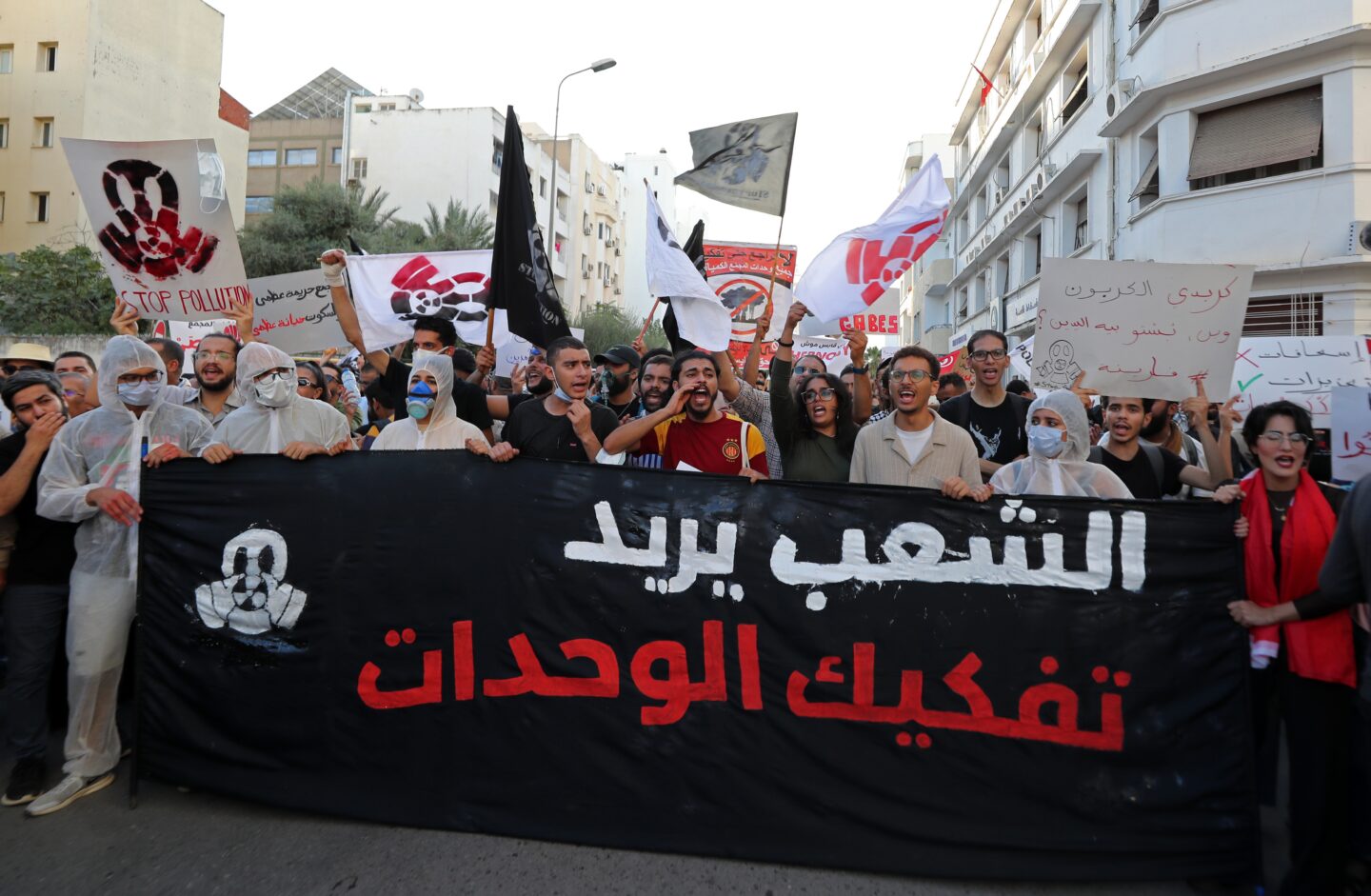
تجمع عدة مئات من الأشخاص يوم الجمعة 10 تشرين الأول/أكتوبر 2025 للاحتجاج على مصنع معالجة الفوسفات في قابس. وجاءت هذه التعبئة في أعقاب أزمة صحية واسعة النطاق: منذ 9 أيلول/سبتمبر 2025، أُدخل أكثر من 180 شخصًا إلى المستشفيات بسبب أعراض تسمم بالغاز، من بينهم عشرات التلاميذ. ويتهم المتظاهرون المصنع بتصريف نفاياته في البحر وفي الهواء الطلق. "الشعب يريد تفكيك المجمع الكيميائي"، "نريد أن نعيش"، "قابس ضحية للتلوث وظلم الحكومة"، هتف المتظاهرون الذين تجمعوا استجابةً لدعوة منظمة "أوقفوا التلوث" Stop Pollution. ومن بين هذه الحوادث، أُدخل في 9 أيلول/سبتمبر نحو عشرين شخصًا إلى المستشفى بسبب مشاكل تنفسية مرتبطة بالانبعاثات الصادرة عن المصنع نفسه. في أعقاب التظاهرات الأولى وتصاعد الغضب السريع في خريف 2025، ترافقت الأحداث في قابس مع تشديد القمع، ما يؤكد الانتقال من "حادثة" صحية إلى صراع عام منظم. فأفادت الصحافة عن تدخلات أمنية وموجات اعتقالات استهدفت المتظاهرين، من بينهم قصّر، وعن مقاربة سياسية وأمنية للحراك، في الوقت الذي اتسعت فيه حدة التعبئة (إضراب عام، دعم نقابي، تكاثر النداءات) وأصبحت انتقادات النموذج الصناعي- الكيميائي أكثر صراحة. هذا الترابط بين تزايد انتشار القضية وتزايد الضغط الحكومي، يعزز قراءة خريف 2025 باعتباره لحظة قطيعة: فحادثة الاختناق لم تنتج غضباً فحسب، بل أعادت تشكيل ميزان القوى، وبلورت المعسكرات، ووضعت حركة أوقفوا التلوث-قابس Stop Pollution-Gabès في دينامية مستدامة من الاحتجاج الاجتماعي-البيئي. وبالأحرى، من منظور سوسيولوجي، يمكن فهم هذه الحادثة على أنها نقطة تحول، بالمعنى الذي يفهمه بيدار وغروسيتي: «لحظة قطيعة تعيد تشكيل تفسيرات الواقع، وتوزع الإمكانيات المتاحة، وتفتح مسارات جديدة للعمل الجماعي، دون أن تكون آثارها آلية أو قابلة للتنبؤ بالكامل».
Several hundred people gathered on Friday, October 10, 2025, to protest against the phosphate-processing plant in Gabès. This mobilization came in the wake of a large-scale health crisis: since September 9, 2025, more than 180 people had been admitted to hospitals with symptoms of gas poisoning, among them dozens of pupils. The demonstrators accused the plant of discharging its waste into the sea and into the open air. “The people want the dismantling of the chemical complex,” “We want to live,” and “Gabès is a victim of pollution and government injustice,” chanted the demonstrators, who had gathered in response to the call of the organization Stop Pollution. Among these incidents, on September 9 some twenty people were admitted to hospital with respiratory problems linked to emissions from the plant itself. In the wake of the first demonstrations and the rapid escalation of anger in the autumn of 2025, events in Gabès were accompanied by a tightening of repression, confirming the shift from a health “incident” to an organized public conflict. The press reported security interventions and waves of arrests targeting demonstrators, including minors, as well as a political and security approach to the movement, at the same time as the mobilization intensified (general strike, trade-union support, proliferation of appeals) and criticism of the chemical-industrial model became more explicit. This connection between the growing public visibility of the issue and the increasing pressure exerted by the authorities strengthens the reading of autumn 2025 as a moment of rupture: the suffocation incident did not merely produce anger; it reconfigured the balance of power, crystallized opposing camps, and placed Stop Pollution-Gabès within a sustained dynamic of socio-environmental protest. More precisely, from a sociological perspective, the incident can be understood as a turning point, in the sense proposed by Bédard and Grossetti: “a moment of rupture that reconfigures interpretations of reality, redistributes the available possibilities, and opens new paths for collective action, without its effects being automatic or fully predictable.”
When the President’s Reactions Open Pandora’s Boxعندما تفتح ردود فعل الرئيس صندوق باندورا
ألقى الرئيس أول خطاب له في 30 أيلول/سبتمبر 2025، بعد حادثة الاختناق، واتخذ نبرة إنذار تشبه إدانة الإبادة البيئية: وصف الرئيس الوضع بـ"الجريمة" وتحدث عن "اغتيال حقيقي للبيئة"، في إشارة إلى فكرة أن المنطقة تعرضت لعنف طويل الأمد بفعل نموذج صناعي فُرض منذ عقود. وبعد ثلاثة أسابيع، ألقى الخطاب الثاني (21 تشرين الأول/أكتوبر 2025)، وأدرج تغيراً واضحاً في التأطير: لم تعد الأزمة تُعرض على أنها نتاج خيار اقتصادي هيكلي، بل كنتيجة لأفعال "فاسدين" يجب عزلهم و"فضحهم". وجاء هذا الخطاب الثاني في أعقاب الإضراب العام الإقليمي الذي دعا إليه الاتحاد العام التونسي للشغل (UGTT) وتظاهرة القوة التي نظمها المحتجون في شوارع قابس، ما منح الخطاب وظيفة استعادة السيطرة على التأطير الرسمي للأزمة. هذا التحول مهم: فالخطاب الأول يعترف بوجود ظلم جماعي وهيكلي، بينما أعاد الخطاب الثاني تسييس الوضع من منظور أخلاقي، عبر مواجهة "الشعب الشريف" مع فاعلين متهمين باستغلال المعاناة البيئية. ويتيح هذا التحول للنظام إقرار الغضب، مع تحييد قدرته على الاحتجاج، من خلال إعادة الغضب من المجال السياسي-البيئي إلى سرد أخلاقي حول التطهير، ما يُجنّب التشكيك في النموذج الصناعي نفسه. وبعد هذا التغيير، لم يعد الأمر مجرد "تحول" داخلي ضمن الإطار نفسه، بل أصبح انحرافاً واضحًا يعيد تشكيل القراءة السياسية للأزمة . فالاعتراف بالظلم التاريخي، الذي بدأ في 30 أيلول/سبتمبر، يفسح المجال للشك في التحركات، في الوقت نفسه الذي أظهرت فيه قدرتها على الشلل الجماعي (إضراب عام، استعراض للقوة في الأماكن العامة). ولإعادة التأهيل الأخلاقي وظيفة إضافية: فهي تسمح بإدانة آثار التلوث من دون فتح النقاش، فعلياً حول البنية الاقتصادية التي تنتجها. بعبارة أخرى، يمكن أن تتعايش إدانة الكارثة مع إعادة إطلاق جدول وطني لإحياء قطاع الفوسفات وتحقيق زيادة كبيرة في الإنتاج بحلول عام 2030؛ هذا التزامن بين خطاب يهدف إلى حماية الحياة وأفق قائم على النمو الاستخراجي يُعمق حدة الصراع، لأنه يجعل الفجوة بين خطاب الرئيس والمسار المادي للدولة في الخيارات الصناعية واضحًا للمحتجين الفاعلين.
The president delivered his first speech on September 30, 2025, after the suffocation incident, and adopted a tone of alarm akin to a condemnation of ecocide: he described the situation as a “crime” and spoke of a “true assassination of the environment,” pointing to the idea that the region had been subjected to long-term violence by an industrial model imposed for decades. Three weeks later, he delivered the second speech (October 21, 2025), introducing a clear shift in framing: the crisis was no longer presented as the product of a structural economic choice, but as the result of the actions of “corrupt people” who had to be isolated and “exposed.” This second speech followed the regional general strike called by the Tunisian General Labour Union (UGTT) and the show of force organized by protesters in the streets of Gabès, giving the speech the function of restoring control over the official framing of the crisis. This shift matters: the first speech recognized the existence of a collective and structural injustice, whereas the second repoliticized the situation in moral terms, setting the “honest people” against actors accused of exploiting environmental suffering. This move allows the regime to acknowledge anger while neutralizing its protest potential, by transferring that anger from the political-environmental field into a moral narrative of purification, thereby avoiding any questioning of the industrial model itself. After this change, the matter was no longer simply a “shift” within the same frame, but a clear deviation that reshaped the political reading of the crisis. The recognition of historical injustice, begun on September 30, gave way to suspicion toward mobilizations at the very moment when they had displayed their capacity for collective paralysis (general strike, show of force in public spaces). Moral rehabilitation has an additional function: it permits the condemnation of pollution’s effects without genuinely opening a debate on the economic structure that produces them. In other words, condemnation of the disaster can coexist with the relaunch of a national agenda to revive the phosphate sector and achieve a major increase in production by 2030; this simultaneity between a discourse aimed at protecting life and a horizon based on extractive growth deepens the conflict, because it makes clear to active protesters the gap between the president’s words and the state’s material trajectory in industrial choices.
والأهم من ذلك، يعمل الخطاب الثاني كعلبة باندورا حقيقية في العلاقة بين الحركة الاحتجاجية والرئاسة. فحتى ذلك الحين، كان لا يزال بإمكان بعض الفاعلين في قابس توقّع رد فعل إيجابي من الرئيس قيس سعيد، الذي كان يُنظر إليه، قبل انتخابه، باعتباره الشخص الذي ندد بالظلم البيئي الذي تعاني منه المنطقة. وتندرج هذه التوقعات بتدخل رئاسي ضمن سياق سياسي أوسع، إذ تُعرض صورة رئيس الدولة على أنها سلطة تحكيمية أعلى من الإدارات، وكـ"مصلح" للأضرار التي تسببت بها النخب والأجهزة. في هذا السياق، يميل جزء من الغضب الاجتماعي إلى التعبير عن نفسه ليس كمطالبة سياسية قابلة للتفاوض، بل كطلب موجه إلى الرئيس لـ"اتخاذ قرار"، و"استعادة العدالة" و "وضع حد للانتهاكات"، ما يغذي في الوقت نفسه سياسة الانتظار وتخصيص الحلول. ولهذا السبب بالتحديد، كان التحول في حالة قابس مكلفًا رمزياً للغاية: فعندما تتوقف الرئاسة عن الظهور كملجأ ممكن وتبدأ في تشويه الاحتجاج، يُعاد تشكيل موضوع الصراع ويقترب الهدف من مركز السلطة. عبر اختياره تجريم التعبئة ضمناً، والحديث عن التلاعب، ومثيري الشغب، و"الفاسدين" الذين يتسترون وراء الغضب الشعبي، يخرق الرئيس هذا العقد الرمزي. فالشخص الذي كان يقدم نفسه على أنه تجسيد لـ"إرادة الشعب" يبدو الآن، في نظر العديد من السكان، ممثلاً لدولة تواصل خنق منطقة بأكملها باسم الربحية الصناعية. وفي الأيام التالية، لم يبقَ هذا التأطير الأخلاقي مجرد خطاب بلاغي بالترافق مع تشديد واضح في الإدارة الأمنية للتسلسل الاحتجاجي. فلم تقتصر تحركات تشرين الأول/أكتوبر على مسيرات "إعلانية" بل لوحظت أيضاً محاولات للوصول إلى موقع المجمع الكيميائي، واحتلالات قصيرة، وتصاعد المواجهة حول منطقة صناعية محمية، ما ساهم في إعادة تصنيف الاحتجاج على أنه "اضطراب" يجب احتواؤه. في هذا السياق، لا تعتبر الاعتقالات والملاحقات القضائية التي أوردتها عدة وسائل إعلام تفاصيل هامشية: فهي تجسد الانتقال من إطار رئاسي ينزع الشرعية عن الغضب ("المُستغَل") إلى سياسة ردع ملموسة، تعيد تعريف المتظاهرين ليس كضحايا لإبادة بيئية، بل كعناصر تشكل تهديداً للنظام العام. ويساهم هذا التحول في زيادة تسييس الحراك ضد الرئيس نفسه : فمن شخصية يمكن أن تكون حليفة، أصبح تدريجياً تجسيداً للطرف المعادي الذي يحمي المجمع الكيميائي ويواصل،، عبر خياراته وكلماته، المنطق الذي يقتل قابس ببطء.
More importantly, the second speech functions as a real Pandora’s box in the relationship between the protest movement and the presidency. Until then, some actors in Gabès could still expect a positive response from President Kais Saied, who, before his election, had been perceived as someone who denounced the environmental injustice suffered by the region. These expectations of presidential intervention belong to a broader political context, in which the image of the head of state is presented as an arbitral authority above administrations, and as a “repairer” of the damage caused by elites and apparatuses. In this context, part of social anger tends to express itself not as a negotiable political demand, but as a request addressed to the president to “make a decision,” “restore justice,” and “put an end to abuses,” feeding at once a politics of waiting and a personalization of solutions. For precisely this reason, the shift in the Gabès case was symbolically very costly: when the presidency ceases to appear as a possible refuge and begins to stigmatize protest, the object of conflict is reshaped and the target moves closer to the center of power. By choosing implicitly to criminalize the mobilization, and by speaking of manipulation, troublemakers, and “corrupt people” hiding behind popular anger, the president breaks this symbolic contract. The person who had presented himself as the embodiment of the “will of the people” now appears, in the eyes of many residents, as the representative of a state that continues to suffocate an entire region in the name of industrial profitability. In the days that followed, this moral framing did not remain mere rhetoric, alongside a clear tightening in the security management of the protest sequence. October’s mobilizations were not limited to “declarative” marches; attempts to reach the site of the chemical complex, brief occupations, and an escalation of confrontation around a protected industrial zone were also observed, contributing to the reclassification of protest as a “disturbance” that had to be contained. In this context, the arrests and prosecutions reported by several media outlets are not marginal details: they embody the passage from a presidential frame that delegitimizes anger as “exploited” to a concrete policy of deterrence, redefining demonstrators not as victims of ecocide but as elements posing a threat to public order. This transformation contributes to the increasing politicization of the movement against the president himself: from a figure who might have been an ally, he gradually becomes the embodiment of the opposing party that protects the chemical complex and continues, through his choices and his words, the logic that is slowly killing Gabès.
The Campaign, the Protest Movement, and the Social Movement: The Specificity of Gabèsالحملة، والحركة الاحتجاجية، والحركة الاجتماعية: خصوصية قابس
يُعرَّف الحراك الاجتماعي بوصفه شكلاً من أشكال العمل الجماعي المنظم، يهدف إلى تغيير أو الدفاع عن نظام اجتماعي قائم. وترى دوناتيلا ديلا بورتا أنه شبكة من الفاعلين والمنظمات غير الرسمية، تربطهم قيم مشتركة وهوية جماعية وممارسات تضامنية.
A social movement is defined as a form of organized collective action that aims to change or defend an existing social order. Donatella della Porta sees it as a network of informal actors and organizations linked by shared values, a collective identity, and practices of solidarity.
في ضوء النظريات السوسيولوجية للحركات الاجتماعية، تتميز الحملة البيئية في قابس بجميع خصائص الحركة الاجتماعية المنظمة. فهي تعتمد على شبكة من الفاعلين المتنوعين والمرتبطين بهوية جماعية بيئية، بدءًا من مختلف أشكال العمل الجماعي، لا سيما حركة "أوقفوا التلوث - قابس"، مرورًا بالنقابات المحلية، ووصولًا إلى المواطنين العاديين. تعبر هذه الحركة أيضًا عن "عمل جماعي متعمد" : فيحدد السكان خصمًا (المجمع الكيميائي، السياسة الصناعية للدولة)، ويحددون مطالبهم الشاملة (الحق في الحياة، الصحة، البيئة، والمدينة)، ويستخدمون مجموعة من أساليب العمل الجماعي (مسيرات، اعتصامات، عرائض، حملات رقمية) بما يتماشى مع تقاليد الحملات كما صاغها تيلي وتارو.
In light of sociological theories of social movements, the environmental campaign in Gabès displays all the characteristics of an organized social movement. It rests on a network of diverse actors linked by a collective environmental identity, beginning with various forms of collective action, especially the “Stop Pollution - Gabès” movement, and extending to local unions and ordinary citizens. This movement also expresses “intentional collective action”: residents identify an adversary (the chemical complex, the state’s industrial policy), define their comprehensive demands (the right to life, health, the environment, and the city), and use a set of collective-action methods (marches, sit-ins, petitions, digital campaigns) consistent with the traditions of campaigns as formulated by Tilly and Tarrow.
من منظور تورين، فإن حراك قابس ليس مجرد رد فعل محلي: إنه عمل جماعي يهدف إلى إحداث تغيير هيكلي. وهي تسعى إلى إعادة تشكيل أولويات الدولة، بالانتقال من منطق الربحية الصناعية إلى منطق حماية الحياة، وفرض علاقة جديدة بين المجتمع والبيئة والسلطة، في سياق يتسم بنموذج استخراجي موجه للخارج، تطغى فيه الأولويات الاقتصادية الوطنية والدولية على صحة السكان المحليين. وبالتالي، يندرج الحراك البيئي في قابس ضمن ما يصفه تورين بـ"مساءلة السلطة"، لأنها تطعن في الهيمنة التكنوقراطية واحتكار الدولة لتعريف "التنمية".
From Touraine’s perspective, the Gabès movement is not merely a local reaction: it is collective action aimed at bringing about structural change. It seeks to reshape the priorities of the state, moving from a logic of industrial profitability to a logic of protecting life, and to impose a new relationship between society, environment, and authority, in a context marked by an externally oriented extractive model, in which national and international economic priorities override the health of local residents. Thus, the environmental movement in Gabès falls within what Touraine describes as the “calling into question of power,” because it challenges technocratic hegemony and the state’s monopoly over the definition of “development.”
وتتوافق هذه الدينامية مع المفهوم التجريبي الاستقرائي للحملات والحركات الاجتماعية المستمد من الحالة التونسية وتوسع نطاقه. فتستند حركة قابس إلى تشخيص مشترك (إطار): الاعتراف الجماعي بوجود مشكلة (التلوث الهيكلي)، وتحديد المسؤول (الدولة، والصناعة الكيميائية)، وصياغة الحلول (تحويل النموذج الصناعي، العدالة البيئية). وكما في المسار الثوري الذي امتد من 17 كانون الأول/ديسمبر 2010 إلى 14 كانون الثاني/يناير 2011، نلاحظ توحيداً للمعنى عبر شعارات وسرديات مشتركة، وتعبئة لفئات وطبقات اجتماعية متعددة، وأفقاً استراتيجياً يتجاوز مجرد الاحتجاج ليهدف إلى تغيير نمط الحياة والتنمية.
This dynamic corresponds to the inductive empirical concept of campaigns and social movements derived from, and expanded through, the Tunisian case. The Gabès movement rests on a shared diagnosis (a frame): collective recognition of the existence of a problem (structural pollution), identification of the responsible party (the state and the chemical industry), and formulation of solutions (the transformation of the industrial model, environmental justice). As in the revolutionary trajectory that extended from December 17, 2010, to January 14, 2011, we observe a unification of meaning through shared slogans and narratives, the mobilization of multiple social categories and classes, and a strategic horizon that goes beyond mere protest and aims to change a mode of life and development.
أخيرًا، ووفقًا لمفهوم الميتابوليتيك (الميتاسياسة)، لا تقتصر حركة قابس على مخاطبة الدولة أو مساءلتها بل تقترح مشروعًا بديلًا للمجتمع، قائمًا على حماية الصحة والكرامة البيئية والعدالة الإقليمية.
Finally, according to the concept of metapolitics, the Gabès movement does not confine itself to addressing or questioning the state; it proposes an alternative project of society, founded on the protection of health, environmental dignity, and regional justice.
وهكذا، تبدو التعبئة البيئية في قابس لا بوصفها حركة اجتماعية مكتملة فحسب، بل أيضاً كمنعطف في الثقافة الاحتجاجية التونسية، إذ أصبحت المطالب البيئية لغة سياسية جديدة.
Thus the environmental mobilization in Gabès appears not only as a fully fledged social movement, but also as a turning point in Tunisian protest culture, as environmental demands become a new political language.
The “Stop Pollution in Gabès” Campaign as a Social Campaignحملة "أوقفوا التلوث في قابس" كحملة اجتماعية
تُعدّ حملة "أوقفوا التلوث في قابس" مبادرة مواطنية إقليمية انطلقت رسمياً في 5 حزيران/يونيو 2012، بمناسبة اليوم العالمي للبيئة. يمثل هذا التاريخ تبلور اسم الحركة وظهورها العلني الأول بشكلٍ منظم، في سياق ما بعد الثورة، إذ اعتقد جزء من سكانها أن سقوط النظام الاستبدادي سيضع حداً للاعتداءات البيئية المرتبطة بالمجمع الكيميائي. غير أن واقع التلوث المستمر سرعان ما أفرز شعوراً بخيبة الأمل، تحول إلى عمل جماعي حول شعار بسيط وموحد: "نحب نعيش N7eb N3ich" (أريد أن أعيش).
The “Stop Pollution in Gabès” campaign is a regional citizen initiative officially launched on June 5, 2012, on the occasion of World Environment Day. This date marks the crystallization of the movement’s name and its first organized public appearance in the post-revolutionary context, when part of the population believed that the fall of the authoritarian regime would put an end to the environmental assaults linked to the chemical complex. Yet the reality of continuing pollution quickly produced a sense of disappointment, which turned into collective action around a simple and unifying slogan: “N7eb N3ich” (I want to live).
في بداياتها، تشكلت حركة "أوقفوا التلوث – قابس" كحملة أفقية وغير حزبية، يقودها نشطاء شباب محليون، ينتمون أساسًا إلى جمعيات ودوائر الدفاع عن حقوق الإنسان في قابس. وكان الخيار التنظيمي واضحًا منذ البداية: تعريف المنظمة بوصفها تجمعاً مواطنياً لا ائتلافاً لجمعيات ولا بنية رسمية ، من أجل الحفاظ على أقصى قدر من الانفتاح والمرونة في العمل، والقدرة على جمع أطياف اجتماعية وأيديولوجية متنوعة. ويهدف هذا التوجه إلى تجنب أي استغلال للقضية البيئية من قبل الجماعات الحزبية أو المؤسسات، مع الحفاظ على القدرة لممارسة الضغط الجماعي على صناع القرار العام.
In its early days, Stop Pollution-Gabès took shape as a horizontal, non-partisan campaign led by young local activists, belonging mainly to associations and human-rights circles in Gabès. The organizational choice was clear from the beginning: to define the organization as a citizen gathering, not as a coalition of associations or a formal structure, in order to preserve the greatest possible openness and flexibility of action, and the capacity to bring together diverse social and ideological currents. This orientation sought to avoid any exploitation of the environmental cause by partisan or institutional groups, while preserving the ability to exert collective pressure on public decision-makers.
تتميز النواة المؤسسة للحركة بتعايش مسارات نضالية متباينة، لعبت دوراً هيكلياً في ترسيخها. فمن جهة، ساهم نشطاء بيئيون غير مسيسين، مثل نادر شكاية، المنخرطين محليًا في جمعيات حماية السواحل والبيئة، في إضفاء شرعية أخلاقية قوية على الحملة وترسيخها ميدانياً. ومن جهةٍ أخرى، أسهم فاعلون يتمتعون بخبرة سياسية ورأس مال نشط أكثر تنظيماً، مثل خير الدين دباية، الذي كان منخرطاً في السابق في أشكال من العمل السياسي والنشاط الحزبي، في صياغة خطاب متماسك، وإتقان أساليب التنديد العلني، وقدرة الحركة على الاستمرار على المدى الطويل. يشكل هذا المزيج بين الالتزام البيئي غير الحزبي والمهارة السياسية أحد الدوافع الأساسية لمرونة حركة أوقفوا التلوث-قابس Stop Pollution–Gabès.
The founding core of the movement is distinguished by the coexistence of different activist trajectories that played a structural role in anchoring it. On the one hand, non-politicized environmental activists, such as Nader Chkaya, locally engaged in associations for the protection of the coast and the environment, helped give the campaign strong moral legitimacy and a grounding in the field. On the other hand, actors with political experience and more organized activist capital, such as Kheireddine Debbaya, who had previously been involved in forms of political work and party activism, contributed to the formulation of a coherent discourse, mastery of the methods of public denunciation, and the movement’s capacity to endure over the long term. This combination of non-partisan environmental commitment and political skill is one of the fundamental drivers of the resilience of Stop Pollution-Gabès.
منذ سنواتها الأولى، اعتمدت مجموعة متنوعة من الأنشطة: مسيرات مدنية، اعتصامات، منتديات عامة، اعتراضات رمزية على الدولة المركزية، وحملات توعية محلية. تم تحقيق إنجاز هام في أيار/مايو 2013، مع تنظيم اعتصام في تونس العاصمة، أمام المسرح البلدي، بهدف واضح هو نقل قضية قابس إلى الساحة العامة الوطنية وكسر العزلة الإقليمية للقضية. في العام نفسه، جمعت مسيرة 5 حزيران/يونيو في قابس عدة آلاف من المشاركين، ما أكد توسيع القاعدة الاجتماعية للحركة.
From its first years, it adopted a varied repertoire of activities: civic marches, sit-ins, public forums, symbolic objections to the central state, and local awareness campaigns. An important achievement came in May 2013, with the organization of a sit-in in Tunis, in front of the Municipal Theatre, with the clear aim of bringing the Gabès issue into the national public arena and breaking the regional isolation of the cause. That same year, the June 5 march in Gabès brought together several thousand participants, confirming the expansion of the movement’s social base.
وعلى مر السنوات، ترسّخت مسيرة 5 حزيران/يونيو السنوية طقسًا أساسيًا في الحملة، فأصبحت لحظة للظهور الجماعي وإعادة تأكيد المطالب، وتجديد الروابط بين السكان والنشطاء والمتعاطفين. اعتبارًا من عام 2015، وسعت حركة أوقفوا التلوث-قابس Stop Pollution–Gabès نطاق عملها لتشمل أشكالًا من التعبير الثقافي (فعاليات فنية، عروض رمزية، نقاشات عامة)، من أجل الوصول إلى جمهور أوسع وتعزيز البعد الاجتماعي والهوياتي للتعبئة البيئية. وفي مواجهة حوادث الاختناق، فرضت الحركة نفسها في غضون أسابيع قليلة كأحد أهم الأمثلة على ما يسميه تشارلز تيلي وسيدني تارو "حملة حركة اجتماعية". وبعيدًا عن كونها مجرد رد فعل عاطفي على سلسلة من حالات الاختناق التي تعرض لها التلاميذ أو على حادثة تلوث صناعي، تشكلت هذه الحركة حول تشخيص مشترك للوضع، ومجموعة واسعة من الإجراءات (مسيرات، تجمعات في الشوارع، اعتصامات، دعوات إلى إضراب عام إقليمي، إنتاج مستمر للبيانات والمرئيات الخاصة بالحراك، تداول شعارات ووسوم موحدة، ومناشدة السلطات علناً على أساس القرارات والمعايير وعناصر الخبرة المضادة)، وتحالفات متعددة القطاعات وإطار استراتيجي للقضية، ما يجعلها لاعباً جماعياً مستداماً ومتسقاً في سياسة الصراع التونسي. ووفقًا لمنطق تيلي وتارو، تُعرّف الحملة بأنها سلسلة من المطالبات العامة المنسقة والمتكررة التي تستهدف واحدًا أو أكثر من أصحاب السلطة ؛ وهذا بالضبط ما حدث في قابس اعتبارًا من أيلول/سبتمبر 2025.
Over the years, the annual June 5 march became established as an essential ritual of the campaign, a moment of collective visibility, reaffirmation of demands, and renewal of ties among residents, activists, and sympathizers. From 2015 onward, Stop Pollution-Gabès expanded its scope of action to include forms of cultural expression (artistic events, symbolic performances, public debates), in order to reach a broader audience and strengthen the social and identity dimension of environmental mobilization. In the face of the suffocation incidents, the movement established itself within a few weeks as one of the most important examples of what Charles Tilly and Sidney Tarrow call a “social-movement campaign.” Far from being merely an emotional reaction to a series of suffocations suffered by pupils or to an industrial-pollution incident, this movement was formed around a shared diagnosis of the situation, a wide range of actions (marches, street gatherings, sit-ins, calls for a regional general strike, continuous production of statements and visuals for the movement, circulation of unified slogans and hashtags, and public appeals to the authorities on the basis of decisions, standards, and elements of counter-expertise), multi-sector alliances, and a strategic framing of the cause, making it a sustained and coherent collective actor in Tunisian contentious politics. According to Tilly and Tarrow’s logic, a campaign is defined as a series of coordinated and repeated public claims targeting one or more holders of power; this is exactly what happened in Gabès beginning in September 2025.
حوّلت حركة أوقفوا التلوث-قابس أولاً حدثاً صادماً: "اختناق عشرات التلاميذ والسكان" إلى قضية عامة، من خلال عملية تأطير (framing) تجاوزت التفسير التقني أو العرضي لتسرّب الغاز. فحدد التشخيص الذي اقترحته الحملة على الفور مصدر المشكلة: الوحدات الملوثة في المجمع الكيميائي، وفشل الدولة في مراقبة المنشآت، ومنطق "التنمية التضحية" الذي فُرض على المنطقة منذ عقود. ومن خلال الربط بين المسؤوليات والضحايا والأسباب الهيكلية، نقل النشطاء تفسير الحادثة إلى صراع بيئي وصحي وسياسي بين السكان المحليين والآلة الصناعية والسلطة المركزية. على النقيض من ذلك، أثارت "أحداث محفزة" أخرى في تونس غضباً عاماً شديداً من دون أن تتحول بالضرورة إلى قضية مستدامة، بسبب غياب حملة منظمة بالفعل. ففي حالة مزونة (محافظة سيدي بوزيد) في نيسان/أبريل 2025، بعد وفاة ثلاثة تلاميذ إثر انهيار جدار في مدرسة، اندلعت تظاهرات ومساءلات علنية للمسؤولين، من ضمنها على المستوى المركزي. لكن، بخلاف قابس، حيث تتمتع حملة مثل "أوقفوا التلوث" بذاكرة نشطة ولغة مشتركة وبرنامج منسق، فإن هذا النوع من الأحداث قد يفقد قدرته على التحول إلى صراع عام طويل الأمد وتراكمي ومجهز.
Stop Pollution-Gabès first transformed a traumatic event, “the suffocation of dozens of pupils and residents,” into a public issue, through a process of framing that went beyond the technical or accidental explanation of a gas leak. The diagnosis proposed by the campaign immediately identified the source of the problem: the polluting units of the chemical complex, the state’s failure to monitor facilities, and the logic of “sacrificial development” imposed on the region for decades. By linking responsibilities, victims, and structural causes, the activists moved the interpretation of the incident into an environmental, health, and political conflict between the local population and the industrial machine and central authority. By contrast, other “triggering events” in Tunisia provoked intense public anger without necessarily turning into a sustained cause, because of the absence of an already organized campaign. In the case of Mezzouna (Sidi Bouzid governorate) in April 2025, after the death of three pupils following the collapse of a wall in a school, demonstrations and public questioning of officials erupted, including at the central level. But unlike Gabès, where a campaign such as Stop Pollution possesses an active memory, a shared language, and a coordinated program, this type of event may lose its capacity to become a long-term, cumulative, and equipped public conflict.
هذا الإطار، بعيداً عن كونه مجرداً، أتاح توسيع القاعدة الاجتماعية للحراك بشكل كبير. في غضون أيام قليلة، لوحظ تصاعد عددي لافت: آلاف السكان في الشوارع، ومجموعات متعددة، وأحياء وفئات اجتماعية ممثلة، وعائلات بأكملها، وشباب، وعمال، ومعلمون، ومحامون، ومجموعات "ألتراس" (مشجعو الفرق الرياضية المحلية) وجمعيات مدنية. كما ظهر داخل هذا المسار: نموذج "الخبير المواطن" (لا سيما صابر عمار، المهندس والناشط)، القادر على ترجمة العناصر التقنية إلى لغة تعبوية، وإنتاج خبرة مضادة متاحة للجميع، وربط القضية المحلية بقضايا أوسع نطاقًا عبر شبكات التواصل الاجتماعي.
This frame, far from being abstract, allowed the social base of the movement to expand considerably. Within a few days, a striking numerical escalation could be observed: thousands of residents in the streets, multiple groups, neighborhoods and social categories represented, whole families, young people, workers, teachers, lawyers, “ultras” groups (supporters of local sports teams), and civil associations. Within this process there also emerged the model of the “citizen expert” (especially Saber Ammar, the engineer and activist), capable of translating technical elements into a language of mobilization, producing counter-expertise accessible to all, and linking the local issue to broader questions through social networks.
في سياق منطق مظاهر القوة والتضامن "WUNC displays" (Worthiness: الكرامة والمصداقية، Unity: الوحدة، Numbers: العدد، Commitment: الالتزام) الذي حلله تيلي وتارو، أظهرت حركة أوقفوا التلوث Stop Pollution ما يأتي:
In the logic of the “WUNC displays” (Worthiness, Unity, Numbers, Commitment) analyzed by Tilly and Tarrow, Stop Pollution displayed the following:
- The worthiness of the cause (a fundamental right: the right to breathe),- –احترام القضية (حق أساسي: الحق في التنفس)،
- Unity (a collective frame: “the people of Gabès,” “Gabès unites”),- –الوحدة (إطار جماعي: "أهالي قابس"، "قابس تتحد")
- Numbers (mass demonstrations, across classes and generations),- العدد (تظاهرات حاشدة، عبر الطبقات والأجيال)،
- الالتزام (تعبئة المجتمعات المحلية، مجموعة متنوعة من الإجراءات، الاستمرارية عبر الزمن).
- Commitment (the mobilization of local communities, a variety of actions, continuity over time).
ما يعزز الطابع الحركي للحملة بدلاً من مجرد احتجاج عابر هو تعدد الإجراءات المنسقة: بيانات يومية، مسيرات، اعتصامات، دعوات للتجمع، إنتاج رسوم بيانية، وثائق تذكر بقرار الحكومة الصادر في 29 حزيران/يونيو 2017 (الذي أعلن تفكيك مجمع قابس الكيميائي واستبداله بمشروع بديل، ولم يُنفّذ)، إدانة التناقضات الوزارية، دعوات إلى إضراب عام، نشر تنبيهات في الوقت الفعلي عند حدوث حالات اختناق جديدة. وتلعب الاتصالات الرقمية دوراً محورياً: فهي توحد اللغة البصرية، وتحدد الشعارات، وتفرض "ذاكرة الصراع" عبر التسلسل الزمني للأحداث وتداول صور الحشود. أما الجمالية البصرية: أقنعة الغاز، شعارات "تنفس ولا موت" أو "نحب نعيش"، الصور الحمراء، كلها تشكل مساحة رمزية تجمع المشاركين حول رموز مشتركة.
What strengthens the campaign’s character as a movement, rather than a passing protest, is the multiplicity of coordinated actions: daily statements, marches, sit-ins, calls to gather, the production of infographics, documents recalling the government decision of June 29, 2017 (which announced the dismantling of the Gabès chemical complex and its replacement by an alternative project, and was not implemented), denunciation of ministerial contradictions, calls for a general strike, and the publication of real-time alerts when new suffocation cases occur. Digital communication plays a central role: it unifies the visual language, defines the slogans, and imposes a “memory of the conflict” through the chronology of events and the circulation of images of crowds. As for the visual aesthetic, gas masks, slogans such as “Breathe or die” and “N7eb N3ich,” and red images all form a symbolic space that gathers participants around shared signs.
عندما تصادق النقابة المركزية على القضية: دور الاتحاد العام التونسي للشغل في قابس
When the Central Union Endorses the Cause: The Role of the UGTT in Gabès
هكذا، تندرج هذه التنظيمات للعمل الجماعي بوضوح ضمن دينامية الحملات الجديدة للحركات الاجتماعية في تونس. بخلاف الاحتجاجات التي ركزت تاريخياً على العمل أو التوظيف أو التهميش الاجتماعي والاقتصادي، تكسر حركة "أوقفوا التلوث" المنطق التقليدي للتبادل بين التنمية الصناعية والأمن الاقتصادي. وهي تؤكد صراحةً أفقاً تكون فيه الحياة أسمى من العمل، وتصبح فيه الكرامة البيئية حقاً أساسياً، ويُرفض نموذج التنمية القائم على الكيمياء الثقيلة والتلوث. لم تعد المطالبة تتعلق بالوصول إلى العمل، بل برفض عمل ونمو يقتلان الناس. هذه القطيعة حاسمة: فتحول الاحتجاج البيئي في قابس إلى حركة اجتماعية-بيئية بديلة، تحمل مشروعًا مجتمعيًا قائمًا على العدالة البيئية والصحة العامة والسيادة البيئية.
These modes of organizing collective action clearly belong to the dynamic of the new social-movement campaigns in Tunisia. Unlike protests that historically focused on labor, employment, or socioeconomic marginalization, Stop Pollution breaks with the traditional logic of exchange between industrial development and economic security. It explicitly affirms a horizon in which life is higher than work, environmental dignity becomes a fundamental right, and the development model based on heavy chemistry and pollution is rejected. The demand is no longer about access to work, but about refusing work and growth that kill people. This break is decisive: environmental protest in Gabès is transformed into an alternative socio-environmental movement, carrying a project of society based on environmental justice, public health, and ecological sovereignty.
من "مانيش مسامح" إلى "أوقفوا التلوث - قابس": حملتان، أفقان سياسيان
From “Manich Msamah” to “Stop Pollution - Gabès”: Two Campaigns, Two Political Horizons
في نهاية هذه العملية، ما كان يمكن أن يبقى حراكًا عاطفيًا ولحظيًا، ترسخ في شكل حملة استراتيجية تهدف إلى إحداث تغييرات هيكلية: تفكيك الوحدات الملوثة، وإجراء تحقيقات مستقلة، وتحميل المسؤولية السياسية، والحق في الصحة، وقبل كل شيء ظهور نموذج اجتماعي- اقتصادي بديل متوافق مع الحياة. من خلال عملها، تجسّد حملة أوقفوا التلوث Stop Pollution تماماً ما يصفه تيلي وتارو بسياسة الصراع: مواجهة منظمة بين مواطنين منظمين وبين الفاعلين المؤسسيين حول تحديد ما يُعتبر المصلحة العامة الشرعية. في هذا المسار، لا تطالب مدينة قابس فقط بالحق في التنفس بل تقترح رؤية مختلفة للتنمية، لا تستند إلى الصناعة السامة بل إلى بيئة اجتماعية ترفض التضحية بالسكان باسم النمو.
At the end of this process, what could have remained an emotional and momentary mobilization became anchored in the form of a strategic campaign aimed at structural changes: the dismantling of polluting units, independent investigations, political accountability, the right to health, and above all the emergence of an alternative socioeconomic model compatible with life. Through its action, Stop Pollution fully embodies what Tilly and Tarrow describe as contentious politics: an organized confrontation between organized citizens and institutional actors over the definition of what counts as the legitimate public interest. In this process, the city of Gabès does not merely demand the right to breathe; it proposes a different vision of development, one not based on toxic industry but on a social ecology that refuses to sacrifice residents in the name of growth.
الخلاصة:
Conclusion:
تُظهر الأحداث التي اندلعت في قابس في خريف 2025 أنه لم يعد ممكناً فهم التحركات المحلية فقط من خلال أنماط "الاحتجاج الاجتماعي" القديمة المرتبطة بالبطالة أو ارتفاع كلفة المعيشة. فمن خلال تحويل حادثة تلوث حادة، وإصابة تلاميذ بالاختناق، وتسرب الغاز، والذعر الصحي، إلى حملة حركة اجتماعية منظمة، تظهر حملة "أوقفوا التلوث - قابس" إعادة تشكيل عميقة للثقافة الاحتجاجية التونسية. لم تنشأ الحملة من فراغ، ولا على أساس العاطفة وحدها: فهي تندرج في تاريخ طويل من الظلم البيئي الموثق بالبحوث، وفي عقود من التضحيات المفروضة باسم التصنيع، وفي شعور دائم بالتهميش الإقليمي. ومن هنا فإن حدث 2025 يمكن أن يشكّل نقطة تحوّل وليس مجرد حادثة عابرة.
The events that erupted in Gabès in the autumn of 2025 show that local mobilizations can no longer be understood only through the old patterns of “social protest” linked to unemployment or the rising cost of living. By transforming an acute pollution incident, the suffocation of pupils, a gas leak, and a health panic into an organized social-movement campaign, “Stop Pollution - Gabès” reveals a profound reconfiguration of Tunisian protest culture. The campaign did not arise from a vacuum, nor on the basis of emotion alone: it belongs to a long history of environmental injustice documented by research, to decades of sacrifices imposed in the name of industrialization, and to a persistent feeling of regional marginalization. For this reason, the 2025 event may constitute a turning point, not merely a passing incident.
أظهرت التحليلات أن أوقفوا التلوث Stop Pollution-Gabès تستوفي معايير حملة الحركة الاجتماعية وفق مفهوم تيلي وتارو: تسلسل من المطالب العامة المستمرة، تأطير متماسك للمشكلة، وتحديد الخصوم، تنويع أساليب العمل، تحالفات متعددة القطاعات، واستمرارية على المدى الطويل. ويعتبر عمل التأطير مركزياً: تشخيص نموذج التنمية السام، تحديد المسؤولين (المجمع الكيميائي، خيارات الدولة، إنكار المؤسسات)، وصياغة أفق بديل قائم على الحق في الحياة والصحة وبيئة غير قاتلة. تسمح هذه العملية بالانتقال من غضب محلي إلى قضية مشتركة، عابرة للطبقات والأجيال، تحدد شعاراتها وصورها ووسومها قواعدها ("نريد أن نعيش"، "قابس تختنق"، "تفكيك الوحدات"). وبعيدًا عن كونها "غير سياسية"، فإن هذه الحملة تعيد السياسة بطريقة مختلفة: ليس عبر اتخاذ موقف على المحور الكلاسيكي بين النظام والمعارضة، لكن عبر مواجهة جوهر السياسات العامة للتنمية.
The analyses have shown that Stop Pollution-Gabès meets the criteria of a social-movement campaign in Tilly and Tarrow’s sense: a sequence of sustained public claims, coherent framing of the problem, identification of opponents, diversification of modes of action, multi-sector alliances, and long-term continuity. The work of framing is central: diagnosing a toxic development model, identifying those responsible (the chemical complex, state choices, institutional denial), and formulating an alternative horizon founded on the right to life, health, and a non-lethal environment. This process allows a passage from local anger to a shared cause, crossing classes and generations, whose slogans, images, and hashtags define its rules (“We want to live,” “Gabès is suffocating,” “Dismantle the units”). Far from being “non-political,” this campaign remakes politics differently: not by taking a position along the classical axis between regime and opposition, but by confronting the very substance of public development policies.
توضح المقارنة مع مانيش مسامح هذه الخصوصية. فبينما كانت الحملة تسعى إلى تحقيق هدف دفاعي ومؤقت، وهو منع قانون المصالحة الذي يُنظر إليه على أنه عودة للنخب الفاسدة، فإن أوقفوا التلوث Stop Pollution–Gabès تحمل مشروعاً لتحويل جذري للنموذج الاجتماعي والاقتصادي. وعلى الرغم من أن الحركة تبدو أقل تسييسًا (عدم وجود أحزاب، شعارات حول تغيير النظام، والمطالبة بـ"اللامبالاة السياسية")، إلا أنها في الواقع أكثر سياسية في مضمونها: فهي لا تعارض فقط نص قانون أو حكومة، بل نظام إنتاج اجتماعي يقبل المرض والموت كآثار جانبية عادية للنمو. لم تعد المطالب تتعلق بـ"المزيد من الوظائف" في مجمع كيميائي أكبر صاحب عمل في المنطقة، بل حول رفض الوظائف والثروة التي تقتل. وبهذا المعنى، تقترح قابس تحولاً بيئياً للاحتجاج.
The comparison with Manich Msamah clarifies this specificity. Whereas that campaign pursued a defensive and temporary objective, namely preventing a reconciliation law perceived as the return of corrupt elites, Stop Pollution-Gabès carries a project for the radical transformation of the socioeconomic model. Although the movement appears less politicized (the absence of parties, slogans about changing the regime, and the demand for “political indifference”), it is in fact more political in its content: it opposes not only a legal text or a government, but a social system of production that accepts illness and death as normal side effects of growth. The demands are no longer about “more jobs” in a chemical complex that is the region’s largest employer, but about refusing jobs and wealth that kill. In this sense, Gabès proposes an ecological transformation of protest.
يبدو أن دور بعض الفاعلين الجماعيين والفرديين، مثل الاتحاد العام التونسي للشغل الإقليمي والشخصيات المدنية، حاسم في هذا التحول. فتمنح الهيئة النقابية الحركة شرعية إضافية وقدرة تنظيمية التنظيم وقوة عددية، مؤكدة أن القضية البيئية تتعلق أيضاً بإطار العدالة الاجتماعية وعالم العمل. من جانبه، يجسد مهندس ناشط مثل عمار صعود قيادة خبيرة تجمع بين الخبرة العلمية المضادة والغضب الأخلاقي والوسائل الرقمية، ويربط المستوى المحلي بسياقات العدالة البيئية عبر الوطنية. مجتمعة، تمدد هذه الموارد الصراع إلى ما بعد لحظة الأزمة، وتترجمه إلى حملة لحركة اجتماعية وتمنحه عمقاً استراتيجياً يتجاوز بكثير مجرد رد الفعل على الحدث.
The role of certain collective and individual actors, such as the regional UGTT and civil figures, appears decisive in this transformation. The trade-union body gives the movement additional legitimacy, organizational capacity, and numerical strength, confirming that the environmental issue also belongs within the framework of social justice and the world of labor. For his part, an activist engineer such as Ammar Saoud embodies expert leadership that combines scientific counter-expertise, moral anger, and digital tools, linking the local level to contexts of transnational environmental justice. Together, these resources extend the conflict beyond the moment of crisis, translate it into a social-movement campaign, and give it a strategic depth that goes far beyond a mere reaction to the event.
أخيرًا، يُظهر مسار العلاقة بين أوقفوا التلوث Stop Pollution-Gabès ورئاسة الجمهورية كيف يمكن لصراع اجتماعي-بيئي أن يعيد تشكيل خطوط الشرعية السياسية. بفتحه "صندوق باندورا" بخطاب ثانٍ يجرم ضمناً التعبئة الشعبية، ينفصل الرئيس رمزياً عن جزء من سكان قابس الذين كانوا لا يزالون يرونه حليفًا محتملاً. فمن كان يدعي أنه يحمل إرادة الشعب أصبح، بالنسبة إلى كثيرين، تجسيداً لدولة تواصل خنق المنطقة باسم الربحية الصناعية. ثم انتقلت السياسة من نموذج التنمية إلى شخصية الرئيس نفسه، من دون أن يتحول الحراك إلى معارضة حزبية كلاسيكية. وهذا هو أحد أهم إسهامات هذه الحالة: إظهار كيف أصبحت النزاعات البيئية، في تونس ما بعد 2011، لغة سياسية جديدة قادرة على تغيير الحدود بين الحكام والمحكومين، بين "الشعب" و"النخب"، بين المركز والهامش.
Finally, the trajectory of the relationship between Stop Pollution-Gabès and the presidency of the republic shows how a socio-environmental conflict can reshape the lines of political legitimacy. By opening “Pandora’s box” with a second speech that implicitly criminalizes popular mobilization, the president symbolically separates himself from part of the population of Gabès who had still seen him as a possible ally. The one who claimed to bear the will of the people became, for many, the embodiment of a state that continues to suffocate the region in the name of industrial profitability. Politics then moved from the development model to the figure of the president himself, without the movement becoming a classical party opposition. This is one of the most important contributions of this case: showing how environmental conflicts, in post-2011 Tunisia, have become a new political language capable of shifting the boundaries between rulers and ruled, between “the people” and “the elites,” between center and margin.
يدعو هذا المقال للنظر إلى قابس ليس باعتبارها "استثناء بيئياً"، بل مختبراً اجتماعياً سياسياً. ويشير إلى أن الصراعات المركزية المستقبلية قد لا تتعلق في المقام الأول بتقاسم السلطة المؤسسية أو بمسألة التوظيف وحدها، بل بالقدرة المادية على العيش والتنفس والبقاء في المكان. بعبارة أخرى، لا يطالب نضال قابس بإغلاق المنشآت الملوثة فحسب، بل إنه يمثل، في الوقت الحاضر، معركة لتحديد معنى "العيش بكرامة" في تونس التي تعاني من أزمة مناخ، ولامساواة إقليمية، واستنفاد نماذج التنمية الموروثة.
This article calls for looking at Gabès not as an “environmental exception,” but as a sociopolitical laboratory. It suggests that future central conflicts may not primarily concern the distribution of institutional power or the question of employment alone, but the material capacity to live, breathe, and remain in place. In other words, the struggle of Gabès does not merely demand the closure of polluting facilities; at present it represents a battle to define the meaning of “living with dignity” in a Tunisia suffering from climate crisis, regional inequalities, and the exhaustion of inherited development models.
أبعد من التحليل الاستعادي، تدعو السلسلة التي بدأتها حملة "أوقفوا التلوث – قابس" إلى توقع مستقبلي حذر لكنه قائم على أسس سوسيولوجية. بفضل هيكلها الأفقي وتجذرها الإقليمي العميق وطبيعة مطالبها، تبدو الحركة حاملة لأفق استراتيجي يصعب تحييده بواسطة أدوات السلطة التقليدية. المطالبة بالحق في التنفس، والعيش من دون مرض أو موت مبكر، لا تشير إلى أي أيديولوجية أو عقيدة دينية، بل هي مطلب حيوي وشامل، عابر للطبقات، يتجاوز الانقسامات السياسية الاعتيادية ويحيد عن الآليات المعتادة لنزع الشرعية. وبفضل أكثر من عقد من الخبرة النضالية والمعرفة المتراكمة وذاكرة الوعود غير المحققة وأساليب التعبئة المُجرّبة، لم تعد حملة "أوقفوا التلوث - قابس" تكتفي بالرد على الأزمات، بل أصبحت تستبق الأحداث وتوثقها وتنظمها وتسجل النزاع على المدى الطويل. في مواجهة نظام سياسي يضاعف من التكتيكات قصيرة الأجل من دون أن يقترح استراتيجية موثوقة للخروج من النموذج الاستخراجي، ترسم الحملة تدريجياً مستقبلاً ممكناً: مستقبل مدينة متحررة من المجمع الكيميائي، ليس كيوتوبيا مجردة، بل كمسار مبني عبر الممارسة الجماعية. وبهذا المعنى، تتقدم قابس ببطء، بصراع، لكن بعزم، نحو إعادة تشكيل مصيرها الحضري والبيئي والاجتماعي، ما يحول العدالة البيئية من مجرد مطلب هامشي ، إلى مبدأ منظم للمستقبل السياسي المحلي.
Beyond retrospective analysis, the sequence initiated by the “Stop Pollution - Gabès” campaign invites cautious but sociologically grounded anticipation. Thanks to its horizontal structure, its deep regional rootedness, and the nature of its demands, the movement appears to carry a strategic horizon that is difficult to neutralize through the traditional tools of power. The demand for the right to breathe and to live without illness or premature death refers to no ideology or religious doctrine; it is a vital and universal demand, cross-class, exceeding ordinary political divisions and eluding the usual mechanisms of delegitimation. Thanks to more than a decade of activist experience, accumulated knowledge, a memory of unfulfilled promises, and tested methods of mobilization, the “Stop Pollution - Gabès” campaign no longer merely reacts to crises; it anticipates events, documents them, organizes them, and inscribes the conflict over the long term. Faced with a political system that multiplies short-term tactics without proposing a credible strategy for exiting the extractive model, the campaign gradually sketches a possible future: the future of a city freed from the chemical complex, not as an abstract utopia, but as a path built through collective practice. In this sense, Gabès advances slowly, through conflict, but with determination, toward the reconfiguration of its urban, environmental, and social destiny, transforming environmental justice from a marginal demand into an organizing principle of the local political future.
تعبّر وجهات النظر المذكورة في هذه الورقة عن آراء كاتبها ولا تعكس بالضرورة وجهات نظر مبادرة الإصلاح العربي، أو فريق عملها، أو أعضاء مجلسها.
The views expressed in this paper are those of its author and do not necessarily reflect the views of the Arab Reform Initiative, its staff, or the members of its board.