Партнеры и приоритеты: что важно для казахстанцев в вопросах внешней политики
Kazakhstan’s foreign policy is increasingly felt by citizens as a matter of everyday security and welfare, yet public influence over decisions remains largely declarative and limited.
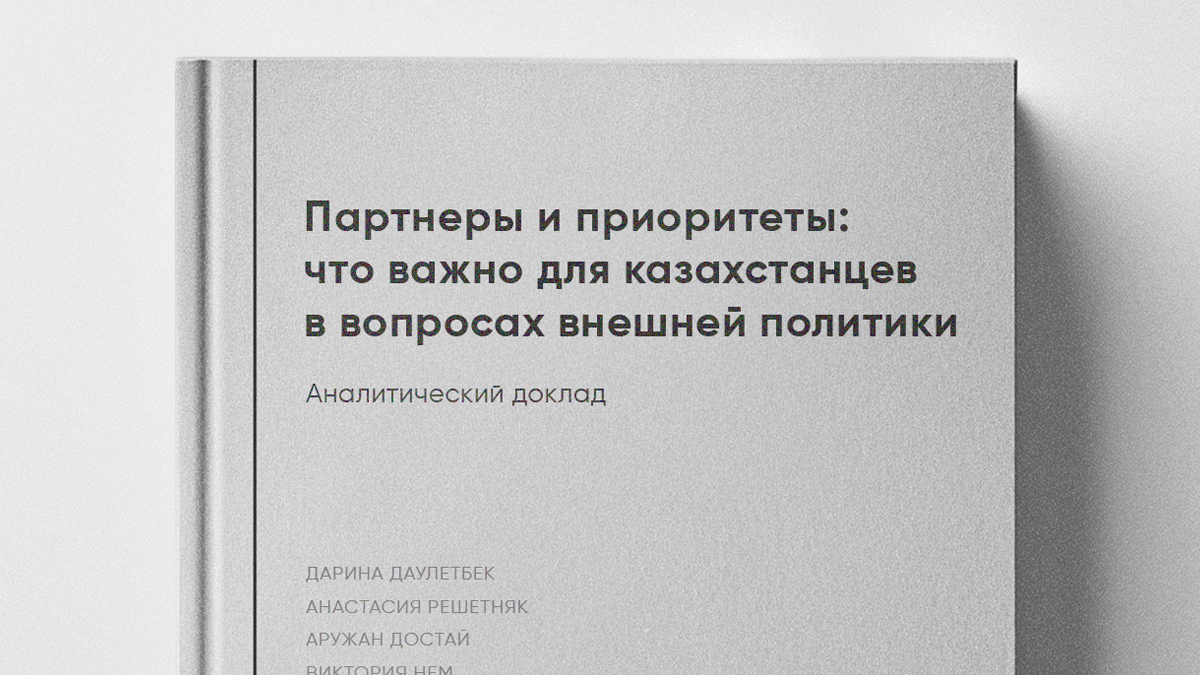
ДАРИНА ДАУЛЕТБЕК, АНАСТАСИЯ РЕШЕТНЯК, АРУЖАН ДОСТАЙ, ВИКТОРИЯ НЕМ, САЛТАНАТ ОРАЗБЕКОВА, СЕРИК БЕЙСЕМБАЕВ
DARINA DAULETBEK, ANASTASIA RESHETNYAK, ARUZHAN DOSTAI, VIKTORIYA NEM, SALTANAT ORAZBEKOVA, SERIK BEISEMBAYEV
Внешняя политика зачастую воспринимается как сфера, делегированная элитам, где решения неизбежно требуют компромиссов, а «воля народа» не может быть прямым ориентиром. Исследования показывают: позиции гражданок (-н) по внешней политике во многом следуют за сигналами партийных и медийных элит, поскольку сами по себе внешнеполитические вопросы сложны и слабо отражены в массовом опыте: люди редко отождествляют изменения в своей повседневной жизни с решениями, принятыми в международной политике.
Foreign policy is often perceived as a sphere delegated to elites, where decisions inevitably require compromise and the “will of the people” cannot serve as a direct guide. Research shows that citizens’ positions on foreign policy largely follow the signals sent by party and media elites, since foreign-policy issues themselves are complex and only weakly reflected in mass experience: people rarely identify changes in their everyday lives with decisions made in international politics.
В Казахстане, где существует явный запрос на политическое участие , эта область также остается слишком далекой от «простых людей». В то же время правительство, реагируя на этот запрос, включило в преамбулу Концепции внешней политики до 2030 года намерение «усилить акцент на продвижение и защиту на внешнем периметре интересов государства, бизнеса, каждого гражданина» для «построения сильного, гармоничного и социально ответственного государства, органично встроенного в современную систему международных отношений», ссылаясь на концепцию «слышащего государства» и задачу войти в число 30 самых развитых государств мира.
In Kazakhstan, where there is a clear demand for political participation, this sphere likewise remains too remote from “ordinary people.” At the same time, responding to that demand, the government included in the preamble to the Foreign Policy Concept through 2030 its intention “to place greater emphasis on promoting and protecting, on the external perimeter, the interests of the state, business, and every citizen,” in order “to build a strong, harmonious, and socially responsible state organically integrated into the modern system of international relations,” invoking the concept of a “listening state” and the goal of entering the ranks of the world’s 30 most developed countries.
Thus, at the conceptual level, Kazakhstan acknowledges that foreign policy should be socially oriented and subordinated first and foremost to the interests of the country’s citizens. In practice, however, society’s influence on decision-making in this sphere remains minimal, while mechanisms for involvement are largely declarative and fragmentary.
Таким образом, на концептуальном уровне в Казахстане признается, что внешняя политика должна быть социально ориентирована и в первую очередь подчинена интересам гражданок (-н) страны. Однако реальное влияние общества на принятие решений в этой сфере остается минимальным, а механизмы вовлечения носят преимущественно декларативный и фрагментарный характер.
At the same time, citizens themselves are coming to recognize the importance of the foreign-policy agenda. The war in Ukraine, sanctions crises, and global uncertainty have forced society to look anew at what is happening in the world. It has become clear that diplomatic alliances and geopolitical maneuvers directly affect prices in shops, the security of borders, and the country’s economic prospects.
Параллельно идет процесс осознания важности внешнеполитической повестки самими гражданками (-нами). Война в Украине, санкционные кризисы и глобальная неопределенность заставили общество по-новому взглянуть на происходящее в мире. Стало очевидно, что дипломатические союзы и геополитические маневры напрямую влияют на цены в магазинах, безопасность границ и экономические перспективы страны.
Against this backdrop, a public demand is taking shape for discussion of foreign-policy questions: does our traditional “multi-vector” approach still work? Who are our real allies? Whose interests do current partnerships serve? Where do the limits of our independence lie?
На этом фоне формируется общественный запрос на обсуждение вопросов внешней политики: работает ли еще наша традиционная «многовекторность»? Кто наши настоящие союзники? Чьим интересам служат текущие партнерства? Где проходят границы нашей независимости?
It was precisely this shift in mass consciousness that formed the basis of our study. We considered it important to understand how Kazakhstani society assesses the country’s foreign policy in light of the existing competing narratives, and to what extent the country’s foreign policy corresponds to citizens’ real demands and interests. To that end, we conducted a representative mass survey, focus-group discussions, and an expert survey. This made it possible to identify not only the distribution of opinions, but also people’s deeper motives, values, and fears.
Именно этот сдвиг в массовом сознании лег в основу нашего исследования. Нам было важно понять, как казахстанское общество оценивает внешнюю политику страны с учетом существующих конкурирующих нарративов, и насколько внешняя политика страны соответствует реальным запросам и интересам гражданок (-н). Для этого мы провели репрезентативный массовый опрос, фокус-групповые дискуссии и экспертный опрос. Это позволило выявить не только распределение мнений, но и глубинные мотивы, ценности и опасения людей.
The results show that, like other areas of state policy, the country’s foreign policy is attracting ever greater attention from Kazakhstanis, which means this subject too requires a broader public dialogue.
Результаты показывают: как и другие области государственной политики, внешняя политика страны привлекает все больше внимания казахстанок (-цев) – а значит, эта тема тоже требует более широкого общественного диалога.
The study was carried out with the support of the Canada Fund for Local Initiatives (CFLI).
Исследование реализовано при поддержке Канадского Фонда Местных Инициатив (CFLI).