What the Shareholders’ Backlash Means
Samsung Electronics’ bonus agreement has turned a labor dispute over performance pay into a broader contest over who may claim the corporation’s residual profits: workers, shareholders, management, or society at large.
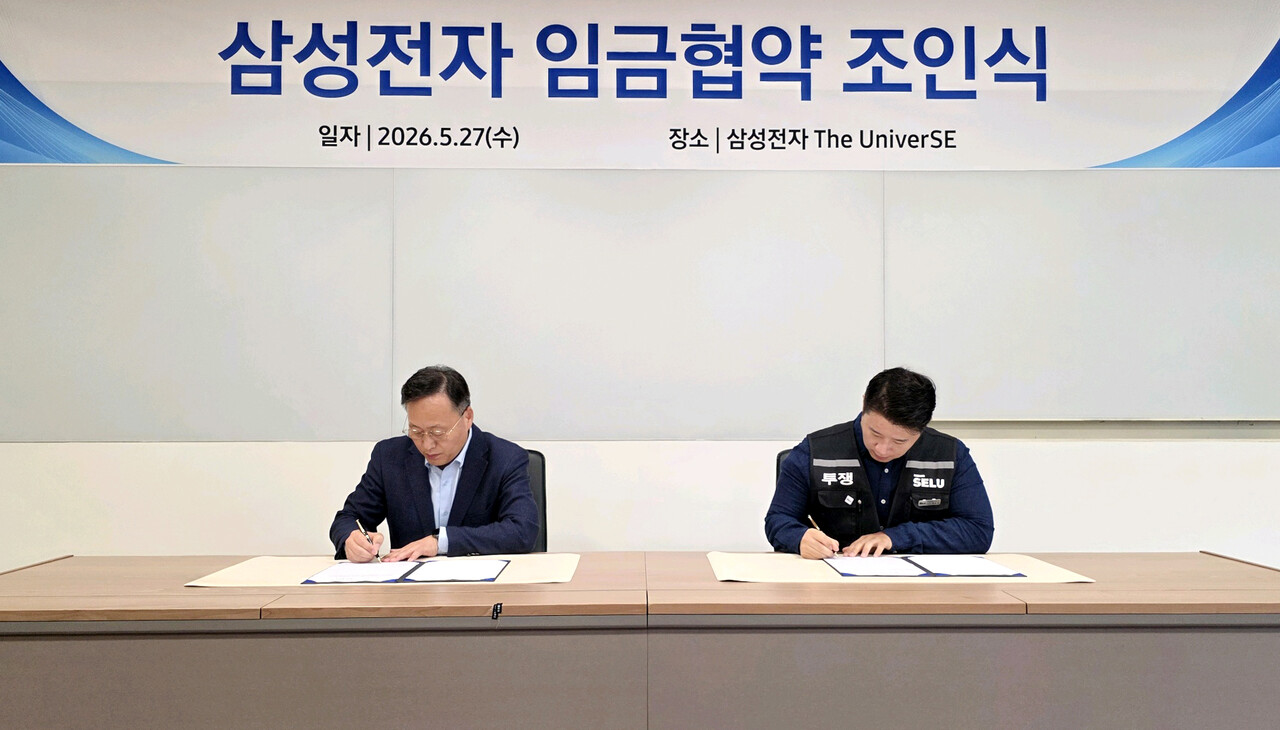
The tentative agreement between Samsung Electronics’ management and labor over performance bonuses has been approved with 73.7 percent voting in favor. In the Samsung Electronics branch of the Samsung Group Supra-Enterprise Union, 80.6 percent of voting members supported it. The Supra-Enterprise Union is organized mainly around the semiconductor, or DS, division, which is expected to receive high bonuses after posting large operating profits. By contrast, 78.9 percent of voting members in the National Samsung Electronics Union opposed the deal. The NSEU has a relatively high proportion of members from the finished-products, or DX, division. Finished products, including smartphones and home appliances, are businesses with less robust operating margins. But only 7,283 NSEU members voted. That was not enough to overturn the strong approval from the Samsung Electronics branch of the Supra-Enterprise Union, where 55,333 members took part.
삼성전자 노사의 성과급 관련 잠정 합의안이 찬성률 73.7%로 가결됐다. 삼성그룹 초기업노조 삼성전자지부는 투표한 조합원 80.6%가 찬성했다. 초기업노조는 반도체(DS) 부문 위주로 조직되어 있는데, DS 부문은 대규모 영업이익을 올려 높은 성과급을 받을 것으로 기대된다. 반면 전국삼성전자노동조합(전삼노)은 투표한 조합원 78.9%가 반대했다. 전삼노는 완제품(DX) 부문 구성원 비중이 상대적으로 높다. 완제품은 스마트폰·가전 등 영업이익률이 높지 않은 부문이다. 그러나 전삼노는 투표 인원이 7283명에 그쳤다. 투표 인원이 5만5333명인 초기업노조 삼성전자지부의 높은 찬성률을 뒤집지는 못했다.
Until now, Samsung Electronics has paid its excess-profit incentive, or OPI, according to “20 percent of EVA,” economic value added, a figure calculated by a complex method and disclosed only to management, with a cap of 50 percent of annual salary. Samsung Electronics’ unions demanded instead that bonuses be paid without a cap, at 15 percent of “operating profit,” a figure anyone can grasp intuitively, rather than EVA. Under the agreement approved in this vote and signed by labor and management, the company will pay, for ten years and without a cap, 10.5 percent of “management performance agreed upon by labor and management” as a special management-performance bonus for the semiconductor division. According to the company’s response disclosed by the Samsung Electronics branch of the Supra-Enterprise Union, “management performance agreed upon by labor and management” here is “calculated on the basis of the amount remaining after labor costs, including provisions for OPI,” the existing bonus, “are excluded from operating profit.” OPI will continue to be paid under the existing formula.
삼성전자는 그동안 계산방식이 복잡한 데다 경영진에게만 공개되는 ‘EVA(경제적 부가가치)의 20%’를 기준으로, 연봉의 50%라는 상한을 두어 초과이익 성과급(OPI)을 지급해왔다. 삼성전자 노동조합들은 EVA가 아니라 누구나 직관적으로 파악할 수 있는 수치인 ‘영업이익’의 15%를 상한 없이 성과급으로 지급해달라고 요구했다. 이번 찬반 투표에서 가결돼 노사가 서명한 합의안에 따르면, 회사는 ‘노사가 합의한 경영성과’의 10.5%를 반도체 부문 특별경영 성과급으로 상한 없이 10년간 지급한다. 초기업노조 삼성전자지부가 공개한 사측 답변에 따르면, 여기서 ‘노사가 합의한 경영성과’란 ‘영업이익에서 OPI(기존 성과급) 충당액 등 인건비가 제외된 금액을 기준으로 산정’한다. OPI는 기존 지급 방식을 유지한다.
Because the agreement does not explicitly mention “operating profit,” there is room for interpretation between labor and management. Yet judging from the company’s published explanation, it seems clear that the source of the special management-performance bonus begins not from the old EVA but from “operating profit” after labor costs such as OPI have been excluded. On May 20, however, President Lee Jae-myung said in opening remarks at a cabinet meeting held together with an emergency economic review meeting: “It is investors and shareholders who receive a share of operating profit,” adding, “To divide it institutionally at a fixed percentage before taxes are even deducted is something investors themselves cannot do.” Is this a sound criticism?
합의문에서 ‘영업이익’을 명시적으로 언급하지 않았기에 노사 합의의 여지는 있다. 그러나 공개된 사측 설명을 기준으로 보면 특별경영 성과급의 재원이 기존의 EVA가 아닌, OPI 등 인건비를 제외한 ‘영업이익’을 출발점으로 삼은 것은 분명해 보인다. 그런데 이재명 대통령은 5월20일 국무회의 겸 비상경제점검회의 모두발언에서 “영업이익을 배분받는 건 투자자와 주주”라며 “세금도 떼기 전에 일정 비율로 제도적으로 나눠 갖는 것은 투자자도 할 수 없는 일이다”라고 말했다. 타당한 지적일까?
To answer that question, let us look at the flow of a company’s income statement. “Operating profit” means the profit a company earns purely from its core business. From “gross sales,” the revenue earned by selling goods and services, one subtracts the “cost of goods sold,” including raw materials, intermediate goods, wages for factory workers, and factory depreciation. From that, one again subtracts “selling, general and administrative expenses,” including wages for workers in sales, administration, marketing, human resources, finance, and research and development, as well as CEO compensation. The resulting figure is operating profit. Add “non-operating income,” which the company earns outside its core business, such as from stocks or real estate, and subtract “non-operating expenses,” such as interest the company must pay on borrowed money, and the result is EBT, earnings before taxes. From EBT, the state takes corporate tax at a certain rate, and what remains is net income. It is from this net income that distribution between the company, as a legal person, and shareholders takes place. The portion of net income retained internally by the company becomes the basis for future research and development or facilities investment. If the company buys back and eliminates its own shares, or returns money to shareholders as dividends, the shareholders’ share grows. See the figure.
이 질문에 답하기 위해 기업의 손익계산서 흐름을 살펴보자. ‘영업이익’이란 기업이 순수하게 본업에서 남긴 이익을 말한다. 상품과 서비스를 팔아 벌어들인 ‘총매출액’에서 원자재와 중간재 비용, 공장 노동자의 인건비, 공장 감가상각비 등 제품 생산에 들어간 ‘매출원가’를 뺀다. 거기서 다시 영업·관리·마케팅·인사·재무·연구개발 부문의 노동자 임금, CEO 보수 등 ‘판매비와 관리비(판관비)’를 뺀 이익을 뜻한다. 이 영업이익에, 회사가 주식·부동산 등 본업 외에서 얻은 ‘영업외수익’을 더하고, 회사가 빌린 돈에 대해 내야 할 이자 등 ‘영업외비용’을 빼면, ‘EBT(Earnings Before Taxes·법인세 차감 전 순이익)’가 된다. EBT에서 국가가 일정 비율의 법인세를 가져가고 남은 몫이 당기순이익이다. 바로 이 당기순이익에서 회사(법인)와 주주 간 배분이 이뤄진다. 당기순이익에서 회사가 내부 적립한 부분은 향후 연구개발이나 설비투자의 기반이 된다. 회사가 자사주를 매입해 없애거나(소각), 주주에게 배당으로 돌려주면 주주의 몫이 커진다(〈그림〉 참조).
Let us return to President Lee Jae-myung’s remarks. As Lee said, shareholders may demand their share of “net income.” But shareholders cannot intervene at the stage before taxes are deducted. On the income statement, the stages before EBT are the arena of negotiation and struggle among the company, workers, suppliers, and creditors, such as banks. That is because EBT is what remains after workers’ wages and bonuses, suppliers’ delivery payments, and creditors’ interest are subtracted from gross sales. Seen this way, the president’s remarks can also be read as needlessly problematizing the tug-of-war between labor and management that naturally takes place before taxes are deducted.
다시 이재명 대통령의 발언으로 돌아오자. 이 대통령의 말대로 주주는 ‘당기순이익’에서 자기 몫을 요구할 수 있다. 다만 주주는 세금을 떼기 전 단계에는 개입할 수 없다. 손익계산서에서 EBT 이전의 단계는 회사와 노동자, 협력업체, 채권자(은행) 사이의 협상과 투쟁의 공간이다. 총매출에서 노동자들의 임금과 성과급, 협력업체의 납품대금, 채권자가 받는 이자 등을 뺀 것이 EBT이기 때문이다. 이렇게 보면 이 대통령의 발언은, 세금 떼기 전에 당연히 이뤄지기 마련인 노사 간 힘겨루기를 공연히 문제 삼은 것으로도 볼 수 있다.
Yet there is also a point in the president’s remarks. In this negotiation, the Samsung Electronics union succeeded in part in pressing its demand that bonuses be paid as “a fixed percentage of operating profit,” after subtracting the amount paid under the existing bonus scheme. But if we look at the flow of the income statement described above, the size of operating profit is determined only after wages and bonuses for employees have first been fixed as “cost of goods sold” and “selling, general and administrative expenses.” The union is now asking that a fixed percentage of the operating profit determined as a result be paid out again as bonuses.
그러나 대통령의 발언에 일리 있는 지점도 있다. 삼성전자 노조는 이번 협상에서 ‘영업이익(에서 기존 성과급 지급액을 뺀 금액)의 일정 비율’을 성과급으로 지급하라는 요구를 일부 관철시켰다. 하지만 앞서 손익계산서의 흐름을 보면, 영업이익 규모는 직원들에 대한 임금과 성과급이 ‘매출원가’ 및 ‘판관비’로 먼저 확정되어야 결정된다. 그런데 노조는 그 결과로 정해진 영업이익의 일정 비율을 다시 성과급으로 지급하라는 것이다.
This creates a circular phenomenon, like a Moebius strip. Suppose, for example, that workers at a certain company demand 10 percent of operating profit as a bonus. If the company’s operating profit is 10 billion won and its interest expense is 9 billion won, EBT is 1 billion won. After paying 200 million won in corporate tax, 800 million won in net income remains. Now suppose the company pays workers an additional bonus of 1 billion won, equal to 10 percent of operating profit. That 1 billion won will be reflected as a cost in cost of goods sold and SG&A. Operating profit falls to 9 billion won; since interest expense is 9 billion won, EBT is zero, corporate tax is zero, and net income is zero. It is a somewhat extreme example, but the essential point, says Lee Jun-il, a professor of accounting at Kyung Hee University, is that “workers are stakeholders who have already taken their share, in the form of wages, from cost of goods sold and selling and administrative expenses.” He adds: “For a labor union to demand, as a fixed additional payment, a certain percentage of operating profit as a bonus is, by analogy, no different from a worker who has already received his meal cutting back into the line in front of shareholders waiting at the end to take more. It would be proper for shareholders, too, to make their demands after receiving their basic serving.”
이러면 뫼비우스의 띠 같은 순환 현상이 벌어진다. 가령 어떤 회사에서 영업이익의 10%를 성과급으로 요구한다고 예를 들어보자. 회사 영업이익이 100억원이고 이자비용이 90억원인 경우, EBT는 10억원이다. 여기서 법인세 2억원을 내고 나면 당기순이익 8억원이 남는다. 그런데 영업이익의 10%인 10억원을 성과급으로 다시 노동자들에게 지급한다고 치자. 이 10억원은 매출원가와 판관비에 비용으로 반영될 것이다. 영업이익은 90억원으로 줄어드는데, 이자비용이 90억원이니 EBT는 0원, 법인세도 0원, 당기순이익도 0원이 된다. 다소 극단적인 예시이긴 하지만, 핵심은 “노동자는 일단 이미 매출원가와 판매·관리비에서 급여로 자신의 몫을 가져간 이해관계자라는 점”이라고 이준일 경희대 회계학과 교수는 지적한다. “노동조합이 영업이익의 일정 비율을 성과급으로 고정적으로 추가 요구하는 것은, 비유하자면 이미 배식을 받은 노동자가 줄의 끝에서 기다리고 있는 주주 앞에 다시 끼어들어 더 가져가겠다는 것과 다름없다. 주주도 기본 배식을 받은 이후에 요구해야 맞다.”
The Union’s Demand and the “Moebius Strip”노동조합 요구와 ‘뫼비우스의 띠’
The tension between workers and shareholders becomes even clearer when viewed against the fact that the previous bonus criterion was “economic value added,” or EVA. EVA is the amount left after subtracting “capital costs” from “after-tax operating profit,” meaning the profit earned from the core business after excluding the corresponding portion of corporate tax. Here, capital costs mean the minimum return that shareholders and creditors “expect” in exchange for providing capital to the company. In other words, the very concept of EVA rests on the premise that shareholders’ share is considered first, and whatever remains is paid to workers as bonuses. It is not easy, however, to know what percentage shareholders expect as their share. In the end, the company calculates the amount to be returned to shareholders through various formulas; in that process, management can, at its discretion, increase capital costs and thereby reduce EVA and the bonuses calculated on that basis. Documents have also surfaced suggesting that management at Samsung Biologics, a Samsung Electronics affiliate, adjusted capital costs within EVA. The fact that workers refused to accept EVA as the criterion for calculating bonuses means that they will receive bonuses based on a much larger amount before corporate tax and capital costs are deducted. But it can also be interpreted, in effect, as a challenge to shareholders, in that it rejects a structure that considers shareholders’ share first.
노동자와 주주의 긴장 관계는, 이전에 성과급을 지급하던 기준이 ‘경제적 부가가치(EVA)’였다는 사실에 비춰보면 더욱 확연해진다. EVA란 ‘세후 영업이익(본업으로 번 이익에서 이에 상응하는 법인세 부분을 제외한 금액)’에서 ‘자본비용’을 뺀 금액이다. 여기서 자본비용은 주주와 채권자가 회사에 자본을 제공한 대가로 ‘기대하는’ 최소한의 수익을 의미한다. 즉, EVA란 개념 자체가 주주의 몫을 먼저 고려한 뒤 남은 부분을 노동자들에게 성과급으로 지급한다는 전제를 깔고 있는 것이다. 다만 주주들이 자신의 몫이 몇%라고 기대하는지 알기란 쉽지 않다. 결국 회사는 이런저런 산식을 통해 주주에게 돌려줄 몫을 계산하는데, 이 과정에서 사측의 재량에 따라 자본비용을 늘려서 EVA 및 이를 기준으로 계산되는 성과급 액수를 줄일 수 있다. 삼성전자 계열사인 삼성바이오로직스에서 사측이 EVA상의 자본비용을 조정한 정황이 문건으로 발견되기도 했다. 노동자들이 EVA를 성과급 산정 기준으로 받아들이지 않았다는 사실은, 법인세와 자본비용을 빼기 전의 훨씬 큰 액수를 기준으로 성과급을 수령한다는 의미도 있지만, 주주의 몫을 먼저 고려하는 구도를 인정하지 않는다는 점에서 사실상 주주에 대한 도전으로 해석할 수도 있다.
Shareholders reacted sharply. Min Kyung-kwon, head of an organization called the Korea Shareholder Activism Headquarters, argues that Samsung Electronics’ labor-management agreement itself is illegal. He criticizes the payment of bonuses linked to and allocated as a fixed percentage of operating profit, a stage before corporate tax is paid, as a circumvention of the state’s taxing authority. Moreover, in the flow of the income statement, the stage “after corporate tax payment” corresponds to net income, which becomes “the shareholders’ share” unless the company retains it internally. For that reason, Min argues that paying bonuses without obtaining shareholder consent through the general shareholders’ meeting violates Article 462 of the Commercial Act. He has also announced plans to file a suit for nullification, arguing that if Samsung Electronics directors approve this labor-management agreement, they will be violating their “duty of loyalty to shareholders” under the revised Commercial Act and committing occupational breach of trust.
주주들은 민감하게 반응했다. ‘대한민국 주주운동본부’라는 단체의 민경권 대표는 이번 삼성전자의 노사 합의 자체가 위법하다고 주장한다. 그는 법인세 납부 이전 단계인 영업이익의 일정 비율을 연동·할당해 성과급으로 지급하는 행위는 국가의 조세권을 우회하는 것이라고 비판했다. 더욱이 손익계산서의 흐름으로 보면 ‘법인세 납부 이후’는 회사가 내부 적립하지 않으면 ‘주주의 몫’이 되는 당기순이익 단계에 해당한다. 그래서 민 대표는 주주총회로 주주들의 동의를 거치지 않은 성과급 지급은 상법(제462조) 위반이라고 주장한다. 또한 삼성전자 이사들이 이번 노사 합의안을 승인하면, 개정 상법상 ‘주주에 대한 충실의무’ 위반이자 업무상 배임이라며 무효 소송을 예고했다.
That argument, however, may conflict with other laws. Under the Corporate Tax Act, bonuses are treated as company expenses if certain requirements are met. Since corporate tax is imposed on EBT after various expenses have been deducted, one can also rebut the claim that paying bonuses constitutes a “circumvention of taxing authority.” If that logic is pursued, the bonuses may be understood as merely linked in outward form to operating profit, and therefore difficult to regard directly as “distribution of profits to shareholders,” or dividends, as stipulated in the Commercial Act.
그러나 이 주장은 다른 법률과 충돌할 수 있다. 법인세법에 따르면 성과급은 일정 요건을 갖추면 회사의 비용으로 처리된다. 법인세는 각종 비용을 제외한 EBT에 부과되는 것이므로 성과급 지급을 ‘조세권 우회’로 볼 수 없다는 반박도 가능하다. 이 논리를 밀고 나가면, 성과급은 외형상 영업이익에 연동되었을 뿐 곧바로 상법에 규정된 ‘주주에 대한 이익분배(이익배당)’로 보기 어렵다고 해석될 수도 있다.
Still, this bonus will be paid entirely in treasury shares. Under the revised Commercial Act, Article 341-4, treasury shares are in principle subject to cancellation within one year of acquisition; when an exception applies, such as compensation for executives and employees, the company must prepare a “treasury-share retention and disposal plan” and obtain approval from the general shareholders’ meeting. In other words, it is not because the company agreed to pay a fixed percentage of operating profit that a shareholders’ meeting is required; it is because payment will be made in treasury shares that shareholder approval is needed.
다만 이번 성과급은 전액 자사주로 지급된다. 개정 상법상(제341조의4) 자기주식은 원칙적으로 취득 후 1년 내 소각 대상이고, 임직원 보상 목적 등 예외 사유가 있는 경우 ‘자기주식보유처분계획’을 작성해 주총 승인을 받아야 한다. 즉 영업이익의 일정 비율을 주기로 했기 때문에 주총을 거쳐야 하는 게 아니라, 자사주 지급 방식이어서 주총 승인이 필요하다.
If shareholders at the general meeting take issue with the disposal of treasury shares for the purpose of compensating executives and employees, implementation of the labor-management agreement could become difficult. Even then, however, “the labor-management agreement would not immediately become void or impossible to carry out,” explains attorney Jang Seok-woo, a certified public accountant with the Honam office of the Korean Metal Workers’ Union Legal Center. His point is that a court would make a comprehensive judgment by considering the wording of the labor-management agreement, the purpose of designating treasury shares as the payment instrument, the possibility of substitute cash payment, and whether the company made efforts to carry out necessary procedures such as shareholder approval.
이때 주총에서 주주들이 임직원 보상 목적의 자사주 처분을 문제 삼는다면, 노사 합의안 이행이 곤란해질 수 있다. 그러나 그 경우에도 “곧바로 노사 합의가 무효가 되거나 이행이 불가능해지는 건 아니다”라고 장석우 변호사(공인회계사, 금속노조 법률원 호남사무소)는 설명했다. 노사 합의의 문언, 지급 수단을 자사주로 정한 취지, 현금 대체 지급 가능성, 회사가 주총 승인 등 필요한 절차를 이행하기 위해 노력했는지 등을 종합해서 법원이 판단할 것이라는 의미다.
What about directors’ duty of loyalty to shareholders? Attorney Jang said, “If the scale, duration, and financial impact of the bonus agreement are markedly significant, yet the board approves or executes it without any reasonable review, the issue of a director’s or representative director’s breach of the duty of loyalty to shareholders could be raised.” But in Jang’s view, absent highly exceptional and special circumstances, even if a director were found to have breached the duty of loyalty to shareholders, that would not immediately render the labor-management agreement void. He added that it would not be easy to establish either a breach of directors’ duty of loyalty or the crime of breach of trust, especially given that the agreement emerged after months of formal bargaining, mediation by the Labor Relations Commission, and government intermediation, and given that, as a result, a strike was averted and Samsung Electronics’ share price rose.
이사의 주주에 대한 충실의무는 어떨까. 장석우 변호사는 “성과급 합의의 규모·기간·재무적 영향이 현저히 중대함에도 이사회가 아무런 합리적 검토 없이 이를 승인하거나 집행했다면, 이사 또는 대표이사의 주주에 대한 충실의무 위반 문제가 제기될 여지는 있다”라고 말했다. 그러나 아주 예외적이고 특별한 사정이 없었다면, 설령 이사가 주주에 대한 충실의무를 위반했다고 해도 곧바로 노사 합의의 무효로 이어지지는 않는다는 것이 장 변호사의 견해다. 특히 이번 합의안이 수개월간의 공식 교섭과 노동위원회 조정, 정부 중재를 거쳐 도출된 안이라는 점, 결과적으로 파업을 하지 않게 되고 삼성전자의 주가도 올랐다는 점에서 이사의 충실의무 위반도, 배임죄도 인정되기 쉽지 않다고 장 변호사는 덧붙였다.
What the Shareholders’ Backlash Means주주들의 반발이 의미하는 것
The repercussions of this case, however, will go far beyond differences in legal interpretation. It appears likely to become a major turning point, pushing the conflicts and struggles among the stakeholders surrounding the company into a new phase. Shareholders are often called “residual claimants.” As the flow of the income statement shows, shareholders are defined as those who receive the portion left after the company pays wages to workers, repays interest to creditors, and even pays corporate tax. Unlike workers who have contracted to receive wages, shareholders have no right to demand recovery of their investment. They must bear the uncertainty that they may lose money. At the same time, as corporate value rises, they can claim a larger share for themselves. But if workers who have already received wages, and who can ordinarily be assured of their base pay even when the company posts a loss, are additionally guaranteed a fixed share of “residual profit belonging to shareholders,” then one may argue that workers come to resemble “residual claimants” like shareholders, beyond being “claimants on corporate costs,” namely wages. Of course, there is a precedent: in September of last year, SK Hynix labor and management agreed to pay 10 percent of operating profit as bonuses without a cap. But only in this Samsung Electronics bonus dispute have shareholders gone so far as to pressure directors over a labor-management wage agreement and invoke the general shareholders’ meeting. It is a symbolic scene, showing that shareholders, too, have now entered what had been the “arena of struggle between management and workers” and the “sphere of management’s business judgment” stretching from gross sales to EBT.
그러나 이번 사건의 파장은 단지 법률 해석의 차이를 훌쩍 넘어설 것이다. 회사를 둘러싼 이해관계자들 사이의 갈등과 투쟁이 새로운 국면으로 진입하는 중대 계기가 될 것으로 보인다. 주주를 흔히 ‘잔여 청구권자’라고 부른다. 손익계산서 흐름에서 보듯, 주주는 회사가 노동자들에게 임금을 주고, 채권자에게 이자를 갚고, 법인세까지 납부한 뒤 남은 몫을 분배받는 존재로 규정된다. 주주들은 임금을 받기로 계약한 노동자와 달리 투자금 회수를 청구할 권리가 없다. 돈을 잃을 수 있다는 불확실성을 감내해야 한다. 반면에 기업가치가 높아질수록 더 많은 부분을 자기 몫으로 챙길 수 있다. 그런데 이미 임금을 받았으며, 회사가 적자를 기록해도 웬만해서는 기본급을 보장받을 수 있는 노동자가 ‘주주 몫인 잔여 이익’의 일정 부분까지 추가로 고정 배분받는다면, 노동자는 ‘기업에 대한 비용(임금) 청구권자’를 넘어 주주와 같은 ‘잔여 청구권자’에 가까워진다는 지적이 가능하다. 물론 지난해 9월 SK하이닉스 노사가 ‘영업이익의 10%’를 상한 없이 성과급으로 지급하기로 한 선례가 존재하기는 한다. 그러나 이번 삼성전자 성과급 분쟁에서야 주주들은 노사 간 임금 협약에 대해 이사들을 압박하며 주주총회를 거론하기에 이르렀다. 이는 총매출액에서 EBT에 이르는 ‘사측과 노동자 사이의 투쟁 영역’이자 ‘경영진의 경영판단 영역’에 주주도 참전하게 되었음을 보여주는 상징적 장면이다.
Against this, some argue that because workers, suppliers, local communities, and the state, rather than short-term minority shareholders with no interest in the company’s long-term performance, are the true risk-bearers, the right to claim a company’s residual profits belongs to these stakeholders rather than to shareholders. See the article “Who Is the Real Owner of That Performance?” in SisaIN No. 973.
이에 대해서는 ‘회사의 장기성과에 관심이 없는 단기 소액주주보다는 노동자와 협력업체, 지역사회와 국가야말로 진정한 위험 감수자들’이기에, 오히려 주주가 아니라 이러한 이해관계자들에게 기업의 잔여 이익을 청구할 권리가 있다는 주장도 있다(〈시사IN〉 제973호 ‘누가 그 성과의 진짜 주인인가’ 기사 참조).
Professor Lee Jun-il thinks somewhat differently. He agrees that all stakeholders, including workers, suppliers, local communities, and the state, bear some degree of risk. But he believes that restrictions on dismissal under the Labor Standards Act, priority repayment rights for wage claims, systems for protecting small and medium-sized enterprises, and policies supporting local economies already compensate for that risk. If these safeguards are insufficient, the institutions should be improved; it does not follow that the distribution structure of the joint-stock company must be changed.
이준일 교수의 생각은 좀 다르다. 그는 노동자·협력업체·지역사회와 국가 등 모든 이해관계자가 얼마간 위험을 부담하고 있다는 사실에는 동의한다. 다만 근로기준법의 해고 제한, 임금채권 우선변제권, 중소기업 보호 제도, 지역경제 지원 정책 등이 그것을 이미 보완하고 있다고 본다. 이런 보호장치가 부족하다면 제도를 개선해야지, 주식회사의 배분 구조를 바꿔야 하는 건 아니라는 것이다.
“If there is a social consensus that part of profits should be distributed to all stakeholders, it can be enacted into law. But when one thing is chosen, something else is sacrificed. Shareholders’ limited liability is a structure in which, if a company’s business fails, shareholders lose only up to the amount they invested, and if it succeeds, they take all that remains. Because this asymmetrical structure exists, people undertake new ventures and start businesses even when they lack money. If the promise of the joint-stock company is weakened, who will spend tens of trillions of won to build semiconductor facilities, or spend ten years attempting to develop a new drug? The problem should be seen not as shareholder capitalism itself, but as short-termism. Is the key not to design institutions so that shareholders, managers, and workers alike do not focus only on short-term results or compensation?” Professor Lee Jun-il said.
“모든 이해관계자에게 이익의 일부를 나눠주자는 사회적 합의가 있다면 법으로 정할 수도 있다. 그러나 어떤 것을 선택하면 무언가는 희생된다. 주주의 유한책임은, 기업의 사업이 실패하는 경우 주주가 자신이 투자한 금액까지만 손해를 보고, 성공하면 남는 것을 모두 가지는 구조다. 이 비대칭적 구조가 있기에 사람들은 돈이 없어도 새로운 모험에 뛰어들어 사업을 한다. 주식회사의 약속이 약화되면 누가 수십조 원을 들여서 반도체 설비를 마련하고, 10년을 들여 신약 개발에 도전할 것인가? 주주자본주의 자체가 아니라 단기주의가 문제라고 봐야 한다. 주주든, 경영자든, 노동자든 단기적 실적이나 보상에만 치중하지 않도록 제도를 설계하는 게 핵심 아닐까(이준일 교수)”
As demands for “N percent of operating profit” as bonuses become an issue in labor-management relations at other companies as well, the share of firms that have introduced collective performance bonuses, or profit-sharing schemes, tied to business results is 43.8 percent among large companies but only 6.4 percent among small and medium-sized enterprises. Kim Jin-uk, head of external cooperation at the Hyundai Motor branch of the Korean Metal Workers’ Union, said: “We have demanded bonuses not based on operating profit, but on 30 percent of net income, after interest expenses and corporate tax are deducted, and we have included in-house subcontractors in that demand. Ultimately, we are trying to raise the share of base pay rather than variable bonuses. The labor movement is also demanding an extension of the retirement age and new hiring, so there is an aspect that feels frustrating when it appears to be excessively buried in bonuses.” After the Samsung Electronics labor-management agreement, not only distribution among the company, shareholders, and workers, but distribution within labor itself remains an unresolved task.
영업이익의 N%를 성과급으로 달라는 요구가 다른 기업 노사관계에서도 이슈가 되는 가운데, 경영실적에 따른 집단 성과급(성과배분제)을 도입한 기업 비중은 대기업이 43.8%인 반면 중소기업은 6.4%에 그쳤다. 금속노조 현대차지부 김진욱 대외협력실장은 “우리는 영업이익이 아니라 (이자비용과 법인세 등을 뺀) 당기순이익의 30%를 성과급으로 요구해왔고 사내 협력업체도 포함해서 요구하고 있다. 궁극적으로는 변동급인 성과급보다 기본급 비중을 높이려 하고 있다. 노동운동이 정년 연장과 신규 채용도 요구하고 있는데 지나치게 성과급에 매몰된 것으로 비쳐 갑갑한 측면이 있다”라고 말했다. 삼성전자 노사 합의 이후, 회사·주주·노동자 사이 배분뿐 아니라 노동 내부의 배분도 숙제로 남았다.
- The Desires of a “Weak Union” Strike Samsung’s Vulnerable Point. The tug-of-war between Samsung Electronics labor and management has reached its first stopping point. Three facts stand immediately before us. On May 20, Samsung Electronics labor and management reached a tentative agreement on bonuses. The union’s ... scheduled for the following day...
- ‘약한 노조’의 욕망, 삼성의 급소를 때리다 삼성전자 노사의 줄다리기가 1차 마침표를 찍었다. 눈앞에 놓인 사실은 세 가지다. 5월20일 삼성전자 노사가 성과급과 관련해 잠정 합의를 이뤘다. 다음 날부터 예정돼 있던 노조의 ...
- Chang Ha-joon’s Rebuke: “A Booming KOSPI? Korea Is Far Too Relaxed.” The Trump administration’s tariff offensive is shaking the global trade order. Yet as of early May 2026, the U.S. economy and financial markets had not yielded to the shock. The U.S. economy, powered by investment in artificial intelligence, and...
- 장하준의 일침 “코스피 활황? 한국, 너무 한가하다” 트럼프 행정부의 관세 공세가 글로벌 무역 질서를 뒤흔들고 있다. 그러나 2026년 5월 초 현재 미국 경제와 금융시장은 충격에 굴복하지 않았다. 미국 경제는 인공지능(AI) 투자와...
- On the Claim That the Samsung Electronics Bonus Strike Is Because of the Yellow Envelope Act [Freestyle]. “Samsung shareholders are so agitated over the union’s demand for 700 million won in bonuses that they are even holding counter-rallies. ... They are all victims of the Yellow Envelope Act.” On April 26, People Power Party leader Jang Dong-hyuk wrote on Facebook...
- 삼성전자 성과급 파업이 노란봉투법 때문이라는 주장에 대해 [프리스타일] “삼성 주주들은 노조의 7억원 성과급 요구에 맞불 집회까지 열며 속을 태우고 있습니다. (…) 모두 노란봉투법의 피해자들입니다.” 국민의힘 장동혁 대표가 지난 4월26일 페이스북에...
- The Essence of the SK Hynix and Samsung Electronics Bonus Controversy Is “This.” The Samsung Electronics union announced a strike after demanding that management pay 15 percent of operating profit as bonuses and abolish the bonus cap, which is set at 50 percent of annual salary. Earlier, in September of last year, SK Hynix labor and management...
- SK하이닉스와 삼성전자 성과급 논란의 본질은 ‘이것’ 삼성전자 노조가 영업이익의 15%를 성과급으로 지급하고 연봉의 50%인 성과급 상한을 폐지하라고 사용자 측에 요구하며 파업을 예고했다.앞서 지난해 9월 SK하이닉스 노사는 영업이익...
- Behind the Dream of KOSPI 5000, the Disarmament of Korean Companies. Dead, yet alive. Such a being is called a “zombie.” Zombies usually appear in fictional works. Yet in the fierce battlefield over corporate control and profit distribution, there are also zombie-like beings...
- 코스피 5000의 꿈 뒤, 한국 기업의 무장해제 죽었지만 살아 있다. 이런 존재를 ‘좀비’라고 부른다. 좀비는 주로 허구의 창작물에 등장한다. 그러나 기업의 지배와 수익배분을 둘러싼 치열한 싸움의 현장에도 좀비 같은 존재가 있다...
- “Let’s Strike Like Samsung Electronics”: What Happened at TSMC. When a company earns unprecedented profits from a semiconductor boom, with whom and how should it share the fruits? This year, SK Hynix and Samsung Electronics suffered through the pains of this distribution question. Korea’s bonus war...
- “삼성전자 따라 파업하자” TSMC에서 일어난 일 반도체 호황으로 사상 초유의 이익을 벌어들인 기업은 과실을 누구와 어떻게 나누어야 하는가? 올해 SK하이닉스와 삼성전자는 이 분배의 문제를 두고 진통을 겪었다. 성과급 전쟁이 한국...
- [Exclusive] “The TSMC Chairman Said a Labor Union Was Not Particularly Necessary.” Recently, among employees of Taiwan foundry company TSMC, there has been talk that “we need to form a labor union” and “we should strike like Samsung Electronics.” Amid this, TSMC chairman C. C. Wei at the end of May...
- [단독] “TSMC 회장, 노동조합 굳이 필요하지 않다고 말했다” 최근 타이완 파운드리 기업 TSMC 직원들 사이에서 ‘노동조합을 만들어야 한다’ ‘삼성전자처럼 파업해야 한다’라는 이야기가 거론되는 가운데, 웨이저자 TSMC 회장이 5월 말 한 ...