Dance’s Antifascist Strategies
The essay asks what dance history, choreography, and artists’ lived experience can teach us about becoming useless to fascism and useful to antifascist resistance.
Choreographing Antifascism seminar at Dansens Hus, March 13-14, 2026. Curated by Bojana Cveijc, in collaboration with Dora García, Goran Sergej Pristas, and Benjamin Pohlig. Dance’s Antifascist Strategies.
Choreographing Antifascism Seminar på Dansens hus 13.-14. mars 2026 Kuratering: Bojana Cveijc, i samarbeid med Dora García, Goran Sergej Pristas og Benjamin Pohlig Dansens antifascistiske strategier
How can we make ourselves useless to fascism, Bojana Cveijc asks. Perhaps dance history can tell us something about how to do that, but it cannot tell us everything.
Hvordan kan vi gjøre oss unyttige for fascismen, spør Bojana Cveijc. Kanskje kan dansehistorien fortelle oss noe om hvordan vi gjør det, men den kan ikke fortelle oss alt.
Choreographing Antifascism is a two-day mini-festival of performance lectures, a seminar, and conversations curated by dramaturg, writer, and professor of dance theory Bojana Cveijc. A new doctoral fellowship at the Oslo National Academy of the Arts bearing the same title was advertised toward the end of 2025, with Cveijc as supervisor. Antifascism is a mode of thought that promotes active political resistance to organized fascism, Nazism, and the far right. It has its origins in interwar Germany and emerged from the Communist Party of Germany (KPD) in 1932 as an attempt to form broad resistance on the left against the rise of Nazism. Many are now looking to the interwar period in an effort to understand today’s political landscape. Cveijc opens the seminar in the foyer at Dansens Hus, where she cites the oppression of minorities and violence against trans people as among the clearest signs of fascism today. She asks what antifascism can be, and whether the theatre can create spaces in which dance-artistic practices might be reoriented.
Choreographing Antifascism er en minifestival over to dager med forestillingsforedrag, seminar og samtaler kuratert av dramaturg, forfatter og professor i danseteori Bojana Cveijc. En ny doktorgradsstilling ved Kunsthøgskolen i Oslo med samme tittel ble utlyst mot slutten av 2025, og skal veiledes av Cveijc. Antifascisme er et tankesett som fremmer aktiv politisk motstand mot organisert fascisme, nazisme og høyreekstremisme. Tankesettet har sin opprinnelse i mellomkrigstidens Tyskland og sprang ut ifra Tysklands kommunistiske parti (KPD) i 1932 som et forsøk på å danne bred motstand i venstresiden mot nazismens fremvekst. Flere ser nå til mellomkrigstiden for å forsøke å forstå dagens politiske landskap. Cveijc innleder seminaret i foajeen på Dansens Hus der hun nevner undertrykkelse av minoriteter og vold mot transpersoner som et av de tydeligste tegnene på fascisme i dag. Hun spør hva antifascisme kan være og hvorvidt teatret kan skape rom for å reorientere dansekunstneriske praksiser.
Memories of an antiwar balletMinner om en antikrigsballett
Inside the Main Stage, the Spanish choreographer Olga de Soto is ready with her performance lecture An Introduction (2010). She works with memories, traces, and transmission, blending choreography with documentary, performance, and installation. Dressed in a red dress, she speaks about her work on the German dancer and choreographer Kurt Jooss’s political work The Green Table (1932). Jooss combined classical ballet with theatricality and narrative and was central to the creation of modern “expressive dance,” or German dance theatre. The work shows the futility of the peace negotiations of the 1930s and is inspired by the medieval dance of death, a reminder that everyone will die regardless of their status in life. The Green Table was enormously popular in its own time. In An Introduction, we see video clips on a large screen onstage: interviews with elderly people who saw the performance and give vivid descriptions of it. In this way, the audience can easily gain insight into the period in which the work was performed and the reception it received. The screen is also used for an English translation of de Soto’s lecture, since she speaks French. Jooss was a student of the German-Slovak dance pedagogue and movement theorist Rudolf Laban, who developed a system for notating choreography called Labanotation. This system was used to document the antiwar work The Green Table. That is no doubt one contributing reason why ballet companies around the world still perform it. On the back wall, the names of all the dancers who have been involved in various productions are projected. During the lecture, de Soto passes around photographs of Jooss’s company, Ballet Jooss, and portrait images of the dancers, a tactile gesture that brings those involved closer. Toward the end, we see clips from The Green Table. It is good that we are allowed to form our own image of the work before we see it, so that the audience’s imagination is activated and offers an alternative way of conveying dance history.
Inne på Hovedscenen er den spanske koreografen Olga de Soto klar for sitt forestillingsforedrag An Introduction (2010). Hun jobber med minner, spor og overføring og blander koreografi med dokumentar, performance og installasjon. Kledd i en rød kjole forteller hun om sitt arbeid med den tyske danseren og koreografen Kurt Jooss sitt politiske verk The Green Table (1932). Jooss blandet klassisk ballett med teatralitet og narrativ og var sentral i skapelsen av moderne «uttrykksdans» eller tysk danseteater. Verket viser nytteløsheten i fredsforhandlingene på 1930-tallet og er inspirert av middelalderens dødsdans, en påminnelse om at alle skal dø uavhengig av status i livet. The Green Table ble svært populær i sin samtid. I An Introduction får vi se videoklipp på en stor skjerm på scenen med intervjuer av eldre personer som så forestillingen og som gir livaktige beskrivelser av den. Slik er det lett for publikum å få et innblikk i tiden verket ble spilt i og mottagelsen det fikk. Skjermen benyttes også til en engelsk oversettelse av de Sotos forelesning, da hun snakker fransk. Jooss var elev av den tysk-slovakiske dansepedagogen og bevegelsesteoretikeren Rudolf Laban som utviklet et system for å notere koreografi kalt Labannotasjon. Dette systemet ble brukt for å dokumentere antikrigsverket The Green Table. Det er nok en medvirkende faktor for at ballettkompanier verden over fortsatt viser verket. På bakveggen projiseres navn på alle danserne som har vært involvert i ulike oppsetninger. Underveis i forelesningen sender de Soto rundt fotografier av Jooss’ kompani Ballet Jooss og portrettbilder av danserne, et taktilt grep som gjør at de involverte kommer nærmere. Mot slutten får vi se klipp fra The Green Table. Det er fint at vi får danne vårt eget bilde av verket før vi ser det, slik at publikums fantasi aktiveres og gir en alternativ måte å formidle dansehistorie på.
An (absent) reckoning with European fascism(Manglende) oppgjør med europeisk fascisme
The professional program consists of contributions from Ana Bigotte Vieira and Joao dos Santos Martins, Benjamin Pohlig, Sunniva Moen Rørvik and Miriam Levy, and Sasa Asentic. The historian and dramaturg Vieira and the dance artist Martins address Portuguese new dance in the 1990s against the backdrop of colonialism, with Portugal as Western Europe’s longest-lived dictatorship. They problematize the way fascism was, as it were, inscribed in the body, and describe how the path to freedom passes through an approach to a non-fascist body. We see video clips from 1993 of the Portuguese dancer and choreographer Vera Mantero improvising movements that break symmetry. It is fascinating to hear about Portuguese dance history; the information would nevertheless have been easier to absorb if it had not been read directly from a screen. The choreographer and dancer Pohlig speaks about how one can think of protests as choreography through the use of scores. Scores are, briefly put, written instructions used by dancers to generate movement and choreography. He shows images from a demonstration against a Tesla factory in Berlin and describes the training required to carry out a demonstration as safely as possible. In this way, Pohlig uses the art space to share activist strategies. Whether the aim is to get more artists to become activists, or to draw inspiration from activist strategies in order to create choreography, remains somewhat unclear. The choreographer, dancer, and drag artist Rørvik and the dancer and poet Levy perform a playful and sharp lecture performance based on their project Labanotation is a bad system (2024). Both attended the Laban Centre for Movement and Dance in London and argue that the school does not take a clear enough position on Laban’s collaboration with the Nazis. They ask what implications such a masking of history has for dance education, and how we can learn to uncover whether dance is being used by fascist forces. Here they examine how false neutrality can be used politically, for example in the case of the Israeli dance company Batsheva, one of Israel’s foremost cultural exports. Rørvik and Levy hold up placards with artistic slogans while radiating activist fervor, transforming what had until then been an academic atmosphere into something rawer, reminiscent of a demonstration where something is at stake. It makes me think about the importance of being emotionally connected to the content one is speaking about, especially when it touches people’s lives directly. At the very end of this section, the choreographer Asentic presents his ongoing research on how disabled people’s perspectives can be integrated into the antifascist struggle. He points out that one can take hold of the fear of otherness and difference in order to break down fascist thinking. Both Pohlig and Asentic are research fellows at the Oslo National Academy of the Arts.
Fagprogrammet består av innlegg fra Ana Bigotte Vieira og Joao dos Santos Martins, Benjamin Pohlig, Sunniva Moen Rørvik og Miriam Levy og Sasa Asentic. Historiker og dramaturg Vieira og dansekunstner Martins tar for seg portugisisk ny dans på 1990-tallet med et bakteppe av kolonialisme med Portugal som Vest-Europas lengstlevende diktatur. De problematiserer hvordan fascisme var som innskrevet i kroppen, og de beskriver hvordan veien til frihet går gjennom å nærme seg en ikke-fascistisk kropp. Vi får se videoklipp av den portugisiske danseren og koreografen Vera Mantero fra 1993 som improviserer fram bevegelser som bryter symmetri. Det er fascinerende å høre om portugisisk dansehistorie, det hadde imidlertid vært lettere å ta imot informasjonen om det ikke ble lest direkte opp fra skjerm. Koreograf og danser Pohlig forteller om hvordan man kan tenke på protester som koreografi gjennom bruk av scores. Scores er kort fortalt nedskrevne instruksjoner som benyttes av dansere for å generere bevegelse og koreografi. Han viser bilder fra en demonstrasjon mot en Tesla-fabrikk i Berlin og beskriver treningen som skal til for å utføre en demonstrasjon på en mest mulig trygg måte. Slik benytter Pohlig kunstrommet til å dele aktivistiske strategier. Om målet er å få flere kunstnere til å bli aktivister eller om det er å inspireres av aktivistiske strategier for å skape koreografi, er noe uklart. Koreograf, danser og drag-artist Rørvik og danser og poet Levy utfører en leken og skarp forelesningsforestilling med bakgrunn i deres prosjekt Labanotation is a bad system (2024). De har begge gått på Laban Center for Movement and Dance i London og hevder at skolen ikke tar tydelig nok stilling når det gjelder Labans samarbeid med nazistene. De spør seg hvilke implikasjoner en slik maskering av historien har for danseutdanninger og hvordan vi kan lære å avdekke hvorvidt dans blir brukt av fascistiske krefter. Her undersøker de hvordan falsk nøytralitet kan benyttes politisk, for eksempel når det gjelder det israelske dansekompaniet Batsheva, som er en av Israels fremste kultureksportvarer. Rørvik og Levy holder opp plakater med kunstneriske slagord mens de oser av aktivistisk glød og forvandler den hittil akademiske stemningen til noe råere, som minner om en demonstrasjon der noe står på spill. Det får meg til å tenke på betydningen av å være emosjonelt påkoblet innholdet man snakker om, særlig når det berører folks liv direkte. Helt til slutt i denne delen presenterer koreografen Asentic sin pågående forskning om hvordan funksjonsvariertes perspektiver kan bli integrert i den antifascistiske kampen. Han påpeker at man kan ta tak i frykten for annerledeshet og forskjell for å bryte ned fascistisk tenkning. Både Pohlig og Asentic er stipendiater ved Kunsthøgskolen i Oslo.
Cultural politics todayKulturpolitikk av i dag
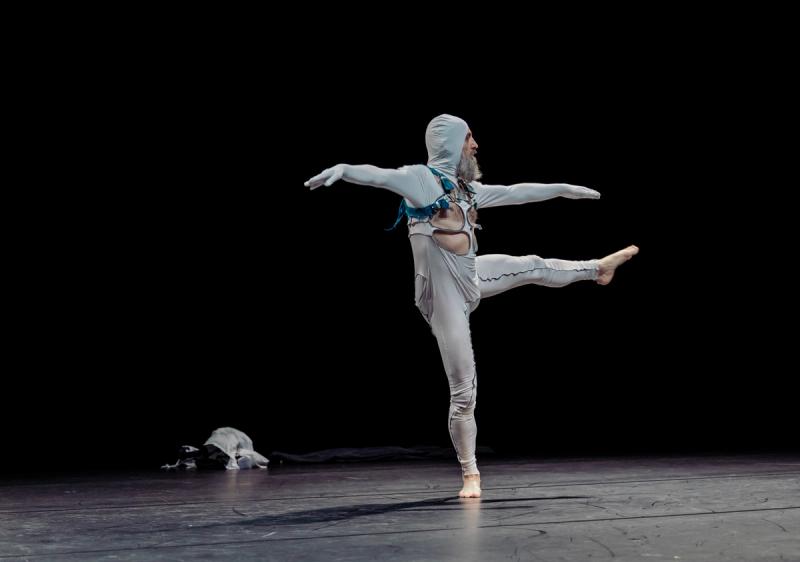
During a short break, when the audience is asked to go out into the foyer, I walk over to choreographer Mette Edvardsen’s stall of books that she sells through her publishing house Varamo Press. I buy a book I have wanted for a long time, namely Kritik av konstens frihet: en motrapport by Gustav Strandberg, Kim West, and Josefine Wikström. It addresses the report “Så fri är konsten,” published by the Swedish Agency for Cultural Policy Analysis (2021), which claims that politically correct cultural-policy steering of art is taking place in Sweden and that this in turn has a negative effect on artistic freedom. The counter-report, by contrast, maps serious, systematic violations of artistic freedom and the arm’s-length principle. After the somewhat unclear distinction between the Directorate of Culture and the Arts Council here at home, and the striking withdrawal this autumn of already-awarded support for choreographer Hooman Sharifi’s Impure Company, I think it is important to keep a close eye on what is happening in cultural politics both here and in other comparable countries, and to mobilize forces. After the break, the choreographer Manuel Pelmus and the dancer Fredric Gies present their homage to The Green Table on the Main Stage, performed as a solo work. Four green fluorescent tubes form a square set diagonally across the middle of the stage. Gies enters in a black suit; he has a long beard. He makes theatrical gestures and movements with his mouth, as if speaking to the audience, while a techno-based soundscape plays. Eventually he takes off the suit, revealing a white tricot and a green harness underneath. He dances in a manner reminiscent of Jooss’s style, and together with the costume and the soundscape it looks both strange and fun. Gies fetches a large white flag, which he lifts, waves, and runs around the space with. It feels very refreshing to encounter an explicitly physical, performative, and visual expression that both contains clear references to The Green Table and also stands well on its own as an independent work.
I en kort pause der publikum bes gå ut i foajeen, går jeg bort til koreograf Mette Edvardsens bod med bøker hun selger gjennom sitt forlag Varamo Press. Jeg kjøper en bok jeg har ønsket meg lenge, nemlig Kritik av konstens frihet: en motrapport av Gustav Strandberg, Kim West og Josefine Wikström. Den tar for seg rapporten «Så fri är konsten», publisert av svenske Myndigheter for kulturanalys (2021) som påstår at det foregår en politisk korrekt kulturpolitisk styring av kunsten i Sverige som igjen påvirker den kunstneriske friheten negativt. Motrapporten kartlegger derimot alvorlige, systematiske overtredelser mot den kunstneriske friheten og prinsippet om armlengdes avstand. Etter det noe uklare skillet mellom Kulturdirektoratet og Kulturrådet her til lands, og høstens oppsiktsvekkende tilbaketrekning av allerede tildelt kunstnerskapsstøtte til koreograf Hooman Sharifis Impure Company, tenker jeg det er viktig å følge nøye med på hva som foregår i kulturpolitikken både her og i andre sammenliknbare land og mobilisere krefter. Etter pausen viser koreografen Manuel Pelmus og danseren Fredric Gies sin hyllest til The Green Table på Hovedscenen, utført som en soloforestilling. Fire grønne lysrør utgjør en firkant på skrå over midten av scenen. Gies entrer scenen i en svart dress, han har langt skjegg. Han gjør teatrale gester og bevegelser med munnen som om han snakker til publikum mens et teknobasert lydbilde spilles av. Etter hvert tar han av seg dressen og avslører en hvit tricot og en grønn harness under. Han danser på en måte som minner om stilen til Jooss, og sammen med kostymet og lydbildet ser det både underlig og gøy ut. Gies henter et stort hvitt flagg som han løfter opp, veiver og løper rundt i rommet med. Det oppleves svært forfriskende med et utpreget fysisk, performativt og visuelt uttrykk som både har tydelige referanser til The Green Table, men som også står godt på egen hånd som et selvstendig verk.
Antifascist world-makingAntifascistisk verdensskaping
Cveijc asks how knowledge of choreography, performance, and activism, through collaboration, self-organized communities, and alliances, can lead us toward antifascist “world-making.” The seminar appeared, in the very highest degree, academic, which is hardly surprising since most of the participants work within higher arts education. I nevertheless missed more experience-based contributions and conversations that could have complemented the more academic or institutionally affiliated presentations. Several of the questions reflected on are current questions that dance artists are living with, and it would have been interesting to hear from those directly concerned. Dance artists may also occupy a special position because they work with the body and perform physical labor, which has traditionally been low-status work. In addition, many dancers are women and queer people who challenge a masculine ideal of purity that fascism attempts to uphold. That dance artists are easy prey for right-wing forces became clear when the financier and internet personality Are Søberg, aka Sløseriombudsmannen, presented excerpts from primarily dance-art projects as part of his Christmas calendar in 2017 in order to sow doubt about public spending and the function of the Arts Council. In the aftermath of the seminar, I find myself wondering why this was not even mentioned, since it brought so much harassment and abuse for some and is a large part of the collective consciousness of the dance-art field. I am curious to see how this research develops further. There is no doubt that we need more such meeting places in which to discuss and reflect on today’s political reality from a dance-art perspective. The last time I attended a similar event was the exhibition and conversation program Cancel Culture Club and Spa at Nitja Centre for Contemporary Art in 2024, curated by the artists Hanan Benammar, Katrine Dirckinck-Holmfeld, and Miriam Haile. There we were given bathrobes and slippers and entered a room filled with soft beanbags and dimmed lighting. In a relaxed atmosphere, artists and academics gave experience-based presentations about the challenges they face in meeting political opposition from the far right, and about their artistic strategies for handling it. The Berlin-based artist Candice Breitz spoke about the situation of pro-Palestinian artists in Berlin who are losing support, while the social anthropologist Michelle Tisdel spoke about how difficult it is to get Norwegian colonial history onto school curricula. The historian of ideas Dag Herbjørnsrud showed concrete examples of how Norwegian public debate has changed in the wake of Donald Trump’s inauguration as president after the 2016 election, and the Fosen activists and artists Ida Benonisen and Mari Qviller set out their experiences of how being an artist means being better protected institutionally than being Sami. We can certainly look to dance history for answers to how we are to make ourselves useless to fascism. Then we will see clearly that we must refrain from entering into collaborations with right-wing forces, regardless of what career-enhancing opportunities are offered. If, however, we want a dance art that is useful for antifascist resistance, I believe more of the answers are to be found among today’s dance artists and in their experiences of standing firm through the storm from the right.
Cveijc spør hvordan kunnskapen om koreografi, performance og aktivisme – gjennom samarbeid, selvorganiserte fellesskap og allianser – kan føre oss mot antifascistisk «verdensskaping». Seminaret fremstod i aller høyeste grad akademisk, noe som ikke er så rart siden flesteparten av deltagerne har sitt virke innenfor høyere kunstutdanninger. Jeg savnet imidlertid flere erfaringsbaserte innlegg og samtaler som kunne komplementert de mer akademiske eller institusjonstilknyttede innleggene. Flere av problemstillingene det ble reflektert over er aktuelle problemstillinger som dansekunstnere står i, og det hadde vært interessant å høre ifra dem det gjelder. Dansekunstnere står muligens også i en særstilling fordi de jobber med kroppen og utfører fysisk arbeid, noe som tradisjonelt er lavstatusarbeid. I tillegg er mange dansere kvinner og skeive som utfordrer et maskulint renhetsideal som fascismen forsøker å opprettholde. At dansekunstnere er et lett bytte for høyreorienterte krefter ble tydelig da finansmann og internettprofil Are Søberg aka Sløseriombudsmannen presenterte utdrag fra hovedsakelig dansekunstprosjekter som en del av sin julekalender i 2017 for å så tvil om offentlig pengebruk og Kulturrådets funksjon. I ettertid av seminaret undrer jeg meg over hvorfor dette ikke engang ble nevnt siden det førte med seg så mye trakassering og hets for enkelte og er en stor del av den kollektive bevisstheten i dansekunstfeltet. Jeg er nysgjerrig på hvordan dette forskningsarbeidet utvikles videre. Det er ingen tvil om at vi trenger flere slike møteplasser for å diskutere og reflektere over dagens politiske virkelighet i et dansekunstperspektiv. Sist gang jeg var på et liknende arrangement var utstillingen og samtaleprogrammet Cancel Culture Club og Spa på Nitja senter for samtidskunst i 2024, kuratert av kunstnerne Hanan Benammar, Katrine Dirckinck-Holmfeld og Miriam Haile. Her fikk vi ha på oss morgenkåper og slippers og gå inn i et rom fylt med mjuke sakkosekker og dempet belysning. I en avslappet atmosfære holdt kunstnere og akademikere erfaringsbaserte innlegg om sine utfordringer i møte med politisk motstand fra ytre høyre og deres kunstneriske strategier for å håndtere dette. Den Berlinbaserte kunstneren Candice Breitz fortalte om situasjonen for pro-palestinske kunstnere i Berlin som mister støtte, mens sosialantropologen Michelle Tisdel fortalte om hvor vanskelig det er å få norsk kolonihistorie inn på pensum i skolen. Idéhistoriker Dag Herbjørnsrud viste konkrete eksempler på hvordan norsk samfunnsdebatt har endret seg i etterkant av innsettelsen av Donald Trump som president etter valget i 2016, og Fosen-aktivistene og kunstnerne Ida Benonisen og Mari Qviller la ut om sine erfaringer om at det å være kunstner er å være bedre institusjonelt beskyttet enn å være same. Vi kan godt se til dansehistorien for svar på hvordan vi skal gjøre oss unyttige for fascismen. Da vil vi se tydelig at vi må la være å inngå samarbeid med høyreorienterte krefter, uavhengig av hvilke karrierefremmende muligheter som tilbys. Ønsker vi oss imidlertid en dansekunst som er nyttig for antifascistisk motstand, tror jeg flere av svarene finnes blant dagens dansekunstnere og deres erfaringer med å stå støtt gjennom blesten fra høyre.