Kazakhstan, Kyrgyzstan and Armenia’s Economies Received an Additional Boost from Anti-Russian Sanctions
Rakhim Oshakbayev argues that the EAEU has acted less as a driver of growth than as a protective shield for Kazakhstan and its partners amid sanctions pressure on Russia.
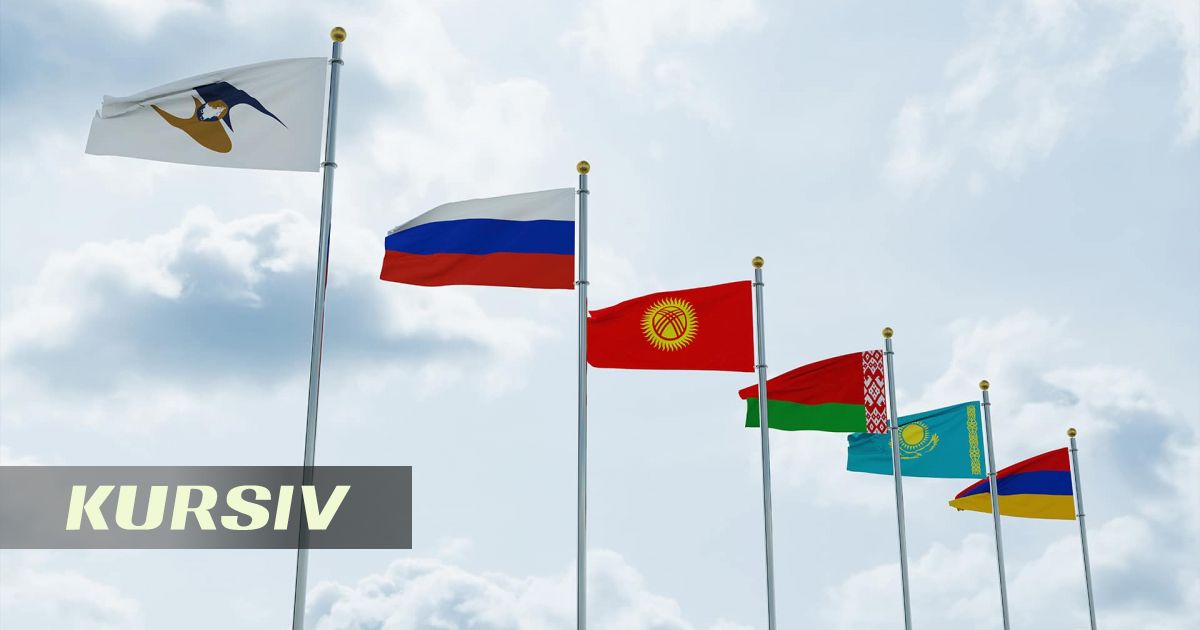
Экономики Казахстана, Кыргызстана и Армении получили дополнительное развитие на фоне антироссийских санкций, принятых в последние годы, заявил директор Центра прикладных исследований «Талап» Рахим Ошакбаев, который в 2015-2016 годы являлся вице-министром по инвестициям и развитию (сейчас министерство промышленности и строительства).
The economies of Kazakhstan, Kyrgyzstan, and Armenia have received an additional boost against the backdrop of the anti-Russian sanctions adopted in recent years, said Rakhim Oshakbayev, director of the Talap Center for Applied Research, who in 2015-2016 served as vice minister for investment and development, now the Ministry of Industry and Construction.
Казахстан, Россия, Кыргызстан, Армения и Беларусь являются членами Евразийского экономического союза (ЕАЭС).
Kazakhstan, Russia, Kyrgyzstan, Armenia, and Belarus are members of the Eurasian Economic Union, the EAEU.
«В моменте, во всяком случае после начала войны в Украине, самые высокие темпы роста считаются в Армении и Кыргызстане за счет того, что они стали использовать те возможности для реэкспорта определенных подсанкционных товаров, привлекли на себя очень много инвестиций, экономической активности и достигли просто гигантских размеров экономического роста и экономического бума», – сказал он в ходе форума AlinEX в Алматы.
“At this point, at any rate since the start of the war in Ukraine, the highest growth rates are being recorded in Armenia and Kyrgyzstan, because they began to use the opportunities for re-exporting certain sanctioned goods, attracted a great deal of investment and economic activity, and achieved simply gigantic levels of economic growth and an economic boom,” he said during the AlinEX forum in Almaty.
According to him, membership in the EAEU has played a major positive role for Kazakhstan and the union’s other member states under conditions of sanctions pressure on the Russian Federation.
По его словам, членство в ЕАЭС оказало большую положительную роль для Казахстана и других государств-членов союза в условиях санкционного давления на РФ.
“If we are talking about Kazakhstan, Russia is the largest trading partner... Fifty percent of food in Kazakhstan is imported from Russia. Fundamental export routes pass through Russia, above all the CPC, the Caspian Pipeline Consortium, and Atyrau-Samara. Around 90% of the oil we export... goes through Russia,” he noted.
«Если мы говорим про Казахстан – Россия является крупнейшим торговым партнером… 50% продовольствия в Казахстане импортируется из России. Через Россию проходят фундаментальные экспортные маршруты, в первую очередь КТК (Каспийский трубопроводный консорциум. – «Курсив»), Атырау – Самара. Около 90% нефти, которую мы экспортируем… идет через Россию», – отметил он.
Oshakbayev believes that being in the EAEU helped Kazakhstan offset possible sanctions risks connected with Russia.
Ошакбаев считает, что присутствие в ЕАЭС помогло Казахстану нивелировать возможные санкционные риски, связанные с Россией.
“The unprecedented isolation that would have happened to Russia would have produced a very large economic shock, including for Kazakhstan. Accordingly, we would not have been able to export oil. We would immediately have lost 70-80% if we had not been under the EAEU umbrella. So the EAEU, in my view, became not so much a driver of development as a very substantial protective shield,” he said.
«Беспрецедентная изоляция, которая бы случилась с Россией, дала бы очень большой экономический шок, в том числе на Казахстан. Соответственно, мы не смогли бы экспортировать нефть. Мы сразу бы лишились 70-80%, если бы не были под зонтиком ЕАЭС. Поэтому ЕАЭС, на мой взгляд, стал не столько драйвером развития, а выступил очень большим защитным щитом», – сказал он.
According to him, Kazakhstan is complying with the sanctions regime.
По его словам, Казахстан соблюдает санкционный режим.
“In the absence of customs controls, an external third party that imposed sanctions, and it is important to understand that these sanctions are illegal. A third party imposed sanctions: these are not UN sanctions, they are sanctions by the European Union and the United States, which instruct us, a third country that is not taking part in the conflict, whom to trade with and whom not to trade with. But we are forced to comply with them,” the expert noted.
«В отсутствие таможни внешняя третья сторона, которая наложила санкции, а важно понимать, что эти санкции незаконны. Это третья сторона наложила санкции – это не санкции ООН, это санкции Евросоюза и США, которые предписывают нам, третьей стране, которая не участвует в конфликте, с кем торговать или не торговать. Но мы вынуждены их соблюдать», – отметил эксперт.
Oshakbayev recalled that banks also comply with the sanctions restrictions.
Ошакбаев напомнил, что банки также соблюдают санкционные ограничения.
“Because our banking system would simply collapse. Our gold and foreign exchange reserves would be frozen, the banks’ reserves would be frozen, and then a total collapse would ensue,” he said.
«Потому что наша банковская система просто ляжет. Будут заморожены наши золотовалютные резервы, резервы банков и тут полный коллапс наступит», – сообщил он.
He noted that Russians had expressed dissatisfaction to him over the fact that Kazakhstan complies with Western sanctions.
Он отметил, что россияне высказывали ему недовольство тем, что в Казахстане соблюдают западные санкции.
Earlier, the expert expressed the opinion that in Kazakhstan the growing level of consumption is increasingly being supported not by household incomes, but by expensive consumer loans, which is intensifying the debt burden and social inequality. Against this backdrop, inflation is hitting low-income groups harder, while over-indebtedness is already becoming a systemic risk for the economy.
Ранее эксперт высказал мнение, что в Казахстане растущий уровень потребления все больше поддерживается не доходами населения, а дорогими потребительскими кредитами, что усиливает долговую нагрузку и социальное неравенство. На этом фоне инфляция сильнее бьет по малообеспеченным, а закредитованность уже становится системным риском для экономики.