Sushi’s Epic Journey: From Slow-Fermented Fish to Global Fast-Food Culture
Sushi’s history runs from the fermented fish cultures of Southeast Asia through Edo’s nigirizushi to a global cuisine whose vitality lies precisely in its capacity to transform.
Sushi’s Epic Journey: From Slow-Fermented Fish to Global Fast-Food Culture: Vanishing Vestiges of Sushi’s Origins
Sushi’s Epic Journey: From Slow-Fermented Fish to Global Fast Food Culture Food and Drink- English - 日本語 - 简体字 - 繁體字 - Français - Español - العربية - Русский Vanishing Vestiges of Sushi’s Origins
The origins of sushi are generally traced to narezushi, a form of fish slowly fermented over time.(*1) That ancient practice survives today in funazushi, a specialty of the region around Lake Biwa in western Japan.
The roots of sushi are usually traced to a type of slow-fermented fish known as narezushi.(*1) That ancient tradition still survives in the form of funazushi, a specialty of the area around Lake Biwa in Western Japan.
Funazushi is made from nigoro-buna, a freshwater fish native to Lake Biwa. The raw fish is salted and cured for several months, then packed with cooked rice and left for roughly a year in an anaerobic environment. In the course of this pickling, lactic-acid fermentation gives the fish a distinctive umami and softens it until it can be eaten bones and all.
Funazushi is made from nigoro-buna, a freshwater fish native to Lake Biwa. The raw fish is salt-cured for several months, then pickled with cooked rice in an anaerobic environment for about a year. During the pickling, lacto-fermentation imparts a unique umami to the fish and tenderizes it to the point where it can be eaten bones and all.
Fermented fish, it must be said, is an acquired taste. To the uninitiated, its smell is sometimes likened to rotting garbage. Yet to gourmands and local people accustomed to its unmistakable aroma, it is a delicacy of the first order. It is an ideal companion to sake and other drinks, and it is also delicious served over rice with salted kelp and hot green tea as ochazuke.
Mind you, fermented fish is an acquired taste. In fact, the uninitiated sometimes compare the smell to that of rotting garbage. But to foodies and locals accustomed to its distinctive odor, it is a top-tier delicacy. The perfect accompaniment to sake or other alcoholic beverages, it is also delicious when served on rice with some salted kelp and hot green tea to make ochazuke.
Funazushi is reasonably well known in Japan, but how many people have actually eaten it? I once put that question to an audience while lecturing at a university near Lake Biwa. Of several hundred students, only a handful raised their hands.
Funazushi is fairly well known in Japan, but how many people have actually tasted it? I once posed this question to my audience when delivering a lecture at a university near Lake Biwa. Out of several hundred students, only a few raised their hands.
Today in particular, with inexpensive kaitenzushi, or conveyor-belt sushi, chains everywhere, almost everyone in Japan has eaten sushi at one time or another. Yet the fermented ancestor of this beloved food seems to be in danger of disappearing.
Especially nowadays, with the proliferation of economical kaitenzushi (conveyor-belt sushi) chains, almost everyone in Japan has eaten sushi at one time or another. But the fermented ancestor of that beloved dish appears to be in danger of extinction.
The Southeast Asian ConnectionThe Southeast Asian Connection
Ironically, my own immersion in Japanese food culture began in Southeast Asia.
Ironically, my immersion in Japanese food culture began in Southeast Asia.
Nearly fifty years ago, when I was a young journalist covering the Cambodian civil war, I set up house in a rural community in Thailand. There was nothing to eat but local produce and local fare, so I ate a great deal from street stalls. The sharp fragrance of fresh spices was new to me, yet in the aromas and flavors there was also something reassuringly familiar.
Nearly 50 years ago, as a fledgling journalist covering the Cambodian civil war, I set up house in a rural community in Thailand. There was nothing available to eat but local products, so I consumed a lot of street food. While the tang of the fresh spices was new to me, there was also something comfortingly familiar about the aromas and flavors.
Intrigued by this mystery, I decided to learn more about the local culture, beginning with its food. Guided by local friends, I made the rounds of the markets. They welcomed me into their kitchens and taught me how to cook what they ate. Then we ate it together.
Intrigued by this mystery, I resolved to learn more about the local culture, starting with the food. With some local friends as my guides, I toured the area’s markets. They welcomed me into their kitchens and taught me how to cook their food. We ate it together.
What revealed itself to me was the umami of fermented fish.
The secret that revealed itself to me was the umami of fermented fish.
One important source of that umami is fish sauce, used as a basic seasoning across much of Southeast Asia: Thailand has nam pla, now fairly well known in Japan; Vietnam has nuoc mam; southern China has yulu. Fermented fish sauce is also found in certain parts of Japan, notably Akita Prefecture’s shottsuru and the ishiri traditionally made on the remote Noto Peninsula.
One key source of this umami is fish sauce, which is used as a basic seasoning agent in much of Southeast Asia: Thailand has its nam pla (fairly well known in Japan these days); Vietnam, its nuoc mam; southern China its yulu. Fermented fish sauce can also be found in certain regions of Japan—notably, the shottsuru of Akita Prefecture and the ishiri traditionally produced on the remote Notō Peninsula.
Another source of umami in Southeast Asian cooking is a paste made from salted, fermented seafood. This paste, known by many names, closely resembles the Japanese product called shiokara, a salty, savory condiment made from squid or fish together with their viscera. But whereas Japanese shiokara is usually nibbled as an accompaniment to drink, the Southeast Asian version is used as a seasoning.
Another source of umami in Southeast Asian cuisine is fish paste made from salted, fermented seafood. This paste (for which there are many names) corresponds closely to the Japanese product known as shiokara, a salty and savory condiment made with squid or fish and their viscera. But while Japanese shiokara is typically nibbled as an accompaniment to alcohol, the Southeast Asian version is used as a seasoning.
I realized that the umami produced by fermentation was a feature shared by Southeast Asian cuisine and the Japanese flavors with which I had grown up. This was why the supposedly exotic tastes of Thailand somehow stirred nostalgia in me. I later learned that other neighboring countries shared the same inclination; fermented fish paste, for example, is also used to season kimchi.
I realized that the umami produced through fermentation was a feature common to Southeast Asian cuisine and the Japanese flavors I grew up with. This was what made the presumably exotic tastes of Thailand somehow nostalgic. I later learned that other neighboring countries share in this proclivity (for example, fermented fish paste is also used to season kimchi).
From Fish Sauce to Sushi?
From Fish Sauce to Sushi?
Fish sauce such as nam pla was originally a liquid by-product of the process of fermenting fish paste, just as soy sauce began as the liquid that pooled during miso fermentation, hence the term tamari.
Fish sauce like nam pla was originally a liquid byproduct of the fish-paste fermentation process, much as soy sauce originated with the liquid that collected (hence the term tamari) in fermenting miso.
How, then, does all this connect to sushi?
So, how does this all relate to sushi?
Thailand and Laos, it turns out, both have their own versions of narezushi: salted fish fermented in rice. These almost certainly predate Japan’s funazushi. The Thai term is pla som, or “sour fish.” Like shiokara, narezushi began as a way to preserve fish left over from a large catch. This method of preservation is thought to have originated in the interior of Southeast Asia, either in the region of northern Thailand and Laos or in southern China, perhaps in the area of present-day Guizhou Province. It was probably brought to ancient Japan from the Asian continent together with the techniques of rice cultivation. References to preserved fish appear in some of Japan’s earliest written records, including the wooden tablets, or mokkan, of the Nara period (710-794) and Heian-period (794-1185) works such as the Engishiki, or Procedures of the Engi Era, and the Konjaku monogatari, Anthology of Tales Old and New.
It turns out that Thailand and Laos both have their own versions of narezushi—salted fish fermented in rice—which almost certainly preceded Japan’s funazushi. The Thai term is pla som, or “sour fish.” Like shiokara, narezushi originated as a means of preserving fish left over from a big catch. This method of preservation is thought to have originated in the interior of southeastern Asia, either in the area of northern Thailand and Laos or in southern China (possibly in the region of what is now Guizhou province). It was probably imported to ancient Japan from the Asian continent along with the technique of rice cultivation. References to preserved fish occur in some of Japan’s earliest written records, including the wooden tablets (mokkan) of the Nara period (710–94) and such Heian-period (794–1185) writings as the Engishiki (Procedures of the Engi Era) and the Konjaku monogatari (Anthology of Tales Old and New).
Today, the funazushi found around Lake Biwa is practically the only surviving trace in Japan of this ancient tradition. At one time, however, narezushi seems to have been made throughout the country using many kinds of freshwater fish.
Nowadays, the funazushi found in the environs of Lake Biwa is practically the only vestige of this ancient tradition still extant in Japan. But at one time, narezushi seems to have been made all around the country using a variety of freshwater fish.
Sometime during the Azuchi-Momoyama period (1573-1600), quicker methods of preservation began to displace this technique. Sometimes the fish was fermented only briefly, in a method known as nama-nare. Another way to preserve fish quickly was to pickle it in rice koji, steamed rice on which a special mold has been cultivated. Izushi, still found in parts of Tohoku and Hokkaido, is an example of this method.
Sometime in the Azuchi-Momoyama period (1573–1600), quicker methods of preservation began to replace this technique. Sometimes the fish was fermented only briefly, in a technique referred to as nama-nare. Another means of preserving fish quickly was to pickle it in rice kōji (steamed rice on which a special mold has been cultivated). Izushi, still found in parts of Tōhoku and Hokkaidō, is an example of this technique.
Edo and the Birth of NigirizushiEdo and the Birth of Nigirizushi
But how did all this give rise to the food we now imagine when we hear the word sushi?
But how did all of this yield the dish we think of today when we hear the word sushi?
Although Japanese people have eaten raw fish, or sashimi, since ancient times, the pairing of sashimi with vinegared rice, what we call Edomae sushi, is a comparatively recent development. Vinegared rice probably emerged as a quick substitute for rice made sour through lactic-acid fermentation. The marriage of vinegared rice and sashimi occurred sometime in the Edo period (1600-1868). The same era saw the spread of wasabi cultivation and the broad production and consumption of soy sauce in the form we know today. Thus all the basic elements of modern sushi came together in the Edo period.
Although Japanese people have been eating raw fish, or sashimi, since ancient times, the pairing of sashimi with vinegared rice—what we call Edomae sushi—is a relatively recent phenomenon. Vinegared rice probably emerged as a quick substitute for rice made sour through lacto-fermentation. The marriage of vinegared rice and sashimi occurred sometime in the Edo period (1600–1868). The same era witnessed the spread of wasabi cultivation and the widespread production and consumption of soy sauce as we know it. In this way, all the basic components of modern-style sushi came together in the Edo period.
Nigirizushi, hand-pressed sushi topped with seafood, was born in the city of Edo, present-day Tokyo, and the term Edomae is still used to designate this style of sushi. Other regional forms developed as well, among them chirashizushi, or “scattered” sushi; oshizushi, pressed sushi; and inarizushi, sushi rice tucked into sweet-salty pouches of fried tofu. For many years, however, hand-formed nigirizushi was regarded as the quintessential Edo dish.
Nigirizushi (hand-molded seafood-topped sushi) was born in the city of Edo (modern-day Tokyo), and the term Edomae is still used to specify this style of sushi. Other regional versions developed as well, including chirashizushi (“scattered” sushi), oshizushi (pressed sushi), and inarizushi (sushi rice stuffed into sweet-and-savory fried-tōfu pouches). But hand-formed nigirizushi was for many years regarded as a quintessentially Edo dish.
In its early form, Edomae sushi differed somewhat from the sushi familiar to most of us today. The seafood component was often something simmered, such as clams or eel, or fish cured with vinegar, such as kohada, a kind of shad. Raw tuna was popular, but it was generally served after being marinated in soy sauce, an option that appears on modern sushi menus as zuke.(*2)
In its early form, Edomae sushi was a bit different from the sushi familiar to most of us today. The seafood component was often either a simmered item, such as clams or eel, or a vinegared fish, such as kohada (a variety of shad). Raw tuna was popular, but it was generally served marinated in soy sauce—an option that appears as zuke on modern-day sushi menus.(*2)
Edomae sushi was popularized by Edo’s flourishing street-food vendors, alongside tempura and soba noodles, but it was also served in high-end specialty shops catering to the affluent. The same two-tiered structure we see today, with widely accessible kaitenzushi on one side and expensive Ginza establishments on the other, seems to have existed almost from the beginning. Incidentally, kaitenzushi made its debut in Osaka in 1958 and spread nationwide in the wake of Expo ’70 in Osaka.
Although popularized by Edo’s thriving street-food vendors (along with tempura and soba noodles), Edomae sushi was also served at high-end specialty shops catering to the well-heeled. The same dual-tiered structure that we see today—represented by widely accessible kaitenzushi on the one hand and pricey Ginza eateries on the other—seems to have existed almost from the start. (Incidentally, kaitenzushi debuted in Osaka in 1958 and spread nationwide in the wake of Osaka Expo 1970.)
From Edo Specialty to National FavoriteFrom Edo Specialty to Pan-regional Favorite
Two historical developments helped accelerate the evolution of nigirizushi from a local Edo specialty into a favorite across Japan.
Two historical developments helped accelerate the evolution of nigirizushi from a local Edo specialty into a nationwide favorite.
The first was the Great Kanto Earthquake of 1923. In the aftermath of that disaster, which destroyed much of the capital, many Tokyo residents and Tokyo businesses moved to other urban centers, carrying the region’s food culture with them. The second was the food shortages and economic controls of the years after World War II, when rice balls, or onigiri, became popular nationwide both as a convenient meal for people on the move and as a way to stretch limited supplies of rice.
The first was the Great Kantō Earthquake of 1923. In the wake of that disaster, which destroyed much of the capital, many Tokyoites and Tokyo businesses relocated to other urban centers, taking the region’s food culture with them. The second was the food shortages and economic controls of the post–World War II years, when rice balls (onigiri) gained nationwide popularity as a convenient meal for people on the move, as well as a means of stretching limited rice supplies.
Of course, the dawn of modern refrigeration technology and the development of nationwide distribution networks were also crucial to the spread of Edomae sushi. With the advent of kaitenzushi and similar casual restaurants, sushi emerged as a favorite across regions. This development more or less coincided with the spread of fast food and family restaurants in the 1970s and 1980s.
Of course, the dawn of modern refrigeration technology and the development of nationwide distribution networks were also key factors in the spread of Edomae sushi. With the advent of kaitenzushi and similar casual restaurants, sushi emerged as a pan-regional favorite. This development more or less coincided with the spread of fast food and family restaurants in the 1970s and 1980s.
Sushi Goes InternationalSushi Goes International
When I first visited the United States in the 1970s, sushi shops were confined to places like Little Tokyo in Los Angeles and patronized mainly by Japanese people and Japanese Americans. Thailand, too, had a few sushi shops when I lived there, but these also catered chiefly to Japanese expatriates. They were places where one took family or business associates for a treat.
When I first visited the United States, in the 1970s, sushi shops were limited to places like Little Tokyo in Los Angeles and patronized mainly by Japanese and Japanese-Americans. Thailand also had a few sushi shops back when I lived there, but these, too, catered primarily to Japanese expatriates. They were places to treat one’s family or business associates.
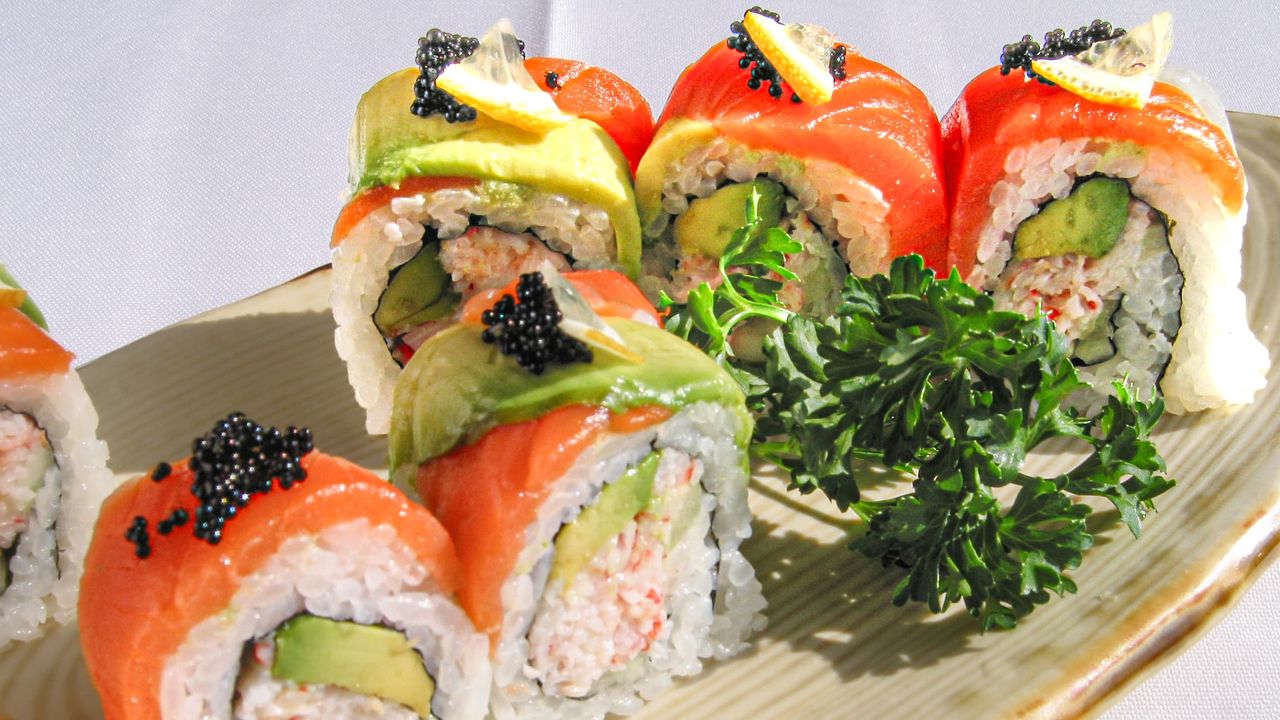
All that began to change in the 1980s. It was a time when Japanese food was gaining adherents in the West as the basis of a healthy diet. The California roll, made with raw salmon and avocado, became the popular “starter sushi” that won over many Americans.
All that began to change in the 1980s. It was an era when Japanese food was gaining Western adherents as the basis of a healthy diet. The California roll, made from raw salmon and avocado, was the popular “starter sushi” that got many Americans hooked.
Of course, some newcomers resisted the idea of eating raw fish. In many cases, however, they came to see that, in terms of texture, it was not so different from eating smoked salmon, oysters on the half shell, or pickled herring. Further advances in refrigeration and distribution helped, as did diligent efforts to export Japanese knowledge of fish processing.
Of course, some novices resisted the idea of consuming raw fish. But in many cases, they came to see that it was not so different, texturally speaking, from eating smoked salmon, oysters on the half-shell, or pickled herring. Further improvements in refrigeration technology and distribution helped, as did diligent efforts to export Japanese fish-processing know-how.
In this way, sushi has become an international food, exceeding the category of “Japanese cuisine.” It is a staple in the takeout sections of supermarkets and convenience stores throughout Asia. I have seen it served as part of an in-flight meal on a South American airline and offered as a standard choice in non-Japanese restaurants in New Zealand.
In this way, sushi has become an international food item, transcending the category of “Japanese cuisine.” It is a staple of the takeout sections of supermarkets and convenience stores all over Asia. I have seen it served as part of an in-flight meal on a South American airline and offered as a standard choice in non-Japanese restaurants in New Zealand.
In many cases, the overseas version differs little from the sushi we know in Japan. In some instances, however, the transformation can be startling: a deep-fried sushi roll topped with jalapeno pepper, devised by a certain Mexican chef, for example.
In many cases, the overseas version differs little from the sushi we know in Japan, but in some instances the transformation is quite eye-opening—like the deep-fried sushi roll topped with jalapeno pepper cooked up by a certain Mexican chef . . .
Let us resist the temptation to denounce such deviations as heresy, as some critics in Japan are inclined to do. A nation that created mentaiko spaghetti, pasta in a sauce of spicy cod roe, and katsu curry, pork cutlet with Japanese-style curry over rice, has no standing to pass that judgment. We should recognize that a dish can enter the ranks of “international cuisine” only when it has transcended the food culture of its native country. At the same time, we may take comfort in the fact that amid this feverish diversification, connoisseurs from around the world still make pilgrimages to Ginza’s revered sushi shops, which continue to set the standard for true Edomae sushi.
Let us resist the temptation to reject such deviations as heresy (as some critics in Japan are wont to do). The nation that developed mentaiko spaghetti (pasta in a sauce of spicy cod roe) and katsu karē (fried pork cutlets and Japanese-style curry on rice) has no right to pass such judgments. We should acknowledge that a dish can only join the ranks of “international cuisine” when it has transcended the food culture of its native country. But we can also take comfort in the fact that, amid this frenzied diversification, aficionados worldwide still make the pilgrimage to Ginza’s hallowed sushi shops, which continue to set the standard for true Edomae sushi.
(*1) In Japanese compounds, the word sushi undergoes a voicing shift and becomes zushi. The Japanese word sushi was originally written with the character 鮓, which in ancient Chinese texts refers to salted, fermented fish. The characters commonly used today, 寿司, were first applied in the Edo period.
(*1) ^ In Japanese compounds, the word sushi undergoes a voicing shift to become zushi. The Japanese word sushi was originally written with the character 鮓, which refers to salted fermented fish in ancient Chinese texts. The characters commonly used today, 寿司, were first applied in the Edo period.
(*2) The term Edomaezushi is sometimes used to refer specifically to this older style of nigirizushi.
(*2) ^ The term Edomaezushi is sometimes used to refer specifically to this older style of nigirizushi.