Martin Jay’s Habermas
Habermas’s lasting legacy lies not only in communicative rationality, but in the disciplined art of listening that made critique an intersubjective, democratic practice.
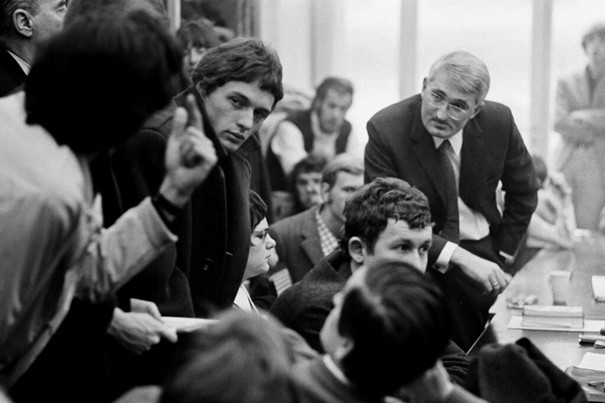
I first met Jürgen Habermas in January 1969, when I went to Frankfurt to do research for my doctoral dissertation on the Institut für Sozialforschung. Because my work dealt with the Institute’s history up to 1950, he could not be counted among the principal actors in my story; nonetheless, he generously shared his time and advice with me. At that point there was as yet no talk of a “second generation” of the Frankfurt School, of which he would later become the most distinguished figure. Indeed, the leading names of the first generation, Max Horkheimer, Theodor W. Adorno, Herbert Marcuse, Leo Lowenthal, and Friedrich Pollock, were still alive and intellectually active.
Jürgen Habermas'la ilk kez, Ocak 1969’da, Institut für Sozialforschung üzerine hazırladığım doktora tezim için araştırma yapmak amacıyla Frankfurt’a gittiğimde tanıştım. Çalışmam, Enstitünün 1950’ye kadarki tarihini ele aldığı için onun doğrudan hikâyemin başlıca aktörlerinden biri sayılması mümkün değildi; buna rağmen zamanını ve tavsiyelerini cömertçe benimle paylaştı. O sıralarda, ileride en seçkin figürü hâline geleceği “Frankfurt Okulu’nun ikinci kuşağı”ndan henüz söz edilmiyordu. Nitekim birinci kuşağın önde gelen isimleri—Max Horkheimer, Theodor W. Adorno, Herbert Marcuse, Leo Lowenthal ve Friedrich Pollock—hâlâ hayattaydı ve entelektüel bakımdan etkinliklerini sürdürüyorlardı.
Although his work was only beginning to be translated into English, Habermas, not yet forty, had acquired an exceptionally strong position in Germany. More than that, he had already become a contested public figure at a moment when Critical Theory’s fraught relation to emancipatory praxis was being tested by students demanding that their teachers support a radical agenda. Habermas, like Marcuse, tried again and again to enter into dialogue with the students, thereby challenging the image of the Frankfurt School as a group of aloof mandarins lingering, in Georg Lukács’s oft-quoted phrase, in the “Grand Hotel Abyss.”
Çalışmaları henüz İngilizceye çevrilmeye başlanmış olsa da, kırk yaşına bile gelmemiş olan Habermas Almanya’da son derece güçlü bir mevki edinmişti. Dahası, Eleştirel Teori’nin özgürleştirici praksisle kurduğu sancılı ilişkinin, hocalarından radikal bir gündemi desteklemelerini talep eden öğrenciler tarafından sınandığı bir dönemde, zaten tartışmalı bir kamusal figüre dönüşmüştü. Habermas, tıpkı Marcuse gibi, öğrencilerle tekrar tekrar diyaloğa girmeye çalıştı; böylece Frankfurt Okulu’nun -Georg Lukács’ın sıkça alıntılanan ifadesiyle- “uçurumun kıyısındaki büyük otel”de oyalanan mesafeli mandarinlerden ibaret olduğu yönündeki imgeye meydan okudu.
On a spectrum extending from Horkheimer, who was under no circumstances sympathetic to the student movement, to Marcuse, who called for solidarity with their cause, Habermas found himself uneasily somewhere in the middle. It was clear to him that what he would later call Adorno’s “strategy of hibernation” was no longer the only option in an age when the “one-dimensionality” of the system was being challenged by meaningful protest. At the same time, he warned of the dangers of assuming that the system stood on the verge of collapse, or that there was nothing worth preserving in Germany’s process of recovery from its Nazi past. In June 1967, after the killing of the student Benno Ohnesorg during demonstrations against the Shah of Iran, Habermas warned against the voluntarism of radicals such as Rudi Dutschke, who wanted to trigger a revolution before objective conditions were ripe. But the German Socialist Student League (SDS) refused to soften its uncompromising militancy; in frustration, Habermas hurled at them the stinging insult “left fascism.”
Öğrenci hareketine hiçbir koşulda sempati duymayan Horkheimer ile davalarıyla dayanışma çağrısı yapan Marcuse arasında uzanan yelpazede Habermas, kendisini huzursuz bir biçimde ortalarda bir yerde konumlanmış buluyordu. Habermas’ın daha sonra Adorno’nun “kış uykusu stratejisi” diye adlandıracağı tutumun, sistemin “tek boyutluluğu”nun anlamlı protestolarla sorgulandığı bir çağda artık tek seçenek olmadığını kabul ettiği açıktı. Bununla birlikte, sistemin çöküşün eşiğinde olduğunu varsaymanın ya da Almanya’nın Nazi geçmişinden arınma sürecinde korunmaya değer hiçbir şey bulunmadığını düşünmenin de tehlikelerine dikkat çekiyordu. Haziran 1967’de, İran Şahı’na karşı düzenlenen gösteriler sırasında öğrenci Benno Ohnesorg’un öldürülmesinin ardından Habermas, nesnel koşullar henüz olgunlaşmadan devrimi tetiklemek isteyen Rudi Dutschke gibi radikallerin iradeciliğine karşı uyarıda bulunmuştu. Ancak Alman Sosyalist Öğrenci Birliği (SDS), uzlaşmaz militanlığını yumuşatmaya yanaşmadı; bunun üzerine Habermas, duyduğu hayal kırıklığıyla onlara “sol faşizm” şeklindeki sert hakareti yöneltti.
This is not the place to revisit the controversy that erupted after that provocative charge, which damaged Habermas’s reputation on the radical left for a generation. Still, however imprudent it may have seemed at the time, it must be acknowledged that the charge captured the “aggressive nationalist subtext” that anticipated the later turn of some radical leaders to the right, even to antisemitism. Beyond this, there is a more general point about Habermas’s willingness to confront his opponents in public spaces, however hostile his audience might be. His outburst, it should be noted, came during his second speech of the day; Habermas had returned at midnight and continued his efforts to dissuade the students from their maximalist agenda and from the temptation to use political violence to achieve it.
Bu yazıda Habermas’ın radikal soldaki itibarını bir kuşak boyunca zedeleyen ve söz konusu kışkırtıcı suçlamanın ardından patlak veren tartışmayı yeniden ele almak niyetinde değilim. Yine de, o dönemde ne kadar ihtiyatsız görünmüş olursa olsun, bu suçlamanın, daha sonra bazı radikal liderlerin sağa, hatta antisemitizme yönelişini önceleyen “saldırgan milliyetçi alt-metni”[2] yakalamış olduğunu teslim etmek gerekir. Bunun ötesinde, Habermas’ın, dinleyici kitlesinin ne denli düşmanca olduğuna bakmaksızın, muhalifleriyle kamusal alanlarda yüzleşmeye istekli oluşuna dair daha genel bir nokta da vardır. Nitekim onun öfke patlaması, belirtmek gerekir ki, gün içindeki ikinci konuşması sırasında yaşanmıştı; Habermas gece yarısı geri dönmüş ve öğrencileri maksimalist gündemlerinden ve bu hedefe ulaşmak için siyasal şiddete başvurma ayartısından vazgeçirmeye yönelik çabalarını sürdürmüştü.
What Habermas exemplified then and in the countless public debates in which he later took part was the ideal of the “engaged intellectual.” But this was not engagement in the conventional sense made famous after the war by Jean-Paul Sartre’s call for intellectuals to be engagé. The Sartrean version meant an unconditional, partisan commitment to a progressive cause, even the subordination of the intellectual’s independent thought to its service. It was above all this conclusion that Theodor W. Adorno opposed in his defiant essay “Resignation,” written shortly before his death, where he attacked “pseudo-activism” and the fetish of praxis while uncompromisingly defending the autonomy of theory. Habermas shared his teacher’s refusal to be browbeaten by those who incessantly invoked Karl Marx’s “Eleventh Thesis on Feuerbach” to justify disrupting the status quo “by any means necessary.” Unlike Adorno and Horkheimer, however, he believed the gulf between theory and praxis could at least be narrowed, and to that end he argued directly with his activist opponents. It is significant that he retained the militant Marxist Oskar Negt as his scientific assistant, even though Negt had edited a 1968 collection titled Die Linke antwortet Jürgen Habermas (The Left Answers Jürgen Habermas) and, with Alexander Kluge, developed a concept of the “proletarian public sphere” to rival Habermas’s bourgeois public sphere. Negt would later write admiringly: “Never again in my life did I meet a person who, in trying to find the truth, attached as much weight to the exchange of arguments as Habermas.”
Habermas’ın o dönemde ve sonrasında katıldığı sayısız kamusal tartışmada örneklediği şey, “angaje entelektüel” idealidir. Ancak bu, savaş sonrasında Jean-Paul Sartre’ın entelektüellerin “engagé” olması gerektiği yönündeki çağrısıyla meşhur ettiği geleneksel anlamda bir angajman değildi. Sartrecı versiyon, ilerici bir davaya kayıtsız şartsız, tarafgir bir bağlılığı, hatta entelektüelin bağımsız düşüncesinin o davanın hizmetine tâbi kılınmasını ifade ediyordu. Özellikle bu sonuca karşı çıkan kişi, ölümünden kısa süre önce kaleme aldığı ve teorinin özerkliğini tavizsiz biçimde savunduğu meydan okuyucu “Teslimiyet” makalesinde, “sözde-aktivizm”e ve praksis fetişizmine saldıran Theodor W. Adorno olmuştu.[3] Habermas da, statükoyu “gerekli her araçla” bozmayı meşrulaştırmak için durmaksızın Karl Marx’ın “Feuerbach Üzerine On Birinci Tez”ine başvuranların baskısına boyun eğmeme konusunda hocasıyla aynı çizgiyi paylaşıyordu. Ancak Adorno ve Horkheimer’dan farklı olarak, teori ile praksis arasındaki uçurumun en azından daraltılabileceğine inanıyor; bu amaçla da aktivist muhalifleriyle doğrudan tartışmaya giriyordu. Nitekim, militan Marksist Oskar Negt’i bilimsel asistanı olarak yanında tutmayı sürdürmesi anlamlıdır; üstelik Negt, 1968’de Die Linke antwortet Jürgen Habermas (Sol, Jürgen Habermas’a Yanıt Veriyor) başlıklı bir derleme yayımlamış ve Alexander Kluge ile birlikte, Habermas’ın burjuva kamusal alan anlayışına rakip olacak bir “proleter kamusal alan” kavramı geliştirmişti. Negt daha sonra hayranlıkla şöyle yazacaktı: “Hayatım boyunca bir daha, hakikati bulmaya çalışırken argüman alışverişine Habermas kadar önem veren bir insanla karşılaşmadım.”[4]
To borrow one of Habermas’s own favorite polemical strategies, there was no “performative contradiction” between his theory of “communicative action” and the role he assumed as a public intellectual. The former placed great value on the intersubjective exchange of ideas, regardless of inequalities of status or power among those who advanced them, in the hope that the better argument would prove persuasive. The latter took concrete form in a lifetime of interventions in the most urgent issues of the day, where the continuity between his most refined theoretical work and his advocacy of specific political positions can be plainly discerned.
Habermas’ın kendi favori polemik stratejilerinden birini ödünç alacak olursak, onun “iletişimsel eylem”[5] teorisi ile kamusal entelektüel olarak üstlendiği rol arasında herhangi bir “edimsel çelişki” yoktu. İlki, daha iyi argümanın ikna edici olacağı umuduyla, fikirlerin öznelerarası alışverişine, bu fikirleri ileri sürenlerin statü ya da güç eşitsizliklerinden bağımsız olarak büyük değer atfediyordu. İkincisi ise, dönemin en acil meselelerine ömür boyu yaptığı müdahalelerde somutlaşıyordu; burada, en rafine teorik çalışmaları ile belirli siyasal pozisyonları savunusu arasındaki süreklilik açıkça görülebilir.
Martin Jay and Jürgen Habermas in Munich on May 29, 2018. Photo courtesy of Martin Jay.
Martin Jay ve Jürgen Habermas, 29 Mayıs 2018’de Münih’te. Fotoğraf: Martin Jay’in izniyle.
All of this will surely be familiar to followers of Habermas and has often been cited as an example of the communicative rationality he defended over his long career. At its center lay the obligation to offer reasons and justifications for one’s views, rather than taking refuge in authority, intuition, or revelation. This approach formed the basis of his political faith in deliberative democracy, or what might be understood as the co-originality of reason and will in the production of legitimate political action. It was also the source of dissatisfaction among critics who were disappointed by even the slightest hint of a liberal or neo-Kantian reimagining of Critical Theory, insisting that its roots in Marxist historical materialism ought to be more explicitly acknowledged.
Bütün bunlar, Habermas’ın takipçileri için kuşkusuz iyi bilinen meselelerdir ve onun uzun kariyeri boyunca savunduğu iletişimsel rasyonalitenin örneği olarak sık sık anılmıştır. Bunun merkezinde, otoriteye, sezgiye ya da vahye sığınmak yerine, kişinin görüşleri için gerekçeler ve temellendirmeler sunma yükümlülüğü yer alıyordu. Bu yaklaşım, onun müzakereci demokrasiye duyduğu siyasal inancın ya da meşru siyasal eylemin üretiminde akıl ile iradenin eş-kökenliliği olarak görülebilecek düşüncenin temelini oluşturuyordu. Aynı zamanda, Eleştirel Teori’nin liberal ya da neo-Kantçı bir yeniden tahayyülüne dair en küçük bir ima karşısında bile hayal kırıklığı duyan eleştirmenlerin hoşnutsuzluğunun da kaynağıydı; çünkü bu eleştirmenler, Eleştirel Teori'nin Marksist tarihsel materyalizmdeki köklerinin daha açık biçimde kabul edilmesi gerektiğini savunuyorlardı.
Habermas was indeed a powerful advocate of expanding the discursive field Wilfrid Sellars called the “space of reasons,” and he never abandoned the public realm even when his arguments failed to prevail. Despite setbacks, he preserved the hope for a long-term “learning process” involving not only technological and scientific progress, but political and even moral improvement. As a child of the Nazi era, he came of age when Europe in general, and Germany in particular, had survived its “civilizational rupture” and finally cast its lot with the “unfinished project of modernity.” Against Max Horkheimer and Theodor W. Adorno’s bleak interpretation of the dialectical reversal in which reason had been reduced to its instrumental variant, Habermas objected that this interpretation was itself undialectical.
Habermas gerçekten de, Wilfrid Sellars’ın “gerekçeler uzamı” diye adlandırdığı söylemsel alanın genişletilmesinin güçlü bir savunucusuydu ve argümanları galebe çalmadığında bile kamusal alandan hiçbir zaman vazgeçmedi. Gerilemelere rağmen, yalnızca teknolojik ve bilimsel ilerlemeyi değil, siyasal hatta ahlaki gelişmeyi de içeren uzun erimli bir “öğrenme süreci” umudunu korudu. Nazi döneminin bir çocuğu olarak, Avrupa’nın genel olarak, Almanya’nın ise özel olarak kendi “uygarlık kırılması”ndan sağ çıkıp nihayet “tamamlanmamış modernlik projesi”yle kader birliği yaptığı bir dönemde yetişti. Max Horkheimer ile Theodor W. Adorno’nun, aklın araçsal varyantına indirgenmiş olduğu diyalektik tersine çevrilmeye ilişkin karamsar yorumuna karşı, Habermas bu yorumun kendisinin de diyalektik dışı olduğunu ileri sürerek direndi.
Much can be said about the basic optimism, perhaps even naivete, that nourished Habermas’s stubborn fidelity to the legacy of the Enlightenment. When the euphoria that followed the end of the Cold War and the expansion of the European Union as an engine of cosmopolitan post-nationalism faded, it began to seem as though his historical moment had passed. For those on the left who enjoyed competing with their right-wing counterparts in “owning the libs,” Habermas became an easy target. His respect for America as a beacon of deliberative democracy and a defender of human rights was discredited; his pacifist belief in “nie wieder Krieg,” “never again war,” was shattered. Cynical realists who claimed they had known all along that power always prevails over reason ironically found common ground with advocates of the Palestinian cause who were outraged by Habermas’s stubborn support for Israel’s right to exist.
Habermas’ın Aydınlanma mirasına inatçı bağlılığını besleyen temel iyimserlik, hatta belki saflık hakkında çok şey söylenebilir. Soğuk Savaş’ın sona ermesinin ve Avrupa Birliği'nin kozmopolit post-ulusalcılığın motoru olarak genişlemesinin ardından doğan coşku sönümlendiğinde, onun tarihsel ânının da geride kaldığı düşünülmeye başlandı. Sağcı muadilleriyle “liberalleri rezil etmek” yarışına girmeyi seven sol çevreler açısından Habermas kolay bir hedef hâline geldi. Habermas’ın, müzakereci demokrasinin işaret feneri ve insan haklarının koruyucusu olarak Amerika’ya duyduğu saygı itibarsızlaştırıldı; pasifist “nie wieder Krieg” —“bir daha asla savaş”— inancı ise paramparça oldu. Gücün her zaman akla üstün geldiğini baştan beri bildiklerini iddia eden alaycı realistler, ironik biçimde, Habermas’ın İsrail’in varolma hakkına yönelik inatçı desteğine öfke duyan Filistin davası savunucularıyla ortak bir zeminde buluştu.
Habermas himself was painfully aware of the gravity of the global situation and of what it meant for the realization of his hopes. During my last visit to Germany in September 2024, lamenting that we had been unable to meet because of his health problems, he wrote: “I would have liked so much to talk about the depressive state of our countries, and even of the world in general. I am more pessimistic than ever before.” For someone in his tenth decade, it cannot have been easy to wonder whether the life’s work he had pursued with such energy, and that had been greeted with such extraordinary interest around the world, had been in vain.
Habermas’ın kendisi de küresel durumun vahametinin ve bunun umutlarının gerçekleşmesi bakımından ne anlama geldiğinin acı bir şekilde farkındaydı. Eylül 2024’te Almanya’ya yaptığım son ziyaret sırasında, sağlık sorunları nedeniyle bir araya gelememiş olmamızdan yakınarak şöyle demişti: “Ülkelerimizin—hatta genel olarak dünyanın—içinde bulunduğu depresif durum hakkında konuşmayı çok isterdim. Şimdiye kadarki herhangi bir zamandan daha kötümserim.”[6] Yaşamının onuncu on yılına girmiş biri için, böylesine büyük bir enerjiyle sürdürdüğü ve dünya çapında olağanüstü bir ilgiyle karşılanan yaşama gayretinin boşuna olup olmadığını düşünmek kolay olmasa gerek.[7]
Now that he is no longer with us, and a general accounting of his extraordinary career can begin, it would be extremely unwise to measure his enduring legacy by the contingencies of the moment, or to erase seven decades of theoretical work and political intervention because of one mistake he made in his mid-nineties over the war in Gaza. Habermas’s voluminous corpus will remain not only a valuable resource for anyone concerned with the many philosophical, political, and social questions he addressed; the example he set as an “engaged intellectual” will endure as well. There was one aspect of his practice of communicative interaction, which I personally experienced many times, that deserves special emphasis. Jürgen Habermas knew that giving reasons and developing arguments was only one dimension of discursive deliberation, which is not merely a polemical, zero-sum struggle among fixed positions; equally important was knowing how to listen to the reasons and justifications of others in the conversation and being open to learning from them. The legal and political theorist Cass Sunstein put it very well in his obituary for Habermas: “He was so curious, and so generous. He was a bit formal, but so kind. He seemed like the world’s best listener.”
Artık aramızdan ayrılmış olduğuna göre ve olağanüstü kariyerinin genel muhasebesi yapılmaya başlanabilecekken, onun kalıcı mirasını anlık konjonktürün değişkenleriyle ölçmek ya da Gazze savaşı konusunda doksanlı yaşlarının ortalarında yaptığı bir hatadan dolayı yetmiş yıllık teorik çalışma ile siyasal müdahaleleri tümüyle silip atmak son derece akılsızca olur. Habermas’ın hacimli külliyatı, yalnızca ele aldığı çok sayıdaki felsefi, siyasal ve toplumsal meseleyle ilgilenen herkes için değerli bir kaynak olarak kalmayacaktır; aynı zamanda “angaje entelektüel” olarak ortaya koyduğu örnek de kalıcı olacaktır. Onun iletişimsel etkileşim pratiğinin, benim de kişisel olarak pek çok kez deneyimlediğim ve özellikle vurgulanmayı hak eden bir yönü vardı. Jürgen Habermas, gerekçeler sunmanın ve argümanlar geliştirmenin, değişmez pozisyonlar arasında geçen polemikçi, sıfır toplamlı bir mücadeleden ibaret olmayan söylemsel müzakerenin yalnızca bir boyutu olduğunu biliyordu; aynı ölçüde önemli olan bir diğer şey, konuşma içindeki başkalarının gerekçelerini ve temellendirmelerini dinlemeyi bilmek ve onlardan öğrenmeye açık olmaktı. Hukuk ve siyaset kuramcısı Cass Sunstein, Habermas için yazdığı ölüm ilanında bunu çok iyi ifade etmişti: “O kadar meraklıydı ve o kadar cömertti ki. Biraz resmiydi, ama son derece nazikti. Dünyanın en iyi dinleyicisi gibiydi.”[8]
I first became aware of Habermas’s special gifts as a listener at the international conference organized in the fall of 1980 at the Max Planck Institute by Wolfgang Bonss and Axel Honneth on the theme “Social Research as Critique.” By the time the conference took place, Habermas was nearing the end of his rather turbulent tenure as the Institute’s co-director and was not listed as a speaker on the official program. At the end of two days of very intense papers by some of the rising stars of Critical Theory, Seyla Benhabib, Axel Honneth, Jean Cohen, Moishe Postone, Helmut Dubiel, Alfons Söllner, Giacomo Marramao, and Douglas Kellner, Habermas took the floor. To the astonishment, at least, of those of us who had not been his direct students or colleagues, he proceeded to offer a twenty-minute summary and critique of all the talks that had come before. Not only had he listened with undivided attention; he had also grasped how the arguments related to one another and what larger pattern held them together. It was a virtuoso performance of what might be called “structural listening.”
Habermas’ın dinleme konusundaki özel yeteneklerini ilk kez, 1980 sonbaharında Max Planck Enstitüsü'’nde Wolfgang Bonss ile Axel Honneth tarafından “Eleştiri Olarak Toplumsal Araştırma”[9] temasıyla düzenlenen uluslararası konferansta fark ettim. Konferans gerçekleştiğinde Habermas, enstitünün eş-direktörü olarak geçirdiği hayli çalkantılı dönemin sonuna yaklaşmıştı ve resmî programda konuşmacı olarak yer almıyordu. Eleştirel Teori’nin yükselen yıldızlarından bazıları—Şeyla Benhabib, Axel Honneth, Jean Cohen, Moishe Postone, Helmut Dubiel, Alfons Söllner, Giacomo Marramao ve Douglas Kellner—tarafından sunulan son derece yoğun bildirilerle geçen iki günün sonunda Habermas söz aldı. Doğrudan öğrencisi ya da çalışma arkadaşı olmayanlarımızı en azından şaşkınlığa uğratacak şekilde, o ana kadar yapılmış bütün konuşmaların yirmi dakikalık bir özetini ve eleştirisini sundu. Yalnızca dikkatini hiç dağıtmadan dinlemekle kalmamış, aynı zamanda argümanların birbirleriyle nasıl ilişkilendiğini ve hepsini bir arada tutan daha geniş örüntünün ne olduğunu da kavramıştı. Bu, “yapısal dinleme” denebilecek şeyin virtüözce bir icrasıydı.
My second direct experience of his acuity as a listener came in 1984. Habermas responded to a series of essays published in Praxis International, later collected in a volume edited by Richard Bernstein, with additional contributions by Albrecht Wellmer, Anthony Giddens, and Habermas himself. The series included essays by Richard Rorty, Thomas McCarthy, Joel Whitebook, and me. My contribution, titled “Habermas and Modernism,” examined the complex role played by aesthetic rationalization in his account of the differentiation of value spheres in the modern world. I pressed Habermas to clarify what he meant by validity testing, rationality, and a learning process in the aesthetic sphere, as well as what their mediation with the cognitive and ethical spheres meant in relation to the lifeworld from which they arose. The other critics posed probing questions about various aspects of his theory and about the challenges mounted by postmodernists such as Jean-François Lyotard. Habermas’s reply, significantly titled “Questions and Counterquestions,” was a model of patient, careful, open-minded, nondefensive engagement; he wove his response into a sustained reflection on the most fundamental issues raised by his interlocutors. Here too, as on so many other occasions, he engaged his critics, listened carefully to their objections, and, rather than producing decisive rebuttals that closed the discussion, posed counterquestions of his own to keep the dialogue going. No thinker of his generation was as committed to intersubjectivity as Habermas; he performatively enacted his substantive critique of the “philosophy of consciousness” as the limited activity of an individual mind reasoning alone.
Onun bir dinleyici olarak keskin sezgisine dair ikinci doğrudan deneyimim ise 1984’te gerçekleşti. Habermas, Praxis International’da yayımlanan ve daha sonra Richard Bernstein editörlüğünde, -ayrıca Albrecht Wellmer, Anthony Giddens ve Habermas'ın kendi katkılarıyla kitaplaştırılan- bir dizi makaleye yanıt verdi.[10] Bu dizide Richard Rorty, Thomas McCarthy, Joel Whitebook ve benim yazılarım yer alıyordu. “Habermas ve Modernizm” başlıklı katkımda, estetik rasyonalizasyonun modern dünyadaki değer alanlarının farklılaşmasına ilişkin anlatıda oynadığı karmaşık rolü incelemiştim. Habermas’ı, estetik alanda geçerlilik sınaması, rasyonalite ve öğrenme süreciyle ne kastettiğini; ayrıca bunların bilişsel ve etik alanlarla dolayımlanmasının, kaynaklandıkları yaşam dünyasıyla ilişkisi bakımından ne anlama geldiğini açıklığa kavuşturmaya zorladım. Diğer eleştirmenler de onun teorisinin çeşitli yönleri ve Jean-François Lyotard gibi postmodernistlerin ortaya koyduğu meydan okumalar hakkında derinlikli sorular yönelttiler. Anlamlı biçimde “Sorular ve Karşı-Sorular” başlığını taşıyan Habermas’ın cevabı, sabırlı, dikkatli, açık fikirli ve savunmacı olmayan bir etkileşimin örneğiydi; kendi yanıtını, muhataplarının gündeme getirdiği en temel meseleler üzerine yürüttüğü sürekli düşünümün dokusu içine yerleştiriyordu. Burada da, başka pek çok durumda olduğu gibi, eleştirmenlerle ilişkiye giriyor, onların itirazlarını dikkatle dinliyor ve tartışmayı kapatan kesin karşı-çıkışlar üretmek yerine, diyaloğu sürdürmek için kendi karşı-sorularını ortaya koyuyordu.[11] Kendi kuşağında hiçbir düşünür öznelerarasılığa Habermas kadar bağlı değildi; o, tek başına akıl yürüten bireysel zihnin sınırlı bir etkinliği olarak “bilinç felsefesi”ne yönelttiği tözsel eleştiriyi, performatif olarak hayata geçiriyordu.
To grasp the broader implications of Habermas’s art of listening, it is useful to recall Theodor W. Adorno’s influential 1938 essay in the Zeitschrift für Sozialforschung, “On the Fetish-Character of Music and the Regression of Listening.” Drawing on Karl Marx’s critique of commodity fetishism, that is, of the failure to place products with exchange value within the larger relations of production that bring them into being, Adorno argued that the listening to music under late capitalism had likewise regressed into the fetishization of isolated parts. Repeated melodies, instrumental or vocal acrobatics, coloristic arrangements, and the like weakened the capacity to hear the work as a whole. Atomistic or reified listening, unlike its holistic or structural alternative, was not only aesthetically crippling; it also blunted music’s critical power to challenge the status quo: “Musical synthesis not only preserves the unity of appearance and prevents it from falling apart into scattered moments of pleasure; within that unity, that is, in the relation of particular moments to a developing whole, it also preserves the image of a social condition in which those particular moments of happiness would be more than mere appearance.”
Habermas’ın dinleme sanatının daha geniş sonuçlarını kavrayabilmek için, Theodor W. Adorno’nun 1938’de Zeitschrift für Sozialforschung’ta yayımlanan etkili makalesi “Müziğin Fetiş Karakteri ve Dinlemenin Gerileyişi”ni hatırlamak yararlı olacaktır. Adorno, Karl Marx’ın meta fetişizmi eleştirisinden hareketle —yani değişim değerine sahip ürünlerin, onları ortaya çıkaran daha geniş üretim ilişkileri içine yerleştirilmemesini eleştiren yaklaşımından— geç kapitalizmde müziğin dinlenişinin de gerileyerek yalıtılmış parçaların fetişleştirilmesine dönüştüğünü ileri sürüyordu. Tekrarlanan melodiler, enstrümantal ya da vokal akrobasi gösterileri, renkçi düzenlemeler ve benzeri unsurlar, yapıtı bir bütün olarak işitme yetisini zayıflatıyordu. Atomistik ya da şeyleşmiş dinleme, bütünsel ya da yapısal alternatifinin tersine, yalnızca estetik açıdan sakatlayıcı değildi; aynı zamanda müziğin statükoya meydan okuma yönündeki eleştirel gücünü de köreltiyordu: “Müzikal sentez yalnızca görünüşün birliğini koruyup onun dağınık haz anlarına parçalanmasını engellemekle kalmaz; aynı zamanda bu birlik içinde, yani tekil anların gelişen bir bütünle ilişkisi içinde, bu tekil mutluluk anlarının salt görünüşten ibaret olmayacağı bir toplumsal durumun imgesini de muhafaza eder.”[12]
I cannot speak to Habermas’s competence as a listener to music; but when it came to attending to the immanent structure of others’ arguments and to their place within a wider discursive context, he had few rivals. His gift in this respect not only made him a remarkable interlocutor in the public sphere; it also helps explain two other important dimensions of his work. It is often noted, rarely with admiration, that Habermas felt compelled to examine patiently the thought of his theoretical predecessors before developing his own arguments. Large works such as The Theory of Communicative Action, Between Facts and Norms, and Also a History of Philosophy contain extensive accounts of an enormously wide range of thinkers, philosophers, theologians, and political, legal, and social theorists, who had formulated and debated the questions Habermas himself sought to answer.
Habermas’ın müzik dinleyicisi olarak yetkinliği konusunda bir şey söyleyemem; ancak başkalarının argümanlarının içkin yapısına ve bunların daha geniş bir söylemsel bağlam içindeki yerine dikkat kesilme konusunda çok az rakibi vardı. Bu alandaki yeteneği onu yalnızca kamusal alanda dikkate değer bir muhatap hâline getirmekle kalmaz; aynı zamanda çalışmalarının iki başka önemli boyutunu açıklamaya da yardımcı olur. Çoğu zaman, pek de hayranlık duyulmadan, Habermas’ın kendi argümanlarını geliştirmeden önce teorik öncüllerinin düşüncelerini sabırla incelemeyi kendine zorunlu gördüğü belirtilir. İletişimsel Eylem Kuramı, Olgular ve Normlar Arasında ve Bir Tarih Felsefesi Daha gibi hacimli eserler, Habermas’ın kendisinin de yanıtlamaya çalıştığı soruları formüle etmiş ve tartışmış çok geniş bir düşünürler yelpazesine—filozoflara, teologlara, siyaset, hukuk ve toplum kuramcılarına—dair kapsamlı incelemeler içerir.
Readers unsympathetic to Habermas have often compared the laborious results of these assessments of his predecessors unfavorably with the more concise and literarily refined aphorisms of Minima Moralia and Dämmerung. Aphorisms have a long and honorable history in the German intellectual tradition, from Georg Christoph Lichtenberg and Friedrich Nietzsche to Karl Kraus and Ernst Bloch. Although they often make for more pleasurable reading and are easier to print on coffee mugs or T-shirts, Habermas appears never to have contemplated turning to the genre. One reason may have been his allergy to confusing philosophy with literature, plainly visible in his disdain for post-structuralism in The Philosophical Discourse of Modernity and elsewhere.
Habermas’a mesafeli okurlar, onun seleflerine dair bu zahmetli değerlendirmelerinin sonuçlarını, Minima Moralia ile Alacakkaranlık’taki daha özlü ve edebî bakımdan daha incelikli aforizmalarla çoğu zaman küçümseyici biçimde karşılaştırmışlardır. Aforizmaların, Georg Christoph Lichtenberg ve Friedrich Nietzsche’den Karl Kraus ve Ernst Bloch’a uzanan Alman entelektüel geleneğinde uzun ve saygın bir geçmişi vardır. Bunlar çoğu zaman daha keyifli bir okuma deneyimi sundukları ve kahve kupalarına ya da tişörtlere basılmaları daha kolay olduğu hâlde, Habermas’ın bu türe yönelmeyi hiç düşünmediği görülür. Bunun bir nedeni, Modernliğin Felsefi Söylemi ve başka yerlerde post-yapısalcılığa duyduğu küçümsemede açıkça görülen, felsefeyi edebiyatla karıştırmaya yönelik alerjisi olabilir.
A more revealing explanation, however, is Habermas’s commitment to structural listening, which does not isolate the final product of an ongoing process of justification from its genetic origins. Aphorisms, indeed, have sometimes been criticized as authoritarian because they conceal the intermediate steps that lead to the lapidary conclusions they deliver. There is no weighing of counterarguments, no sustained and detailed presentation of confirming evidence, no admission of uncertainty. As Alexander García Düttmann observes in his analysis of Minima Moralia, aphorisms depend on the force of “so ist es,” “that is how it is.” When they succeed, the reader grasps the meaning in an instant; it is as if the whole were crystallized in a striking detail that opens up a broad world of significance. But when they fail, the reader is left wondering what morsels of wisdom can be extracted from a text offered as a gnomic pronouncement. By contrast, no one is left with the impression that Habermas arrived at his conclusions without listening to and learning from the efforts of his predecessors. In a sense, his insistence on situating his own thoughts within an ongoing dialogical, or more precisely plural-logical, conversation embodies the values of deliberative democracy, in which the art of listening carefully to others’ arguments is as necessary as the capacity to develop persuasive arguments of one’s own.
Bununla birlikte daha açıklayıcı bir neden, Habermas’ın, süregiden bir gerekçelendirme sürecinin nihai ürününü onun genetik kökenlerinden yalıtmayan yapısal dinleme anlayışına bağlılığıdır. Gerçekten de aforizmalar, ulaştıkları veciz sonuçlara götüren ara adımları gizledikleri için zaman zaman otoriter olmakla eleştirilmiştir. Karşıt argümanların tartılması yoktur; doğrulayıcı kanıtların sürekli ve ayrıntılı sunumu yoktur; belirsizliğin kabulü yoktur. Alexander García Düttmann’ın Minima Moralia çözümlemesinde işaret ettiği gibi, aforizmalar “so ist es” - “işte durum budur”[13] gücüne dayanırlar. Başarılı olduklarında, okur anlamı bir anda kavrar; sanki bütün, geniş bir anlam dünyasını açan çarpıcı bir ayrıntıda kristalleşmiş gibidir. Ama başarısız olduklarında, okur kendisine özdeyişvari bir bildiri olarak sunulan metinden hangi bilgelik kırıntılarını çıkarabileceğini düşünmek zorunda kalır. Buna karşılık hiç kimse, Habermas’ın sonuçlarına, seleflerinin çabalarını dinlemeden ve onlardan öğrenmeden ulaştığı izlenimine kapılmaz. Bir bakıma, kendi düşüncelerini sürmekte olan diyalojik—hatta daha doğru bir ifadeyle çoğul-mantıksal—bir konuşma içine yerleştirme konusundaki ısrarı, başkalarının argümanlarını dikkatle dinleme sanatının, kişinin kendi ikna edici argümanlarını geliştirme becerisi kadar gerekli olduğu müzakereci demokrasinin değerlerini cisimleştirir.
There is one important respect in which Habermas’s practice of structural listening differs from the model Adorno set out in the context of music. Adorno’s model assumed that the music itself had been composed with the intention of producing, in the phrase quoted above, “the unity of appearance within a developing whole,” so that the task of the competent listener was to discern and appreciate what was already there. Habermas, by contrast, listened to prior arguments in the hope of integrating them into what he called a “rational reconstruction,” a process in which his own retrospective efforts were necessary to reveal the immanent pattern of the material to which he was responding. In other words, discursive listening involved a more intersubjective balance between present and past than its aesthetic counterpart; it required what Hans-Georg Gadamer called a “fusion of horizons,” rather than the passive discernment of holistic structures latent in the material heard. For this reason, Habermas’s approach better represented the dialogical interaction of deliberative democracy than the expert listening of a musical connoisseur.
Habermas’ın yapısal dinleme pratiğinin, Adorno’nun müzik bağlamında ortaya koyduğu modelden ayrıldığı önemli bir nokta vardır. Adorno’nun modeli, müziğin bizzat kendisinin, yukarıda alıntılanan ifadeyle, “gelişen bir bütün içinde görünüşün birliği”ni üretme niyetiyle bestelenmiş olduğunu varsayıyordu; dolayısıyla yetkin dinleyiciden beklenen, zaten orada bulunan şeyi ayırt edip takdir etmesiydi. Buna karşılık Habermas, önceki argümanları, “rasyonel yeniden-kurulum” adını verdiği bütünlük içinde birleştirme umuduyla dinliyordu; bu süreçte, yanıt verdiği malzemenin içkin örüntüsünü ortaya çıkarmak için kendi geriye dönük çabaları da zorunlu hâle geliyordu. Başka bir deyişle, söylemsel dinlemede şimdi ile geçmiş arasında, estetik karşılığındakinden daha öznelerarası bir denge söz konusuydu; Hans-Georg Gadamer’ın deyişiyle "ufukların kaynaştırılması" gerekiyordu; işitilen malzeme içinde gizil olarak bulunan bütünsel yapıları edilgin biçimde ayırt etmek yetmiyordu. Bu nedenle Habermas’ın yaklaşımı, müzakereci demokrasinin diyalojik etkileşimini bir müzik uzmanının yetkin dinleyiciliğinden daha iyi temsil ediyordu.
The second insight that follows from appreciating his listening skills concerns a distinction I did not fully grasp until I recently revisited the second volume of Also a History of Philosophy. In May 2025, I sent him a copy of my review, together with a note expressing my admiration for his command of medieval theology. A day later, he graciously replied: “I have immediately and with great curiosity, and satisfaction, read your review of the second volume. As you can imagine, this part of the book was the most difficult for me and took the longest time, after all I am not a historian. But you have captured my intention exactly. I am very grateful that you again took the trouble to read this stuff carefully and to write this wonderful piece.” I quote these final words I have from Habermas not only because they movingly express the mutual warmth of our decades-long friendship, but also because the disclaimer he italicized supports a striking point about his listening skills.
Onun dinleme becerilerini kavramaktan doğan ikinci içgörü ise, kısa süre önce Bir Tarih Felsefesi Daha’nın[14] ikinci cildini yeniden inceleyene kadar tam anlamıyla fark edemediğim bir ayrıma ilişkindir. Mayıs 2025’te ona, Orta Çağ teolojisi üzerindeki hâkimiyetine duyduğum hayranlığı dile getiren bir notla birlikte incelememin bir kopyasını göndermiştim. Bir gün sonra nazikçe şu cevabı verdi: “İkinci cilde ilişkin değerlendirmenizi hemen ve büyük bir merakla—ve memnuniyetle—okudum. Tahmin edebileceğiniz gibi, kitabın bu bölümü benim için en zor olanıydı ve uzun zaman aldı—sonuçta ben bir tarihçi değilim. Ama niyetimi tam olarak yakalamışsınız. Bu metni yeniden dikkatle okuyup bu harika yazıyı kaleme alma zahmetine katlandığınız için size çok minnettarım.”[15] Habermas’tan elimde kalan bu son ifadeleri yalnızca onlarca yıla yayılan dostluğumuzun karşılıklı sıcaklığını dokunaklı biçimde dile getirdikleri için değil, aynı zamanda italikle vurguladığı bu çekincenin, onun dinleme becerilerine dair dikkat çekici bir noktayı desteklemesi bakımından da aktarıyorum.
When Habermas intervened in the fierce debate over the relativization of the Holocaust that would later become known as the Historikerstreit, or Historians’ Dispute, he was accused by leading professional historians such as Ernst Nolte, Michael Stürmer, Andreas Hillgruber, Joachim Fest, and Klaus Hildebrand of trespassing on their field. He openly acknowledged that he was an amateur when it came to historical research, but insisted that as a citizen of the Federal Republic of Germany he had the right to intervene. In his view, the revisionist narratives of his opponents trivialized the crimes of Nazism and ignored the still urgent need to reckon with its legacy. These attempts sought to revive German ethno-nationalism and to block the notion of “constitutional patriotism” that Habermas, with the American experience in mind, had tried to defend.
Habermas, daha sonra Historikerstreit (Tarihçiler Tartışması) olarak bilinecek olan ve Holokost’un görelileştirilmesi etrafında dönen sert tartışmaya müdahil olduğunda; Ernst Nolte, Michael Stürmer, Andreas Hillgruber, Joachim Fest ve Klaus Hildebrand gibi önde gelen profesyonel tarihçiler tarafından kendi alanlarına izinsiz girmekle suçlanmıştı. Tarihsel araştırma söz konusu olduğunda bir amatör olduğunu açıkça kabul ediyor; ama Federal Almanya Cumhuriyeti’nin bir yurttaşı olarak tartışmaya müdahil olma hakkına sahip olduğunu savunuyordu. Ona göre rakiplerinin revizyonist anlatıları Nazizm'in suçlarını sıradanlaştırıyor ve onun mirasıyla hesaplaşmanın hâlâ acil bir mesele olduğunu görmezden geliyordu. Bu girişimler, Alman etno-milliyetçiliğini yeniden diriltmeyi ve Habermas'ın Amerikan deneyimini göz önünde bulundurarak savunmaya çalıştığı “anayasal yurtseverlik” anlayışının önünü kesmeyi amaçlıyordu.
Much could be said about the still-resonant consequences of this debate for highly sensitive issues such as the uniqueness of the Holocaust. The irony is that Habermas initially defended that uniqueness against right-wing nationalist attempts at exculpatory relativization, and later returned to the same line of defense when circles on the left questioned its function in the debate over genocide in Gaza. But what interests me here is that he continued to refuse, with italics no less, to be called a “historian.” For this reflects, broadly speaking, the difference between the way he “listened” to the past and the way historians do so. Historians are normally warned against excessive presentism and “precursoritis,” in which the original contexts of ideas and actions are ignored and a teleological narrative is imposed on the past. Instead, they are trained to construct more “objective” or “dispassionate” representations that bracket, as far as possible, present concerns and values.
Bugün hâlâ yankıları süren bu tartışmanın, örneğin Holokost’un benzersizliği gibi son derece hassas meseleler bakımından pek çok sonucu üzerinde durulabilir. İronik olan şudur ki, Habermas başlangıçta bu benzersizliği, sağcı milliyetçilerin aklayıcı görelileştirme girişimlerine karşı savunmuş; fakat daha sonra, Gazze’deki soykırım tartışmasında sol çevreler bu işlevi sorguladığında, yine aynı savunma hattına geri dönmüştür. Ancak benim burada ilgilendiğim nokta, onun kendisine “tarihçi” denmesini hâlâ reddetmesi —hem de italikle vurgulayarak— olmuştur. Çünkü bu tutum, genel olarak konuşursak, onun geçmişi “dinleme” biçimiyle tarihçilerin bunu yapma biçimi arasındaki farkı yansıtır. Tarihçiler normalde, fikirlerin ve eylemlerin özgün bağlamlarının göz ardı edilip geçmişe teleolojik bir anlatının dayatıldığı aşırı şimdiciliğe ve “öncül-hastalığı”na karşı uyarılırlar. Bunun yerine, mümkün olduğunca güncel kaygıları ve değerleri paranteze alan daha “nesnel” ya da “soğukkanlı” temsiller kurmaları yönünde eğitilirler.
Habermas’s more intersubjective rational reconstructions, by contrast, always had a critical function directed toward the present. When he said that I had understood his intention, I think he meant that it was right to read his journey through medieval theology as an attempt to ground the origins of communicative interaction in the religious practice of a second-person, I-Thou dialogue between God and sinner, rather than in a third-person attempt to know God’s metaphysical attributes. In other words, the legacy of religion should be understood in performative rather than substantive terms; political theology prefers the latter, seeing secularized ideas merely as old wine in new bottles.
Buna karşılık Habermas’taki daha öznelerarası rasyonel yeniden-kurulumlar her zaman bugüne dönük eleştirel bir işleve sahipti. Benim onun niyetini kavradığımı söylediğinde kastettiği şeyin, sanırım, Orta Çağ teolojisi içindeki yolculuğunu, iletişimsel etkileşimin kökenlerini Tanrı ile günahkâr arasındaki ikinci şahıs, Ben-Sen diyaloğunun dinsel pratiğinde temellendirme girişimi olarak okumanın doğru olduğu düşüncesiydi; yoksa Tanrı’nın metafizik niteliklerini üçüncü şahıs bakış açısından bilmeye yönelik girişim olarak değil. Başka bir deyişle, dinin mirası, siyasal teolojinin tercih ettiği tözsel terimlerle değil, performatif terimlerle anlaşılmalıdır; çünkü siyasal teoloji sekülerleşmiş fikirleri yalnızca eski şarabın yeni şişelerde sunulması olarak görür.
It seems to me that both styles of listening are rewarding enough to make choosing one over the other unnecessary. Now that Habermas has himself become part of history, professional historians can complete the preliminary work begun by biographers such as Stefan Müller-Doohm, Matthew Specter, Martin Beck Matuštík, and Philipp Felsch, and situate his thought within the multiple contexts in which it was produced, interpreted, and applied. Following the model of attentive musical listening defended by Adorno will require interpreting his entire career and the milieus in which it developed as a whole, rather than fetishizing a single moment, as some critics have done with his unfortunate intervention on Gaza. But still more fruitful would be to “listen” to Habermas’s legacy in the mode of active attention that he himself practiced, which means placing it within future rational reconstructions that have yet to emerge. Rather than confining Habermas to a past that can be viewed from afar and reducing his ideas to mere expressions of the Geist, the Spirit, of his time, we should honor his eagerness to avoid authoritarian conclusions that end discourse by posing counterquestions that keep the discussion going. Perhaps doing so is the best way to loosen the grip of the pessimism that surrounded him at the end of his life, for that entire life was devoted to critique as an endless, intersubjective activity animated by an emancipatory practical intent.
Bana öyle geliyor ki, her iki dinleme tarzında da birini diğerine tercih etmeyi gereksiz kılacak ölçüde ödüllendirici yanlar vardır. Habermas artık kendisi de tarihin parçası hâline geldiğine göre, profesyonel tarihçiler; Stefan Müller-Doohm, Matthew Specter, Martin Beck Matuštík ve Philipp Felsch gibi biyografi yazarlarının başlattığı ön çalışmaları tamamlayabilir ve onun düşüncelerini üretildikleri, yorumlandıkları ve uygulandıkları çoklu bağlamlar içine yerleştirebilirler. Adorno’nun savunduğu dikkatli müzikal dinleme modelini izlemek, burada yalnızca tek bir ânı fetişleştirmek yerine (-ki bazı eleştirmenlerin onun talihsiz Gazze müdahalesine yaklaşımı tam da böyle olmuştur) tüm kariyerini ve oluştuğu çevreleri bir bütün olarak yorumlamayı gerektirir. Fakat daha da verimli olan, Habermas’ın mirasını, onun bizzat uyguladığı gibi etkin dikkat kipinde “dinlemek” olacaktır; bu da, henüz ortaya çıkmamış gelecekteki rasyonel yeniden-kurulumlar içine yerleştirilmesi anlamına gelir. Habermas’ı uzaktan seyredilebilecek bir geçmişe hapsetmek ve düşüncelerini yalnızca kendi döneminin Geist’ının (Tininin) ifadelerine indirgemek yerine, onun söylemi sonlandıran otoriter sonuçlardan kaçınma hevesini, tartışmayı sürdüren karşı-sorular yönelterek onurlandırmak gerekir. Belki de bunu yapmak, yaşamının sonunda kendisini kuşatan kötümserliğin etkisini gevşetmenin en iyi yoludur; çünkü onun bütün hayatı, özgürleştirici bir pratik niyet taşıyan, sonu gelmez ve öznelerarası bir etkinlik olarak eleştiriye adanmıştı.
Translated by: Melisa Yıldırım. Final reading: Ulaş Bager Aldemir.Çeviren: Melisa Yıldırım Son Okuma: Ulaş Bager Aldemir
[1] https://www.theideasletter.org/essay/martin-jays-habermas/#b4bbea79-b8d6-4ced-92cf-bd53a526e1b9
[1] https://www.theideasletter.org/essay/martin-jays-habermas/#b4bbea79-b8d6-4ced-92cf-bd53a526e1b9
[2] Elliot Neaman, Free Radicals: Agitators, Hippies, Urban Guerrillas, and Germany’s Youth Revolt of the 1960’s and 1970’s (Candor, NY: Telos Press, 2016), p. 223.
[2] Elliot Neaman, Free Radicals: Agitators, Hippies, Urban Guerrillas, and Germany’s Youth Revolt of the 1960’s and 1970’s (Candor, NY: Telos Press, 2016), s. 223.
[3] Theodor W. Adorno, “Resignation,” Telos, 35 (1978).
[3] Theodor W. Adorno, “Resignation,” Telos, 35 (1978).
[4] Cited in Stefan Müller-Doohm, Jürgen Habermas: A Biography, trans. Daniel Steuer (Malden, Mass.: Polity, 2016), p. 317.
[4] Aktaran: Stefan Müller-Doohm, Jürgen Habermas: A Biography, çev. Daniel Steuer (Malden, Mass.: Polity, 2016), s. 317.
[5] See Martin Jay, “The Debate over Performative Contradiction: Habermas vs. the Post-structuralists,” in Zwischenbetrachtungen: Im Prozess der Aufklärung, ed. Axel Honneth et al. (Frankfurt: Suhrkamp, 1989); also Philosophical Interventions in the Unfinished Project of Enlightenment (Cambridge, Mass.: MIT Press, 1992).
[5] Bkz. Martin Jay, “The Debate over Performative Contradiction: Habermas vs. the Post-structuralists,” içinde Zwischenbetrachtungen: Im Prozess der Aufklärung, haz. Axel Honneth vd. (Frankfurt: Suhrkamp, 1989); ayrıca Philosophical Interventions in the Unfinished Project of Enlightenment (Cambridge, Mass.: MIT Press, 1992).
[6] Private email from Jürgen Habermas to Martin Jay, September 24, 2024. The opposition between optimism and pessimism depends, of course, on the possibilities under consideration. For his critics on the left, Habermas had long displayed uninterrupted pessimism about the overcoming of capitalism, the possibility of direct popular sovereignty, the democratization of money, and so on. For one example among many, see Perry Anderson, “Norming Facts: Jürgen Habermas,” in Spectrum: From Right to Left in the World of Ideas (London: Verso Books, 2005).
[6] Jürgen Habermas’tan Martin Jay’e özel e-posta, 24 Eylül 2024. Elbette iyimserlik ile kötümserlik arasındaki karşıtlık, dikkate alınan olanaklara bağlıdır. Soldaki eleştirmenleri açısından Habermas, kapitalizmin aşılması, doğrudan halk egemenliğinin imkânı, paranın demokratikleştirilmesi vb. konularda uzun zamandır kesintisiz bir kötümserlik sergilemekteydi. Çok sayıdaki örnekten biri için bkz. Perry Anderson, “Norming Facts: Jürgen Habermas,” içinde Spectrum: From Right to Left in the World of Ideas (London: Verso Books, 2005).
[7] If there is any doubt on this score, see Luca Corchia, Stefan Müller-Doohm, and William Outhwaite, eds., Habermas Global (Frankfurt: Suhrkamp, 2019), a work containing essays on Habermas’s worldwide reception amounting to nearly 900 pages in all.
[7] Bu konuda herhangi bir kuşku varsa bkz. Luca Corchia, Stefan Müller-Doohm ve William Outhwaite (haz.), Habermas Global (Frankfurt: Suhrkamp, 2019); eser, Habermas’ın dünya çapındaki alımlanışını ele alan ve toplamda yaklaşık 900 sayfaya tekabül eden makaleler içermektedir.
[8] Cass Sunstein, “On the Death of Jürgen Habermas: A Day to Mourn, A Day to Celebrate,” Cass’s Substack, March 14, 2026. The importance of listening in processes of democratic deliberation has recently been examined in Matt Qvortrup and Daniela Vancic, eds., Complementary Democracy: The Art of Deliberative Listening (Berlin: De Gruyter, 2022); and “Listening as a Power in Political Communication,” Political Communication, 42 (2025).
[8] Cass Sunstein, “On the Death of Jürgen Habermas: A Day to Mourn, A Day to Celebrate,” Cass’s Substack, 14 Mart 2026. Demokratik müzakere süreçlerinde dinlemenin önemi yakın dönemde şu çalışmalarda incelenmiştir: Matt Qvortrupve Daniela Vancic (haz.), Complementary Democracy: The Art of Deliberative Listening (Berlin: De Gruyter, 2022); ayrıca “Listening as a Power in Political Communication,” Political Communication, 42 (2025).
[9] The papers were published in Sozialforschung als Kritik: Zum sozialwissenschaftlichen Potential der Kritischen Theorie, ed. Wolfgang Bonß and Axel Honneth (Frankfurt: Suhrkamp, 1981).
[9] Bildiriler şu derlemede yayımlanmıştır: Sozialforschung als Kritik: Zum sozialwissenschaftlichen Potential der Kritischen Theorie, haz. Wolfgang Bonß ve Axel Honneth (Frankfurt: Suhrkamp, 1981).
[10] Richard J. Bernstein, ed., Habermas and Modernity (Cambridge, Mass.: MIT Press, 1985).
[10] Richard J. Bernstein (haz.), Habermas and Modernity (Cambridge, Mass.: MIT Press, 1985).
[11] For other examples, see John B. Thompson and David Held, eds., Habermas: Critical Debates (Cambridge, Mass.: MIT Press, 1982); Craig Calhoun, ed., Habermas and the Public Sphere (Cambridge, Mass.: MIT Press, 1992); and Craig Calhoun, Eduardo Mendieta, and Jonathan VanAntwerpen, eds., Habermas and Religion (Malden, Mass.: Polity, 2013).
[11] Başka örnekler için bkz. John B. Thompson ve David Held (haz.), Habermas: Critical Debates (Cambridge, Mass.: MIT Press, 1982); Craig Calhoun (haz.), Habermas and the Public Sphere (Cambridge, Mass.: MIT Press, 1992); ayrıca Craig Calhoun, Eduardo Mendieta ve Jonathan VanAntwerpen (haz.), Habermas and Religion (Malden, Mass.: Polity, 2013).
[12] Theodor W. Adorno, “On the Fetish-Character of Music and the Regression of Listening,” in The Culture Industry: Selected Essays in Mass Culture, ed. J. M. Bernstein (London: Routledge, 1991), p. 28.
[12] Theodor W. Adorno, “On the Fetish-Character of Music and the Regression of Listening,” içinde The Culture Industry: Selected Essays in Mass Culture, haz. J. M. Bernstein (London: Routledge, 1991), s. 28.
[13] Alexander García Düttmann, So ist es. Ein philosophischer Kommentar zu Adornos “Minima Moralia” (Frankfurt: Suhrkamp, 2004).
[13] Alexander García Düttmann, So ist es. Ein philosophischer Kommentar zu Adornos „Minima Moralia“ (Frankfurt: Suhrkamp, 2004).
[14] Martin Jay’s review of Also a History of Philosophy, Vol. II: The Occidental Constellation of Faith and Knowledge, Notre Dame Philosophical Reviews, May 6, 2025, NDPR review.
[14] Martin Jay, Also a History of Philosophy, Vol. II: The Occidental Constellation of Faith and Knowledgedeğerlendirmesi, Notre Dame Philosophical Reviews, 6 Mayıs 2025, NDPR incelemesi
[15] Private email from Jürgen Habermas to Martin Jay, dated May 18, 2025; author’s personal archive.
[15] Jürgen Habermas’tan Martin Jay’e, 18 Mayıs 2025 tarihli özel e-posta; yazarın kişisel arşivi.