South Korea’s Local Elections: The Ruling Democratic Party Wins 12 Districts, but Oh Se-hoon Holds Seoul
The elections gave Lee Jae-myung’s Democratic Party a broad local mandate, yet Oh Se-hoon’s narrow victory in Seoul showed that voters still wanted checks on one-party dominance and remained unsettled by housing politics and election-management failures.
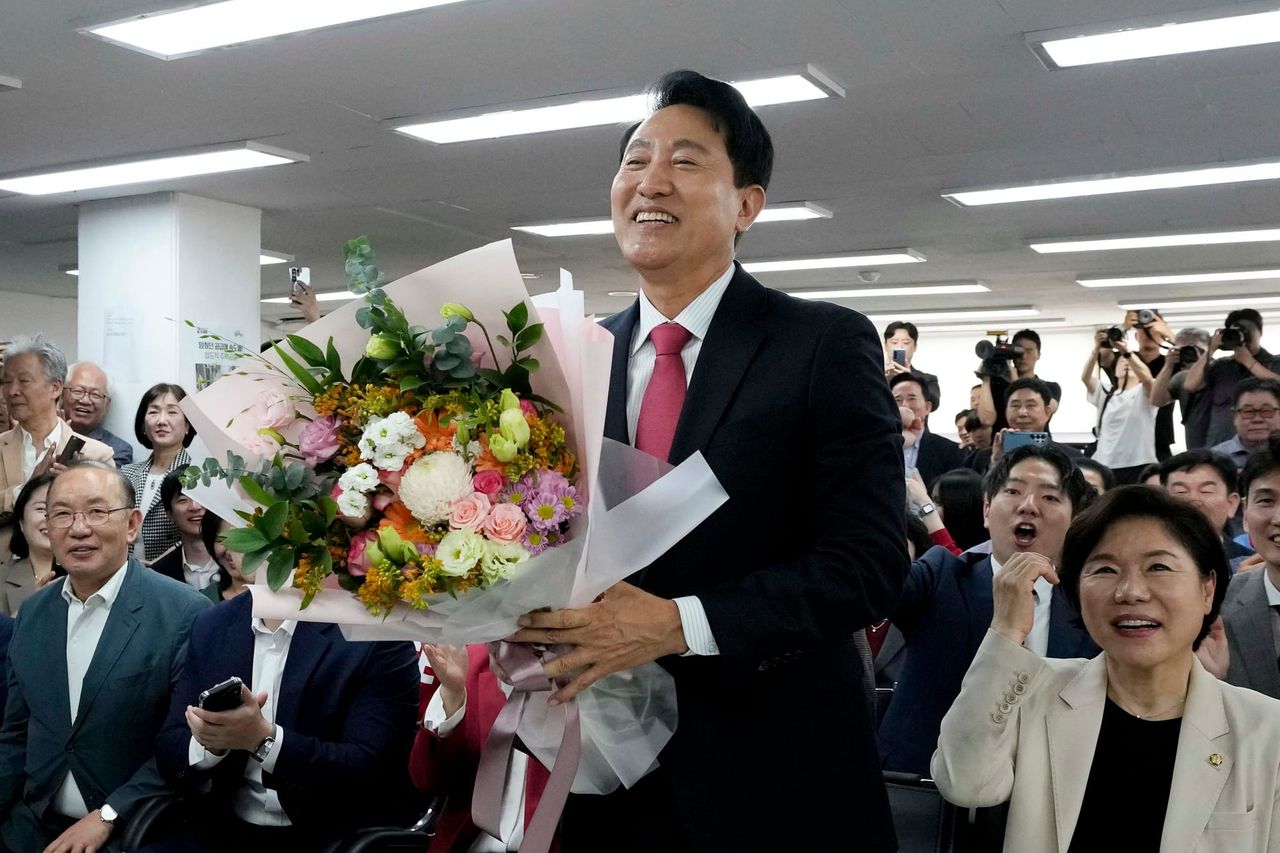
韓國第九屆地方首長選舉及部分國會議員選區補選於6月3日進行投票,至4日選舉結果全數出爐,執政黨共同民主黨在12個選區獲勝,而主要在野黨國民力量僅勝出4個選區。但備受關注的首都首爾市長位置,仍由國民力量的吳世勳成功連任。本次地方大選被視為總統李在明上任一年後的成績單。
Voting in South Korea’s ninth local executive elections, together with by-elections for several National Assembly constituencies, took place on June 3; by June 4 all results had been released. The ruling Democratic Party won in 12 districts, while the main opposition People Power Party prevailed in only four. Yet the closely watched mayoralty of the capital, Seoul, was retained by the People Power Party’s Oh Se-hoon, who won re-election. These local elections were widely regarded as a report card on President Lee Jae-myung’s first year in office.
李在明2025年6月因為前總統尹錫悅被彈劾而在補選當中上台。國民力量則因尹錫悅在2024年發動的戒嚴風波而陷入混亂,因此外界普遍認爲共同民主黨會大勝主要對手國民力量。
Lee Jae-myung came to power in a by-election in June 2025 after former president Yoon Suk Yeol was impeached. The People Power Party, meanwhile, had fallen into disarray over the martial-law crisis Yoon triggered in 2024, and outside observers generally expected the Democratic Party to score a sweeping victory over its principal rival.
尹錫悅所控最嚴重的領導叛亂罪在一審被判無期徒刑,二審目前還在進行,並有其他案件仍在審理中。
The gravest charge against Yoon Suk Yeol, leading an insurrection, resulted in a life sentence at first instance. The second trial is still under way, and other cases remain before the courts.
共同民主黨此次贏得12地,含全南光州、釜山、仁川、大田、蔚山、世宗、京畿道、江原道、忠清北道、忠清南道、全羅北道、濟州;國民力量則是首爾、大邱,以及慶尚北道、慶尚南道共4地(本屆因兩個地方政府合併,廣域首長席次由17減為16)。在2022年地方選舉中,共同民主黨僅在17席中拿下5席。
This time the Democratic Party won 12 areas: South Jeolla-Gwangju, Busan, Incheon, Daejeon, Ulsan, Sejong, Gyeonggi Province, Gangwon Province, North Chungcheong Province, South Chungcheong Province, North Jeolla Province, and Jeju. The People Power Party won four: Seoul, Daegu, North Gyeongsang Province, and South Gyeongsang Province. Because two local governments were merged for this term, the number of metropolitan executive seats fell from 17 to 16. In the 2022 local elections, the Democratic Party won only five of the 17 seats.
而國會補選結果,則由共同民主黨拿下9席、國民力量獲得4席、另1席為無黨籍韓東勳。
In the National Assembly by-elections, the Democratic Party won nine seats, the People Power Party won four, and one seat went to the independent Han Dong-hoon.
Why Local Seats Matter to the Ruling Party地方席次對執政黨的重要性
地方選舉結果象徵對李在明的執政成績檢驗,若能掌握更多席次,也將讓執政黨在握有立法與行政權力的基礎上,在地方擴大影響力。
The local-election results symbolize a test of Lee Jae-myung’s record in government. If the ruling party can command more seats, it will be able to expand its influence at the local level on top of the legislative and executive power it already holds.
李在明目前的支持率大約六成,他提倡「務實外交」路線獲肯定。股市表現同樣也是觀察指標之一,韓國股市持續走強,人工智慧晶片帶動韓國出口成長,加上政府強調決策透明,均顯示李在明的全國支持度高。在國會補選的結果,執政黨同樣取得勝利。
Lee Jae-myung’s approval rating currently stands at about 60 percent, and his line of “pragmatic diplomacy” has won recognition. The stock market is also one indicator to watch: South Korean equities have continued to strengthen, artificial-intelligence chips have driven growth in South Korean exports, and the government has emphasized transparency in decision-making. All of this points to Lee’s high level of national support. In the National Assembly by-elections, too, the ruling party emerged victorious.
首爾總統領導力研究所所長崔震(Choi Jin,音譯)在選前受訪表示,由於目前16個地方首長職位中有14個由保守派國民力量黨掌握,李在明若能取得更多地方支持,將更輕鬆有效地推動地方政策,並有助於該黨為2028年國會大選做好準備。
Before the election, Choi Jin, director of the Institute of Presidential Leadership in Seoul, said in an interview that because 14 of the current 16 local executive posts were held by the conservative People Power Party, Lee Jae-myung would find it easier and more effective to advance local policies if he could secure broader local support; it would also help the party prepare for the 2028 National Assembly elections.
然而不能忽略的是,本次選舉結果,執政黨贏得重要的釜山席次,卻在首爾失利。
What cannot be overlooked, however, is that in this election the ruling party won the important Busan seat but lost in Seoul.
韓國蓋洛普民意調查主任許珍宰在選前分析,從過去的地方選舉結果發現,總統支持率較高時,執政黨能贏得較多地方首長席次。他進一步指:「真正重要的不是民主黨會不會贏,而是取得什麼程度的成果,才足以被認定為真正贏得這場選舉。」他分析,若未能拿下首爾或釜山等指標城市,即便整體勝選,仍難稱完全勝利。
Before the election, Heo Jin-jae, director of polling at Gallup Korea, analyzed past local-election results and found that when a president’s approval rating is high, the ruling party tends to win more local executive seats. He further noted: “What really matters is not whether the Democratic Party wins, but what level of results would be enough for it to be judged as having truly won this election.” In his analysis, if the party failed to take benchmark cities such as Seoul or Busan, even an overall victory would be hard to call complete.
The Incumbent Seoul Mayor Wins Re-election現任首爾市長連任
成功連任市長的吳世勳在當選後發表勝選感言,他認為選舉勝利的功勞應歸於選民,而非他個人。他強調,「各位市民再次確立了民主主義『制衡與平衡』這一原則,大家讓首爾成為民主主義的最後一道安全關卡,避免韓國完全倒向單一方向。」
After securing another term as mayor, Oh Se-hoon delivered his victory remarks, saying that credit for the win belonged to the voters, not to him personally. He emphasized: “The citizens have once again affirmed democracy’s principle of checks and balances. You have made Seoul the final safety lock for democracy, preventing South Korea from tilting entirely in one direction.”
吳世勳能在全國藍潮中守住首爾,可從三股力道理解。一是選民牽制心理,在共同民主黨預期大獲全勝之際,選民傾向不讓單一政黨全面通吃,吳所謂的「制衡與平衡」正是呼應此現象。
Oh Se-hoon’s ability to hold Seoul amid a nationwide blue wave can be understood through three forces. The first was voters’ instinct for restraint: just as the Democratic Party was expected to win an overwhelming victory, voters were inclined not to let a single party take everything. Oh’s language of “checks and balances” spoke directly to this phenomenon.
第二是首爾的房市政治:明知大學政治學教授申律(Shin Yul,音譯)分析,首爾選民的投票傾向,部分受到對政府住宅政策不滿的影響——當局正試圖為首都過熱的房市降溫。李在明政近期以收緊房貸為抑制房價的降溫手段,導致有房族和首購族皆心生不滿;而吳世勳的競選政見主打住房問題,承諾到2031年將新增31萬套住房供應,打中不少選民。
The second was the politics of Seoul’s housing market. Shin Yul, a professor of political science at Myongji University, analyzed Seoul voters’ behavior as being shaped in part by dissatisfaction with the government’s housing policy, as the authorities sought to cool the capital’s overheated real-estate market. Lee Jae-myung’s administration had recently tightened mortgage lending as a means of suppressing housing prices, angering both homeowners and first-time buyers. Oh Se-hoon, meanwhile, centered his campaign platform on housing, pledging to add 310,000 units of supply by 2031, a promise that struck home with many voters.
但值得注意的是,共同民主黨候選人鄭願伍其實在選前民調和出口民調皆為領先,多家電視台出口民調顯示,鄭願伍對吳世勳比率是51.4%對46%。但截至4日下午3時、開票99.54%的時候,吳世勳得49.15%、鄭願伍48.13%,吳以差距約1個百分點的結果險勝。在開票中整晚落後的吳世勳,直到尾聲才靠江南、瑞草、松坡等漢江以南選區的票逆轉,僅以三萬票上下之差勝出。
It is worth noting, however, that the Democratic Party candidate, Jeong Won-oh, had in fact led both pre-election polls and exit polls. Exit polling by several television stations showed Jeong ahead of Oh Se-hoon by 51.4 percent to 46 percent. But as of 3 p.m. on June 4, with 99.54 percent of the ballots counted, Oh had 49.15 percent to Jeong’s 48.13 percent, winning narrowly by about one percentage point. Oh had trailed throughout the night as the count proceeded, and only at the very end did votes from districts south of the Han River, including Gangnam, Seocho, and Songpa, allow him to reverse the race, winning by a margin of roughly 30,000 votes.
鄭願伍選後表示,「我將沉重且謙虛地接受市民各位的選擇,是我做得不夠好,一切都是我的責任,我沒能更靠近市民,也沒能更深入傾聽,沒能獲得更多人的支持與信任。」並向對手致上祝賀之意。
After the election, Jeong Won-oh said: “I will accept the choice of the citizens with gravity and humility. I did not do well enough. Everything is my responsibility. I was unable to draw closer to the citizens, unable to listen more deeply, and unable to win more people’s support and trust.” He also offered his congratulations to his opponent.
吳世勳是首位五度當選首爾市長的候選人。他於2006年首次當選首爾市長,並於2010年成功連任。他還曾參與2016年和2020年兩屆國會議員選舉,但未能當選。後來因時任首爾市長朴元淳去世,他在2021年補選中勝出。2022年成功連任。南韓地方首長練續任期為3屆,因此這屆期滿後他將不能繼續參選首爾市長。
Oh Se-hoon is the first candidate to be elected mayor of Seoul five times. He was first elected Seoul mayor in 2006 and won re-election in 2010. He also ran in the 2016 and 2020 National Assembly elections, but was not elected. Later, after the death of then Seoul mayor Park Won-soon, Oh won the 2021 by-election. He was re-elected in 2022. South Korean local executives may serve three consecutive terms, so after this term expires he will not be able to run again for mayor of Seoul.
他的勝選進一步提升了其在韓國保守陣營中的政治影響力,鞏固了作為未來總統潛在參選人的地位。
His victory further elevates his political influence within South Korea’s conservative camp and consolidates his position as a potential future presidential contender.
Ballot Shortages at Some Polling Stations部分投票所選票短缺
本次選舉過程中,發生選票短缺爭議。首爾多達14處投票所的投票用紙不足,包括松坡區12處、江南區及廣津區各1處,導致松坡區蠶室7洞第2投票所甚至到晚間10時才完成投票。
During this election, a controversy arose over ballot shortages. As many as 14 polling stations in Seoul ran short of ballots, including 12 in Songpa District and one each in Gangnam and Gwangjin districts. At Polling Station No. 2 in Jamsil 7-dong, Songpa District, voting was not completed until 10 p.m.
這些選票短缺的投票所外聚集了抗議民眾。4日早上,有大批抗議民眾聚集在蠶室7洞第2投票所外,大喊「再次選舉」、「選舉無效」、「選舉不公」等口號。由於抗議影響,也導致投票箱被運至開票所的時間延遲,至截稿前該區仍有2000張選票未能確定。
Protesters gathered outside the polling stations where ballots had run out. On the morning of June 4, large numbers assembled outside Polling Station No. 2 in Jamsil 7-dong, shouting slogans such as “hold the election again,” “the election is invalid,” and “the election is unfair.” The protests also delayed the transport of ballot boxes to the counting center; by press time, 2,000 ballots from the district had still not been confirmed.
有受訪者告訴媒體,「不應該發生選票不足問題,不管選舉結果是誰贏,都應該重新選舉。」也有民眾嗆示威者說「選舉已結束」,示威者回稱「還沒結束」。
One interviewee told the media: “A ballot shortage should never have happened. No matter who wins the election, it should be held again.” Some members of the public also shouted at the demonstrators that “the election is over,” to which the protesters replied: “It is not over yet.”
對此,選委會3日當晚召開記者會道歉,「對於損害國民對公正選舉管理的信任這一點,我們深感責任重大,並致以深深歉意」。選委會指,得知選票不足就立即補充並採取措施與引導,確保在投票所等待的選民超過截止時間也能正常進行投票。
In response, the election commission held a press conference on the evening of June 3 to apologize. “We feel a heavy sense of responsibility for damaging the public’s trust in the fair administration of elections, and we offer our deepest apologies,” it said. The commission stated that once it learned of the ballot shortage, it immediately replenished supplies and took measures and provided guidance to ensure that voters waiting at polling stations could cast their ballots normally even after the official closing time.
選委會說明,選票印刷數量是根據近期投票率來印製,這次松坡區共有146個投票所,印製張數是選民人數的50%,因部分地方選民人數比預期還要多,才出現了投票用紙不足的情況。
The election commission explained that the number of ballots printed was based on recent turnout rates. Songpa District had 146 polling stations in this election, and ballots were printed for 50 percent of registered voters. Because the number of voters in some places exceeded expectations, a shortage of ballot papers occurred.
國民力量黨魁張東赫表示,此事件嚴重侵害了選民的投票權,他要求立即停止開票,並要求主管機關依調查結果決定是否重新舉行選舉。不過,執政黨拒絕停止開票,也認為沒有重新選舉的必要,但強調必須對「失職的選舉管理必須追究責任。」
People Power Party leader Jang Dong-hyuk said the incident had seriously infringed upon voters’ right to vote. He demanded that the count be stopped immediately and that the competent authorities decide, based on the results of an investigation, whether the election should be held again. The ruling party, however, rejected any halt to the count and said there was no need for a new election, while stressing that “those responsible for dereliction in election management must be held accountable.”
首爾市長吳世勳批評選票不足問題,「作為民主主義最基本且神聖的公民參政權遭到侵害一事,身為候選人,我深感遺憾。」他認為,「必須徹底查明問題所在,追究相關責任,並提出根本性的改善對策。」
Seoul Mayor Oh Se-hoon criticized the ballot shortage, saying: “As a candidate, I deeply regret that citizens’ most basic and sacred democratic right to political participation was infringed.” He argued that “the source of the problem must be thoroughly identified, the relevant responsibility pursued, and fundamental measures for improvement proposed.”
李在明則對選票短缺事件表示「深切遺憾」,並下令相關機構查明短缺原因、追究責任人員,並迅速建立可信的防範機制。對於選舉結果,他表示,政府將虛心接受國民通過選舉結果釋放的信號。
Lee Jae-myung, for his part, expressed “deep regret” over the ballot-shortage incident and ordered the relevant agencies to determine the cause of the shortage, hold responsible personnel accountable, and swiftly establish a credible prevention mechanism. As for the election results, he said the government would humbly accept the signal sent by the people through the outcome of the vote.
李在明說,不管當選者的黨籍,中央政府將與新成立的地方政府會積極展開合作。他更指選舉已經結束,政界應該凝聚力量,改善民生經濟、推動地區均衡發展,引導國民團結。
Lee Jae-myung said that regardless of the party affiliation of those elected, the central government would actively cooperate with the newly formed local governments. He further stated that since the election was over, the political world should gather its strength to improve the people’s livelihood and the economy, advance balanced regional development, and guide national unity.