Those Who Survived the Winter
Through the ordeal of one seventeen-story apartment block in Kyiv, the piece shows how Russian attacks, failing infrastructure, and improvised solidarity turned the winter of 2026 into a struggle for survival for thousands of city residents.
Data JournalismЖурналістика даних
Those Who Survived the Winter. Chronicles of the Rescue of a Kyiv Seventeen-Story Building Left Without Heat and Light in Bitter Frost
Ті, хто пережив зиму. Хроніки порятунку київської 17-поверхівки, яка залишилася без тепла і світла в люті морози
On Friday, January 9, residents of a high-rise on Kyiv’s Left Bank woke up in cold, dark apartments. During the night, Russia had struck CHPP-5 with five missiles, leaving thousands of Kyiv buildings without heat, electricity, or water.
У п’ятницю, 9 січня, мешканці висотки на Лівому березі Києва прокинулися в холодних і темних квартирах. Вночі Росія поцілила п’ятьма ракетами в ТЕЦ-5 — без тепла, електрики й води залишилися тисячі київських будівель.
For this building, the attack marked the beginning of an icy marathon: an exhausting fight by residents to survive and save their own homes.
Для цього будинку атака стала початком крижаного марафону — виснажливої боротьби людей за виживання та порятунок власних помешкань.
This building is one of a thousand with such problems. Through its example, we show what countless Kyivans faced in the winter of 2026.
Цей будинок один із тисячі з такими проблемами. На його прикладі ми показуємо, з чим зіткнулося безліч киян взимку 2026 року.
Those Who Survived the WinterТі, хто пережив зиму
Chronicles of the rescue of a seventeen-story building on Rusanivka in Kyiv, left without heat and light in bitter frost
Хроніки порятунку 17-поверхівки на Русанівці в Києві, яка залишилася без тепла і світла в люті морози
Burst pipes, flooded apartments, shattered windows, frozen electrical panels, melted wires: all this was happening in this and hundreds of other Ukrainian apartment blocks during twenty-degree frosts, air raids, and constant blackouts.
Розірвані труби, затоплені квартири, вибиті вікна, замерзлі електрощитові, поплавлені дроти — усе це відбувалося в цьому і сотнях інших українських багатоповерхівок під час 20-градусних морозів, повітряних нальотів і постійних знеструмлень.
Texty.org.ua reconstructed, day by day, the chronicle of the rescue and survival of one building on Rusanivka in January and February 2026.
Texty.org.ua реконструювали день за днем хроніку порятунку і виживання одного будинку на Русанівці в січні-лютому 2026 року.
All apartment numbers and names in the dialogues from the building chat cited below have been changed.
Усі наведені нижче номери квартир та імена в діалогах із будинкового чату змінені.
What Makes the Building SpecialЧим особливий будинок
The high-rise on Ihor Shamo Boulevard was built in 1969 as an experimental project for a “quality panel block.” Six such buildings were erected in the former Soviet Union: first two in Moscow, then four in Kyiv.
Багатоповерхівку на бульварі Ігоря Шамо збудували 1969 року за експериментальним проєктом «якісної панельки». Таких у колишньому Союзі звели шість: спершу дві в Москві, потім чотири в Києві.
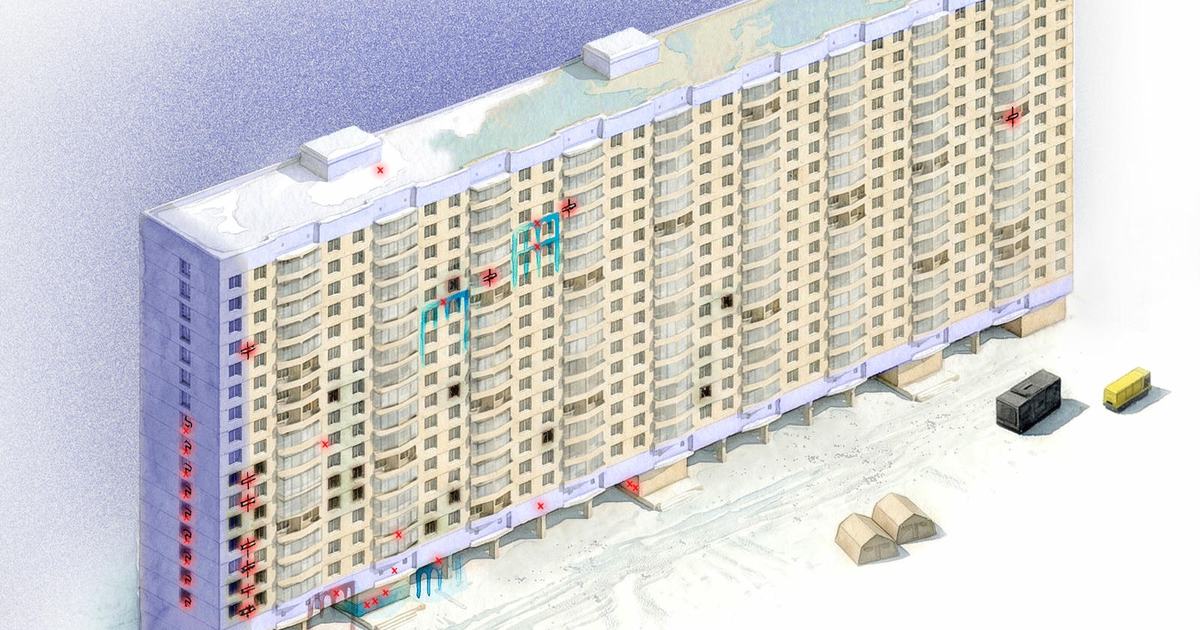
The building has no basement. The first floor is nonresidential: it contains the lobby, fire stairs, and utility rooms, and the elevator shafts begin there. Beside them are concrete supports with open space between them. The high-rise seems to be hanging in the air. For that reason, Kyivans call it the “house on chicken legs.”
Підвалу в будинку немає. Перший поверх нежитловий: тут розташовані хол, пожежні сходи та підсобки, починаються шахти ліфтів. А поруч бетонні опори з відкритим простором між ними. Здається, ніби багатоповерхівка висить у повітрі. Через це кияни називають її «будинком на курячих ніжках».
For clarity: between the first and second floors there is a technical floor with utility pipes; another technical floor with pipes is in the attic. In the illustration, they are marked in pink.
Для розуміння: між першим і другим поверхами розміщений технічний поверх із трубами комунікацій; ще один техповерх із трубами на горищі (на ілюстрації позначені рожевим кольором).
The high-rise has sixteen residential floors, from the second to the seventeenth, and three entrances, with 128 apartments in each. The apartments are equipped with gas stoves, a rarity for buildings of this height. The exterior walls are three-layer concrete panels.
Висотка має шістнадцять житлових поверхів (із 2-го по 17-й) і три під’їзди (по 128 квартир у кожному). Помешкання обладнані газовими плитами, що є рідкістю для будинків такої поверховості. Зовнішні стіни — тришарові бетонні панелі.
About a thousand people used to live in the building. After the start of the full-scale war, many apartments emptied out.
Раніше в будинку мешкало близько 1 тис. людей. Після початку великої війни чимало квартир спорожніло.
The heating system depends on electricity: the heat-transfer medium, or technical hot water, is pumped upward by four electric pumps. One more pump serves the water supply. The pumps are installed in an underground heating station next to the building.
Система опалення залежить від електроенергії: теплоносій (технічну гарячу воду) качають нагору чотири електричні насоси. Ще один призначений для водопостачання. Насоси встановлені в підземному теплопункті поруч із будинком.
First the third entrance heats up, then the second, then the first. Regular blackouts cause disruptions: air gets into the pipes, and its bubbles block the flow of hot water.
Спочатку прогрівається третій під’їзд, потім другий, потім перший. Регулярні знеструмлення спричиняють перебої: у труби потрапляє повітря, і його бульбашки блокують рух гарячої води.
This apartment block is usually warm. But once the blackouts began, the apartments heated unevenly: in some it was 20 degrees Celsius and above, and residents opened windows to air the rooms; in others it was 15 or 16 degrees.
У цій багатоповерхівці тепло. Але з початком знеструмлень квартири прогрівалися нерівномірно: в одних +20 °С і вище, мешканці відчиняли вікна на провітрювання, в інших +15–16 °С.
The 2025 heating season began badly. The building’s electrical grid could barely withstand the load fluctuations caused by regular blackouts: residents switched on appliances all at once, trying to manage laundry, cleaning, and charging devices while they had power.
Опалювальний сезон 2025 року почався невдало. Електромережа будинку ледве витримувала перепади навантаження, що виникали через регулярні знеструмлення: мешканці одночасно вмикали електроприлади, щоб устигнути попрати, прибрати, зарядити гаджети.
A home voltage meter belonging to one of the building’s residents shows only 177 volts instead of the required 230, because everyone switched on their appliances at the same time as soon as the electricity returned.
Домашній пристрій для вимірювання напруги, що належить одному з мешканців будинку, показує лише 177 В замість необхідних 230 В, оскільки всі одночасно увімкнули електроприлади одразу після появи електроенергії
An important detail: the building’s internet almost never disappeared, even during prolonged blackouts, because providers had installed powerful batteries for their equipment.
Важлива деталь: інтернет у будинку майже не зникав навіть під час тривалих знеструмлень, провайдери встановили потужні акумулятори для свого обладнання.
The building is serviced by ZhED-410, a housing maintenance section and subdivision of the municipal management company. But the ZhED cannot cope with its work, because it services around fifty old panel blocks.
Будинок обслуговує ЖЕД-410 (житлово-експлуатаційна дільниця), підрозділ муніципальної керуючої компанії. Але зі своєю роботою ЖЕД не справляється, бо обслуговує пів сотні старих панельок.
In 2016, the building’s residents tried to create a condominium association, but they did not gather enough votes.
У 2016 році мешканці будинку намагалися створити ОСББ, але забракло голосів.
The Heating Disappeared. Day 2, January 10Зникло опалення День 2 10 січня
City authorities said CHPP-5 would take two days to repair.
Міська влада заявила, що ТЕЦ-5 ремонтуватимуть дві доби.
Kyiv city authorities warn of a prolonged outage caused by an enemy attack.
Київська міська влада попереджає про тривале відключення внаслідок ворожої атаки
Because of the frosts, some buildings began draining water from their heating systems to save the pipes from freezing. But the ZhED decided to wait, hoping the heat supply would be restored.
Через морози в деяких будинках почали зливати воду із систем опалення, щоб урятувати труби від замерзання. Але в ЖЕД вирішили зачекати, сподіваючись на відновлення подачі тепла.
Toward evening, cold water appeared in the apartments, and even the electricity came back after flickering for a while.
Під вечір у квартирах з’явилася холодна вода і навіть повернулася електрика, трохи поблимавши.
Day 3, January 11День 3 11 січня
At eight in the evening, the power was turned on. The building’s electrical grid could not withstand it: a transformer fuse burned out and had to be replaced.
О восьмій вечора дали світло. Будинкова електромережа не витримала: згорів запобіжник трансформатора, довелося його замінити.
Later, one of the three phases in the electrical panel burned out. A third of the apartments were again left without power. The building’s residents created an emergency fund in the chat. They agreed to send money to a card for urgent needs, each giving whatever they could.
Згодом в електрощитовій згоріла одна з трьох фаз. Третина квартир знову залишилася без світла. Мешканці будинку створили в чаті аварійний фонд. Домовилися скидатися на картку грішми на термінові потреби: хто скільки може.
Ice in the Radiators. Day 4, January 12Лід у батареях День 4 12 січня
Heat was slowly appearing, but not for everyone, not at once, and not for long. The radiators in the first entrance remained icy.
Тепло потроху з’являлося, але не в усіх, не одразу й ненадовго. Батареї в першому під’їзді залишалися крижаними.
First entrance. A cat, out of habit, sits on the radiator waiting for warmth, but it is cold.
Перший під'їзд. Кіт за звичкою сидить на батареї в очікуванні тепла, але вона холодна
“I’m very happy for everyone whose radiators have warmed up, but not from the bottom of my heart,” admits Maryna from the first entrance. Neighbors from the second thanked her for her honesty.
«Дуже рада за всіх, у кого потепліли батареї, але не від щирого серця», — зізнається Марина з першого під’їзду. Сусіди з другого подякували їй за чесність.
The half-destroyed power plant could not provide the necessary hot-water pressure for it to pass through the pipes of all the risers, the vertical branches.
Напівзруйнована ТЕЦ не давала потрібного тиску гарячої води, щоб вона пройшла трубами всіх стояків (вертикальних відгалужень).
On top of that, the pipes were clogged by air bubbles. The air had to be released through special valves. To do this, Valerii, the plumber from the ZhED, hereafter simply the plumber, had to come at exactly the moment when there was electricity and the electric pumps were working: he had to climb to the seventeenth floor, preferably by elevator, and from there to the upper technical floor.
На додачу труби закупорили бульбашки повітря. Його треба було спустити через спеціальні крани. Для цього слюсар-сантехнік Валерій із ЖЕД (надалі просто сантехнік) мав прийти саме тоді, коли було світло й працювали електронасоси: піднятися на 17-й поверх (бажано на ліфті), а звідти на верхній техповерх.
The situation was growing more complicated. “Neighbors, I saw that the windows in the apartment on the thirteenth floor have no glass,” Valentyna wrote in the neighbors’ chat. “Everything there has probably frozen. I’ve submitted two requests to the ZhED.”
Ситуація ускладнювалася. «Сусіди, бачила, що в квартирі на 13-му поверсі вікна без скла, — написала Валентина в сусідському чаті. — Там, напевне, все замерзло. Двічі подавала заявку в ЖЕД».
This was unoccupied apartment 83, which had been standing with its panes blown out since a summer storm. The frozen water in its radiators was apparently blocking the heat supply to other apartments. The neighbors agreed to look for the apartment’s owners.
Ішлося про незаселену квартиру 83, що стояла з вибитими шибками ще з часу літньої бурі. Замерзла вода в батареях, вочевидь, блокувала подачу тепла в інші квартири. Сусіди домовилися шукати власників помешкання.
Day 5, January 13День 5 13 січня
A relay in the heating pump burned out. One resident bought a new one at a shop and gave it to the electrician. The pump was replaced, but they could not start it: the electricity had gone out again.
Згоріло реле в насосі опалення. Один із мешканців купив у магазині нове. Передав електрику. Насос замінили, але запустити не змогли — знову зникла електроенергія.
At night the temperature fell to minus 18 degrees Celsius. In apartments without heating, the temperature dropped to 7 or 8 degrees. On the lawn behind the building, city authorities set up two Points of Invincibility. People could charge devices, warm up, and have something hot to eat.
Вночі похолодало до −18 °С. У квартирах без опалення температура опустилася до +7–8 °С. На галявині за будинком міська влада встановила два пункти незламності. Можна підзарядити гаджети, зігрітися, поїсти гарячого.
Day 6, January 14День 6 14 січня
The radiators were either cold or barely warm. There was no hot water. The power came on toward evening for a few hours, but people could not warm themselves with electric fan heaters, and were advised not to plug power banks in to charge all at once: the building’s electrical grid could not withstand the load. By evening, two of the three phases in the electrical panel were already melting.
Батареї або холодні, або ледь теплі. Гарячої води немає. Світло дали під вечір на кілька годин, але грітися електричними дуйчиками не можна, ставити павербанки одразу на зарядку не рекомендують — електромережа будинку не витримує навантаження. Увечері на електрощитку плавиться вже дві з трьох фаз.
Active residents printed a leaflet urging people to use electricity sparingly, wear warm clothing at home, heat water on the gas stove, and wash laundry at 20 to 30 degrees Celsius.
Активні мешканці надрукували листівку із закликом ощадливо використовувати електроенергію, носити в хаті теплий одяг, гріти воду на газовій плиті, прати при температурі +20–30 °С.
“Your heater at home means darkness in the building!” the activists proposed as a headline. They also called the ZhED, emergency services, and hotlines with reports that there was no heat.
«Твій обігрівач удома — темрява в будинку!» — пропонують заголовок активісти. Вони ж телефонують у ЖЕД, аварійні служби, на гарячі лінії із заявками про відсутність тепла.
Day 7, January 15День 7 15 січня
Seeing the plumber was considered a great stroke of luck. Tradesmen were running from building to building. The residents faced a task with two asterisks: wait for electricity, and catch the plumber in that brief interval.
Побачити сантехніка вважалося великою удачею. Майстри бігали від будинку до будинку. Перед мешканцями стояло завдання з двома зірочками: дочекатися електроенергії і в цей короткий проміжок сантехніка.
“Valerii called. He says his wife has a birthday, she’s turning sixty, and he has to go shopping. He won’t make it to us today,” Oksana wrote in the neighbors’ chat on the evening of January 15.
«Подзвонив Валерій. Каже, у жінки день народження — 60 років, треба йти скуплятися. Вже до нас не попаде сьогодні», — пише Оксана в сусідському чаті ввечері 15 січня.
“Let’s kidnap him,” Andrii joked in reply.
«Давайте його викрадемо», — жартує у відповідь Андрій.
“Tell him we’ll give his wife a present,” Viktoriia added.
«Скажіть, що дамо жінці на подарунок», — додає Вікторія.
Even when electricity and the plumber coincided in the building, another accident would occur: a phase would melt in the panel, or the pump relay would fail. Releasing the air from the pipes was impossible.
Навіть коли світло й сантехнік зустрічалися в будинку, ставалася чергова аварія: плавилася фаза на щитку або виходило з ладу реле насоса — спустити повітря з труб було неможливо.
The Heating Was Started. Day 8, January 16Опалення запустили День 8 16 січня
In the evening, everything came together: employees of the energy company, the plumber, and the head of the ZhED started up the heating system.
Увечері все зійшлося: працівники енергокомпанії, сантехнік і керівниця ЖЕД запустили систему опалення.
But they could not warm the radiators in the first entrance: it was too far from the pumps. In the chat, people joked:
Але батареї в першому під’їзді не вдалося нагріти — надто далеко від насосів. У чаті жартували:
“Good evening! Light, water, heat: is any of it there?”
«Добрий вечір! Світло, вода, опалення — щось із цього є?»
“Only evening!”
«Тільки вечір!»
But the building has gas. On kitchen stoves and in ovens, residents heat firebricks, then carry them around the apartment and set them out.
Але в будинку є газ. На кухонних плитах і в духовках мешканці гріють вогнетривку цеглу, щоб потім розкласти її по всій квартирі.
“I bought seven of them at 55 hryvnias each,” Tetiana shares from experience. “I heat them and carry them into the room on a tray.”
«Купила сім штук по 55 гривень, — ділиться досвідом Тетяна. — Грію й несу на піддоні в кімнату».
The temperature in the apartments is 1 to 6 degrees Celsius. The windows begin to frost over from the inside.
Температура в помешканнях +1–6 °С. Вікна починають обмерзати зсередини.
To get warm, residents turn on gas ovens and open the doors so that warm air fills the room.
Щоб зігрітися, мешканці вмикають газові духовки і відчиняють дверцята, щоб тепле повітря наповнювало приміщення
They heat firebricks on gas stoves.Гріють на газових плитах вогнетривку цеглу
People gradually leave the high-rise in search of warmer housing.
Люди потроху виїжджають із багатоповерхівки в пошуках теплішого житла.
Those who stay wear winter coats at home, three pairs of trousers, sleep in sleeping bags and outerwear, surrounded by hot-water bottles and bottles of hot water. Some pitch camping tents in their rooms and light candles inside; it is warmer that way.
Ті, хто залишився, вдягають удома зимові куртки, три пари штанів, сплять у спальниках і верхньому одязі, обклавшись грілками й пляшками з гарячою водою. Дехто ставить у кімнатах туристичні намети, всередині запалює свічки — так тепліше.
That day, neighbors together with a ZhED representative try to get into apartment 83 to check the condition of the radiators and persuade the owners to glaze the windows, or at least cover them with something.
Цього дня сусіди разом із представницею ЖЕД намагаються потрапити у квартиру 83, щоб перевірити стан батарей і переконати власників засклити чи бодай затулити чимось вікна.
The owner agreed to come after a call from the ZhED. But during the meeting, she would not let the neighbors over the threshold, behaved aggressively, hit the ZhED representative, smashed the glass in the entrance door, and ran away. The radiators were never checked. The police did not come when called. The injured woman refused to file a complaint.
Власниця погодилися прийти після дзвінка з ЖЕД. Проте під час зустрічі не пустила сусідів на поріг, поводилася агресивно, вдарила представницю ЖЕД, розбила скло у дверях під’їзду і втекла. Батареї так і не перевірили. Поліція на виклик не приїхала. Постраждала відмовилася писати заяву.
“Let’s call in a lift and board up the window from the outside,” neighbors suggest in the chat.
«Давайте викличемо вишку і заб’ємо вікно знадвору», — пропонують сусіди в чаті.
“Maybe we should say a sabotage and reconnaissance group has holed up there? Then they’ll come,” others toss out ideas.
«Може, скажемо, що там ДРГ засіла? Хай приїдуть», — кидають ідеї інші.
In the evening, utility workers installed a diesel generator near the building to keep the heating pumps running without interruption.
Увечері комунальники встановили біля будинку дизельний електрогенератор для безперебійної роботи опалювальних насосів.
Day 9, January 17День 9 17 січня
In the morning, fuel was brought for the generator, and the pumps began working. At lunchtime, water started pouring from the lower technical floor above the first entrance: a harbinger of the floods to come.
Уранці привезли пальне для генератора, насоси запрацювали. В обід із нижнього техповерху над першим під’їздом полилася вода — провісник майбутніх потопів.
In the ominous apartment 83, a radiator had burst. Water flowed down to the lower floors. On the twelfth floor, the first wet stains appeared.
У зловісній квартирі 83 розірвало батарею. Вода потекла на нижні поверхи. На 12-му з’явилися перші мокрі плями.
Only after that did the police agree to open the apartment door; the owner refused to come. Neighbors entered the apartment together with police officers and employees of the municipal emergency rescue service, KARS.
Лише після цього в поліції погодилися відчинити двері у квартиру (власниця відмовилася приходити). Сусіди потрапили в помешкання разом із поліцейськими й працівниками комунальної аварійно-рятувальної служби (КАРС).
A KARS worker opens the door of the problem apartment in the presence of police officers and building residents.
Працівник КАРС відчиняє двері проблемної квартири в присутності поліцейських і мешканців будинку
Inside, the wind roamed; piles of garbage lay everywhere; crowds of cockroaches ran about.
Всередині гуляв вітер, лежали купи сміття, бігали натовпи тарганів.
The sewer was clogged, and the radiators in two rooms had frozen. One of them had cracked, and that was where the water was leaking from.
Каналізація забита, батареї у двох кімнатах замерзли. Одна з них тріснула, звідти й витікала вода.
The radiators were cut off and caps were installed on the pipes. Later, neighbors boarded up the windows with chipboard sheets and covered them with polyethylene.
Батареї зрізали й поставили на труби заглушки. Пізніше сусіди забили вікна листами ДСП і затягнули поліетиленом.
Residents of the building boarded up the broken window with a sheet of chipboard and covered it with polyethylene. Flood. Day 10, January 18
Розбите вікно мешканці будинку забили листом ДСП і затягнули поліетиленом Потоп День 10 18 січня
The pressure in the heating pipes reached the required seven atmospheres. The radiators began to warm ever so slightly, but not in the first entrance.
Тиск у трубах опалення сягнув потрібних семи атмосфер. Батареї почали ледь-ледь прогріватися, але не в першому під’їзді.
…the essay continues at the source.