There Are Other Important Reasons for the Conflict in Eastern Congo
The recent escalation in eastern Congo cannot be reduced to Rwanda’s appetite for minerals; it is rooted in failed negotiations, regional security calculations, the position of Congolese Tutsi, and international ambiguity.
Er zijn ook andere belangrijke redenen voor het conflict in Oost-Congo
There are also other important reasons for the conflict in eastern Congo
“The Congo crisis extends beyond ‘conflict minerals’”“‘De Congocrisis reikt verder dan ‘conflictmineralen’’
De zucht van Rwanda naar Congolese mineralen als hoofdfactor zien van de recente inval in Oost-Congo, is te kort door de bocht, schrijven Judith Verweijen (Universiteit Utrecht) en Koen Vlassenroot (UGent) in een gezamenlijk opiniestuk. Het doet onrecht aan de andere belangrijke redenen voor het conflict.
To see Rwanda’s hunger for Congolese minerals as the chief factor behind the recent incursion into eastern Congo is too simplistic, write Judith Verweijen of Utrecht University and Koen Vlassenroot of Ghent University in a joint opinion piece. It does an injustice to the other important reasons for the conflict.
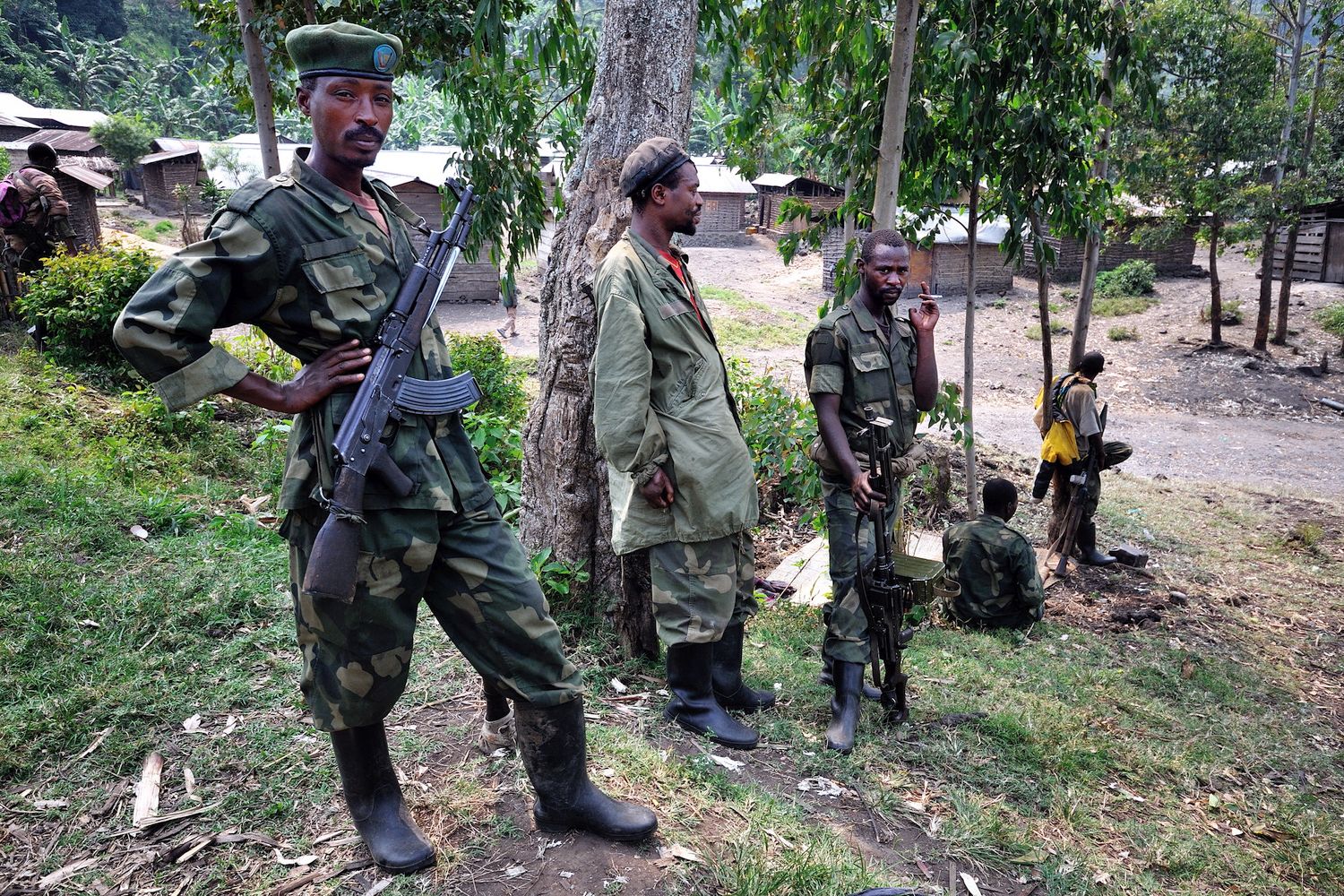
On Sunday night, the Congolese rebel group M23 entered Goma, capital of North Kivu province in the east of the Democratic Republic of Congo, together with the Rwandan army. The M23 rebellion, which began three years ago, has thereby taken another dramatic turn.
Zondagnacht viel de Congolese rebellengroep M23 samen met het Rwandese leger Goma binnen, de hoofdstad van de provincie Noord-Kivu in het oosten van de Democratische Republiek Congo. De drie jaar geleden gestartte rebellie van de M23 neemt hiermee opnieuw een dramatische wending.
In media reports and opinion pieces, Rwanda’s appetite for Congolese minerals is invariably presented as the main factor behind the recent escalation. This is too facile, and it does an injustice to the other important reasons for the conflict. Controlling the mineral trade has never been the primary driver of the M23 group, and it is also hard to see it as the motivation behind the capture of Goma.
In mediaberichtgeving en opiniestukken wordt steevast de zucht van Rwanda naar Congolese mineralen als de hoofdfactor gezien voor de recente escalatie. Dit is te kort door de bocht en doet onrecht aan de andere belangrijke redenen voor het conflict. Het beheersen van de mineralenhandel is nooit de primaire drijfveer van de M23 groep geweest en is ook moeilijk te zien als de motivatie achter de inname van Goma.
The M23 is the latest incarnation of a long series of rebellions led by Congolese Tutsi and backed by Rwanda since the mid-1990s. These rebellions have a twofold origin. On the one hand, they serve to strengthen the position of Congolese Tutsi. This group has historically faced discrimination, though economically it has occupied a privileged position, and has often been the victim of ethnically targeted violence. On the other hand, these rebellions have also always served Rwanda’s security and economic interests.
De M23 is de laatste incarnatie van een lange reeks door Congolese Tutsi geleide en Rwanda ondersteunde rebellieën sinds midden jaren 90. Deze rebellieën hebben een tweevoudige oorsprong. Enerzijds dienen zij om de positie van Congolese Tutsi te versterken. Deze groep is historisch gezien gediscrimineerd, hoewel economisch in een bevoorrechte positie, en vaak het slachtoffer geweest van etnisch gericht geweld. Anderzijds hebben deze rebellieën ook altijd de veiligheids- en economische belangen van Rwanda gediend.
The M23 emerged in 2012 from a mutiny by Tutsi officers in the Congolese army. It also occupied Goma then, but was militarily defeated shortly afterward. The agreements made to restore peace, however, largely remained words on paper. Frustration over this prompted part of the group to re-establish itself in Congo at the end of 2017.
De M23 ontstond in 2012 vanuit een muiterij van Tutsi officieren in het Congolese leger. Het bezette toen ook Goma, maar werd kort daarna militair verslagen. De afspraken die gemaakt werden om de vrede te herstellen bleven echter grotendeels woorden op papier. De frustratie hierover bewoog een deel van de groep om zich eind 2017 weer in Congo te vestigen.
In 2021, frustration also began to grow in Rwanda over the attitude and choices of Congolese president Tshisekedi, who took office in 2019. Kinshasa, for instance, concluded an agreement with Uganda on military operations by the Ugandan army in eastern Congo against the Ugandan rebel group ADF. There was also new cooperation with Kampala around a number of road and mining projects. The Rwandan regime experienced this as a threat to its economic and security interests in eastern Congo. Finally, Kigali believed that Kinshasa was not keeping its word on agreements concerning the gold trade.
In 2021 begon ook vanuit Rwanda de frustratie te groeien over de houding en keuzes van de Congolese president Tshisekedi, die in 2019 aantrad. Zo sloot Kinshasa met Oeganda een akkoord over militaire operaties door het Oegandese leger in Oost-Congo tegen de Oegandese rebellengroep ADF. Ook was er nieuwe samenwerking met Kampala omtrent een aantal wegen-en mijnbouw projecten. Het Rwandese regime ervaarde dit als een dreiging voor haar economische en veiligheidsbelangen in Oost-Congo. En tenslotte vond Kigali dat Kinshasa geen woord hield in afspraken rond de goudhandel.
The race for minerals is neither the cause nor the stake of the recent escalation.
De wedloop om mineralen is niet de oorzaak, noch de inzet van de recente escalatie.
These frustrations were the catalyst for Rwanda to exert pressure on Kinshasa by supporting an armed rebellion. What followed was a continual intensification of the violence and a complete diplomatic impasse between the two countries.
Deze frustraties waren de katalysator voor Rwanda om via het steunen van een gewapende rebellie druk uit te kunnen oefenen op Kinshasa. Wat volgde was een voortdurende intensificatie van het geweld en een complete diplomatieke impasse tussen beide landen.
International and regional attempts to find a solution, whether diplomatically or militarily, have so far failed. As a result, both sides have entrenched themselves ever more deeply in bellicose positions. To Rwanda’s chagrin, the Congolese army has begun working closely with the FDLR, Rwandan rebels whose origins lie in the Rwandan army and militias involved in the 1994 genocide. Kinshasa, in turn, is indignant at the extensive military support Rwanda provides to the M23.
Internationale en regionale pogingen om diplomatiek of militair een oplossing te vinden, zijn tot nog toe mislukt. Met als gevolg dat beide kanten zich steeds dieper hebben vastgegraven in oorlogszuchtige standpunten. Tot wroeging van Rwanda is het Congolese leger nauw gaan samen werken met de FDLR, Rwandese rebellen die hun oorsprong hebben in het Rwandese leger en milities die betrokken waren bij de genocide in 1994. Kinshasa is op haar beurt verbolgen over de omvangrijke militaire steun die Rwanda aan de M23 biedt.
(Continue reading below the recommended item)(Lees verder onder de leestip)
But what, precisely, is the role of natural resources in this conflict? And how, if at all, are they contributing to the new escalation of violence?
Maar wat is nu precies de rol van grondstoffen in dit conflict? En (hoe) dragen deze bij tot de nieuwe escalatie van het geweld?
Until April 2024, when the M23 took the Rubaya mine, mining was not the group’s principal source of income. It financed its operations mainly through all kinds of taxation, for example on trade, markets, livestock, and at roadblocks. This changed after the capture of the Rubaya mine. It is estimated to yield around 120 tons of coltan a month, worth a rough 800,000 U.S. dollars. Mineral exports from Rwanda, a substantial share of which originates in Congo, have also increased over the past two years.
Tot april 2024, toen de M23 de Rubaya mijn innam, was mijnbouw niet de belangrijkste inkostenbron van de groep. Zij financierde haar operaties voornamelijk via allerhande belastingen, bijvoorbeeld op handel, markten, vee en via wegversperringen. Dit veranderde na de inname van de Rubayamijn. Er wordt geschat dat deze zo’n 120 ton coltan per maand oplevert, goed voor een slordige 800.000 US dollar. Ook is de export van mineralen vanuit Rwanda, waarvan een aanzienlijk deel uit Congo afkomstig is, de afgelopen twee jaar toegenomen.
The question remains, however, why, if controlling mining had been the objective, the group did not focus more deliberately over the past three years on controlling mining areas. The capture of Goma also does not appear to be a strategic move if the aim is to maximize mineral revenues further. After all, the seizure of the city focuses all attention on the crisis and its Rwandan sponsors. In doing so, it risks bringing Rwandan mineral exports into the spotlight, or even exposing them to sanctions. In the long run, that could be highly damaging for Rwanda.
De vraag blijft echter waarom, als mijnbouw controleren het doel was geweest, de groep zich de afgelopen drie jaar niet doelgerichter op het controleren van mijngebieden gericht heeft. De inname van Goma lijkt ook geen strategische zet indien het doel is de inkomsten van mineralen verder te maximaliseren. De inname van de stad vestigt immers alle aandacht op de crisis en haar Rwandese sponsors. Hiermee dreigt ook de Rwandese export van mineralen in het vizier te komen, of zelfs te worden gesanctioneerd. Wat voor Rwanda op termijn zeer nadelig zou kunnen zijn.
The Congolese regime, too, is gradually becoming entangled in this war and must be called to account for its responsibilities.
Ook het Congolese regime raakt stilaan verstrikt in deze oorlog en moet op haar verantwoordelijkheden worden gewezen.
It is therefore not the race for minerals that has caused the recent escalation. It is better understood in light of the failed negotiations between Congo and Rwanda. That impasse is partly the result of Kinshasa’s categorical refusal to negotiate with the M23 and to address its grievances concerning the position of Congolese Tutsi. Kinshasa has also failed to honor its promise to break ties with the FDLR.
Het is dus niet de wedloop om mineralen die de recente escalatie veroorzaakt heeft. Deze kan beter begrepen worden in het licht van de falende onderhandelingen tussen Congo en Rwanda. Die impasse is deels het resultaat van de categorische weigering van Kinshasa om met de M23 te onderhandelen, en in te gaan op haar grieven omtrent de positie van Congolese Tutsi. Ook is Kinshasa haar belofte om banden met de FDLR te breken niet nagekomen.
But the current deadlock is also due to the relative ease with which the M23 and the RDF managed to seize large areas of North Kivu from January 2024 onward, despite several attempts at a ceasefire. This also points directly to the weakness of the Congolese army.
Maar de huidige patstelling is ook te wijten aan het relatieve gemak waarmee M23 en RDF grote gebieden in Noord-Kivu in handen wisten te krijgen vanaf januari 2024, ondanks verschillende pogingen tot een staakt-het-vuren. Wat meteen ook duidt op de zwakte van het Congolese leger.
Regional geopolitics has further poured oil on the fire. Tensions between Rwanda and Burundi have risen sharply after the Burundian army began fighting on Kinshasa’s side on the basis of a bilateral military cooperation agreement. Relations between Rwanda and South Africa have also deteriorated following South Africa’s participation in a SADC military mission, a regional cooperation organization of states in southern Africa, intended to support Kinshasa in its fight against the M23.
Regionale geopolitiek heeft verder olie op het vuur gegooid. De spanningen tussen Rwanda en Burundi zijn hoog opgelopen nadat het Burundese leger aan de kant van Kinshasa is gaan vechten op basis van een bilateraal militair samenwerkingsakkoord. Verder zijn de verhoudingen tussen Rwanda en Zuid-Afrika verslechterd na de deelname van Zuid-Afrika aan een militaire missie van de SADC (regionaal samenwerkingsverband van staten in zuidelijk Afrika) die Kinshasa moet ondersteunen in haar strijd tegen M23.
What is distressing here is that the escalation has been further encouraged by the lack of diplomatic action against Rwandan military involvement. When Rwanda supported the M23 in 2012, a number of donors suspended their development cooperation.
Schrijnend hierbij is dat de escalatie verder in de hand is gewerkt door het gebrek aan diplomatieke actie tegen de Rwandese militaire betrokkenheid. Toen Rwanda de M23 steunde in 2012, schortten een aantal donoren hun ontwikkelingssamenwerking op.
Today, apart from condemnations, few concrete actions have so far been decided. Moreover, the attitude of a number of major donors has proved rather ambiguous. In February 2024, just as the M23’s territorial expansion was gathering speed, the EU signed a strategic partnership on critical raw materials with Rwanda. Later in 2024, it also gave another 20 million to the Rwandan army to support its operations in northern Mozambique, where it plays a crucial role in containing a rebel group that threatens the operations of France’s TotalEnergies.
Vandaag werden behalve veroordelingen, voorlopig weinig concrete acties besloten. Bovendien is de houding van een aantal grote donoren nogal dubbelzinnig gebleken. De EU tekende in februari 2024, toen de M23’s territoriale uitbreiding een grote vlucht nam, nog een strategisch partnership voor kritieke grondstoffen met Rwanda. Het gaf later in 2024 ook nog eens 20 miljoen aan het Rwandese leger ter ondersteuning van hun operaties in het noorden van Mozambique, waar het een cruciale rol speelt in het beheersen van een rebellengroep die de operaties van het Franse TotalEnergies bedreigt.
This international ambiguity is being fully exploited by Rwanda, which in recent weeks and days sent additional troops to support the M23 in its takeover of Goma. If international partners, and the EU and its member states in particular, do not want to lose their last shred of credibility, they will have to move quickly to unambiguous action. But pressure on Rwanda alone is not enough. The Congolese regime, too, is gradually becoming entangled in this war and must be called to account for its responsibilities.
Deze internationale dubbelzinnigheid wordt volop uitgebuit door Rwanda, dat de laatste weken en dagen extra troepen stuurde om de M23 te ondersteunen in haar machtsovername van Goma. Willen internationale partners, en de EU en haar lidstaten in het bijzonder, hun laatste restje geloofwaardigheid niet verliezen, dan zullen ze snel tot ondubbelzinnige actie moeten overgaan. Maar enkel druk op Rwanda is onvoldoende. Ook het Congolese regime raakt stilaan verstrikt in deze oorlog en moet op haar verantwoordelijkheden worden gewezen.
Judith Verweijen is an assistant professor at Utrecht University. Koen Vlassenroot is professor of Political Science and head of the Conflict Research Group at Ghent University.
Judith Verweijen is universitair docent aan de Universiteit Utrecht. Koen Vlassenroot is professor in de Politieke Wetenschappen en hoofd van de Conflict Research Group aan de Universiteit Gent.
The authors write in their own names. This article is independent of the MO* editorial board.
De auteurs schrijven in eigen naam. Dit artikel staat los van de MO*redactie.