Sirat: The Nomads of a Harsh and Arid Age
A first, personal reading of Oliver Laxe’s Sirat sees its wounded rave nomads moving through landscape, music, and ordeal toward a stark vision of devotion, innocence, and tragic solitude.
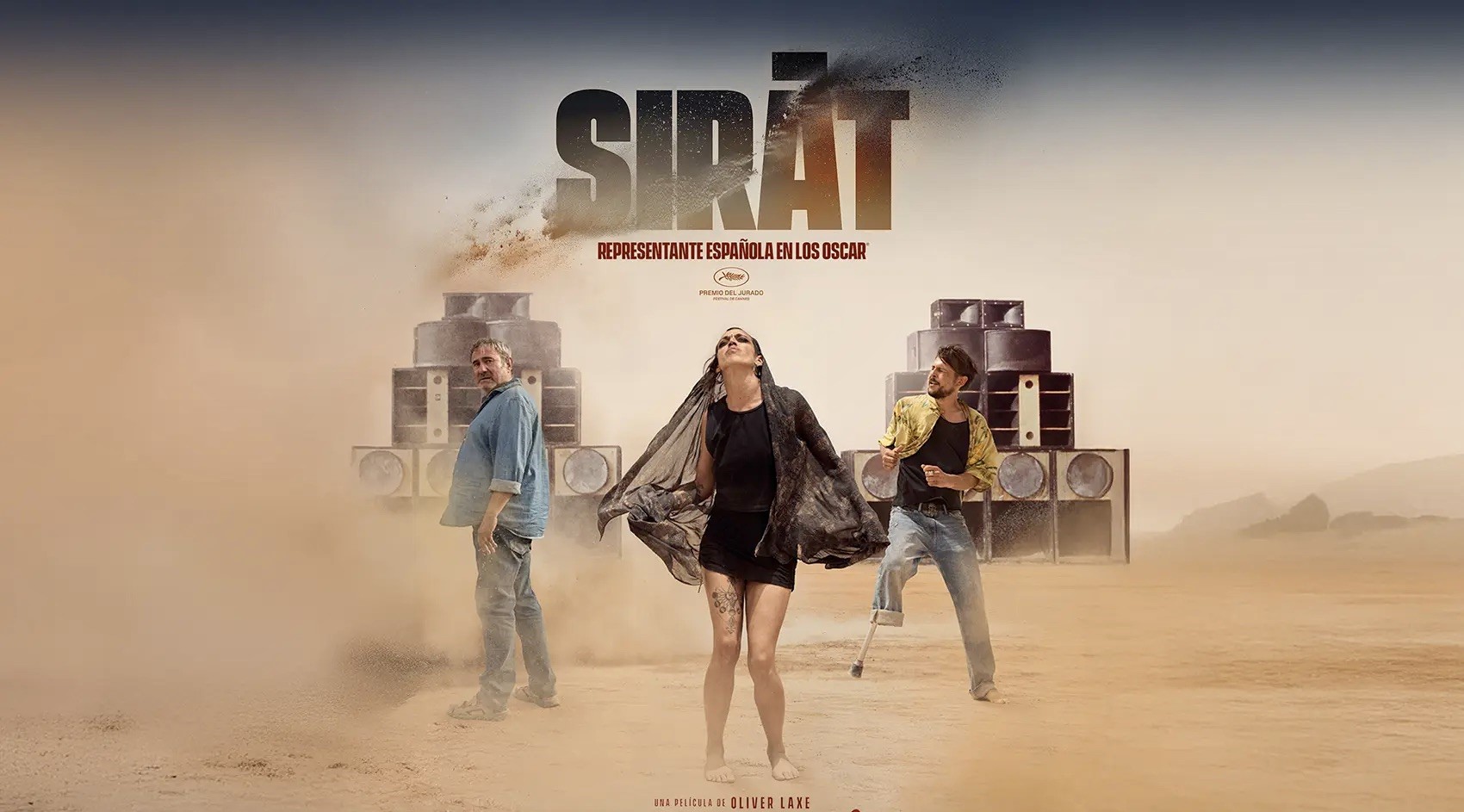
Πήγα να δω το Sirat (Oliver Laxe, 2025) εντελώς απροετοίμαστος για το τι πρόκειται να δω. Δεν είχα διαβάσει τίποτα, δεν είχα ακούσει κάτι από κανέναν. Με τράβηξαν δυο φίλοι και πήγαμε και το είδαμε. Ξεκίνησα λοιπόν να βλέπω με μάτι «καθαρό», «αθώο», με μια ματιά εντελώς προσωπική. Θα επιχειρήσω να μεταφέρω εδώ αυτούσια αυτήν την πρώτη εντύπωση και θα προσπαθήσω να την κάνω μάλιστα οδηγό μου. Θέλω να ακολουθήσω τα στοιχεία που με οδήγησαν στην αποκωδικοποίηση ή την πρόσληψη της ταινίας με τη σειρά που τα συνειδητοποιούσα σταδιακά. Παρόλο που μετά διάβασα για τον σκηνοθέτη και μάλιστα κάποιες συνεντεύξεις του με μεγάλο ενδιαφέρον, θα περιοριστώ στον τρόπο με τον οποίο ο ίδιος βλέπει το έργο του μόνο σε πολύ συγκεκριμένα σημεία. Η προσωπική πρόσληψη θα είναι ο οδηγός μου.
I went to see Sirat (Oliver Laxe, 2025) wholly unprepared for what I was about to watch. I had read nothing; I had heard nothing from anyone. Two friends dragged me along, and we went and saw it. So I began watching with a “clean,” “innocent” eye, with an entirely personal gaze. I will try here to convey that first impression intact, and indeed to make it my guide. I want to follow the elements that led me to decode, or receive, the film in the order in which I gradually became conscious of them. Although afterward I read about the director, and indeed read some interviews with him with great interest, I will confine myself to the way he himself sees his work only at very specific points. My personal reception will be my guide.
Οι ήρωες παρουσιάζονται ήδη στην πρώτη σκηνή του έργου. Σε έναν εκστατικό χορό μάς συστήνονται μέσα από σημαδεμένα πρόσωπα και λερωμένα, πληγωμένα ή ακρωτηριασμένα σώματα. Δεν τους γνωρίζουμε ακόμη -και δεν θα τους γνωρίσουμε με έναν παραδοσιακό αφηγηματικό τρόπο ούτε μέχρι το τέλος της ταινίας- αλλά σε αυτά τα πρόσωπα και τα σώματα, με τα ετερόκλητα ρούχα, τα piercing, τα ιδιαίτερα κουρέματα, τα ακρωτηριασμένα μέλη, αναγνωρίζουμε ότι πίσω από την έκσταση του χορού κρύβονται ιστορίες τραύματος. Άνθρωποι δίχως τόπο, δίχως στέγη, δίχως καταγωγή. Πλάνητες, flaneurs, μιας σκληρής και άνυδρης εποχής, όπως η έρημος στα βουνά του Άτλαντα στο Μαρόκο, όπου είναι γυρισμένη η ταινία.
The heroes are presented in the film’s very first scene. In an ecstatic dance, they are introduced to us through marked faces and bodies that are dirty, wounded, or mutilated. We do not yet know them, and we will not come to know them in any traditional narrative way even by the film’s end, but in these faces and bodies, with their motley clothes, piercings, distinctive haircuts, and amputated limbs, we recognize that behind the ecstasy of the dance lie stories of trauma. People without place, without shelter, without origin. Wanderers, flaneurs, of a harsh and arid age, like the desert in the Atlas Mountains of Morocco, where the film was shot.
Among them, out of place, with the classic look of an Easterner, like the figures we see in Fatih Akin’s films, is a father (played superbly by the Spaniard Sergi Lopez) with his young son, searching for his lost daughter. He will follow the caravan of ravers, who are chasing the next stop for a party in the wilderness, trailing the enormous vehicles that carry them and their bulky equipment, he in his little van. Their coexistence appears mismatched from the outset to the point of caricature (this seems to me to have been the director’s intention in the group’s first nocturnal convoy). An unexpected tragic loss will make him one of them thereafter. His own “amputation” will make him one of those who have nothing to lose. And just where you expect the explosion, the clash between the two worlds, the ordeal will bring them close.
Ανάμεσά τους, παράταιρος, με μια κλασική μορφή Ανατολίτη, όπως αυτές που βλέπουμε στις ταινίες του Φατίχ Ακίν, ένας πατέρας (τον υποδύεται έξοχα ο Ισπανός Σέρχι Λόπεζ) μαζί με τον μικρό γιο του, που αναζητά την χαμένη του θυγατέρα. Θα ακολουθήσει το καραβάνι των ravers, που κυνηγούν την επόμενη στάση για πάρτι στην ερημιά, παίρνοντας στο κατόπι τα τεράστια οχήματα που μεταφέρουν εκείνους με τον ογκώδη εξοπλισμό τους, αυτός με το μικρό φορτηγάκι του. Η συνύπαρξή τους ήδη από την αρχή φαίνεται αταίριαστη σε σημείο γελοιογραφικό (αυτή μου φαίνεται ότι ήταν η πρόθεση του σκηνοθέτη στο πρώτο νυχτερινό κομβόι της συντροφιάς). Η απροσδόκητη τραγική απώλεια θα τον κάνει μέλος τους στη συνέχεια. Ο δικός του «ακρωτηριασμός» θα τον κάνει έναν απ΄ αυτούς που δεν έχουν τίποτα να χάσουν. Κι εκεί που περιμένεις την έκρηξη και τη σύγκρουση ανάμεσα στους δύο κόσμους, η δοκιμασία θα τους φέρει κοντά.
The landscape is the protagonist of the film. A bare, apocalyptic landscape, where desolation, dust, sun, or darkness test the relations among people, set the limits of their action. “I don’t film nature because it is beautiful. I film nature because it puts us to the test at every moment. It puts my characters to the test; it puts me to the test. Moreover, like life, nature does not give you what you are looking for. It gives you what you need. And sometimes the way nature makes us vibrate is powerful and harsh and difficult for us, but I have faith that it is always for the good. I have this conviction deep inside me,” the director says in an interview. Nature functions in this way in classic westerns, as it does in neo-westerns, and from this point of view we can place the film within that genre, one that many contemporary directors have served with very different aims and results. With one difference:
Το τοπίο πρωταγωνιστεί στην ταινία. Ένα τοπίο γυμνό, αποκαλυπτικό, όπου η ερημιά, η σκόνη, ο ήλιος ή το σκοτάδι δοκιμάζουν τις σχέσεις μεταξύ των ανθρώπων, θέτουν τα όρια της δράσης τους. «Δεν κινηματογραφώ τη φύση επειδή είναι όμορφη. Κινηματογραφώ τη φύση επειδή μας θέτει σε δοκιμασία κάθε στιγμή. Θέτει σε δοκιμασία τους χαρακτήρες μου, θέτει σε δοκιμασία εμένα. Επιπλέον, όπως και η ζωή, η φύση δεν σου δίνει αυτό που αναζητάς. Σου δίνει αυτό που έχεις ανάγκη. Και κάποιες φορές ο τρόπος που μας δονεί η φύση είναι ισχυρός και σκληρός και δύσκολος για μας, αλλά έχω την πίστη ότι είναι πάντοτε για καλό. Έχω αυτήν την πεποίθηση βαθιά μέσα μου» λέει σε μια συνέντευξή του ο σκηνοθέτης. Η φύση λειτουργεί με αυτόν τον τρόπο στα κλασικά γουέστερν, όπως και στα νεο-γουέστερν, και από αυτήν την άποψη μπορούμε να εντάξουμε την ταινία στο είδος αυτό, το οποίο έχουν υπηρετήσει πολλοί σύγχρονοι σκηνοθέτες με πολύ διαφορετικούς σκοπούς και αποτελέσματα. Με μια διαφορά:
Here, music dominates even more than the landscape. It never stops playing. Although many classic westerns and neo-westerns have been furnished with exceptional scores, here the music neither accompanies nor extends nor underlines the action. Music is the occasion and the driving force. There is no film without it. Where classic westerns sought to discover treasures or enemies in order to avenge themselves on them, or to escape their vengeance, the heroes of Sirat seek a space in which to set up their speakers, playing music at full volume so that they can surrender to redemptive dance. Outside the reality of others, beyond the limits of the world that lies outside their community.
Η μουσική εδώ κυριαρχεί πιο πολύ και από το τοπίο. Δε σταματά ποτέ να παίζει. Παρόλο που πολλά από τα κλασικά ή τα νεο-γουέστερν, έχουν επενδυθεί με εξαιρετικές μουσικές, εδώ η μουσική δεν συνοδεύει ούτε επεκτείνει ή υπογραμμίζει τη δράση. Η μουσική είναι η αφορμή και η κινητήρια δύναμη. Δεν υπάρχει ταινία χωρίς αυτήν. Εκεί που τα κλασικά γουέστερν επιζητούσαν να ανακαλύψουν θησαυρούς ή εχθρούς για να τους εκδικηθούν ή να γλιτώσουν την εκδίκησή τους, οι ήρωες του Sirat αναζητούν χώρο για να στήσουν τα ηχεία τους παίζοντας μουσική στη διαπασών για να επιδοθούν στο λυτρωτικό χορό. Έξω από την πραγματικότητα των άλλων, πέρα από τα όρια του κόσμου που βρίσκεται εκτός της κοινότητάς τους.
Nomadism: In any case, there seems to be no outside world for this tribe of nomads. We see it nowhere. They do not come into contact with it. Does this way of life seem unreal? And yet, I think, this “exotic” nomadism is very real. In cinema we saw a very realistic rendering of it in 2021’s Nomadland. Contemporary nomads, living permanently in their trailers, vans, or trucks, outcasts, victims of banks and real estate. Gig workers, who may clean the toilets of a campsite for a season or pack boxes at Amazon (as the film showed) from September to December. Work that may last only a few weeks, and then a start toward the next stop. Wherever work is found.
Ο νομαδισμός: Έτσι κι αλλιώς δεν φαίνεται να υπάρχει έξω κόσμος για αυτήν τη φυλή των νομάδων. Δεν τον βλέπουμε πουθενά. Δεν έρχονται σε επαφή μαζί του. Μοιάζει εξωπραγματικός αυτός ο τρόπος ζωής; Κι όμως, αυτός ο «εξωτικός» νομαδισμός είναι πολύ υπαρκτός, σκέφτομαι. Στον κινηματογράφο είδαμε μια πολύ ρεαλιστική απόδοσή του στο Nomadland του 2021. Οι σύγχρονοι νομάδες, που ζουν μόνιμα στα τροχόσπιτα, στα βανάκια ή στα φορτηγά τους, απόκληροι-θύματα των τραπεζών και του real estate. Gig–workers, που μπορεί να καθαρίζουν τις τουαλέτες ενός κάμπινγκ για μια σεζόν ή να πακετάρουν στην Amazon (όπως έδειχνε η ταινία) από Σεπτέμβριο μέχρι Δεκέμβριο. Δουλειά που μπορεί να διαρκεί ακόμη και λίγες εβδομάδες, και μετά ξεκίνημα για την επόμενη στάση. Όπου βρεθεί εργασία.
The army is the only image of authority in the film. The army that breaks up the parties. The reality of the state invading the group’s heterotopia and announcing that the Third World War has begun. It will push the heroes deeper into the desert. But only that far. It will not have any greater effect on their endless flight.
Ο στρατός είναι η μοναδική εικόνα εξουσίας στην ταινία. Ο στρατός που διαλύει τα πάρτι. Η πραγματικότητα του κράτους που εισβάλλει στην ετεροτοπία της ομάδας και ανακοινώνει πως ξεκίνησε ο Γ΄ Παγκόσμιος Πόλεμος. Θα ωθήσει τους ήρωες πιο βαθιά μέσα στην έρημο. Αλλά μόνο ως εκεί. Δε θα επηρεάσει περισσότερο την αέναη φυγή τους.
The sirat, finally, perhaps the central idea, which gave the film its title. We are told what it is at the beginning of the film, as the titles fall. According to the Qur’an, it is the bridge that separates paradise from hell. Thin as a thread and sharp as a knife. The righteous will pass over it, while sinners will lose their balance and fall into the fire. You forget this first reference to the Sirat afterward, and you discover its significance only toward the end of the film, which closes in a perfect circular form.
Το σιράτ, τέλος, η κεντρική ιδέα ίσως, που έδωσε τον τίτλο στην ταινία. Μας πληροφορεί περί τίνος πρόκειται στην αρχή της ταινίας, με το που πέφτουν οι τίτλοι. Είναι, σύμφωνα με το Κοράνι, η γέφυρα που χωρίζει τον παράδεισο από την κόλαση. Λεπτή σαν κλωστή και κοφτερή σαν μαχαίρι. Οι δίκαιοι θα περάσουν από πάνω της, ενώ οι αμαρτωλοί θα χάσουν την ισορροπία τους και θα πέσουν στη φωτιά. Ξεχνάς αυτή την πρώτη αναφορά στο Σιράτ στη συνέχεια και θα ανακαλύψεις τη σημασία της μόνο προς το τέλος της ταινίας, που κλείνει με ένα τέλειο κυκλικό σχήμα.
In this unexpected and riveting ending, innocence (in a film, indeed, that is not at all Manichaean) survives, and devotion to a purpose is vindicated. Yet, as it appears, the price for this, and also the only gain, is a tragic solitude.
Σε αυτό το απρόσμενο και καθηλωτικό τέλος, η αθωότητα (σε ένα φιλμ μάλιστα που δεν είναι διόλου μανιχαϊστικό) επιβιώνει και η αφοσίωση σε έναν σκοπό δικαιώνεται. Όμως, όπως φαίνεται, το αντίτιμο για αυτό, αλλά και το μόνο κέρδος, είναι μια τραγική μοναξιά.
Psalidakos Poulos’s text was edited by Antonis Gazakis.
Το κείμενο του Ψαλιδάκου Πούλου επιμελήθηκε ο Αντώνης Γαζάκης
Reproduction and distribution of the article are permitted under the terms of the Attribution-ShareAlike 4.0 International license (CC BY-SA 4.0).
Επιτρέπεται η αναπαραγωγή και διανομή του άρθρου σύμφωνα με τους όρους της άδειας Attribution-ShareAlike 4.0 International (CC BY-SA 4.0)