In the “World’s Happiest Country,” 80 Percent Are Willing to Take Up Arms to Defend Their Homeland
Finland’s civil defense culture shows how historical memory, everyday preparedness, and public trust turn national resilience from an abstract ideal into a shared civic practice.
In the “World’s Happiest Country,” 80 Percent Are Willing to Take Up Arms to Defend Their Homeland「全球最幸福國家」有8成民眾願拿起武器保家衛國
連續9年在《世界幸福報告》(World Happiness Report)中名列全球榜首的芬蘭,還有另一項數字令其他國家自嘆不如。根據芬蘭國防資訊諮詢委員會(MTS)調查,當國家遭到攻擊且衝突結果不確定時,約8成芬蘭民眾願意拿起武器保衛國家;相較之下,歐盟國家的平均只有約3成。
Finland, which has ranked first in the World Happiness Report for nine consecutive years, has another figure that leaves other countries humbled. According to a survey by Finland’s Advisory Board for Defence Information (MTS), when the country is under attack and the outcome of the conflict is uncertain, roughly 80 percent of Finns are willing to take up arms to defend their country; by contrast, the average across EU countries is only about 30 percent.
擁有1,340公里陸地邊界、與俄羅斯接壤的芬蘭,如何在富足生活中保持備戰意識?怎麼在「幸福的日常」中融入民防訓練?《報導者》在芬蘭專訪指標性志工組織「赫爾辛基民防協會」(Helsingin Väestönsuojeluyhdistys ry),發現狗學校、博物館、地下游泳池和遊樂場,正隱藏著他們的韌性祕訣與決心。
With a 1,340-kilometer land border adjoining Russia, how does Finland preserve a readiness for war amid affluence? How does it fold civil defense training into the “happy everyday”? The Reporter interviewed the emblematic volunteer organization Helsinki Civil Defence Association (Helsingin Väestönsuojeluyhdistys ry) in Finland and found that dog schools, museums, underground swimming pools, and playgrounds conceal the secret of the country’s resilience and resolve.
Nearly 70, Helsinki resident Jukka Lehtiranta has a little travel map of his own. This itinerary has now also become a reason for foreign media and government delegations to visit Helsinki.
年近70的赫爾辛基市民萊堤蘭卡(Jukka Lehtiranta),有一份自己的小旅行地圖。這條參訪路線,如今也成為各國媒體、政府代表到訪赫爾辛基的理由。
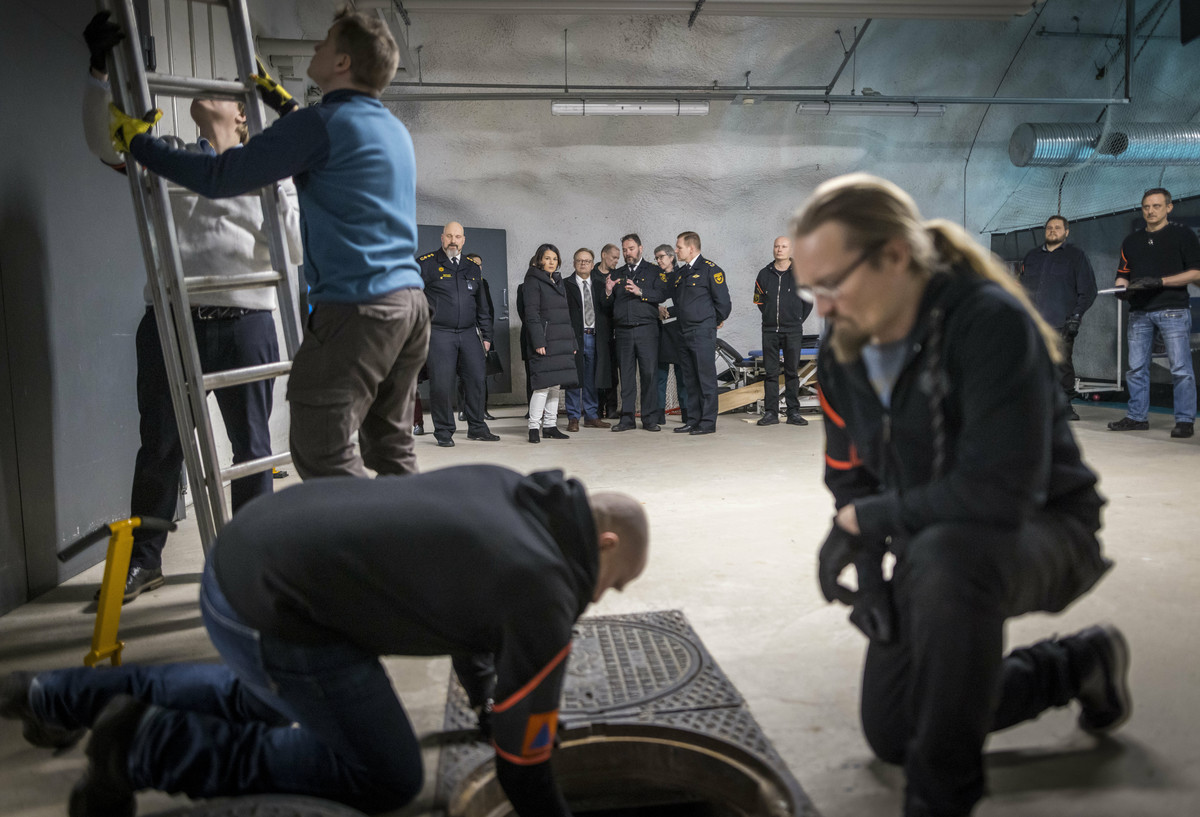
“First, you can go to the Merihaka metro station near us. It is a shelter that can accommodate 6,000 people; in ordinary times it is a swimming pool, children’s playground, and gym. Next, you can go to Central Station, where two arched steel doors are hidden. Because they are arched, they can withstand pressure as high as 18 bar, eighteen times normal atmospheric pressure. The blast doors at Kamppi metro station, meanwhile, are suspended from the ceiling. Six other metro stations are also air-raid shelters. If you look closely, you can see a metal strip on the ground. Giant blast-proof steel doors weighing several tons are normally concealed beneath the floor; in an emergency they rise upward, sealing off the outside and forming a completely airtight, three-dimensional CBRN protection space.”
「首先,你可以到我們附近的梅里哈卡地鐵站(Merihaka),那裡是可以容納6,000人的避難所,平常則是游泳池、兒童遊戲場和健身房。接下來,你可以到中央車站,那裡藏著兩道弧形的鋼製大門,因為是弧形設計,所以可承受的壓力高達18巴(正常大氣壓力的18倍)。另外,康皮地鐵站(Kamppi)的防爆門則是天花板吊掛式,其他還有6個地鐵站也都是防空避難所。仔細看,你可以在地上看到一條金屬條,重達數噸的巨型防爆鋼門平時就藏在地板下方,緊急時會向上升起、阻絕外部,形成一個完全氣密的立體核生化防護空間。」
Since Russia’s full-scale invasion of Ukraine, Lehtiranta, as chair of the Helsinki Civil Defence Association, has had to deliver this introduction several times almost every month. Over the past two or three years, foreign journalists and foreign government representatives have come one after another, trying to imagine and understand how spaces that citizens normally use for exercise, gatherings, exhibitions, and even the storage of classic sports cars would become Finland’s fortresses in wartime.
這些介紹,在俄羅斯全面侵略烏克蘭之後,身為赫爾辛基民防協會理事長的萊堤蘭卡,幾乎每個月都要說上幾次。這兩、三年來,外國記者、外國政府代表頻頻造訪,人們試著想像並理解,市民們平常用來運動、集會、辦展,甚至收藏古典跑車的空間,在戰時情境下將如何變成芬蘭的堡壘。
“Air-raid shelters are part of our lives. If children have played there since they were small, then when civil defense, drills, or a real emergency are discussed, people are probably less likely to panic.”「防空洞是我們生活的一部分。如果孩子們從小就在那裡玩,那麼談到民防、演習,或真的急難到來,大家也就比較不容易慌張了吧。」
After retiring from the communications giant Nokia, Lehtiranta has served as the volunteer chair of the Helsinki Civil Defence Association, hereafter the Civil Defence Association. These days, he spends half his life in an air-raid shelter that has been in operation since 1941.
從通訊巨頭Nokia退休後,萊堤蘭卡就一直以志工身分擔任赫爾辛基民防協會(以下簡稱民防協會)理事長。如今,他的生活有一半時間,都待在一座1941年開設至今的防空洞裡。
Pushing open the semicircular door, one finds inside this 85-year-old air-raid shelter the Helsinki Civil Defence Museum, founded by the Civil Defence Association. As Lehtiranta led us along the winding path deeper inside, he explained how the bend of the corridors, the design of the doors, the ventilation ducts, the drainage valves, and other details provide protection in an emergency.
推開半圓形的大門,這座85歲的防空洞裡,藏著民防協會創立的赫爾辛基民防博物館。萊堤蘭卡一邊領著我們沿著蜿蜒路徑往裡走,一邊解釋走道彎曲的角度、門板的設計、通風的管道、排水閥等,如何在急難時提供保護。
And after reminding us of the threshold beneath our feet, Lehtiranta asked us to look up: “We are inside granite bedrock. Where we are standing, roughly 10,000 years ago, there was still an ice sheet three to four kilometers thick above our heads. You can imagine how solid these rock strata must be to have withstood the test of the glaciers.”
而除了提醒腳下的門檻,萊堤蘭卡也要我們抬頭看:「我們身處在花崗岩的基岩之中。我們所在的地方,頭上差不多在1萬多年前,還有3到4公里厚的冰層。你可以想像這些岩層有多堅固,才能經得起冰河的考驗。」
Lehtiranta says such granite formations extend across almost all of Finland, and they are the natural condition that explains why Helsinki has 5,500 underground facilities. Yet beyond what nature has granted, what matters still more in civil defense is policy. Helsinki today can provide shelter space for one million people, more than its population; across Finland, shelters can accommodate as many as 4.8 million people. All of this is owed to more than half a century of policy investment.
萊堤蘭卡說,這樣的花崗岩層幾乎遍布整個芬蘭,這也是赫爾辛基之所以設有5,500個地下設施的天然條件。 除了大自然賦予的條件,民防更重要的還是政策。赫爾辛基如今能為100萬人提供避難空間,不僅已超過市民人數,全芬蘭避難設施可容納的人數更是高達480萬人,而這都得歸功於超過半世紀的政策投入。
Beginning in 1955, the Finnish government issued regulations requiring buildings larger than 600 square meters to include built-in shelter facilities, and it set clear standards for ventilation, toxic-gas protection, water supply, public health equipment, and other systems under extreme conditions. As the threat patterns of modern warfare and new technological tools have changed, this body of law has continued to keep pace. The hardware of air-raid shelters, the airtight pressure they can withstand, and more must be inspected regularly and upgraded to the latest standards.
自1955年開始,芬蘭政府頒布法令,當時就要求面積超過600平方公尺的建物必須內建避難設施,並對設施在應對極端時刻的通風、防毒、供水、公衛設備等訂出明確標準。隨著現代戰爭的威脅樣態以及新式科技工具的變化,這套法規也一直與時俱進。像是防空洞的硬體設備和能承受的氣密壓力等,都必須定時檢驗並隨最新標準升級。
“Many people now come to Finland and ask us how we did it. I think this whole museum is the answer,” Lehtiranta said.
「很多人現在來芬蘭問我們,我們是怎麼做到的?我想,這一整個博物館,就是答案,」萊堤蘭卡說。
Opened in 1999, the Helsinki Civil Defence Museum was converted from an air-raid shelter capable of holding 500 people. Its exhibition areas contain documents, objects, and reconstructions of crucial scenes. The oldest of these scenes is Finland 1,000 years ago.
1999年開幕的赫爾辛基民防博物館,是由一座能容納500人的防空洞改造而成。展區裡有文件、物件,以及關鍵現場的復刻──其中年代最久遠的一個場景,就是1,000年前的芬蘭。
At that time, people in Finland lived by village. Each village would identify a nearby hill and build a hillfort on it from stones and timber. When enemies came, the villagers would go up the hill together to defend themselves. To this day, nearly 100 such remains still exist in Finland.
當時住在芬蘭的人們以村莊為單位,每個村莊會尋找附近的一座小山,在山上用石頭、木柴築起丘堡(hillfort)。敵人來犯時,村民便集體上山防禦。至今,芬蘭境內仍保有近100座遺跡。
“In every era, people have had ways to protect themselves and resist foreign enemies,” Lehtiranta said. The Civil Defence Museum’s exhibition is divided into two routes: one traces the evolution of defensive methods, the other the evolution of means of attack. Beginning with the use of poisonous snakes in ancient warfare, then the advent of aircraft and poison gas, the exhibition explains how changes in the form of war extended risk and the damage of attack far beyond the front lines where two armies met, all the way to cities and the rear. Bombing from aircraft and gas attacks did not strike only armies; civilians, too, were drawn into war. Thus, around the 1920s, the concept of “civil defense” emerged in Finland.
「每個時代,人們都有保護自己、對抗外敵的方式,」萊堤蘭卡說。民防博物館的展出分成兩個路線,一邊是防禦方式的演變,另一邊是攻擊手段的進化。展覽從古代作戰時的毒蛇攻擊,到飛機的出現、毒氣的出現,說明戰爭型態的改變,如何讓風險和進攻的傷害一路拓展到兩軍交戰前線之外的地方,一路威脅到城市、大後方。飛機帶來的轟炸、毒氣攻擊,不只是攻擊軍隊,平民也被捲入了戰爭。因此,大約在1920年代,「民防」的概念就在芬蘭出現。
Pointing to a promotional poster from the period for “Air Defense and Anti-Gas Week,” Lehtiranta said that in 1927 the Finnish Anti-Gas Protection Association (Suomen Kaasusuojelujärjestö), hereafter the Anti-Gas Association, was founded chiefly because people felt the government was not doing enough, or doing it quickly enough. Civil society therefore launched an organization that began teaching the public about poison gas and holding drills, including how to put on protective gas equipment, how to wash and decontaminate, and even plans to set up its own gas-mask factory. The association also expanded into a national body. Several times a year it printed “fake newspapers” to simulate the circumstances of an attack; “Air Defense and Anti-Gas Week,” for example, called on civil society to spend a week at regular intervals drilling for situations of danger.
萊堤蘭卡指著一張當時的「防空與防毒氣週」宣傳海報說:1927年,芬蘭毒氣戰防護協會(Suomen Kaasusuojelujärjestö,以下簡稱防毒協會)成立,主因就是認為政府做得不夠多、不夠快,於是由民間發起組織,開始教導民眾關於毒氣的知識,並舉辦演練,包括如何穿戴防毒用具、如何清洗除汙,甚至打算自辦防毒面具工廠,協會也推廣為全國性團體。他們一年幾次印刷「假的報紙」,模擬攻擊發生的情況,像是「防空與防毒週」就是號召民間定期以一個星期的時間對危難情境展開演練。
That same year, Finnish schools also began promoting civil defense courses. Lehtiranta speculates that, at the time, not many residents had radios or newspapers, so reaching families through students also became one strategy for promoting civil defense nationwide.
同年,芬蘭的學校也開始推廣民防課程。萊堤蘭卡猜測,當時擁有收音機、報紙的居民不多,因此從學生接觸家庭,也成為全國民防推廣的策略之一。
In 1934, the Anti-Gas Association founded a civil defense school in Helsinki and began formally training ordinary citizens. By this point, Finnish society’s understanding of emergency response was becoming more widespread; even horses, an important means of transport at the time, had their own gas masks. Today, by displaying these documents, posters, and even anti-gas equipment for different animals, the Helsinki Civil Defence Museum allows people to understand where Finland’s civil defense came from, how people in the past faced risk and danger, and how civil defense organizations of different generations, rising from the bottom up, stepped forward one by one in response to the times.
1934年,防毒協會在赫爾辛基創辦民防學校,開始正式培訓一般民眾。此時,芬蘭社會關於緊急狀況的應變觀念也愈來愈普及,就連當時重要的交通工具──馬,也有專屬的防毒面具。如今,赫爾辛基民防博物館透過展示這些文件、海報,甚至不同動物的防毒道具,讓人們理解芬蘭的民防從何而來,過去的人們如何面對風險和危難,並看見不同世代、由下而上的民防組織,如何一個個因應時勢而挺身出現。
After the corridor introducing the history of civil defense, the other end of the museum is an educational space, where a documentary on the “Great Bombing of Helsinki” is screened and where there is lecture space for 50 people. Farther on lies the museum’s largest exhibition area: the wartime history of the Soviet-Finnish wars from 1939 to 1944.
走過介紹民防歷史的長廊,博物館另一端是教育空間,那裡播放著「赫爾辛基大轟炸」的紀錄片,還有足以容納50人的講座空間。再往前走,則是博物館內最大的展區:關於1939年至1944年蘇聯─芬蘭戰爭的戰時歷史。
To look back on those years is also to look back on a painful lesson in Finnish history. Although Finland broke free from Russian rule in 1917, after independence the country neglected the importance of building an army and investing in national defense. Only when Nazi Germany began its invasions and made a secret pact with the Soviet Union to divide Europe did Finland awaken to the fact that it had to confront the neighboring great power on its own, or face no fate but annexation.
回顧那幾年的歷史,也是回顧芬蘭歷史上的慘痛教訓。芬蘭雖然在1917年脫離俄羅斯的統治,但國家獨立之後卻忽略了建軍和投資國防的重要性。直到納粹德國開始侵略,並與蘇聯密約瓜分歐洲後,芬蘭才驚覺必須自身對抗相鄰的強國,否則只有被併吞的下場。
The Civil Defence Museum records in detail the conflict known as the Winter War. “That is because after the Winter War ended, many Finns realized: if we had planned and prepared then, life under catastrophe might have been different; every civilian and volunteer could have done more for society,” Lehtiranta noted. After the Winter War, nearly 200 civil defense organizations were founded across Finland, including the Helsinki Civil Defence Association where he serves.
民防博物館詳細記錄了那場被稱為「冬季戰爭」(Winter War)的衝突,「那是因為在冬季戰爭結束後,許多芬蘭人才意識到:如果我們當時有規劃、有準備,災難之下的日子或許可以不同,每個平民、志工能為社會做的可以更多,」萊堤蘭卡指出,在冬季戰爭之後,芬蘭全國創立了近200個民防組織,之中就包括他所服務的赫爾辛基民防協會。
In August 1939, Nazi Germany and the Soviet Union signed the Non-Aggression Pact, whose secret additional protocol divided Eastern Europe into their spheres of influence; Finland, along with Estonia, Latvia, and Lithuania, was assigned to the Soviet Union. In September and October that year, invoking this secret pact and relying on great-power coercion, the Soviet Union forced the three Baltic states to sign agreements that were formally “mutual assistance” pacts but in substance allowed Soviet troops to enter and occupy them.
1939年8月,納粹德國與蘇聯簽署《互不侵犯條約》,其祕密附帶條款將東歐劃分為雙方勢力範圍,芬蘭與愛沙尼亞、拉脫維亞、立陶宛被劃歸蘇聯。同年9至10月,蘇聯依此密約以強權威逼,迫使波羅的海三國簽署表面為「互助」、實質為允許蘇軍進駐的占領式合約。
Stalin then turned the Soviet Union’s next target toward Finland, issuing an ultimatum demanding the cession of defensive fortresses and the lease of ports. Finland knew that compromise would be tantamount to national extinction and firmly refused to yield. After negotiations collapsed, the Soviet Union staged the Mainila incident itself, attacking its own troops and blaming Finland. On this pretext, it launched a full-scale invasion of Finland on November 30, 1939, beginning the Winter War after large-scale air raids.
隨後,蘇聯的史達林(Joseph Stalin)將下一個目標轉向芬蘭,提出割讓防禦要塞與租借港口的最後通牒。芬蘭深知妥協等同亡國,堅拒退讓。談判破裂後,蘇聯自導自演「邁尼拉事件」,對自己部隊發動攻擊卻誣賴給芬蘭,以此為藉口,於1939年11月30日全面入侵芬蘭,在大規模空襲後展開「冬季戰爭」。
Facing a million Soviet troops and armored forces, the poorly supplied Finnish army displayed immense national resilience. Using the bitter cold and forest terrain, and dressed in white snow camouflage, they waged agile guerrilla warfare, dealing heavy blows to an unprepared Soviet army and creating a military miracle in which the few struck the many. Although Finland, its ammunition exhausted and aid cut off, was ultimately forced in March 1940 to cede 11 percent of its most valuable territory, including the Karelian Isthmus, compared with the three Baltic states that were soon wholly annexed by the Soviet Union and completely lost their statehood, Finland still miraculously preserved its independence and sovereignty.
面對百萬蘇軍與裝甲部隊,物資匱乏的芬蘭軍隊展現了強大的民族韌性。他們利用嚴寒與森林地形,身穿白色雪地偽裝服展開靈活的游擊戰,重創毫無準備的蘇軍,締造了以寡擊眾的軍事奇蹟。雖然芬蘭因彈盡援絕,最終於1940年3月被迫割讓11%的精華領土(含卡累利阿地峽),但相較於隨後遭蘇聯全面吞併、徹底亡國的波羅的海三國,芬蘭仍奇蹟般地保住了國家的獨立與主權。
The period from August 1939 to the formal outbreak of war in November became, in Finnish history, a time when civil defense was rapidly legalized. The Winter War and the subsequent four-year Continuation War, in which Soviet power was thoroughly repelled, became a nationwide war of resistance in which Finnish society, regardless of gender or age, developed all kinds of civil defense and military-civilian cooperation mechanisms, further shaping Finnish national character.
從1939年8月到11月正式開戰,這段時間成為芬蘭歷史上民防快速法制化的時期。而包括冬季戰爭和後來4年「繼續戰爭」中將蘇聯勢力徹底擊退的過程,則是芬蘭舉國上下不分性別與年紀,發展出民防、軍民協作各種機制的全國性抗戰時期,並進一步形塑了芬蘭的民族性。
The Civil Defence Museum does not whitewash the past. Its Winter War exhibition lays out a chain of lessons.
沒有粉飾過去,民防博物館裡冬季戰爭的布展,是把一連串的教訓都攤開。
First came the shortage of air-raid shelters. During the Winter War, Helsinki was bombed more than 50 times, with a total of 16,500 bombs amounting to 2,600 metric tons. “A historian calculated that if all those bombs had hit Helsinki, on average one bomb would have fallen every nine meters. Russia intended to blast Helsinki to pieces.” Pointing to photographs in the exhibition, Lehtiranta recalled that on the eve of war the government hurriedly issued civil defense regulations, such as instructions telling people how to reinforce their home cellars with wood or block first-floor doors and windows with sandbags; even parks and large sewer systems were converted into temporary shelters.
首先,是防空洞的不足。赫爾辛基在冬季戰爭期間,共被轟炸50餘次,總計1.65萬枚炸彈,總噸數達2,600公噸,「一位歷史學家計算過,如果這些炸彈全都命中赫爾辛基,平均每9公尺就會有1枚炸彈落地。俄羅斯是打算炸爛赫爾辛基。」萊堤蘭卡指著展覽裡的照片,回顧戰爭爆發前夕,政府趕緊頒布民防法規,像是指引民眾如何以木頭加強家裡的地窖,或者以沙包擋住一樓的門窗等;連公園、大型的下水道系統,都被改造成臨時避難所。
But the greatest problem was the large-scale fires caused by bombardment. Once the common wooden buildings of the time caught fire, entire blocks would be affected. The government therefore mobilized all residents to move flammable objects out of their homes and store them together, and to pile sand and water on rooftops in an effort to reduce the damage after bombing. Hardest to imagine is that wartime citizens also designated “watchers” to remain on every household’s roof; if a house was unfortunately bombed, they had to put out the fire at the first possible moment to prevent it from spreading.
但最大的問題,是砲火造成的大規模火災。當時常見木製的建築一旦起火,便會殃及整個街區。於是政府發動所有居民,把家中的易燃物搬出集中放置,並在頂樓堆起沙和水,試圖降低轟炸後的災情。最難想像的是,戰時的市民還指定了「守望者」留守在每戶頂樓,若房子不幸遭到轟炸,他們更得第一時間滅火,以免火勢蔓延。
Second were the difficulties in keeping the city running after mass evacuation. Because there were no air-raid shelter facilities at the time, people had to leave their homes. But after the evacuation, Helsinki, originally a city of 250,000 people, had just over 60,000 remaining, and the severe shortage of manpower caused many problems.
其次,大規模疏散導致的城市運作困難。因為當時沒有防空避難設備,人們必須離開家園。但疏散之後,原本有25萬人口的赫爾辛基,卻只剩下6萬多人留守,嚴重的人手不足在當時也造成了許多問題。
Finally, there was the gap between alarms and public response. People at the time did not know what would happen to a city under attack after war broke out, and there was no reliable, rapid communications system. Although the Finnish government urgently installed an alarm system loud enough to be heard, the public’s limited understanding of air raids, sheltering, and wartime response meant that people later began to distrust the alarms. As a result, when a real air raid came, some people still ignored the warning, causing the tragedy of heavy civilian casualties.
最後,是警報與民眾應變之間的落差。當時的人們並不清楚戰爭爆發後,城市遇襲會出現什麼狀況,也沒有可靠、快速的通訊系統。芬蘭政府雖然緊急設置了足夠響亮的警報系統,但由於民眾對空襲、避難與戰時應變的理解有限,因此後來竟開始不信任警報,結果在真正的空襲來臨時,仍有民眾無視警報而釀成大量平民傷亡的悲劇。
Lehtiranta explained the photographs one by one, holding back his emotion. In a reconstructed domestic kitchen in one corner of the museum, he explained to us how, under conditions of extreme difficulty, those who stayed in the city cooperated across military and civilian lines to resist a war that nearly destroyed it.
萊堤蘭卡壓抑著情緒,對著一張張照片說明。在博物館一角復刻的民宅廚房中,他向我們解釋在極度困難的情況下,留在城市裡的人如何軍民合作,抵抗一場幾乎要摧毀城市的戰爭。
Food in the kitchen was rationed then. No one could eat their fill; everything was allocated according to workload, to ensure people had the strength to work. For mothers cooking at home, everything from caring for children alone to preparing food was a difficulty; once they took off the apron, many women also had to assume medical and logistical roles. Many students became assistants to soldiers, useful in air defense, sentry duty, and supply work; even the scouts had their own assigned tasks in municipal work and other nonmilitary public duties.
廚房裡的食物當時採取配給制,沒有人能夠吃飽,全依工作量來分配,以確保有體力工作。下廚的媽媽,從獨自照顧孩子到烹調食物等工作都是難題;脫下圍裙,許多女性還得同時承擔起醫護和後勤的角色。許多學生則成了軍人的助手,在防空、站哨、後勤補給上派上用場;甚至連童子軍們,也在市政工作等非軍事公務上,有了自己負責的任務。
Next to the kitchen are photographs of air defense from the period. Visitors can see the “barrage fire” air-defense method developed by a colonel: the sky was divided into different grids, and each anti-aircraft gun calculated the angle required to fire into the different grids, the gun elevation, the aiming method, and the time lag before explosion. When lookouts spotted the enemy and reported the direction of flight to the commander, the commander would order anti-aircraft units to bombard specific grids with phosphorus shells.
廚房隔壁展出了當時防空的照片。參觀者可以看到一位上校所發展出的「彈幕射擊」(Barrage fire)防空法:天空被分成不同的框格,每一座防空砲則計算好發射到不同框格的角度、火砲仰角、瞄準方式和爆炸時間差。當瞭望員發現敵軍並通報指揮官飛行方向後,指揮官會下令防空部隊對特定框格以含磷的炮彈進行轟擊。
Thus, as enemy aircraft flew, a “wall of explosions” would appear before them. Most enemy pilots therefore decided not to continue forward; after dropping their bombs early, they turned back. Lehtiranta said a study published in 2023 found that this air-defense method, based on military-civilian cooperative observation, meant that in the end only 25 percent of pilots could fly as far as Helsinki, and only 5 percent of the shells successfully landed and exploded there.
於是,當敵機飛行時,眼前會出現一道「爆炸之牆」,大多數敵方飛行員因此決定不再往前,提早投彈後便展開返航。萊堤蘭卡說,2023年出版的一份研究發現,這種由軍民合作瞭望的防空法,讓最終只有25%的飛行員能飛到赫爾辛基,成功在赫爾辛基落地轟炸的炮彈更只有5%。
In another unassuming corner of the museum, there is an unusual reconstruction of what a basement looked like then.
博物館另一個不起眼的角落,則不尋常地復刻了當時地下室的模樣。
Lehtiranta led us over. After bending down to enter, it was as if we had stepped into a wooden-reinforced cellar in the basement of a home at the time. Then the reconstructed alarms and bombing sounds rang out one after another; the ceiling and walls of the exhibition space even shook as the air-raid shelters did then.
萊堤蘭卡領著我們前去,彎腰鑽進之後,彷彿走進了當時民宅地下室那以木頭加強改造的地窖。接著復刻的警報和轟炸聲接連響起,展間的天花板和牆壁,甚至會和當年的防空洞一樣跟著搖晃。
“We have had elderly people who lived through the war bring their descendants here. Between two generations, three generations, many conversations began this way. But there are also people who cannot speak at all. As soon as the alarm sounds, their tears begin to fall.”
「我們有一些經歷過戰爭的長者,帶著他們的後代來這裡。兩代、三代人之間,就這樣開始了很多對話。但也有的人根本說不出話,警報一響,眼淚就開始一齊落下。」
Lehtiranta says the museum is one of the Helsinki Civil Defence Association’s missions. Once people understand the city’s past, its wartime resistance and cooperation, and the origins of civil defense, they naturally begin to think about what they themselves can do now.
萊堤蘭卡說,博物館是赫爾辛基民防協會的使命之一。當人們理解這座城市的過去、曾經的抗戰與協作,並理解民防的由來後,自然會思考此時的自己能做些什麼。
The association’s second and third missions, therefore, are to lower the threshold for action and enable citizens to participate directly in national defense.
因此,民防協會的第二、第三個使命,便是降低行動門檻,讓民眾能直接參與國防。
Lehtiranta himself is the best example. “I joined the association because my daughter had a German shepherd.” He lowered his head and shyly took a sip of tea. One day in 2001, his daughter suddenly adopted a newborn stray dog and asked her father to help raise it. Then father and daughter discovered that an organization near their home ran a dog school, perfectly suited to a dog that needed activity. This became their first point of contact with the Helsinki Civil Defence Association.
萊堤蘭卡自己就是最好的例子:「我會加入協會,是因為我女兒養了一隻德國狼犬。」他低頭害羞的喝了一口茶。女兒在2001年的某日突然領養了新生的流浪犬,找爸爸共同扶養,接著兩父女發現家附近有個組織在經營狗學校,正好適合家中需要活動的犬隻,這成了他們認識赫爾辛基民防協會的契機。
The association not only recruits search-and-rescue dogs through its dog school; it also trains people. Its long educational tradition has even helped it win places many times in world-class search-and-rescue dog competitions. Standing before an entire wall of puppy photographs, Lehtiranta introduced their 190-person search-and-rescue team division: it trains weekly during spring and summer, and currently 50 people are registered in the national emergency rescue mechanism. Once a search-and-rescue mission arises or war is encountered, they are specialists the state can quickly call up and mobilize.
這裡不僅以狗學校招募搜救犬,也培訓人。長期的教育傳統,甚至多次讓民防協會拿下世界級搜救犬比賽的名次。萊堤蘭卡站在一整牆小狗照片前,介紹他們190人的搜救小隊部門:在春夏期間每週訓練,目前有50人登記在國家的急難救援機制中。一旦有搜救任務或遭遇戰事,他們是國家能快速徵召動員的專才。
After building the community, the Helsinki Civil Defence Association joined its own capacities with government collaboration, together with the formal military training of the National Defence Training Association of Finland (MPK), so that the public and private sectors jointly provide courses such as basic civil defense training and shelter survival training. The Civil Defence Association has also launched its most acclaimed course: professional training for shelter operators, which over two days prepares participants to become professional operators capable of running a shelter for 6,000 people. The association now has 109 certified shelter operators, who in an emergency would immediately take their positions and become part of the government’s defense.
建立社群之後,赫爾辛基民防協會將自身能量與政府協力,搭配芬蘭國防訓練協會(MPK)的正規軍事訓練,公私部門共同提供基礎民防訓練、避難所生存訓練等課程。民防協會還另外發起了最為人稱道的課程:避難所操作員專業培訓,以兩天的時間,培養學員成為能夠營運6,000人容量避難所的專業操作員。協會旗下現有109位合格的避難所操作員,急難時他們會立刻就位,成為政府防禦的一部分。
“We are only one of many civil society groups. Other friendly organizations focus specifically on women volunteers or on children; each group has its own way of promoting civil defense and helping its own community find a place,” Lehtiranta added. All of them work closely with the Finnish national and local units that coordinate and manage emergency relief.
「我們只是眾多的民間團體之一,其他友團還有專門以女性志工為主、或以兒童為核心的,每個團體都有自己的方式推動民防,幫自己的群體找到位置,」萊堤蘭卡補充,他們都與芬蘭國家和地方統籌管理急難救助的單位緊密合作。
Just before we arrived for the interview, a central government official had left the museum. “That official is actually also a member, just not a very active one beyond paying dues,” Lehtiranta said with a wry smile. The Civil Defence Association currently has more than 400 members and is sustained by an annual fee of 21 euros, about NT$765. In return, the association offers members first-aid courses with a market value of 200 euros, about NT$7,300.
像是在我們抵達採訪之前,一名中央政府官員才從博物館離開,「那名官員其實也是會員,但只是繳會費不太積極而已,」萊堤蘭卡苦笑。民防協會目前擁有400多名會員,年費年繳21歐元(約新台幣765元)維持運作,協會則提供市價200歐元(約新台幣7,300元)的急救課程作為會員回饋。
The visitors to the museum that day were not only Finnish officials. On Lehtiranta’s desk also lay the business card of a Polish journalist and gifts brought by the Taiwanese government. “A few days ago it was Germany. The question everyone asks is: ‘Why do people take part in civil defense?’” Lehtiranta said. Visiting delegations are all struggling with how to communicate with the public and awaken public participation, reflecting a common anxiety among countries around the world in this era.
當天造訪博物館的訪客,其實不只芬蘭官員,萊堤蘭卡的桌上還放著另一名波蘭記者的名片和台灣政府帶來的禮品,「前幾天則是德國。大家都會問的一題是:『為什麼人們會參與民防?』」萊堤蘭卡說,到訪的訪團都在苦惱怎麼與大眾溝通、喚起公眾參與,這也反映了世界各國在這個時代的相同焦慮。
The representatives from Germany also asked Lehtiranta: Do you think these shelters will one day be used?
來自德國的代表還問萊堤蘭卡:你覺得這些避難所,總有一天會被啟用嗎?
“I answered: ‘If war really breaks out, these shelters will be used. But all the effort is made so that war does not happen.’”「我回答:『如果真的爆發戰爭,這些避難所會被啟用。但所有的努力,都是為了讓戰爭不發生。』」
“What the shelter system builds is public confidence. This has to do with ‘resilience.’ Everything you see here, woven together, is building confidence for the people.”
「避難所系統建立的是民眾的信心,這跟『韌性』(resilience)有關,所有你看到的這些,編織起來都是在為民眾建立信心。」
Lehtiranta does not think Finland is truly superior to other countries in any way. It is simply that historical events have taught Finns the aggressive nature of their neighbor Russia, and history has also told them that those who do not prepare will pay the price.
萊堤蘭卡認為芬蘭並不真的比其他國家有什麼過人之處,只是歷史事件讓芬蘭人認識了鄰國俄羅斯的侵略本質,而歷史也告訴他們:不做準備者,必將付出代價。
“After Ukraine was fully invaded, I went back and looked for materials, and came to understand Finland’s own history of invasion. Before the Winter War, there was the event Finns call the ‘Great Wrath,’ Isoviha. From 1713 to 1721, Russian troops invaded Finland, plundering and destroying within its territory, setting fire to everything, more brutal than ordinary invaders. I’m not entirely sure what they really wanted.
「在烏克蘭被全面侵略後,我回頭去找了資料,認識芬蘭的被侵略史。在冬季戰爭之前,還有芬蘭人稱為『大恨時期』(Isoviha)的事件。1713至1721年,俄羅斯部隊入侵芬蘭,在境內掠奪、破壞,放火燒掉一切,比入侵者更加殘暴。我不太確定他們真正想要什麼。
“So we have a very deep historical memory of the ‘cross-border tradition’ of our neighbor to the east. Every now and then, they come across the line.
「所以我們對於東邊鄰居的『跨境傳統』有非常深的歷史記憶,他們三不五時會越界過來。
“Russia as a threat has not ‘really troubled’ us, because we know they have always been a threat. Finland has an unattractive saying: ‘A Russian is a Russian, even if you fry him in butter. (Ryssä on ryssä, vaikka voissa paistaisi.)’ It means their nature is simply not to do things in our way.
「俄羅斯作為威脅,並沒有『真正困擾』我們,因為我們知道他們一直是威脅。芬蘭有句俗語不太好聽:『俄羅斯人就是俄羅斯人,就算把他放奶油裡煎也一樣。(Ryssä on ryssä, vaikka voissa paistaisi.)』意思是,他們的本性就是不會用我們的方式做事。
“That said, there are also Russian members in our search-and-rescue team, and over the years I have had several Russian colleagues at work, so this has nothing to do with individuals.”「話雖如此,我們搜救隊裡也有俄羅斯成員,我多年來在職場上有過幾位俄羅斯同事,所以這跟個人無關。」
After recognizing that nature, people ask themselves: Have we prepared the supplies, skills, knowledge, and psychological readiness? If not, then go to a civil defense organization and draw up a rescue plan for when disaster occurs. For many Finns, this is a “shared responsibility.”
認清本質後,人們自問:準備好物資、技能、知識與心理準備了嗎?如果沒有,就往民防組織去,擬定災害發生時的救援計畫。這對許多芬蘭人來說,是「共同責任」。
Lehtiranta speculates that the reason “shared responsibility” has become part of being Finnish may have to do with geography and culture. Historically, when Finns moved from hunting to agriculture, communities were not large. Especially in eastern Finland, covered in boreal forest, simply opening fields required logging, leveling the land, and clearing all vegetation before the soil beneath could be found. In the end, they also had to race ice and snow to farm. Cooperation and mutual aid were thus etched into Finns’ memory of survival.
萊提蘭卡推測,「共同責任」之所以成為芬蘭人的一部分,或許和地理文化有關。歷史上,芬蘭人從狩獵跨向農業時,社區規模並不大,特別在滿是寒帶森林的芬蘭東部,光要開墾田地就得伐木、整地、清除所有植被才能找到底下土壤,最後還得和冰天雪地搶快耕種,因此合作互助也就這樣刻入了芬蘭人的生存記憶。
To survive, Finns had to shoulder shared responsibility; the same is true when disaster strikes. In 1827, for example, Turku, then Finland’s largest city, suffered the worst urban fire in Nordic history, and the following year Finland established its first volunteer fire brigade. After the 1939 Winter War, Finland also saw a wave of civil defense organizations. Another example came in 1963, when a five-year-old girl in northern Finland went missing. The whole country mobilized support within five days, but because of inadequate command and communications coordination and because volunteers lacked professional training, the golden window for rescue was missed; her body was finally found on the thirteenth day. This tragedy led the following year to the founding of the Voluntary Rescue Service (Vapaaehtoinen Pelastuspalvelu, Vapepa). At the time, 50 companies and 50 associations jointly signed an agreement to form a national rescue network. Today, more than 10,000 volunteers nationwide are on call around the clock; with a single phone call, the police can summon support to assist joint searches anywhere in Finland.
為了生存,芬蘭人必須扛起共同責任,遇到災難亦如此。像是1827年,芬蘭當時最大的城市土爾庫(Turku)發生了北歐史上最嚴重的城市大火,隔年芬蘭就成立了第一個志願消防隊;而在1939年冬季戰爭後,芬蘭也掀起一波民防組織潮。又如1963年,北芬蘭一名5歲女童失蹤,全國在5天內動員支援,卻因指揮與通訊協調不足、志工缺乏專業訓練等因素,錯失黃金救援時機,最終在第13天尋獲她的遺體。這起悲劇,促成了隔年「志願救難服務」(Vapaaehtoinen Pelastuspalvelu, Vapepa)的成立。當時由50家公司、50個協會共同簽署協議,組成全國性救援網絡;如今全國有超過1萬名志工24小時待命,警方只要一通電話,就能呼叫支援,前往芬蘭各地協助聯合搜尋。
Lehtiranta points out that whether it is a city’s great fire, a war, or the death of a missing girl, “we always ask: What if we had been prepared? If on the first day the girl was lost we had had as many people, capabilities, and organization as we had on the fifth day, the outcome might have been completely different.”
萊堤蘭卡指出,無論是一座城市的大火、戰爭,或一位失蹤女孩的喪生,「我們總是會問,如果我們做好準備呢?如果在女孩走丟的第1天,就有第5天那麼多的人手、能力與組織,結果可能完全不同。」
Under external threats and natural disasters that cannot be changed, creating a different outcome for one’s own safety and interests: this is the purest reason Finns take part in civil defense.
在無法改變的外在威脅和天然災害下,為自身的安全和利益創造不一樣的結果,這就是芬蘭人參與民防最純粹的理由。
Seeking Truth in Depth, Walking with Many Voices深度求真 眾聲同行
An independent spirit is the condition for free thought. Only independent media can safeguard the public sphere and allow free discussion and truth to emerge.
獨立的精神,是自由思想的條件。獨立的媒體,才能守護公共領域,讓自由的討論和真相浮現。
In a difficult media environment, The Reporter has persisted in devoting itself to public-interest investigation and in-depth reporting through a nonprofit model. We operate through the support of reader sponsorship, do not rely on commercial advertorial placement, and, on the premise of independence and autonomy, move among important public issues of every kind.
在艱困的媒體環境,《報導者》堅持以非營利組織的模式投入公共領域的調查與深度報導。我們透過讀者的贊助支持來營運,不仰賴商業廣告置入,在獨立自主的前提下,穿梭在各項重要公共議題中。
This year marks the tenth anniversary of The Reporter. Please support us as we continue to follow the truth of news events at home and abroad and face the challenges of the next decade.
今年是《報導者》成立十週年,請支持我們持續追蹤國內外新聞事件的真相,度過下一個十年的挑戰。