The Divide in the Turkish Medical Association Is Political, Not Technical
The central question in the TTB elections is not professional renewal or institutional continuity, but whether the association will remain faithful to its historic commitment to peace, equality, democracy, and solidarity with Kurdish politics.
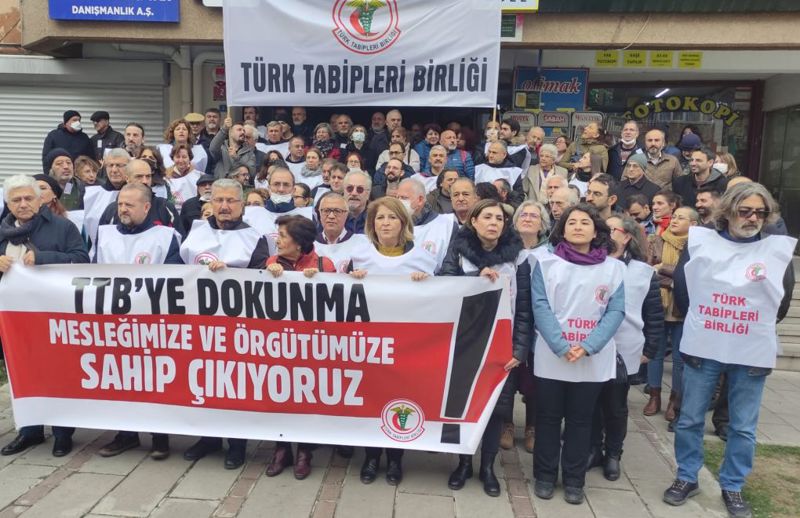
In recent days, some assessments of the Turkish Medical Association (TTB) elections have tried to explain the split taking place through technical differences. One list was supposedly “profession-oriented,” the other “organizationally experienced”; one supposedly represented “renewal,” the other “institutional continuity”...
Son günlerde Türk Tabipleri Birliği (TTB) seçimleri üzerine yapılan bazı değerlendirmeler, yaşanan ayrışmayı teknik farklılıklar üzerinden açıklamaya çalışıyor. Bir liste "meslek odaklı", diğeri "örgütsel deneyimli" imiş; biri "yenilenmeyi", diğeri "kurumsal devamlılığı" temsil ediyormuş...
No.
Hayır.
The split taking place in the TTB today is, in essence, not technical but political.
Bugün TTB'de yaşanan ayrışma esas olarak teknik değil, siyasidir.
At the center of the problem there is no distribution by specialty, no average age, no geographical representation.
Sorunun merkezinde branş dağılımı, yaş ortalaması ya da coğrafi temsil yoktur.
These are headings that cover over the real debate.
Bunlar gerçek tartışmanın üzerini örten başlıklardır.
The real divide is this: to stand side by side with Kurdish politics, or to put distance between oneself and it?
Asıl ayrışma: Kürt siyasetiyle yan yana durmak mı, ona mesafe koymak mı?
That is the essence of the matter!
Meselenin özü budur!
And to call this “professional focus” is not an electoral tactic but a retreat.
Bunun adını da "meslek odaklılık” koymak bir seçim taktiği değil bir geri çekilmedir.
A retreat from the demand for peace.
Barış talebinden geri çekilmedir.
A retreat from the idea of equal citizenship.
Eşit yurttaşlık fikrinden geri çekilmedir.
It is to accept the boundaries drawn by the government against a political sphere it has criminalized for years.
İktidarın yıllardır kriminalize ettiği bir siyasal alana karşı onun çizdiği sınırları kabul etmektir.
The ethical and democratic accumulation the TTB possesses today is the product of a history of common struggle.
TTB'nin bugün sahip olduğu etik ve demokratik birikim, ortak mücadele tarihinin ürünüdür.
After the 1980 coup, as the political sphere was being narrowed, as the Turkish-Islamic synthesis was becoming state policy, as trade unions were being purged, as emergency rule, village evacuations, enforced disappearances, and unsolved murders were taking place in the Kurdish provinces, as the Susurluk order governed the country, the TTB and the chambers of physicians did not become institutions that defended only physicians’ personal and labor rights.
1980 darbesi sonrasında siyasal alan daraltılırken, Türk-İslam sentezi devlet politikası haline gelirken, sendikalar tasfiye edilirken, Kürt illerinde olağanüstü hal, köy boşaltmaları, zorla kaybetmeler ve faili meçhuller yaşanırken, Susurluk düzeni ülkeyi yönetirken TTB ve tabip odaları yalnızca hekimlerin özlük haklarını savunan kurumlar olmadı.
They opposed torture. They defended peace against war. They defended human rights. They defended a democratic solution to the Kurdish question. For that reason, they became targets.
İşkenceye karşı çıktılar. Savaşa karşı barışı savundular. İnsan haklarını savundular. Kürt sorununun demokratik çözümünü savundular. Bu nedenle hedef oldular.
Therefore, today’s debate is not an electoral debate.
Dolayısıyla bugünkü tartışma seçim tartışması değildir.
It is a debate over which historical line the TTB will follow.
TTB'nin hangi tarihsel hatta yürüyeceği tartışmasıdır.
Whom you give up in order to win shows what kind of future you are willing to accept.
Kazanmak için kimlerden vazgeçtiğiniz, nasıl bir geleceğe razı olduğunuzu gösterir.
What we need today is not more distance, but more courage.
Bugün ihtiyaç duyduğumuz şey daha fazla mesafe değil, daha fazla cesarettir.
The problem is not being too close.
Sorun fazla yakın olmak değildir.
The problem is that we can no longer stand sufficiently side by side.
Sorun, artık yeterince yan yana duramamaktır.
The Turkish Medical Association was never merely a professional organization defending physicians’ economic rights; what set it apart was its ability to carry the ethical principle at the heart of medicine into public life.
Türk Tabipleri Birliği hiçbir zaman yalnızca hekimlerin ekonomik haklarını savunan bir meslek örgütü olmadı; onu farklı kılan, hekimlik mesleğinin özündeki etik ilkeyi kamusal hayata taşıyabilmesiydi.
Because medicine is not only the treatment of disease; it is the defense of life. And defending life is impossible without defending peace against war, equality against discrimination, freedom against oppression, and justice against lawlessness. For this reason, medical ethics and the struggle for democracy cannot be separated from one another.
Çünkü hekimlik yalnızca hastalık tedavi etmek değil, yaşamı savunmaktır; yaşamı savunmak ise savaş karşısında barışı, ayrımcılık karşısında eşitliği, baskı karşısında özgürlüğü ve hukuksuzluk karşısında adaleti savunmadan mümkün değildir. Bu nedenle hekimlik etiği ile demokrasi mücadelesi birbirinden ayrılamaz.
Those who today propose staying away from certain political questions in the hope that “we should reach broader segments” are, without realizing it, narrowing the very ground on which the TTB’s historical legitimacy rests. Yet legitimacy is won not by remaining silent, but by standing in the right place in difficult times.
Bugün “daha geniş kesimlere ulaşalım” düşüncesiyle bazı siyasal başlıklardan uzak durmayı önerenler, farkında olmadan TTB’nin tarihsel meşruiyetini oluşturan zemini daraltmaktadır. Oysa meşruiyet sessiz kalarak değil, zor zamanlarda doğru yerde durarak kazanılır.
What we need is not less politics or less solidarity, but a more principled politics, a braver solidarity, and a stronger partnership.
İhtiyacımız olan daha az siyaset ya da dayanışma değil; daha ilkeli bir siyaset, daha cesur bir dayanışma ve daha güçlü bir ortaklıktır.
The history of the TTB has taught us that rights, democracy, ethics, and peace are indivisible. Those who give up defending the rights of one people gradually lose the will to defend all rights.
TTB’nin tarihi bize hakların, demokrasinin, etiğin ve barışın bölünmez olduğunu öğretti. Bir halkın hakkını savunmaktan vazgeçenler, zamanla bütün hakları savunma iradesini kaybeder.
For this reason, the decision to be made today concerns not only which list will win, but the moral and political compass by which the TTB will move in the years ahead. Because sometimes a person is defeated not by the elections they lose, but by those they abandon for the sake of winning.
Bu nedenle bugün verilecek karar yalnızca hangi listenin kazanacağına değil, TTB’nin gelecek yıllarda hangi ahlaki ve siyasal pusulayla yol alacağına ilişkindir. Çünkü insan bazen kazandığı seçimlerle değil, kazanmak uğruna kimlerden vazgeçtiğiyle yenilir.
The ability of the Effective Democratic TTB (ED-TTB) to bring together physicians from Turkey’s east and west under the same democratic roof is not a matter of simple delegate arithmetic, but the result of a deep-rooted belief in the fraternity of Turkey’s peoples and in peace. The only focal point that has reported on the rights violations experienced by physicians in the region, on the public-health crises created by periods of conflict, and that has never left its colleagues there alone has been the ED-TTB. To present this organic, historical, and principled alliance as a matter of “list balance” is to underestimate the unifying force and sense of justice that the ED-TTB extends across the whole of Turkey.
Etkin Demokratik TTB'nin (ED-TTB) Türkiye’nin doğusundaki ve batısındaki hekimleri aynı demokratik çatı altında buluşturabilmesi, basit bir delege matematiği değil, Türkiye halklarının kardeşliğine ve barışa olan köklü inancın sonucudur. Bölgedeki hekimlerin yaşadığı hak ihlallerini, çatışmalı süreçlerin yarattığı halk sağlığı krizlerini raporlaştıran ve oradaki meslektaşlarını asla yalnız bırakmayan tek odak ED-TTB olmuştur. Bu organik, tarihsel ve ilkesel ittifakı bir "liste dengesi" gibi sunmak, ED-TTB'nin Türkiye'nin bütününe yayılan o birleştirici gücünü ve adalet duygusunu hafife almaktır.
To try to adopt a neutral and objective intellectual position when analyzing the debates within the TTB, while knowingly passing over the historical, ideological, and institutional rightness of the ED-TTB, is a very troubling position.
TTB içindeki tartışmaları analiz ederken tarafsız ve nesnel bir entelektüel pozisyon almaya çalışmak ancak bunu yaparken ED-TTB’nin tarihsel, ideolojik ve kurumsal haklılığını bile bile atlamak çok üzücü bir pozisyon.
In an authoritarian climate such as Turkey’s, where democracy, human rights, and the rule of law have been suspended, to say, “We are tired of politics, so let us focus only on our profession,” is to submit to the regime of pressure created by those in power. In a country without democracy, good and qualified medicine cannot be practiced. In a health system under neoliberal devastation, you cannot protect physicians’ labor without defending peace against war and human rights against anti-democratic practices. To dilute this structural truth with a psychological argument such as “political fatigue” is to do an injustice to the ED-TTB’s historical rightness.
Türkiye gibi demokrasinin, insan haklarının ve hukukun askıya alındığı otoriterleşme ortamında, "Siyaset yorgunuyuz, o yüzden sadece mesleğimize odaklanalım" demek, iktidarın yarattığı baskı rejimine teslim olmaktır. Demokrasinin olmadığı bir ülkede, iyi ve nitelikli hekimlik yapılamaz. Neoliberal yıkım altındaki bir sağlık sisteminde, savaşa karşı barışı, anti-demokratik uygulamalara karşı insan haklarını savunmadan hekimin emeğini de koruyamazsınız. Bu yapısal gerçeği "siyaset yorgunluğu" gibi psikolojik bir argümanla sulandırmak, ED-TTB’nin tarihsel haklılığına haksızlık etmektir.
The politics of fear produces distance; the politics of freedom, solidarity!
Korkunun siyaseti mesafe üretir, özgürlüğün siyaseti ise dayanışma!