Preaching Without a Party: Independent religious figures find space under the Islamic Emirate
Since the Taliban’s return to power in August 2021, the space for organised religious activism in Afghanistan has narrowed sharply. Islamic parties have been suppressed or gone quiet. The Islamic Emirate of Afghanistan (IEA), itself an Islamist movement, has worked steadily to bring religious discourse under state control. And yet, an unusual category of religious figure has grown more prominent under the IEA than it ever was before – young, urban, ‘online-first’ preachers who blend short videos on personal piety and family life with charitable and educational projects. AAN’s Sharif Akram examines the work of four prominent Afghan Islamic influencers and looks at how their growing popularity is gently testing the scope of religious authority in Afghanistan.
Our new report considers four online preachers – Rahmatullah Nowruz, Nasratullah Sahibi, Abdul Samad Qazizada and Jawed Ibrahimi – who have risen to prominence since the Taliban’s return to power in August 2021. Most were already active during the Islamic Republic, running small charities, posting religious content on Facebook and YouTube and quietly building schools and orphanages, but they were not particularly visible. In the last five years, that has changed, even as the Islamic Emirate of Afghanistan (IEA) has sought to monopolise religious authority. It has banned or suppressed the various Islamist parties that were active under the Islamic Republic and moved to control religious discourse, including who may legally preach, how and on what. A large number of the Taliban’s own cadre, as well as mullahs affiliated with the movement, are now embedded in state structures, as ministers, members of the security forces, university chancellors and judges, becoming the public face of religion in Afghanistan.
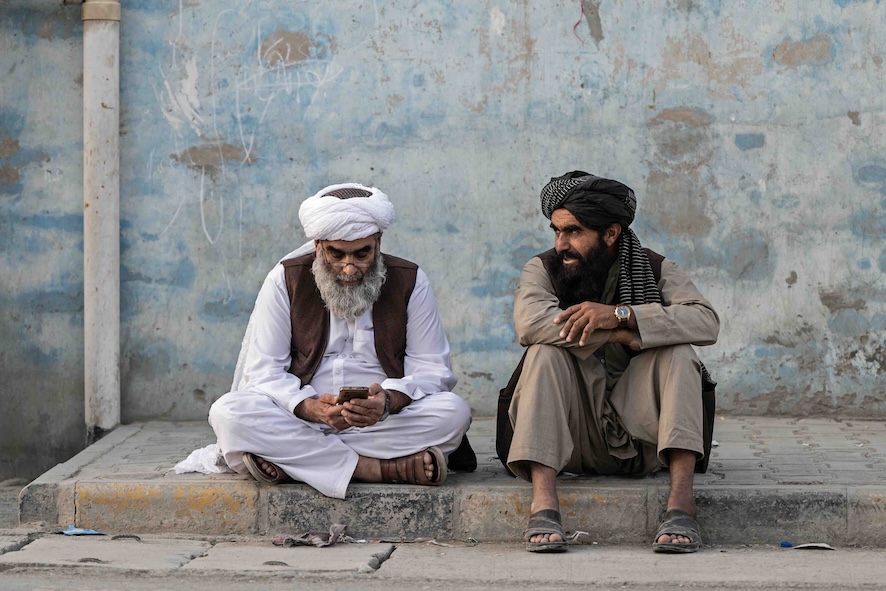
Despite all this, these four preachers have emerged – young, urban, ‘online-first’ Islamic influencers who blend short videos on personal piety, family life and self-improvement with charitable and educational projects. The four are marked out by dress, language and subject matter from the Taliban and Taliban-aligned mullahs who prohibit and warn, dwelling on what people must not do and what punishments await sinners in the hereafter. Emirate discourse focuses on the failings of urban Afghans, of women’s dress, music and the influence of Western media. Traditional mullahs do not, by and large, address how a young man should manage his anger, how a husband and wife should communicate or how a person should cope with depression. The online preachers address precisely these questions, in a tone that is encouraging rather than chastising. As to their appearance, instead of robes, turbans and untrimmed beards, they look more like urban professionals. Their followers collectively number in the millions and include young women as well as men. Notably, as well, none of the four has gone through the full, rigorous madrasa education, which means they are dismissed by the religious establishment and more conservatively minded Afghans as unfit to speak about Islam. Yet, their popularity keeps on growing.
Part of their appeal is that, under the Islamic Emirate, religion and the state have become increasingly difficult to tell apart. Ordinary people used to look to mullahs as figures who could, at least in principle, stand apart from power. Now, their sermons sound less like religious counsel and more like state communication. Into this gap in religious authority and teaching have stepped the online preachers. This report draws on a review of the four figures’ online output, their televised interviews, audience comments on their posts and secondary reporting by other outlets. The analysis is based on what they have chosen to say in public. The report begins by examining how religious activism operated before the Emirate takeover and why, with its return, the space for independent religious voices has opened up. Sharif looks at what they preach and how their audiences receive them. He asks whether, ultimately, the four are helping the Emirate maintain its rule, or subverting it.
Edited by Kate Clark and Rachel Reid
You can preview the report online and download it by clicking here or the download button below.
Endnotes:
Revisions: