Is the “Maximum Use” of Nuclear Power Rational?
The government’s Seventh Basic Energy Plan rests on uncertain demand forecasts and an opaque decision-making process, making its turn toward the “maximum use” of nuclear power economically, politically, and climatically hard to justify.
Is the “maximum use” of nuclear power rational? The government’s Seventh Basic Energy Plan deletes “reducing dependence on nuclear power” Politics and Diplomacy, Science, Society - English - Japanese - Simplified Chinese - Traditional Chinese - Français - Español - Arabic - Russian Nuclear power’s share is “around 20 percent.”
原発「最大活用」は合理的か:「脱原発依存」削除の政府第7次エネ基本計画 政治・外交 科学 社会- English - 日本語 - 简体字 - 繁體字 - Français - Español - العربية - Русский 原発の依存度は「2割程度」
The Seventh Basic Energy Plan sets out a policy of aiming for decarbonization by 2050 while responding to rising demand for electricity.
第7次エネルギー基本計画は、電力需要の増加に対応しつつ、2050年の脱炭素化を目指す方針を示したものだ。
As for the power-generation mix, the plan calls for raising renewable energy from its current share of 20 percent to 40-50 percent and making it a main power source, while increasing nuclear power from 8.5 percent in 2023 to around 20 percent by 2040. Thermal power generation, which produces large volumes of greenhouse gases, is to be reduced from its current 70 percent to 30-40 percent.
電源構成の比率は、再生可能エネルギーを現状の2割から4~5割に増やして主力電源とし、原子力は23年の8.5%から40年には2割程度まで増やすとした。温室効果ガスの排出が多い火力発電は、現状の7割を3~4割まで低減させる計画だ。
Japan’s actual and projected power-generation mix. Created by Nippon.com from the Agency for Natural Resources and Energy’s outline of the Seventh Basic Energy Plan.日本の電源構成の実績と予測 ※資源エネルギー庁第7次エネルギー基本計画の概要からnippon.com作成
With regard to nuclear power, it is fair to say that the plan marks a major turning point: it raises the policy of utilization to the level of “maximum” use, reviews the forty-year operating limit for nuclear plants, and explicitly allows such measures as extensions and rebuilding.
原子力については、活用を「最大限」にまで引き上げ、原発の40年の運転期間制限を見直して「延長・建て替えの容認」などを明記した点で、大きな転換点を迎えたと言って良い。
Reliance on demand forecasts that lack certainty.確実性欠く需要予想に依拠
Japan’s energy policy has long been compiled on the basis of the “Long-Term Energy Supply and Demand Outlook.” The Basic Energy Plan, too, is grounded in that long-term outlook, and this time the government cites rising electricity demand from artificial intelligence and the information industry as the basis for its major shift toward the “maximum use of nuclear power.”
日本のエネルギー政策は、以前から「長期エネルギー需給見通し」に基づいてまとめられてきた。基本計画も長期需給見通しをベースにしており、今回、政府は「原発の最大限活用」方針に大転換した理由を、人工知能(AI)や情報産業による電力需要の増加を根拠にしている。
Yet there have been multiple cases in which these forecasts of electricity demand diverged from actual demand. The figure comparing projected and actual electricity demand, compiled by the Organization for Cross-regional Coordination of Transmission Operators, Japan, compares demand forecasts with actual results. Since 2016, high demand forecasts have been issued almost every year, but actual demand has fallen far below those projections, showing just how inaccurate demand forecasting can be.
しかし、電力のこの需要見通しは、実際の電力需要とは乖離(かいり)が生じた例が複数ある。〈図・電力需要予測と実績〉は電力広域的運営推進機関(OCCTO)による、電力需要の予測と実績を比較したものだ。2016年以降、毎年のように高い需要見通しを示したが、実際の需要量は予想を大きく下回っており、需要予測がいかに不正確なものかを物語っている。
The revision of the Basic Plan this time rests on the premise that growing demand from data centers will require vast amounts of electricity. At the same time, some point out that digitalization may bring revolutionary improvements in energy efficiency and reduce electricity demand. An “Energy Basic Plan” founded on energy-demand forecasts marked by considerable uncertainty therefore contains a fundamental problem from the outset.
今回の基本計画の変更は、データセンターの需要増大により大量の電力が必要になるという前提に立っている。一方、デジタル化によるエネルギー効率が革新的に改善され、電力需要を低減させるとの指摘もある。かなりの不確実性があるエネルギー需要予測に基づいた「エネルギー基本計画」は、そもそも根本的な問題を抱えているのである。
Problems in the decision-making process.意思決定プロセスに課題
In fact, the “Energy Basic Plan” itself has a character ill suited to an age of electricity liberalization, which inherently contains uncertainty.
実はこの「エネルギー基本計画」自体、不確実性を内包する電力自由化の時代に適合できない性質を持つ。
First, the government has promoted the use of market principles accompanying the liberalization of the energy market. In practice, a wide variety of companies, including city-gas providers and major telecommunications firms, have entered the electricity business and compete over supply systems, prices, and other factors. But the uncertainty produced by such liberalization and a government-led Basic Energy Plan are, from the start, difficult to reconcile. Making use of market principles should instead require moving away from a “planning” mentality. This is also why, in Europe and the United States, where liberalization has advanced, a centralized planning model like Japan’s, in which the government predetermines the structure of supply and demand, is no longer common.
第1に、政府はエネルギー市場の自由化に伴う市場原理の活用を進めてきた。実際、都市ガスや大手通信会社など多種多様な企業が電気事業に参入し、供給体制や価格などで競い合っている。だが、そういった自由化がもたらす不確実性と政府主導のエネルギー基本計画は、そもそも整合性が取りにくい関係にある。市場原理の活用は、むしろ「計画」的発想から離れる必要があるはずだ。自由化を進めた欧州や米国で、日本のような「需給構造を政府が決め打ちする中央集権的な計画型モデル」が一般的ではなくなっているのも、そういう背景がある。
Second is the absence of any evaluation of alternatives. The discussion of the Basic Energy Plan almost entirely lacks the important perspective of “evaluating alternatives,” meaning the multifaceted comparison and consideration needed to choose the best option from among several possibilities. Put differently, Japan’s energy policy has no “Plan B” capable of responding to an uncertain future. This is a decisive flaw, and it leads to rigid policy.
第2に代替案評価の欠如である。複数の選択肢から最適なものを選ぶために多角的に比較検討する「代替案の評価」という重要な視点が、エネルギー基本計画の議論にはほとんど欠けている。言い換えれば、日本のエネルギー政策には、不確実な将来に対応できる「プランB」が存在していない。これが決定的な欠陥であり、硬直的な政策につながっている。
Third, there are problems with the decision-making process itself. The conventional council-based method of decision-making allows for far too narrow a range of views. Looking at the central body, the Advisory Committee for Natural Resources and Energy, one sees many direct stakeholders and little visible diversity of opinion. There is no sign at all of a process that allows participation from what is commonly called civil society.
第3に意思決定プロセスにも問題がある。従来通りの審議会方式の意思決定プロセスでは、あまりにも意見の幅が狭い。中心となっている総合資源エネルギー調査会をみても、直接の利害関係者が多く、意見の多様性も見えにくい。いわゆる市民社会からの参加プロセスが全く見えてこない。
Under these circumstances, even if the operation of nuclear plants attracts attention as an issue of national concern, it is hardly surprising if decisions on nuclear operations are seen as the outcome of discussions among a limited group of stakeholders.
これでは国民的課題として原発の稼働が注目されても、原発稼働の意思決定が一部の利害関係者による議論の結果、と見られても仕方ない。
Questions about economic viability. The basis for the economic rationality of the “maximum use” of nuclear power is extremely opaque.
経済性への疑問 原発「最大限活用」の経済的合理性の根拠は極めて不透明だ。
Even according to the Ministry of Economy, Trade, and Industry’s own announcements, nuclear power had already ceased by 2021 to be “the most economically efficient power source.” In the latest assessment of generation costs as well, nuclear power is said to cost more than solar power and is not regarded as “the cheapest power source.”
原発は、経済産業省の発表でも既に2021年時点で既に「最も経済性の高い電源」ではなくなっている。今回発表された発電コスト評価でも、原発は太陽光よりも高く、「最も安い電源」ではないとされる。
This time, the renewal of aging nuclear plants has been permitted, and for the first time since the Fukushima nuclear accident, a power company has emerged that has expressed an intention to rebuild. Yet perhaps because of anxiety over the economics of newly built nuclear plants, Kansai Electric Power president Nozomu Mori has said, “Because it is important to secure predictability in recovering investment, it will be necessary to develop the business environment and take other measures based on national policy.” (*1)
今回、古い原発の更新が認められ、福島原発事故以降、初めて建て替えの意向を示す電力会社が登場した。だが新設原発の経済性に不安があるのか、関西電力の森望社長は「投資の回収の予見性を確保することが重要なので、国の政策に基づく事業環境整備などが必要となる」と述べている(※1)。
In response, the government has begun considering the introduction of a new fee system to ensure the recovery of construction costs, with a view to supporting the construction of new nuclear plants. This confirms that building new nuclear plants cannot stand in a free market, and there is concern that it will lead to a greater burden on the public.
これを受け、政府も原発の新設支援に向け、建設費の回収を確実にすべく新たな料金制度の導入を検討し始めた。新規原発の建設は自由な市場では成り立たないことを裏付けたもので、国民負担の増加につながると懸念されている。
The government has also approved extensions to the operating lives of nuclear plants, but consistency with the policy of building new plants will likely become an issue as well.
また、政府は原発の寿命延長も認めたが、新設政策との整合性も問題になるだろう。
The contributions to supply stability and climate-change measures are limited.供給安定性や気候変動対策への貢献は限定的
“Supply stability” and “contribution to climate-change measures” are cited as reasons for making maximum use of nuclear power. Yet here, too, only limited effects can be expected.
原子力発電の最大限活用の理由として「供給安定性」と「気候変動対策への貢献」が挙げられている。だが、これも限定的な効果しか期待できない。
Nuclear power’s defining feature is that it can secure generating capacity at a constant output, in other words, “supply stability.” However, because shutdowns caused by frequent earthquakes and growing uncertainty over restart plans have made it harder to forecast whether generating capacity can be secured according to plan, its reliability as a stable baseload power source is beginning to dim. As of 2024, the average capacity factor remains only 30.6 percent. (*2)
原発は一定出力で発電容量を確保できる点、つまり「供給安定性」が特徴だ。ただ、頻発する地震による稼働停止や、再稼働計画の不確実性の高まりにより、計画に沿った発電容量の確保を予測することも難しくなっている。平均稼働率は2024年現在で30.6%にとどまっており(※2)、安定したベースロード電源としての信頼性にも陰りが見える。
As a measure against global warming, existing nuclear plants would certainly be effective if they operated and replaced thermal power generation. But if nuclear operations lead to curtailing the output of renewable energy, their effect on global-warming countermeasures will be limited. Moreover, it is said that building a new nuclear plant takes at least twenty years, so even if new construction produces results, they will not appear until 2045 at the earliest. In short, new nuclear plants will not arrive “in time” as a measure against global warming.
温暖化対策としては、既存の原発が稼働して火力発電を代替すれば確かに効果があるだろう。しかし、原発の稼働により再生可能エネルギーの出力を抑制することになると、温暖化対策への効果は限定的になる。さらに、原発の新設には少なくとも20年はかかると言われているので、新設して効果を上げるなら早くても45年以降になってしまう。要は、新規原発は温暖化対策として「間に合わない」のである。
Resolving key issues in order to gain public understanding.国民理解へ重要課題の解決を
Finally, regardless of whether one supports or opposes nuclear power, the greatest challenges in nuclear policy are the selection of a final disposal site for high-level radioactive waste, the so-called “nuclear waste,” and the decommissioning of the Fukushima Daiichi Nuclear Power Station. Unless there is a prospect of resolving such issues, public understanding of nuclear policy will not be obtained.
最後に、原発の「推進・反対」に関わらず、原子力政策の最大の課題として挙げられるのが、高レベル放射性廃棄物(いわゆる『核のごみ』)の最終処分場選定や福島第1原発の廃炉の問題だ。このような問題の解決の見通しが立たない限り、原子力政策への国民の理解は得られないだろう。
As for the “nuclear waste problem,” surveys are being conducted in a total of three towns and villages in Hokkaido and Saga Prefecture, but there is no prospect of deciding on a disposal site. It would be desirable to state explicitly in law that this is an issue that must be resolved regardless of support for or opposition to nuclear power, and to reorganize the relevant system accordingly. It is also important to specify, through legal revision, the establishment of an independent “third-party body” to evaluate the disposal process objectively.
「核のごみ問題」は、北海道と佐賀県の計3町村で調査が行われているが、処分地の決定は見通せていない。推進・反対に関わらず解決が必要な課題であることを、法律に明記し、体制もそれに従った組織に改変することが望ましい。さらに、処分プロセスを客観的に評価する、独立した「第三者機関」の設置も法改正で明記することが重要だ。
The decommissioning and reconstruction of Fukushima Daiichi are also vital tasks that must be addressed regardless of support for or opposition to nuclear power. The road map for decommissioning has no legal basis, and the scientifically weak target of completing the work in thirty to forty years is still being maintained. Even now, fourteen years after the accident, problems remain piled up: the overall goals for decommissioning, the implementation system, the evaluation system, for which an independent third-party body is necessary, the review of total costs and how they should be borne, the disposal of decontaminated soil and the issue of treated contaminated water, and the process of building consensus with local communities and the international community. Here, too, a fundamental review is required.
福島第1原発の廃炉や復興も、原発の推進・反対に関わらず必要な重要課題だ。廃炉のためのロードマップは法的根拠もなく、30~40年で完了するという科学的には根拠の薄い目標がいまだに維持されている。事故後14年もたった今でも、廃炉全体の目標、実施体制、評価体制(独立した第三者機関が必要)、総費用の見直しやその負担の在り方、除染土の処分や汚染処理水の問題、地元をはじめ国際社会との合意形成プロセスなど、課題は山積みのままだ。ここでも根本的な見直しが必要だ。
Information disclosure and fair evaluation are necessary.情報公開と公正な評価が必要
For nuclear policy to be carried out smoothly, trust is indispensable not only from a country’s own citizens but also from the international community. To that end, there must be a mechanism for disclosing the information that serves as the basis of policy, comparing it with alternatives, and reflecting the views of many stakeholders. In policy evaluation, not only self-assessment but fair evaluation, including the establishment of third-party bodies, will generate citizens’ trust. Restoring that trust requires securing transparency in such policy-making processes, and beyond that, continuing sincere dialogue in ordinary times.
原子力政策の円滑な実行には、自国の市民のみならず、国際社会からの信頼も不可欠である。そのためには、政策の根拠となる情報を公開し、代替案との比較をした上で、多くのステークホルダーの意見を反映する仕組みが必要だ。政策評価には自らの評価のみならず、第三者機関の設置など、公正な評価が市民の信頼を生む。市民の信頼回復には、そのような政策決定過程における透明性の確保が不可欠であり、さらには平常時から真摯(しんし)な対話を継続していくべきだ。
If this Basic Energy Plan is to become one trusted by citizens and by the international community, the policy-making process must be fundamentally reviewed.
今回のエネルギー基本計画が市民や国際社会に信頼されるものとなるよう、政策決定プロセスの根本的な見直しが求められる。
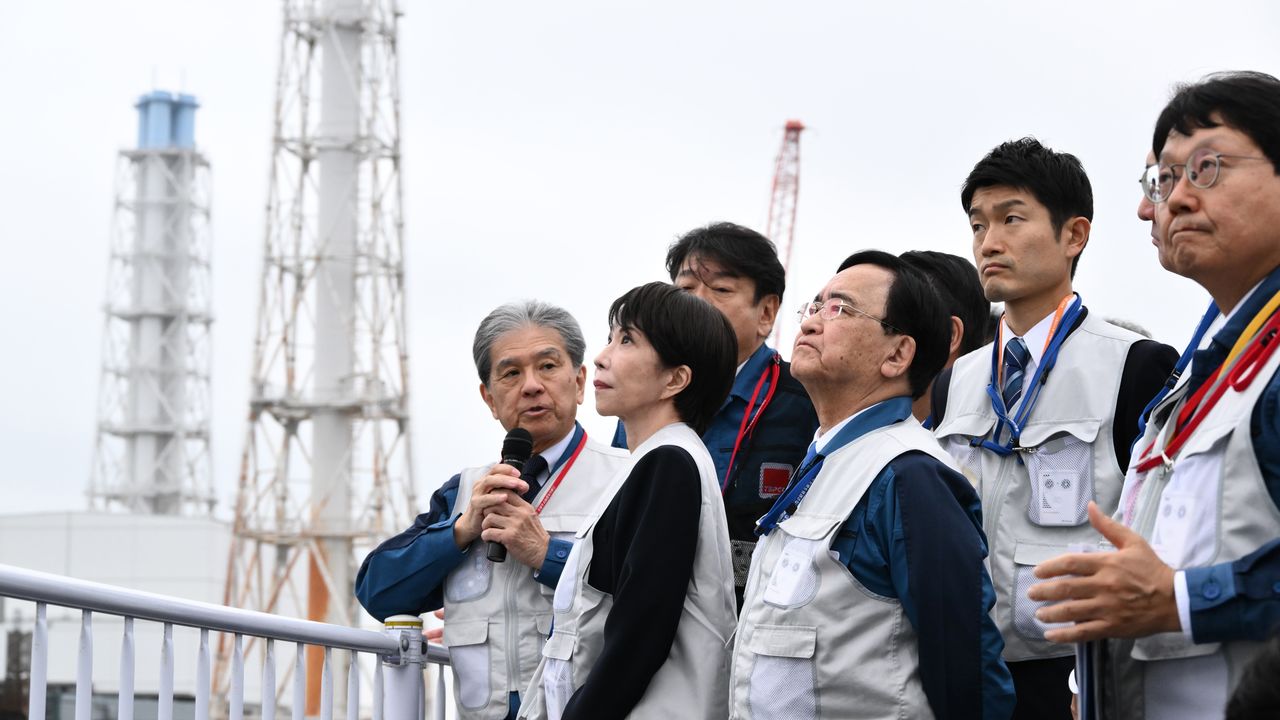
Banner photo: Prime Minister Sanae Takaichi inspecting Tokyo Electric Power Company’s Fukushima Daiichi Nuclear Power Station and receiving an explanation from Akira Ono, executive vice president of Tokyo Electric Power Company Holdings, at far left; Takaichi is second from left. Okuma, Fukushima Prefecture, December 2, 2025. Pool photo, Jiji.
バナー写真:東京電力福島第1原子力発電所を視察し、東京電力ホールディングス(HD)の小野明副社長(左端)から説明を受ける高市早苗首相(左から2人目)=2025年12月2日、福島県大熊町(代表撮影、時事)
(*1) NHK News, “Kansai Electric Power to Resume Survey for Rebuilding on the Mihama Nuclear Power Plant Site,” July 22, 2025.
(※1) ^ NHK ニュース、「関西電力 美浜原発敷地内に建て替えに向け調査再開へ」、25年7月22日。
(*2) Koichi Ishikawa, “Capacity Factor of Domestic Nuclear Power Generation in Fiscal 2024 Was 30.6%,” January 10, 2025.
(※2) ^ 石川公一、「国内原子力発電2024年度の設備利用率は30.6%」、25年1月10日。