The “Miracle Drug” Spreading Among Teenagers
Obesity drugs created to treat disease are being prescribed with alarming ease for cosmetic weight loss, even to adolescents, while regulation and data lag far behind the risks.
Even a map app could not locate it precisely. After passing through the subway turnstiles, I wandered for a long while through “basement level two,” but the clinic was nowhere to be seen. “Which way should I go to get to OO Clinic?” I asked at a nearby shop. The answer came back as if the question were familiar: “Go straight toward Cheongnyangni.” In the middle of a subway transfer corridor thronged with hurried passersby, the exterior was so unobtrusive that unless one looked closely, it was hard to tell it was a clinic at all. Inside, there was no person at the reception desk, only a tablet PC. Under purpose of visit, the only choices were things like “diet injection,” “hair-loss medication,” “urology,” and “acne medication.” By seven in the evening, the clinic had quickly filled with thin, young women.
지도 앱에서도 정확한 위치를 찾을 수 없었다. 지하철 개찰구를 통과해 ‘지하 2층’을 한참 헤맸지만, 병원은 보이지 않았다. “OO 병원으로 가려면 어디로 가야 하나요?” 인근 상가에 물어보자 익숙하다는 듯 돌아온 답은 “청량리 방면으로 쭉 가세요”였다. 사람들이 바쁘게 오가는 지하철 환승 통로 한복판, 눈여겨보지 않으면 병원인지 알아채기 힘든 외관이었다. 내부로 들어가자, 접수처엔 사람 대신 태블릿 PC가 놓여 있었다. 내원 목적을 선택하는 항목에는 ‘다이어트 주사’ ‘탈모약’ ‘비뇨기과’ ‘여드름약’ 등의 선택지만 있었다. 저녁 7시, 병원 내부는 금세 마르고 젊은 여성들로 가득 찼다.
After selecting “diet injection” and waiting, I was soon called by a nurse. The moment I sat down in the consulting room, the doctor asked bluntly, “Mounjaro or Wegovy?” When I answered “Mounjaro,” he gave a mechanical explanation: “The dosage is 2.5 mg, right? Read this notice, and this is how you give yourself the shot.” Mounjaro and Wegovy are injected by the person to whom they are prescribed. The doctor did not ask my weight or body mass index, BMI. He did not ask about past medical history or experience of side effects, and there was not even a perfunctory examination. In barely more than twenty seconds, it was possible to obtain a prescription for Mounjaro with astonishing ease.
‘다이어트 주사’를 선택하고 대기하자, 곧 간호사가 호명했다. 진료실에 들어가 앉자마자 의사는 다짜고짜 물었다. “마운자로요, 위고비요?” ‘마운자로’라고 답하자 “용량은 2.5㎎이죠? 여기 안내문 읽어보시고, 주사는 이렇게 놓으면 돼요”라는 기계적인 설명을 했다(마운자로와 위고비는 처방받은 이가 직접 주사한다). 의사는 몸무게나 체질량지수(BMI) 따위를 묻지 않았다. 과거 병력이나 부작용 경험도 묻지 않았고, 형식적인 검사 절차도 없었다. 불과 20초 남짓이면, 마운자로를 아주 쉽게 처방받을 수 있었다.
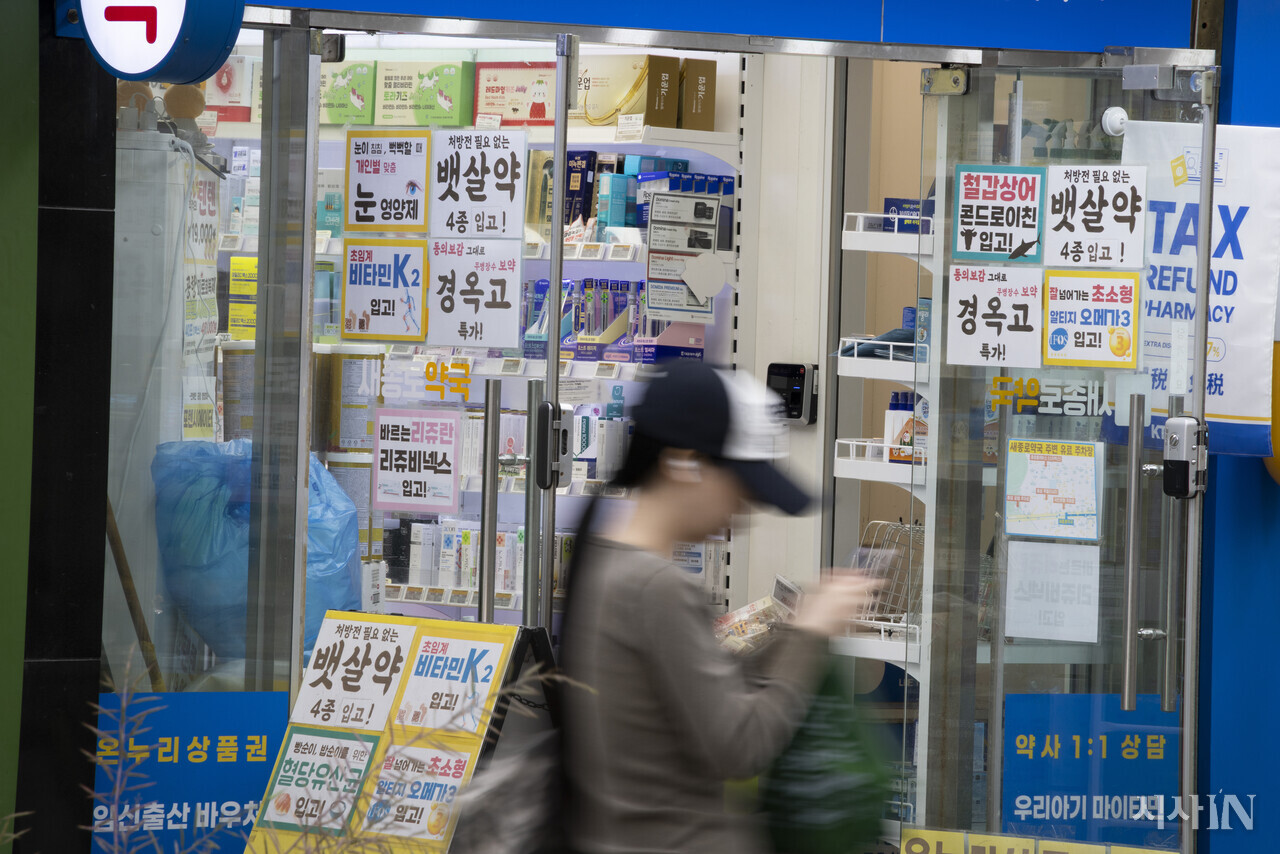
The prescription fee is a flat 10,000 won; at the 2.5 mg dose, Wegovy costs 218,000 won and Mounjaro 290,000 won, a perfectly fixed-price system. Around Jongno in Seoul, known as a “Mounjaro mecca,” pharmacies and clinics like this lined the streets. On social media, information circulated about clinics that readily prescribed Mounjaro and Wegovy. These drugs, advertised with provocative slogans promising a loss of ten kilograms in three months, have begun to be used as cosmetic diet drugs for “getting even thinner,” their original purpose as treatments for diabetes and obesity forgotten. A pharmacist at Pharmacy A in Jongno District said, “All the clinics around here prescribe Mounjaro. These days people of all ages are taking Mounjaro away with them. Most are young women, but the age range has widened, from high school students to men in their sixties.” A pharmacist at Pharmacy B explained, “Because of the price, really young kids are rare, but there are quite a few high school students.”
처방비는 일괄 1만원, 2.5㎎ 기준 위고비는 21만8000원, 마운자로는 29만원으로 완벽한 정찰제다. ‘마운자로 성지’로 불리는 서울 종로 일대에는 이런 약국과 병원이 즐비했다. SNS에는 손쉽게 마운자로와 위고비를 처방해주는 병원 정보가 공유됐다. 3개월이면 10㎏을 감량한다는 자극적 홍보 문구가 붙는 이 약은, 당뇨·비만 치료제라는 본래의 목적을 잊고 ‘더 마르기 위한’ 미용 목적의 다이어트 약으로 사용되기 시작했다. 종로구 A 약국 약사는 “여기 병원들은 다 마운자로 처방한다. 요즘은 다양한 연령대가 마운자로를 가져간다. 대부분 젊은 여성이지만, 고등학생부터 60대 남성까지 연령대가 다양해졌다”라고 말했다. B 약국 약사는 “아무래도 가격대가 있으니까 아주 어린애들은 드물어도, 고등학생은 꽤 있다”라고 설명했다.
Illegal distribution has also increased. On May 13, the Ministry of Food and Drug Safety announced the results of an inspection into the distribution of GLP-1 obesity treatments, including Mounjaro and Wegovy, which suppress appetite. After inspecting 632 hospitals, clinics, and pharmacies nationwide, the ministry found six sites where doctors had used the drugs themselves without preparing medical records, or where drugs had been sold without prescriptions.
불법 유통도 늘었다. 5월13일 식품의약품안전처(식약처)는 마운자로, 위고비 등 식욕을 억제하는 GLP-1 계열 비만치료제의 유통 실태 점검 결과를 발표했다. 식약처가 전국 632개 병원과 약국을 점검한 결과, 진료기록부를 작성하지 않고 의사 본인이 약을 사용하거나 처방전 없이 약품을 판매한 여섯 곳이 적발됐다.
The “Miracle Drug” Spreading Among Teenagers청소년에게 퍼진 ‘기적의 약’
Originally, Mounjaro and Wegovy were intended for obese patients with a body mass index of 30 or above, or for overweight patients with a BMI of 27 or above and below 30 who also have weight-related comorbidities such as hypertension. In reality, however, prescriptions are being written “for anyone” who “wants them.” Because prescriptions for obesity treatments can be obtained so easily, whether by skirting the law or violating it outright, even self-mocking remarks now appear in online communities: “Soon, if you’re not thin, you’ll be branded as someone without money.”
원래 마운자로와 위고비는 체질량지수(BMI) 30 이상인 비만 환자나 BMI 27 이상 30 미만이면서 고혈압 등 체중 관련 동반 질환이 있는 과체중 환자 등이 처방 대상이다. 그러나 현실은 ‘원하면’ ‘누구에게나’ 처방이 이루어지고 있다. 너무나 쉽게, 탈법 혹은 불법으로 비만치료제 처방이 가능하다 보니 온라인 커뮤니티에서는 “이제는 마르지 않으면 ‘돈 없는 사람’으로 낙인찍힐 수 있다”라는 자조적인 목소리마저 나온다.
The miracle drug has spread even to teenagers. A pharmacist at Pharmacy C in Jongno District explained why the pharmacy does not carry Mounjaro, Wegovy, and similar drugs: “I simply cannot stand seeing thin people come in and take those drugs. And then kids come in for them too. So we just decided not to stock them.” This has been known for some time. At the National Assembly Health and Welfare Committee’s parliamentary audit last October, it was pointed out that prescriptions for Mounjaro for teenagers were increasing. So Byung-hoon, a lawmaker from the Democratic Party of Korea, said, “Under Ministry of Food and Drug Safety guidelines, the obesity treatment Mounjaro may be prescribed to people aged 18 and older, yet it is also being prescribed to teenagers who have not turned 18. The ministry must take this seriously and manage it.”
기적의 약은 청소년에게까지 퍼졌다. 종로구 C 약국 약사는 마운자로, 위고비 등을 취급하지 않는 이유를 이렇게 말했다. “마른 이들이 와서 그 약을 가져가는 게 도저히 보기 싫은 거다. 거기다가 애들이 와서 가져가니까. 그래서 우리는 그냥 들여놓지 않았다.” 일찌감치 알려진 일이다. 지난해 10월 국회 보건복지위원회 국정감사에서 청소년 대상으로 마운자로 처방 건수가 늘고 있다는 지적이 나왔다. 소병훈 더불어민주당 의원은 “비만치료제 마운자로는 식약처 지침상 만 18세 이상에게 처방 가능한데, (만 18세가 되지 않은) 청소년들에게도 처방되고 있다. 식약처가 심각하게 보고 관리해야 한다”라고 지적했다.
How is this possible? Because of “off-label” use, the use of a drug for purposes other than those for which it has been approved. In principle, prescribing a drug outside its indications, meaning the diseases or symptoms for which a therapeutic effect is expected from a specific medicine, requires approval from the Health Insurance Review and Assessment Service. But medical insiders explain that because there is no separate penalty provision even when drugs are prescribed beyond the scope of approval or notification, such prescriptions are easily issued. In other words, although Ministry of Food and Drug Safety guidelines say Mounjaro should be prescribed only to those aged 18 and older, the rule has no coercive force. One doctor tipped me off: “A considerable number of teenagers, including aspiring idols, are getting prescriptions for Mounjaro and Wegovy regardless of disease.”
어떻게 이런 일이 가능할까. ‘오프라벨(허가 용도 외 사용)’ 때문이다. 원칙적으로는 적응증(특정 의약품에 의해 치료 효과가 기대되는 병이나 증상) 외에 약품을 처방하려면 건강보험심사평가원 허가를 받아야 한다. 그러나 허가 또는 신고 범위를 초과해 약물을 처방하더라도 별도의 처벌 규정이 없어 손쉽게 처방이 이루어진다는 게 의료 관계자들의 설명이다. 식약처 지침상 마운자로는 만 18세 이상에게만 처방하도록 되어 있지만, 강제력이 없다는 이야기다. 한 의사는 “아이돌 지망생 등 적잖은 청소년들이 질병과 무관하게 마운자로, 위고비를 처방받고 있다”라고 귀띔했다.
According to Drug Utilization Review, or DUR, data submitted by the Health Insurance Review and Assessment Service to the office of Kim Sun-min, a Rebuilding Korea Party lawmaker on the National Assembly Health and Welfare Committee, in April 2026, prescription checks in March of this year recorded 41 cases of Saxenda, 2,213 cases of Wegovy, and 1,888 cases of Mounjaro among teenagers. Cases also emerged in which Wegovy, Mounjaro, Saxenda, and similar drugs were checked for prescriptions to children under the age of ten. In the cases of Saxenda and Wegovy, the Ministry of Food and Drug Safety has approved expanded indications for adolescent patients aged 12 and older, but Mounjaro has not yet been approved in Korea for adolescent use.
2026년 4월 국회 보건복지위원회 김선민 조국혁신당 의원실이 건강보험심사평가원으로부터 제출받은 의약품안전사용서비스(DUR) 자료에 따르면 올해 3월에는 10대들에게 삭센다 41건, 위고비 2213건, 마운자로 1888건이 처방 점검됐다. 10세 미만에게까지 위고비, 마운자로, 삭센다 등을 처방 점검한 사례도 드러났다. 삭센다와 위고비의 경우 식약처로부터 12세 이상 청소년 환자에 대해서 적응증 확대 승인을 받았지만, 마운자로는 아직 국내에서 청소년 대상 승인이 나지 않은 상태다.
The problem of side effects is also serious. Lee Dong-geun, secretary-general of the Association of Pharmacists for a Healthy Society, explained, “The most severe side effect is pancreatitis, and recently in the United States eating disorders have become an issue. Some users experience eating disorders, but all of these reports concern patients who fit the indications. We do not know the side effects in patients who receive the drugs outside the indications. In the past, when prescriptions of the so-called butterfly pills, narcotic appetite suppressants, became a social problem because of adolescent use, the Ministry of Food and Drug Safety drew up prescription guidelines and showed a will to regulate them, which helped mitigate the risk. In the same way, related regulations must be hurried along.”
부작용 문제도 심각하다. 이동근 건강사회를 위한 약사회 사무국장은 “가장 심한 부작용은 췌장염이고, 최근 미국에서는 섭식장애가 문제가 되고 있다. 사용자 일부가 섭식장애를 겪는다는 건데, 이 모든 보고는 적응증에 맞는 환자에 관한 내용이다. 적응증 외 약물을 투여한 환자에 대해서는 부작용을 알 수 없는 상황이다. 과거 청소년 사용으로 사회적 문제가 됐던 일명 나비약(마약성 식욕억제제) 처방에 대해 식약처가 처방 가이드라인을 만들어 규제 의지를 보인 후 위험이 완화된 측면이 있는 만큼 관련 규제를 서둘러야 한다”라고 설명했다.
The Ministry of Food and Drug Safety plans to designate GLP-1 obesity treatments such as Wegovy and Mounjaro as drugs at risk of misuse and abuse. Once designated as such, drug containers, packaging, and accompanying documents must carry the phrase “drug at risk of misuse and abuse.” But designation as a drug at risk of misuse and abuse does not make off-label prescribing impossible. As noted above, even if the drugs are prescribed to teenagers, there is no way to regulate it.
식약처는 위고비, 마운자로 등 GLP-1 계열의 비만치료제를 오남용 우려 의약품으로 지정한다는 방침이다. 오남용 우려 의약품으로 지정되면 약품 용기나 포장, 첨부 문서에 ‘오남용 우려 의약품’ 문구를 표시해야 한다. 그러나 오남용 우려 의약품으로 지정되더라도 적응증 외 처방이 불가능한 건 아니다. 앞서 말했듯 청소년에게 처방해도 이를 규제할 방법이 없다.
Eli Lilly Korea, the domestic supplier of Mounjaro, also says prescriptions should be made only within the scope of approval. An Eli Lilly Korea official explained, “Because studies involving adolescents are still under way, Mounjaro should be used only for adult patients with obesity, patients with diabetes, and patients with obstructive sleep apnea. We, too, have no way to regulate off-label prescriptions by medical personnel.”
마운자로의 국내 공급사인 한국릴리 역시 허가 사항 안에서만 처방이 이루어져야 한다고 말한다. 한국릴리 관계자는 “청소년에 대해서는 아직 연구가 진행 중인 만큼, 마운자로는 성인 비만 환자, 당뇨병 환자, 폐쇄성 수면무호흡증 환자를 대상으로만 사용되어야 한다. 우리로서도 의료진의 오프라벨 처방을 규제할 방법은 없다”라고 설명했다.
Even When They Are Misused, There Are No Statistics오남용해도, 통계는 없다
At the Korean Society for the Study of Obesity as well, off-label prescribing to adolescents has emerged as a central issue. Lee Jae-hyeok, secretary-general of the society and professor of endocrinology at Hanyang University Myongji Hospital, lamented, “If a problem arises when the drugs are administered to underweight adolescents who are not candidates for obesity treatment, medical personnel must bear unlimited responsibility. The problem is that the obesity treatment market does not fall within the scope of regulation. The society is also monitoring indiscriminate prescribing, but it is not easy to prevent use through internal self-correction alone.”
대한비만학회에서도 청소년에 대한 오프라벨 처방이 화두로 떠올랐다. 이재혁 대한비만학회 총무이사(한양대 명지병원 내분비내과 교수)는 “비만치료제 투여 대상자가 아닌 저체중 청소년에게 투여했을 때 문제가 생기면 의료진이 무제한 책임을 져야 한다. 문제는 비만 치료 시장이 규제 범위에 들어 있지 않다는 점이다. 학회에서도 무분별한 처방에 대해 모니터링하고 있지만, 단순히 내부 자정 노력만으로는 사용을 막기가 쉽지 않다”라고 토로했다.
The Korean Society for the Study of Obesity also regards as serious the fact that it cannot identify cases of side effects caused by off-label prescribing. Secretary-General Lee Jae-hyeok said, “Reports of side-effect cases are being accumulated only for patients who fall under the indications. We are in a situation where we cannot know how many more side effects will occur among patients outside the indications, or what kinds of side effects will occur.”
대한비만학회 역시 오프라벨 처방으로 인한 부작용 사례를 파악할 수 없다는 점을 심각하게 보고 있다. 이재혁 총무이사는 “부작용 사례 보고는 ‘적응증’에 해당하는 환자들에 대해서만 축적되고 있다. 적응증 외 환자들에게서 부작용이 얼마나 더 발생할지, 어떤 부작용이 발생할지 알 수 없는 상황이다”라고 말했다.
In fact, because Mounjaro, Wegovy, and similar products are non-reimbursed items, there are no precise national statistics on whom they have been prescribed to, or in what quantities. The data most commonly used as a proxy are the Health Insurance Review and Assessment Service’s Drug Utilization Review, or DUR, records, but even these do not include every prescription. Lee Dong-geun, quoted earlier, pointed out, “Because DUR data are collected on a health-insurance basis, medical institutions may omit reports on non-reimbursed items.” An official at the Health Insurance Review and Assessment Service likewise explained, “DUR is a system that checks contraindications before prescription, such as concomitant use, age, and pregnancy. It is not data recording claims for non-reimbursed drugs. Non-reimbursed drugs can be prescribed without undergoing DUR checks.”
실제로 비급여 제품인 마운자로, 위고비 등은 누구에게 얼마나 처방됐는지 정확한 국가 통계가 없다. 가장 유사한 데이터로 사용되는 것은 건강보험심사평가원의 의약품안전사용서비스(DUR) 자료이지만, 이조차 모든 처방 내역이 포함되진 않는다. 앞서 이동근 사무국장은 “DUR 자료는 건강보험 기반으로 수집한 자료이기 때문에 의료기관이 비급여에 대해서는 보고를 누락할 수 있다”라고 지적했다. 건강보험심사평가원 관계자 역시 “DUR은 처방 전 병용, 연령, 임부 금기 등을 점검하는 시스템으로 비급여 약제 청구 내역을 기록한 데이터는 아니다. 비급여 약제는 DUR 점검을 하지 않고도 처방할 수 있다”라고 설명했다.
In the end, voices are calling urgently for systematic guidelines on prescribing these drugs to adolescents. Secretary-General Lee Jae-hyeok said, “There needs to be a designated hospital responsible for pediatric and adolescent obesity, or a proper prescribing framework needs to be created from the initial launch of a drug. We are approaching this cautiously, because if we are not careful it could become difficult to prescribe for adolescents who truly need treatment.” Hong Yong-hee, a director of the Korean Society for the Study of Obesity and professor of pediatrics at Soonchunhyang University Bucheon Hospital, also pointed out, “With children whose bodies are still developing, we have to approach far more carefully. The system must be refined so that the drugs reach only children who truly need them, and the medical community itself also needs self-corrective efforts.”
결국 청소년에게 처방하는 데 체계적인 가이드라인이 시급하다는 목소리가 나온다. 이재혁 총무이사는 “소아청소년 비만을 다루는 전담 병원을 지정하거나, 약 출시 초기부터 올바른 처방 틀이 만들어져야 한다. 자칫하면 치료가 필요한 청소년들에 대한 처방이 어려워질 수 있기 때문에 조심스럽게 접근하고 있다”라고 말했다. 홍용희 대한비만학회 이사(순천향대 부천병원 소아청소년과 교수)도 “신체가 발달 중인 아이들에게는 훨씬 더 조심스럽게 접근해야 한다. 정말 필요한 아이들에게만 약이 갈 수 있도록 제도를 다듬어야 하고, 의료업계 내부에서도 자정의 노력이 필요하다”라고 지적했다.
Yoo Ji-hye, the Women’s Party candidate for Seoul mayor, has said she will regulate advertisements for obesity treatments that emphasize diet effects for cosmetic purposes. Yoo explained, “After looking directly at pharmacy streets and the medical advertising environment, I found advertisements for obesity treatments very easily, and there were even clinics being called ‘obesity-treatment meccas.’ The reality in which drugs for extreme weight loss are prescribed and consumed far too easily is a serious problem. In particular, because they can threaten even the health of growing adolescents, I believe both the advertising environment and the medical system need to be improved.”
유지혜 여성의당 서울시장 후보는 미용 목적의 다이어트 효과를 강조하는 비만치료제 광고를 규제하겠다고 나섰다. 유지혜 후보는 “약국 거리와 의료 광고 환경을 직접 둘러본 결과, 비만치료제 광고를 매우 쉽게 발견할 수 있었고 심지어 ‘비만치료제 성지’라고 불리는 병원까지 있었다. 극단적 체중 감량을 위한 약물이 지나치게 손쉽게 처방되고 소비되는 현실은 심각한 문제다. 특히 성장기 청소년들의 건강까지 위협할 수 있다는 점에서, 광고 환경과 의료 시스템 개선이 모두 필요하다고 본다”라고 설명했다.
Obesity treatments born to treat disease are spreading among teenagers as miracle drugs that make already thin bodies thinner still. Before a “treatment” becomes a “disease” that ruins children’s bodies, it is time to put countermeasures in place.
질환을 치료하기 위해 탄생한 비만치료제가 마른 몸을 더 마르게 만들어주는 기적의 약으로 청소년 사이에 번지고 있다. ‘치료’제가 어린아이들의 몸을 망치는 ‘질병’이 되기 전에, 대책을 세워야 할 때다.
- Beyond Controversy and Catharsis, the “Front Lines” Touched by the Presidential Work Reports. “Swiftly and with a sense of speed.” “Exclude ideological debates and proceed pragmatically.” These were phrases that appeared often in President Lee Jae-myung’s live-broadcast work reports, held from December 11 to 23, 2025. The president’s distinctive...
- 논란과 사이다 넘어, 대통령 업무보고가 건드린 ‘전선’들 “신속하고 속도감 있게.” “이념 논쟁은 배제하고 실용적으로.” 2025년 12월11일부터 23일까지 진행된 이재명 대통령 생중계 업무보고에서 자주 등장한 표현이다. 대통령 특유의...
- The Real Question Raised by a “Wegovy Diary” [A Reporter’s Recommended Book]. The fate of “diet drugs” generally goes like this. At first they are hailed as “magic pills,” only for side effects more lethal than obesity itself to be discovered, after which they disappear from the shelves. So perhaps it is better not to try them after all...
- ‘위고비 체험기’가 던지는 진짜 질문 [기자의 추천 책] ‘다이어트 약’의 운명은 대체로 이렇다. 처음에는 ‘마법의 약’으로 각광받다가 비만 그 자체보다 치명적인 부작용이 발견되고 매대 위에서 사라진다. 그러니 역시 시도하지 않는 게 낫...
- The Science of Obesity: Why Diets Always Fail [Physicist Kim Sang-wook’s “Investigating Things to Extend Knowledge”]. Wegovy, the obesity treatment that recently went on sale in Korea, is the talk of the country. There have been countless obesity treatments before, but public excitement has often soon turned into disappointment. Many are responding that Wegovy is somewhat different. Scientifically...
- 비만의 과학, 다이어트는 왜 늘 실패하나 [물리학자 김상욱의 ‘격물치지’] 최근 국내 판매가 시작된 비만 치료제 위고비가 화제다. 지금까지 수많은 비만 치료제가 있었지만, 사람들의 환호는 곧 실망으로 바뀌곤 했다. 위고비는 좀 다르다는 반응이 많다. 과학...
- Wegovy Arrives: Is a World Opening in Which Anyone Can Become Slim? Suppose you are a woman who is 156 cm tall and weighs 58 kg, with a BMI of 23.83. If you spend 8.5 million won over 17 months, or 68 weeks, on an obesity treatment, about 500,000 won every four weeks, and lose 15 percent of your body weight...
- 위고비 상륙, 누구나 날씬해지는 세상이 열린다? 만약 당신이 156㎝에 58㎏(BMI 지수 23.83)인 여성이라고 해보자. 17개월(68주) 동안 850만원(4주에 약 50만원)을 들여 비만치료제를 사용해서 몸무게의 15%인 ...
- GTX-A Samseong Station’s 178 Tons of Rebar “Were Not Even Ordered”: Safety Concerns Grow. A huge quantity of rebar has gone missing. This is not the story of the “boneless apartments” that caused an uproar a few years ago. It is the story of GTX-A, which tens of thousands of citizens are using every day even now. In the future, this line’s major transfer...
- GTX-A 삼성역 철근 178t ‘발주도 안 했다’··· 커지는 안전 우려 철근이 무더기로 빠졌다. 몇 년 전 세간을 떠들썩하게 한 ‘순살 아파트’ 이야기가 아니다. 지금도 하루에 시민 수만 명이 이용 중인 GTX-A 이야기다. 앞으로 이 노선의 주요 환...