From Labor Lawyer to Supreme Court Justice
Kim Seon-su’s books offer a rare, rigorous account of judicial reform, labor law, and public service from a former justice who insists that the judiciary rests on public trust and respect.
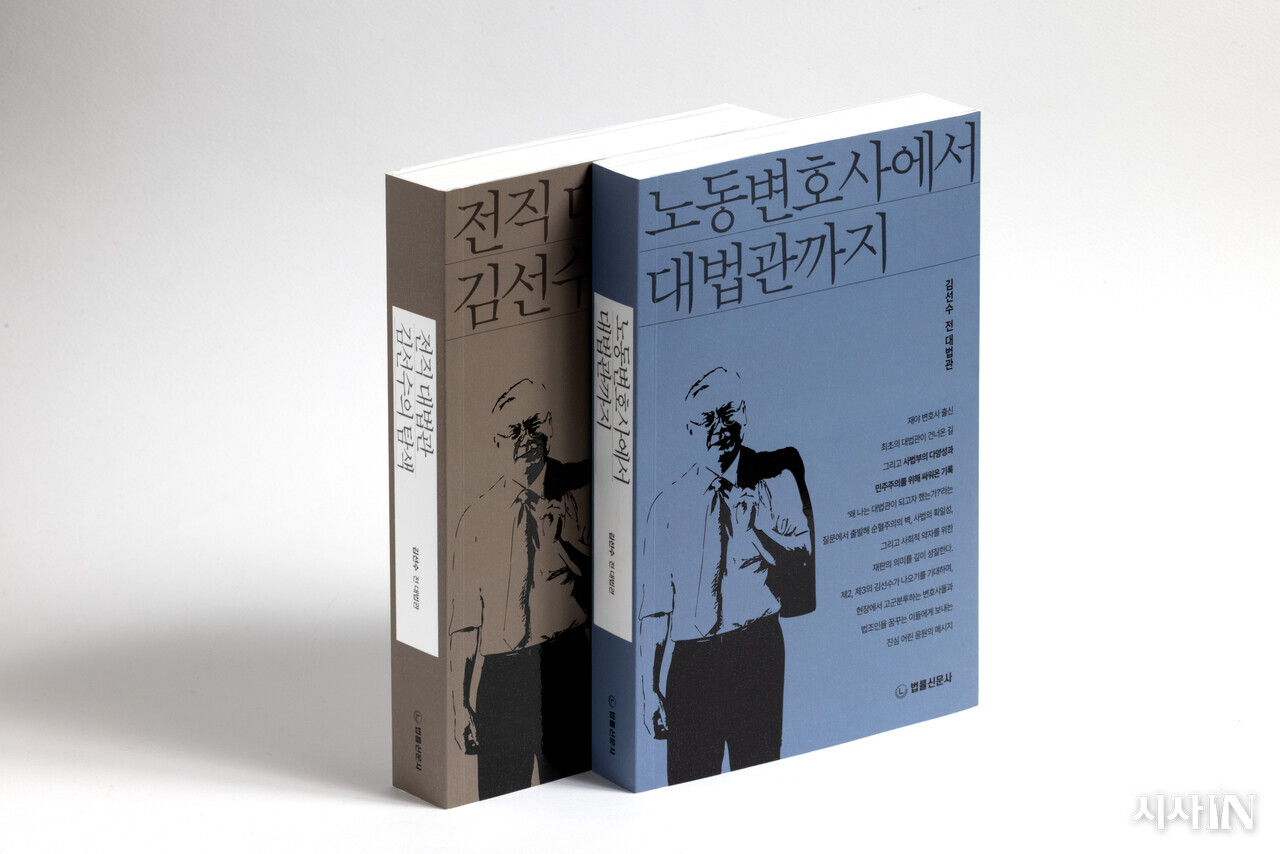
He was appointed after being recommended six times as a nominee for the Supreme Court. In the court records, he was the first Supreme Court justice to come from private practice, with no prior career as either a judge or prosecutor. Kim Seon-su, now a chair professor at the Judicial Research and Training Institute, served as a justice from August 2018 to August 2024; this past January, he published two books.
대법관 후보자로 여섯 번 추천된 끝에 임명됐다. 법원 기록상 판검사 경력이 없는 첫 재야 변호사 출신 대법관이었다. 2018년 8월부터 2024년 8월까지 대법관으로 재직한 김선수 사법연수원 석좌교수가 지난 1월 책을 두 권 펴냈다.
From Labor Lawyer to Supreme Court Justice recounts why he became a labor lawyer, with what cast of mind he passed his years on the Supreme Court, and what cases he handled along the way, and how. It includes, among other pieces, an essay he wrote for the legal magazine Gosi-gye after placing first in the 1985 bar examination, in which he asked with unsparing force: “Is it all right to accept the vested privilege that comes with passing the examination, without raising any question, as the natural reward for one’s own effort?” The book also includes interviews he gave to outlets such as SisaIN before and after taking office as a justice.
〈노동변호사에서 대법관까지〉는 그가 왜 노동 변호사가 되었는지, 어떤 마음가짐으로 대법관 시기를 보냈는지, 그 과정에서 무슨 사건을 어떻게 다뤘는지 담았다. 1985년 사법시험에 수석 합격한 뒤 법률 잡지 〈고시계〉에 쓴, “(고시 합격에 따른 기득권을) 자신의 노력에 대한 당연한 보상으로서 아무런 문제 제기 없이 받아들여도 좋을까?”라고 통렬히 묻는 글을 비롯해, 대법관 취임 전후 〈시사IN〉 등과 한 인터뷰 기사도 실려 있다.
I also recommend Kim Seon-su, Former Supreme Court Justice, in Search. Written by an author who took part in the process of judicial reform as a member of the Judicial Reform Committee under the Supreme Court and as the Blue House secretary for judicial reform, the book sets out the history of Korea’s judicial system and the direction it ought to take. Especially valuable in themselves are its statistical analysis of Supreme Court en banc decisions over the thirty years since democratization, and its comprehensive analysis of all en banc Supreme Court rulings in labor cases handed down in Korea over the past sixty years.
〈전직 대법관 김선수의 탐색〉도 추천한다. 대법원 산하 사법개혁위원회 위원, 청와대 사법개혁비서관으로서 사법개혁 과정에 참여하기도 한 저자가 한국 사법제도의 역사와 나아갈 방향을 정리한 내용이다. 특히 민주화 이후 30년간 내려진 대법원 전원합의체 재판 통계분석이나, 지난 60년간 한국에서 선고된 노동사건에 대한 대법원 전원합의체 판결 전체 분석은 그 자체로 귀한 자료다.
At a time when debates over judicial reform are consumed superficially within the logic of political polarization, merely looking into the intense reflections of a former justice who believes that “the ground on which the judiciary exists is the people’s trust in and respect for it” makes one reconsider professional ethics and one’s attitude toward life. Such records are all the more welcome in a society where few people share their experience in public office with the community. I hope his statement, that “each small bench of four Supreme Court justices should include at least one justice who comes purely from private practice,” is realized before it is too late.
사법개혁을 둘러싼 논쟁이 정치 양극화의 맥락에서 표피적으로 소비되는 현실에서, “사법부 존립의 근거는 국민의 사법부에 대한 신뢰와 존중”이라고 믿는 전직 대법관의 치열한 고민을 들여다보는 것만으로도 직업윤리와 삶의 태도를 다시 생각해보게 된다. 공직 경험을 공동체와 나누는 이가 드문 상황에서 이런 기록은 더 반갑다. ‘네 명으로 구성된 대법원 소부에 순수 재야 변호사 출신 대법관이 한 명씩은 있어야 한다’라는 그의 말이 너무 늦지 않게 실현되기 바란다.
- Constitutional complaints against court judgments: will they realize judicial justice, or bring about a litigation hell? Legislative power belongs to the National Assembly (Article 40 of the Constitution). Executive power belongs to the government, headed by the president (Article 66, Paragraph 4). Yet if the Constitutional Court finds a statute enacted by the National Assembly unconstitutional, it abolishes that law and...
- 재판소원, 사법 정의 실현할까 소송 지옥 초래할까 입법권은 국회에 속한다(헌법 제40조). 행정권은 대통령을 수반으로 하는 정부에 속한다(헌법 제66조 제4항). 하지만 헌법재판소는 국회가 만든 법률이 위헌이라면 그 법을 폐지하고...
- A former judge caught in the fallout from the “judicial abuse” scandal offers counsel: “The Yang Sung-tae trial should go to the en banc court.” How did it come to this: the chief justice of a country’s Supreme Court indicted for abuse of authority on grounds including interference in trials? Former Chief Justice Yang Sung-tae, for the sake of a Supreme Court staggering each year under tens of thousands of appeals, created a subcontracting court...
- ‘사법농단’ 유탄 맞은 전직 판사의 고언 “양승태 재판, 전원합의체로” 일국의 대법원장이 재판 개입 등을 이유로 직권남용죄로 기소되다니, 어디에서부터 잘못된 것일까. 양승태 전 대법원장이 매년 수만 건의 상고 사건에 허덕이는 대법원을 위한 하청법원인 ...
- Amid controversy over the “Cho Hee-dae judiciary,” what is the level of trust in the courts? [2025 Trust Survey] In the political standoff over the ruling party’s pressure on the judiciary, one word appears again and again: “trust.” The ruling party argues that distrust of the judiciary has accumulated under Chief Justice Cho Hee-dae, and that to resolve it, the National Assembly must pass laws related to judicial reform...
- ‘조희대 사법부’ 논란 중, 사법부 신뢰도는? [2025 신뢰도 조사] 여당의 사법부 압박 정국에서 자주 등장하는 단어가 바로 ‘신뢰’다. 여당은 조희대 대법원장 체제에서 사법부에 대한 불신이 누적되었고, 이를 해소하기 위해 국회에서 사법개혁 관련 법...
- Thirty years as a labor lawyer: former Supreme Court Justice Kim Seon-su on his calling. Born in Jinan, North Jeolla, in what he calls a “remote backwater without even electricity,” former Justice Kim Seon-su, 63, asked and asked again in an essay he wrote for the legal magazine Gosi-gye after placing first in the 1985 bar examination: “Is it...
- 노동 변호사 30년, 김선수 전 대법관이 말하는 사명 전북 진안의 “전기도 안 들어오는 ‘깡촌’”에서 태어난 김선수 전 대법관(63)은 1985년 사법시험에 수석 합격한 뒤 법률 잡지 〈고시계〉에 쓴 글에서 묻고 또 물었다. “(고시...
- The protection of labor rights begins with labor courts. Special Feature - Visiting Europe’s Labor Courts. Why Korea needs labor courts. Labor courts are common in Europe. The protection of labor rights begins with labor courts. Attorney Kim Seon-su of the law firm Simin passed the 27th bar examination in 1985...
- 노동권 보호는 노동법원에서부터 특집 - 유럽의 노동법원을 가다 한국에 노동법원이 필요한 이유유럽에서는 흔한 노동법원노동권 보호는 노동법원에서부터 김선수 변호사(법무법인 시민)는 1985년 제27회 사법시험에 수...
- Reading the fiction of Jeong Chan and Lee Gyeong-hye before “May in Gwangju” [A Reporter’s Recommended Books] In mid-May, I had occasion to travel to the provinces. At my lodging, I was flipping through cable channels when the film 1987 was on. There is a scene in which members of a college comics club lower the curtains and watch a video of “May 18 Gwangju”...
- ‘5월 광주’ 앞에서 정찬과 이경혜의 소설을 읽다 [기자의 추천 책] 5월 중순, 지방에 갈 일이 있었다. 숙소에서 케이블 채널을 돌리는데 영화 〈1987〉이 방영되고 있었다. 대학 만화 동아리에서 커튼을 내리고 ‘5·18 광주’ 비디오를 보는 장면...