James Meek: Short Cuts
Britain’s centre-left fight is becoming a dispute over political economy, not just leadership style.
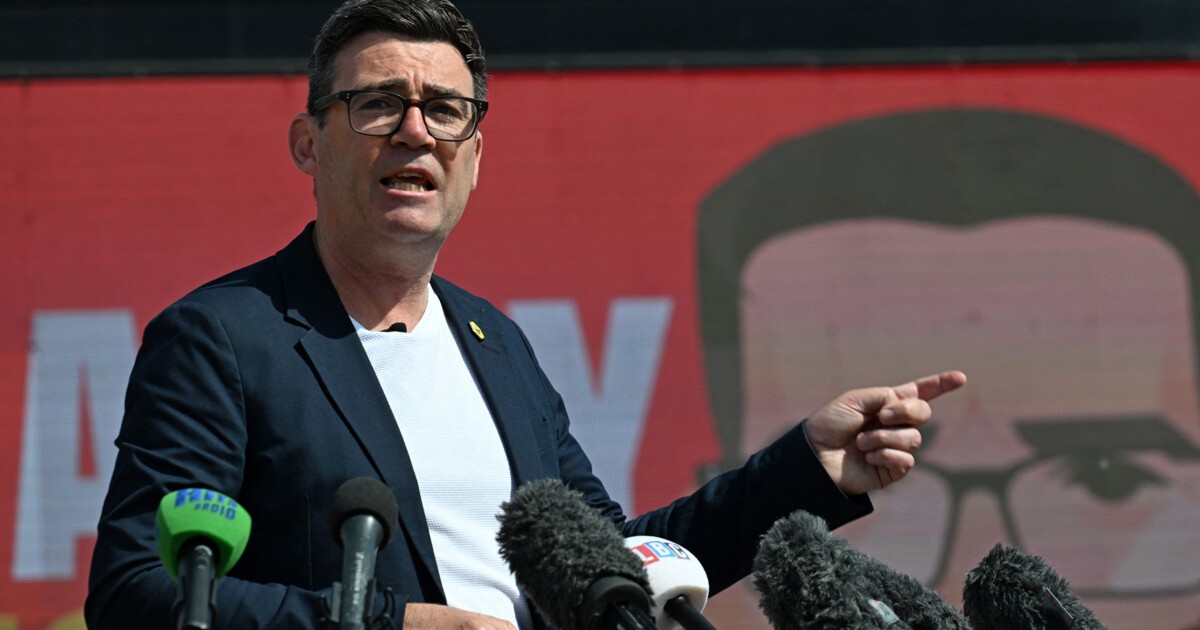
The day before Labour officially gave him the chance to become an MP again, Andy Burnham made a speech in Leeds. He had the tricky task of pitching for three jobs in twenty minutes: the one he has, mayor of Greater Manchester; the one he hopes to get, MP for Makerfield; and the one he hopes to take from the person now doing it, prime minister. He had to make the case, unlikely on the face of it, that a ruling party can regain trust and improve people’s lives by swapping out its leader just two years after that leader led the party to a thumping victory.
It didn’t go badly, though it wasn’t a smooth performance. It had a rough and ready, rhetorically undercooked quality, a little awkward in places, more like somebody making forceful points in conversation than the adviser-dulled confections of a campaign speech or the sweep and flow of a natural orator. Since glib oratory in the service of vacuity and saying what you think you should say rather than what you actually think are two of the things people claim to hate most about politicians in general, and Keir Starmer in particular, Burnham came across rather well. He seemed sincere and – strangely for such an experienced politician who clearly doesn’t lack ego or self-confidence – diffident. His air of ordinary-bloke humility contrasted with his large and, for adherents of the post-Thatcher consensus, unsettling ideas. Unsettling not so much in respect of the future as of the past – he now doubts, he says, fundamental assumptions made by British governments since 1979, including Labour governments, some of which he served in as a cabinet minister. Among these are the assumptions that profit-seeking asset managers are the best people to run essential services, that meaningful power is too complicated and carries too much responsibility to be entrusted to the municipalities and shires, and that the benefits of globalisation would trickle down to the North of England. ‘It all adds up to forty years of neoliberalism that have not been kind to the North of England,’ he said. ‘Forty years of trickle-down economics that did not, in the end, trickle down very much at all to Blackbridge or Hindley.’
I recognised this Andy Burnham as the man I met in the mayor’s office in Manchester two years ago, when I was in the city to write about homelessness. He had just been re-elected for a third term with a huge majority. He’d successfully untangled the free-market fanaticism that had hobbled Greater Manchester’s buses and trams, putting together the beginnings of a London-style integrated transport system, the Bee Network, and presided over a construction boom that filled the city centre with blocks of luxury flats, lavish civic restorations and the corresponding honeypots of hedonistic-bohemian living. It’s an urban spectacle unlike any other I have seen in Britain, fuelled by universities, football and foreign property investors, a post-industrial peacocking that makes you gawp.
Burnham was engaging, oddly shy, full of seemingly genuine energy to do more as mayor, but at the same time piqued to be out of the national political conversation (this was a few weeks before Starmer won his landslide; as an opposition MP, Burnham had twice run unsuccessfully for the party leadership, beaten into fourth place by Ed Miliband and coming a distant second to Jeremy Corbyn). In his telling, his years as mayor had given him a new perspective on Westminster, on the ministries that hoard power at the expense of the regions only to misuse it. He told me he had regrets about his New Labour years, about the Blair-Brown acceptance of so much that Margaret Thatcher had done, ‘the drive in the 1980s, which sadly the Labour government I was in didn’t do anything like enough to reverse – everything was broken up. Everything was sold off. Everything was deregulated.’
He used the word ‘learning’ as a singular noun, a synonym for ‘lesson’, a usage I’d heard before only from my son’s schoolteachers, and which somehow made him seem more earnest, as he threw out radical, resource-hungry proposals for the national stage. ‘I’m now increasingly wanting to talk about a Grenfell law, and the right learning from Grenfell is to enshrine in UK law a good decent safe home as a human right,’ he told me then. ‘It shouldn’t be sort of “You might be lucky enough to have one, you might not.”’
He seemed surprised when I asked him why, if he wanted to redefine housing as a universal right, Manchester was letting developers build so many blocks of expensive flats without any obligation to include affordable housing. The city even lends them money to do it. Burnham explained the baroque scheme, contrived by George Osborne, by which councils get government cash to lend to developers and can use the interest payments to commission affordable housing. His aim then was to get 2500 social-rent homes – houses let at heavily subsidised, non-profit rents, like council houses – built in every year of his third term. Two years later, the pace of building has picked up, but the goal remains far away. That said, there is such a profusion of different funding bodies and housing concepts – affordable or social? Planned, started or finished? Housing association or council? – that it’s hard for the outsider to make a tally, or to be sure which of the many agencies involved deserves credit or blame for a house being built or not being built, and indeed what power the mayor of Greater Manchester has to make it happen in the first place.
It might be wise not to be too optimistic about Burnham bringing miracles of delivery, and focus instead on his willingness to question the long-prevailing economic consensus; where Starmer seems to have believed ‘change’ meant a surer hand on the controls, Burnham looks more ready to question the workings of the machine. For those who point out that Corbyn and his shadow chancellor, John McDonnell, already did this – did they? Their 2017 manifesto was radical in terms of spending, but startlingly conservative in its presentation of Britain as an autonomous economy, rather than a few pieces on the extra-jurisdictional patchwork of other people’s economies: the US, China, India, Europe, the Gulf. The hysterical reaction to Burnham’s comments in the New Statesman last September, when he said ‘We’ve got to get beyond this thing of being in hock to the bond markets,’ showed how shocking it is to the financial world when someone – a left-wing politician, no less – who’s not supposed to care about the bond market demonstrates that, on the contrary, he sees it as a central part of the country’s problems. For this the Daily Mail called him ‘financially illiterate’.
Before Burnham can challenge Starmer, he has to win Makerfield, about halfway between the city of Manchester and Liverpool, where Burnham was born. It won’t be a cakewalk, but Burnham has advantages. As mayor, he’s generally popular in Greater Manchester. The depth of loathing for Starmer that Labour campaigners encounter on the doorstep may help the presumed leadership candidate to remove him, even if he belongs to the same party. There’s distance between Burnham and the things that make people most angry, or despairing, about Starmer: his response to the Israeli slaughter in Gaza, his dalliance with Peter Mandelson.
Against Burnham are the Labour-hostile media and the online posters of the right, now swivelling against him. There are also the powerful facts of the recent local elections. In the area Burnham hopes to represent, Labour took an absolute battering. Wigan council, part of Greater Manchester and the local authority that overlaps with the Makerfield constituency, had 25 of its 75 seats up for election; 22 of them were held by Labour, and it lost every one to Reform. It wasn’t close. If you add the Labour and Green votes together, Reform still comes out ahead in all but one of the seats.
Even this isn’t as bleak for Burnham as it sounds. The evidence nationally suggests that Reform’s performance wasn’t a result of Labour voters switching to Reform, but of an exceptionally high turnout of Reform voters, including ex-Tories and people who don’t normally vote at all, together with a low turnout of Labour voters disinclined to rally round Starmer. In the Makerfield by-election, Burnham is the insurgent, the most effective means of winkling Starmer out of Downing Street. It won’t hurt his mission that he comes across as the anti-Farage, Badger to Farage’s Toad of Toad Hall, club scene v. golf club, smart casual v. smart formal, the Northerner v. the Southerner.
And if he wins, and then displaces Starmer? The hope that a fresh face will make all the difference then comes up against an alternative, darker possibility. That, as weak a leader as Starmer has been, he was fighting something more primal and unpleasant than political dissatisfaction: that any 21st-century Labour leader, or even perhaps any 21st-century British prime minister, will be exposed to a disproportionate level of loathing and abuse. A mosaic of old and new media realms – overwhelmingly anti-immigrant, paedophilia-obsessed, Islamophobic, antisemitic, blindly patriotic, dementedly gender-normative, pro-strongman, clickbaiting – retail lies, rumours, half-truths and suppositions, constantly expanding the boundaries of acceptable insult and threat, and spreading fear.
This isn’t to excuse Starmer’s failings, or to become pompous about protest and the mockery of leaders. The use of anti-terrorism laws against Palestine Action to cover up British military incompetence should alone have been enough to earn Starmer national odium. But there’s a perceptible and growing zone in which anger spills over into conspiracism. It’s hard to know where ‘reasonable dislike’ ends and ‘irrational hatred’ begins. In a less social media intensive age Gordon Brown, too, once he became prime minister, attracted a strange extra degree of loathing, seeming at times unmoored from anything he’d done. It’s unclear whether Burnham, King of the North, will fare any better.
Send Letters To:
The Editor London Review of Books, 28 Little Russell Street London, WC1A 2HN letters@lrb.co.uk
Please include name, address, and a telephone number.