Why Love Radio Always Turns into Hate Radio
Alexander Plotnikov reflects on exile, memory theater, the victorious nature of art, and the uneasy passage from a radio of love to a politics of hatred.
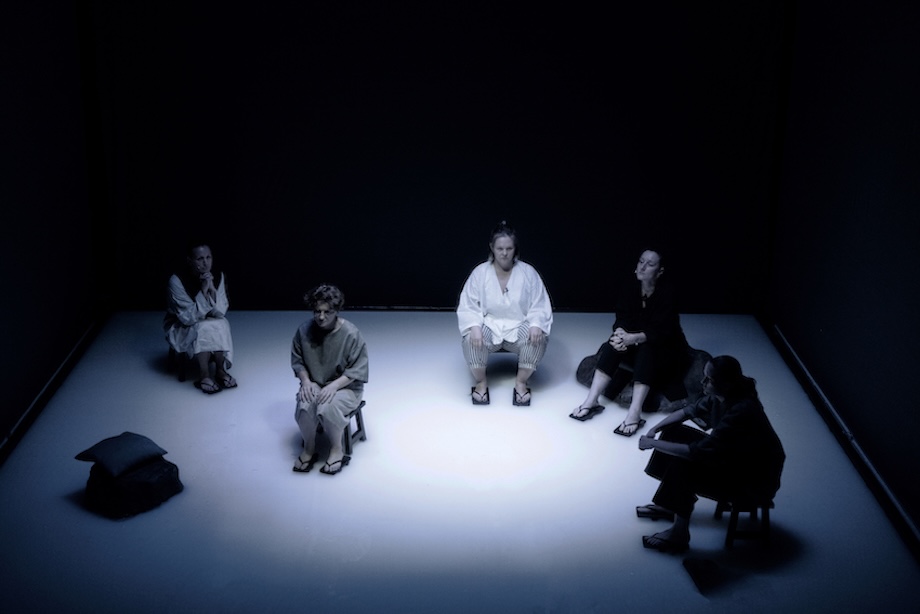
Сегодня в Ереване открывается «Хронофест», организованный театральным режиссером Ильей Мощицким и продюсером Артемом Арсеняном. В программе – 17 спектаклей, два из них, «Радио любви» (Love Radio) и «Книга скорби» сделаны режиссером Александром Плотниковым («Книга скорби» – вместе с Шахеном Хандкаряном). Публикуем большую беседу с Плотниковым: о его книжке «Альфа Центавра», новых спектаклях и о том, почему Love Radio всегда превращается в Hate Radio.
Today in Yerevan, Chronofest opens, organized by theater director Ilya Moshchitsky and producer Artyom Arsenyan. The program includes seventeen productions; two of them, Love Radio and The Book of Sorrow, were created by director Alexander Plotnikov (The Book of Sorrow together with Shahen Khandkaryan). We are publishing an extended conversation with Plotnikov: about his book Alpha Centauri, his new productions, and why Love Radio always turns into Hate Radio.
Режиссеру и драматургу Александру Плотникову тридцать. До отъезда в Ереван летом 2024-го он успел заявить о себе как режиссер не для избранных, но с избранными темами (исключением был его спектакль «Анна Каренина», вышедший в Красноярском ТЮЗе и получивший в 2021-м «Золотую маску»).
The director and playwright Alexander Plotnikov is thirty. Before leaving for Yerevan in the summer of 2024, he had already made a name for himself as a director not for the chosen few, but with chosen themes (the exception was his production of Anna Karenina at the Krasnoyarsk Theater for Young Audiences, which won a Golden Mask in 2021).
At Moscow's Shalom Theater, Plotnikov staged The Red Book, about the valiant heroes of the Great Patriotic War whose names Soviet people were not supposed to know, because those names were not Russian but Jewish, and the great Soviet motherland could not have heroes like that. In Kazan he premiered Tärҗemä, an autofictional piece about how he, the descendant of a Turkmen great-grandmother and a mother from Kherson, learned Tatar in order to tell the people of Tatarstan about himself in their national language. The production was performed several times and then shut down.
В московском театре «Шалом» Плотников ставил «Красную книгу» – о доблестных героях ВОВ, имена которых советские люди не должны были узнать – потому, что имена эти не русские, а еврейские, а таких героев у великой советской родины быть не могло. В Казани он выпустил спектакль «Тәрҗемә» – автофикшн о том, как он, потомок туркменской прабабушки и херсонской мамы, учил татарский, чтобы рассказать о себе жителям Татарстана на их национальном языке. Спектакль сыграли несколько раз и закрыли.
With the company Daughters of Soso, Plotnikov staged Hiroshima, the book by the great reporter John Hersey, who gathered the testimonies of eyewitnesses who survived the blast (the production is performed at Moscow's Vnutri Space). Last autumn in Moscow, the publishing house Individuum brought out Plotnikov's essay-book Alpha Centauri, subtitled "a doc.poem about cosmonauts who never went into space." A solo performance with the same title was brought to the Voices.Berlin festival. In it, Plotnikov speaks about an obsession with the narrative of victory and about its "by-products": those who, for various reasons, never flew into space, but died or were cast into the refuse of the space community. He does this in the way usually associated with Zoomers: in a quiet voice, almost without intonation, his glasses glinting shyly. During Khrushchev's thaw, people like that were called "bespectacled intellectuals." Back then there were eccentrics (Smoktunovsky, for example) who believed that such people, too, could be heroes in every sense of the word. Today, Russian cinema does not cast people like that. Plays are not staged about them. And they are only grudgingly allowed to become directors. This is not their time. Nevertheless, the quiet Alpha Centauri is in demand: this season it has been performed twice in Berlin, in Frankfurt, in Ljubljana, Slovenia, and at a festival in Basel.
С компанией «Дочери Сосо» Плотников поставил «Хиросиму» – книгу великого репортера Джона Херси, собравшего свидетельства выживших после взрыва очевидцев (спектакль идет в московском Пространстве «Внутри»). Прошлой осенью в Москве, в издательстве Individuum у Плотникова вышла книжка-эссе «Альфа Центавра» с подзаголовком «док.поэма о космонавтах, которые не были в космосе». А на фестиваль Voices.Berlin привезли моноспектакль с тем же названием. В нем Плотников рассказывает об одержимости нарративом победы и о ее «побочных продуктах» – тех, кто по разным причинам не полетел в космос, а погиб или попал в отбросы космического сообщества. Делает он это так, как обычно свойственно зумерам: тихим голосом, почти без интонаций, застенчиво поблескивая очками. Во время хрущевской оттепели таких и называли «интеллигентами-очкариками». В то время находились чудаки (вроде, например, Смоктуновского), верившие, что такие люди тоже могут быть героями во всех смыслах слова. Сегодня в российском кино таких не играют. И пьес про них не ставят. И в режиссеры пускают с трудом. Сейчас не их время. Тем не менее, тихая «Альфа Центавра» – нарасхват: в этом сезоне ее дважды сыграли в Берлине, во Франкфурте, словенской Любляне и на фестивале в Базеле.
"From the very beginning of your career, you have chosen strange material for your productions (perhaps with the sole exception of Anna Karenina, staged at the Krasnoyarsk Theater for Young Audiences and awarded a Golden Mask). In October 2025, at the Sens Interdits festival ("No Entry" — ed.) in Lyon, you made De-création, a production about the French philosopher Simone Weil, or more precisely about several actresses' attempt to investigate the performative nature of Weil's ethics."
– Ты с самого начала карьеры выбираешь странный материал для спектаклей (пожалуй, только за исключением «Анны Карениной», поставленной в Красноярском ТЮЗе и получившей «Золотую маску») . В октябре 2025-го на фестивале Sens Interdits («Вход запрещен» — прим.ред.) в Лионе ты сделал спектакль De-création про французского философа Симону Вейль, а, вернее, про попытку нескольких артисток исследовать перформативную природу этики Вейль.
"Since we have begun with Simone, I want to quote her: 'Only a person in an extreme state of degradation can speak the truth.' On the one hand, this has to do with the understanding that any word, any truth, once uttered in public, 'in the light,' say, in an interview, attracts interpretations, which drag behind them accusations (sometimes quite justified ones) of insincerity, dishonesty, self-interest, posturing, and so on."
– Раз уж мы начали с Симоны, то хочу её процитировать: «Говорить правду может только человек, находящийся в крайнем состоянии деградации». С одной стороны, это связано с пониманием того, что любое слово или любая правда, будучи озвученной прилюдно – «на свету», например, в интервью, – притягивает к себе интерпретации, которые тащат за собой обвинения (иногда, вполне обоснованные) в неискренности, в нечестности, в корысти, в позе и т.д.
"On the other hand, this is bound up with Christian metaphysics and with the voice, or rather with speech, with the logos of the defeated, the vanquished. With the idea that the truth about a given situation, or about the world in general, lies within the defeated, because they are the ones who have come to know that world and its iron logic in full. But as a rule they cannot say anything, because the extreme degree of degradation, whether social or physical, presupposes the absence of any place from which anything can be said."
С другой стороны, это связывается с христианской метафизикой и с голосом или, скорее, с речью — с логосом поверженных, проигравших. С тем, что правда о той или иной ситуации или о мире вообще — внутри проигравших, потому что они-то этот мир и его железную логику узнали сполна. Но сказать они, как правило, ничего не могут, потому что крайняя степень деградации, будь то социальная деградация или физическая, предполагает отсутствие места, откуда можно что либо сказать.
"Well, a holy fool can say it."
– Ну, юродивый-то может сказать.
"But I am not a holy fool. So, in beginning this interview, I want to draw attention to the fact that everything I say will be untrue."
– Но я не юродивый. Поэтому, начиная интервью, я хочу обратить внимание на то, что всё, что я скажу, — неправда.
"So then, dear reader. This material, produced and/or disseminated by us, is... untrue."
– Итак, дорогой читатель. Данный материал, произведенный и/или распространенный нами, является… неправдой.
"Yes, of course, one can joke about it, but I can very clearly picture the people who cannot speak now, cannot give interviews, cannot be heard. And it seems to me that there is far more truth in their feelings and thoughts than in anything I will say here."
– Ну да, можно и пошутить, но я просто отчетливо представляю себе людей, которые сейчас говорить не могут, не могут дать интервью, не могут быть услышанными. И мне кажется, в их чувствах и мыслях гораздо больше правды, чем во всём, что я буду здесь говорить.
"Accepted. Though what is truth? That category was invented by human beings and exists only for human beings. The subject I myself proposed to you for this interview some time ago, 'to leave cannot stay,' has now bored me beyond words. Have you, by the way, decided where to put the comma?"
– Принято. Хотя, что такое правда? Эта категория придумана человеком и существует только ради человека. Тема, которую я сама некоторое время назад предложила тебе для интервью: «уехать нельзя остаться» – сейчас уже надоела мне до такой степени, что не передать. Ты, кстати, определился?
"No. I left Moscow after the verdict against Zhenya Berkovich and Svetlana Petriychuk; it was not a wave of immigration, just a few isolated cases. And since then, soon it will be two years, I have been trying to understand why I did it."
– Нет. Я уехал из Москвы после приговора Жене Беркович и Светлане Петрийчук, это не была волна иммиграции: просто какие-то единичные случаи. И с тех пор, в общем, уже скоро два года, я пытаюсь понять, почему я это сделал.
"For the first two and a half years after February 24, 2022, I had the feeling that my place was there, at home, that I wanted and had to bear witness from inside. Then that feeling left me. While remaining in Russia, I was engaged in memorial theater: I made productions devoted to catastrophes of the past. A strange, ghostly work of clearing rubble, as if, by starting with the past, one could carry that work through to the present day."
Первые два с половиной года после 24.02.2022 у меня было ощущение, что моё место там, дома, что я хочу и должен свидетельствовать изнутри. А потом это ощущение ушло. Оставаясь в России, я занимался мемориальным театром: делал спектакли, посвященные катастрофам прошлого. Такая странная призрачная работа по разбору завалов – как будто, если начать с прошлого, можно эту работу довести и до сегодняшнего дня.
"The productions we made then seemed to me a kind of Noah's ark, where people could gather in order to breathe the same air and understand that they were not alone. But gradually that ark turned into a bunker. And I realized that I was cultivating fear. In other words, I had completely forgotten why I was doing theater."
Наши спектакли, выпущенные тогда, казались мне таким «ноевым ковчегом», где люди могут собраться, чтобы подышать одним воздухом и понять, что они не одни. Но постепенно этот ковчег превратился в бункер. И я понял, что занимаюсь культивированием страха. То есть я вообще забыл, зачем занимаюсь театром.
"By the way, why?"
– Кстати, зачем?
"Let me try to answer that question a little later. For now I will return to 'to leave cannot stay.' There is one element people rarely talk about: the element of travel. It is rather shameful: in a world where people are fleeing explosions, fleeing the destruction of their homes, fleeing threats to their freedom, in this world of forced nomads, it is shameful to say that emigration may also be a journey. But after moving to Yerevan, I suddenly felt that I had not so much gone into emigration as returned from it: it was February 24 that had squeezed me into emigration. Here I returned to the feeling of some kind of normal life, to some inner homeland of my own, and began to remember that not all of our existence is defined by dialogue with unfreedom. That is, of course, a privilege of youth, though perhaps not only that. And probably I am not alone in feeling it. But in general, on this score, I would like to wish everyone, on both sides of the border: 'Homelands for everyone, free of charge, and let no one go away aggrieved.'"
– Давай я попозже постараюсь ответить на этот вопрос. А пока вернусь к «уехать нельзя остаться». Есть один элемент, о котором редко кто говорит, элемент путешествия. Это довольно стыдно: в мире, где люди бегут от взрывов, от того, что их дома уничтожены, от того, что их свобода под угрозой — в этом мире вынужденных кочевников стыдно говорить, что эмиграция может быть ещё и путешествием. Но, переехав в Ереван, я вдруг почувствовал, что скорее не уехал в эмиграцию, а из нее вернулся: в эмиграцию меня выдавило как раз 24 февраля. А здесь я вернулся к ощущению какой-то нормальной жизни, к какой-то своей внутренней родине, стал вспоминать, что не всё наше существование определяется диалогом с несвободой. Это, конечно, привилегия молодости, а, может, и не только. И наверное, я не один это чувствую. Но вообще, на этот счет хотелось бы пожелать всем, по обе стороны границы: «Родины для всех даром, и пусть никто не уйдёт обиженным».
"Do you miss Moscow in Yerevan?"
– В Ереване ты по Москве не скучаешь?
"No. Except once, when I stumbled on Katya Gordeeva's* interview with the psychologist Vita Kholmogorova. They were walking through Moscow, along Bolshaya Nikitskaya. I saw familiar railings, and suddenly something inside me said, 'Oh.' In general, during my time living in Yerevan, Moscow became a ghost for me. At any rate, that is what I thought until last summer, when I had to go there on paperwork business. That trip became a rather frightening encounter with myself: I realized that the ghost was not Moscow at all, but me. And that in fact I love my city very much. I walked through Moscow, and things I had not thought about for decades crowded around me from all sides, as if reaching out their hands and saying, 'Why did you leave us?' The whole of my past life: childhood, youth, my first institute, my second institute, all sorts of stories, friendships. I thought all of that had long since entered the realm of memories, but it turned out that memory does not exist at all. That all this is not memory, but living life, which continues to live itself on verandas, in metro underpasses, in bookshops, in all the places where something happened to me. That is, I understood that a large part of my soul is still alive, and I cut it off, abandoned it, and am calmly living somewhere else."
– Нет. Кроме одного раза, когда я наткнулся на интервью Кати Гордеевой* с психологом Витой Холмогоровой. Они гуляли по Москве, по Большой Никитской. Я увидел знакомые решетки и вдруг что-то внутри меня сказало «Ой». Вообще, за время жизни в Ереване Москва для меня стала призраком. Во всяком случае, я так думал, пока прошлым летом мне не пришлось туда съездить по бумажным делам. Эта поездка стала довольно страшной встречей с собой: я понял, что призрак вовсе не Москва, а я сам. И что на самом деле очень люблю свой город. Я шёл по Москве, и вещи, о которых я не вспоминал десятилетиями, обступали меня со всех сторон, как будто тянули руки и говорили: «Зачем ты нас оставил?». Вся прошедшая жизнь: детство, юность, первый институт, второй институт, и всякие разные истории, дружбы. Я думал, что всё это давно в зоне воспоминаний, а оказалось, что памяти вообще не существует. Что всё это не память, а живая жизнь, которая продолжает себя жить на верандах, в переходах метро, в книжных магазинах, во всех местах, где что-то со мной случалось. То есть я понял, что большая часть моей души до сих пор жива, а я отрезал ее, бросил, и живу себе спокойно в другом месте.
"All this common emigrant narrative, the shame that we left, the shame that we abandoned people, the shame that we are not fighting and not doing theater there: I do not really understand what that means. But this shame before my own life I now understand. Before my first kiss, my first walk along Tverskaya. Shame before my first trip to a shop that sells alcohol after 11 p.m. And that shame is with me now."
Весь этот частый эмигрантский нарратив: стыд за то, что мы уехали, стыд за то, что мы бросили людей, стыд за то, что мы не сражаемся и не занимаемся там театром – я не очень понимаю, что это значит. Но вот этот стыд перед своей собственной жизнью я теперь понимаю. Перед своим первым поцелуем, первой прогулкой по Тверской. Стыд по своему первому походу в магазин, где продают алкоголь после 23:00. И этот стыд теперь со мной.
"Well, that is already a kind of poeticizing of shame. Where do you live now, and where do you plan to live?"
– Ну, это уже некая поэтизация стыда. Где ты сейчас живешь и где планируешь жить?
"For now, in Yerevan. But my working routes are connected with different countries. So I plan to live wherever I have to."
– Пока в Ереване. Но рабочие маршруты связаны с разными странами. Так что планирую жить, где придется.
"In the time you have been away from Moscow, you have done a great deal. I heard about the wonderful Free Auction Named for Sergei Parajanov at the Ilkhom Theater in Tashkent, where the artist's story is revealed through the sale not only of objects (not his personal belongings, but things associatively connected with him), but also of metaphysical concepts: there is, for example, a lot called 'Silence.' Why Tashkent in particular?"
– За то время, что ты не в Москве, ты многое сделал. Я слышала про прекрасный «Свободный аукцион имени Сергея Параджанова» в театре «Ильхом» в Ташкенте, на котором история художника раскрывается через распродажу не только предметов (не его личных, а связанных с ним ассоциативно), но и метафизических понятий: есть, например, лот под названием «Молчание». Почему именно в Ташкенте?
"Because that is where there was an opportunity to do it. And because Ilkhom is now my large family, whom I love very much. Last autumn, the artist Ksyusha Sorokina and I premiered there a production of Twenty Days Without War, loosely based on Alexei German's film. We plan never to part from Ilkhom."
– Потому что именно там была возможность это сделать. И потому что «Ильхом» теперь моя большая семья, которую я очень люблю. Прошлой осенью мы с художницей Ксюшей Сорокиной выпустили там же спектакль «Двадцать дней без войны» по отдаленным мотивам фильма Алексея Германа. Планируем с «Ильхомом» никогда не расставаться.
"You and I ran into each other in autumn 2025 at a reading of Marius Ivaškevičius's play Totalitarian Romance, in which Soviet realities, for example Bulgakov's relationship with Stalin, are superimposed on the totalitarian realities of contemporary Tajikistan: the play grew out of Ivaškevičius's conversations with the well-known Tajik director Barzu Abdurazzakov. You said something interesting then: the more Barzu spoke about how, several years ago, he and three of his actors rehearsed Mankurt in Dushanbe, which would then have been seen, let's say, by three and a half people (but even before the premiere they were visited, and one of the actors was sentenced to ten years), the more you thought about the interconnection between those who are repressed and those who repress. That sounds fairly hopeless."
– Мы с тобой столкнулись осенью 2025-го на читке пьесы Марюса Ивашкявичюса «Тоталитарный роман», в которой советские реалии – например, взаимоотношения Булгакова со Сталиным, накладываются на тоталитарные реалии современного Таджикистана: пьеса выросла из бесед Ивашкявичюса с известным таджикским режиссером Барзу Абдураззаковым. Ты тогда сказал интересную вещь: чем больше Барзу рассказывает про то, как несколько лет назад он и три его актера репетировали в Душанбе «Манкурта», которого потом увидели бы, условно, три с половиной человека (но еще до премьеры к ним пришли, и одного из актеров посадили на десять лет), тем больше ты думал о взаимосвязи тех, кого репрессируют и тех, кто репрессируют. Звучит вполне безнадежно.
"It really is a hopeless and inseparable fusion. I often return to Judith Butler's book The Psychic Life of Power, where she says, very wisely, that the subject within any social or political relations is produced by political pressure as such. That is, if a person, no matter their gender or age, goes out onto any square in any totalitarian space and says 'no,' then their very voice and their desire to say 'no' have already been constructed by that space. As political units, we cannot be produced in any other way than through the experience of our political violence. Because violence sponsors our protest and our resistance. There are, of course, various exit strategies, Buddhist ones and the like. But if we are in the world and not in a monastery, then we are inevitably bound up with it. And all our most sincere feelings, words, and thoughts inevitably bear the stamp of the power, or the social order, against which we are speaking."
– Это правда безнадежная и неразрывная спайка. Я часто возвращаюсь к книжке Джудит Батлер «Психика власти», где она очень мудро говорит о том, что субъект внутри любых социальных или политических отношений производится политическим давлением как таковым. То есть, если человек, неважно, какого пола и возраста, выходит на любую площадь любого тоталитарного пространства и говорит: «нет», то сам его голос и его желание сказать «нет», уже сконструированы этим пространством. Как политические единицы мы не можем быть произведены никак иначе, кроме как через опыт нашего политического насилия. Потому что насилие спонсирует наш протест и наше сопротивление. Есть, конечно, всякие стратегии выхода, вроде буддийских. Но, если мы находимся в миру, а не в монастыре, то мы неизбежно с этим связаны. И любые наши самые искренние чувства, слова и мысли – на них неизбежно стоит клеймо той власти или того социального порядка, против которых мы выступаем.
"Theatrical life continues inside Russia: premieres take place, theater conferences and laboratories happen. People with similar views are drawn to one another. True, denunciations then arrive against some people, others are fired, and still they try to do something, though now on chamber stages. At the end of an excellent small-form production, which you too probably managed to see, Chekhov's classic characters simply walk into the fire. In other words, this is about that 'last bunker' we spoke of earlier. Is this happening because people are being pressured? No. They are simply living here and now; they need to realize themselves and earn money. And they look for opportunities, not because they are 'in fusion with power.' In Alpha Centauri you write: 'Has the feeling that everything is lost become our new homeland?' That resembles a kind of narcissistic hymn to one's own loss."
– Внутри России продолжается театральная жизнь: идут премьеры, происходят театральные конференции, лаборатории. Люди одних взглядов тянутся друг к другу. Правда, потом на кого-то приходят доносы, кого-то увольняют, а он все равно пытается что-то делать, но уже на камерных площадках. В финале отличного спектакля малой формы, который и ты, наверное, тоже успел увидеть, классические персонажи Чехова просто уходят в огонь. То есть, речь про тот «последний бункер», о котором мы говорили выше. Происходит ли это потому, что на людей давят? Нет. Просто они живут здесь и сейчас, им надо самореализовываться и зарабатывать. И они ищут возможности – не потому, что они «в спайке с властью». Вот ты в книжке «Альфа Центавра» пишешь: «А не стало ли чувство, что все потеряно, нашей новой родиной?» Это похоже на некое нарциссическое воспевание своей утраты.
"I mean something quite concrete: lately, when people ask me where I am from, I very much want to answer, 'From nowhere.' Because to say that I am from Moscow, or that my mother was born in Kherson, or that my great-grandmother was born in Bukhara, or that there were Roma in my family, or that I studied at a theater institute... all that is strange. I very much want, as it were, to try to reformulate this loss and absence of a root system as the basis for a new identity. Why should we not simply begin to think this negativity positively, to say to ourselves: 'We belong to a certain community of placelessness. A community of loss.' And literally begin to inhabit this metaphysical non-place?"
– Я имею в виду довольно конкретную вещь: когда последнее время меня спрашивают, откуда я, мне очень хочется ответить: «Ниоткуда». Потому что говорить, что я из Москвы или что моя мама родилась в Херсоне, или что моя прабабушка родилась в Бухаре, или что у меня в роду были цыгане, или что я учился в театральном институте… – это все странно. Мне очень хочется как бы попытаться переформулировать эту утрату и отсутствие корневой системы как обоснование для новой идентичности. Почему бы нам просто не начать мыслить эту негативность позитивно, не сказать себе: «Мы принадлежим некой общности отсутствия места. Общности утраты». И буквально начать обживать это метафизическое не-место?
"You mean that one's own aura, one's own personality, is our home. Like snails?"
– Ты хочешь сказать, что собственная аура, собственная личность – это и есть наш дом. Как у улиток?
"You ask questions that require detached analysis. But in answering them, I understand that at the same time they are utterly individual. Take, say, the feeling of being originally torn away from everything: it has been with me since childhood, and it helps me in emigration. I, for instance, have always felt rather calm in a foreign place. In some sense even calmer than at home. And very calm on the road. That is, my early trauma, connected with homelessness and the absence of a root system, suddenly became a psychic privilege in this new world. But it seems to me that I am not alone in this, and that the potential for a new understanding of homeland remains here. This seems very important to me: to define anew what homeland is, without linking homeland to land, to ideology. Or to something one can solemnly die for."
– Ты задаешь вопросы, которые требуют отстраненного анализа. Но, отвечая на них, я понимаю, что они в то же время предельно индивидуальны. Вот, скажем, чувство изначальной оторванности от всего — оно со мной с детства и оно помогает мне в эмиграции. Мне, например, всегда было довольно спокойно в чужом месте. Даже в каком-то смысле спокойнее, чем дома. И очень спокойно в пути. То есть, моя ранняя травма, связанная с бездомностью и отсутствием корневой системы, вдруг стала психической привилегией в этом новом мире. Но мне кажется, что я такой не один – и что потенциал для нового понимания родины здесь сохраняется. Мне кажется это очень важно: определить заново, что такое родина, не связывая родину с землей, с идеологией. Или с чем-то, за что можно торжественно умереть.
"In the book you talk about the race for success and successfulness. But most art is precisely about the defeated. Apart from that 'healthy' art totalitarian regimes love so much. All this complex ('degenerative') art is about those who do not fit into the frame and, to use the images of your book, do not launch into space. Thomas Mann's Buddenbrooks: The Decline of a Family, and on down the list of world literature. There are, true, also stories of ascent, for example The Resistible Rise of Arturo Ui. But there all the emphases are arranged so that every schoolchild understands what a scoundrel this successful Arturo is. So I can argue with you: life forces us to chase success and successfulness, but art does not."
– В книжке ты говоришь про гонку за успехом и успешностью. Но ведь бОльшая часть искусства – как раз про побежденных. Кроме того «здорового», которое так любят тоталитарные режимы. А вот все это сложное («дегенеративное») – оно про тех, кто не влезает в рамки, и, пользуясь образами твоей книжки, не взлетает в космос. Томас Манн «Будденброки. История гибели одного семейства» – и далее по списку мировой литературы. Есть, правда, еще истории восхождения, например, «Карьера Артура Уи». Но там все акценты расставлены так, чтобы каждый школьник понял, какая мразь этот успешный Артуро. Так что я могу с тобой поспорить: жизнь заставляет нас гнаться за успехом и успешностью, но искусство – нет.
"In the book and in the performance I am trying to articulate something else: culture cannot do without heroes. Culture may be interested in the defeated. But in taking an interest in the defeated, it turns them into heroes, and in that sense it always does so from the side of the victors. Aesthetics itself is highly victorious. As Andrei Platonov wrote, any music plays for the sake of victory, even if it is sad. The nature of music and, in general, the nature of culture is such that it always celebrates. Human super-effort, human capacities, human freedom. It 'celebrates' in a biblical sense, a very exalted one. And here I see a problem: a certain failure of reality and this exaltation to meet. One cannot fail to notice the strange divergence between a world collapsing into apocalypse and art, which handles this all too skillfully. It continues to develop, solve its own tasks, and produce its masterpieces, whatever point of catastrophe we may be in."
– В книжке и в спектакле я стараюсь артикулировать нечто иное: культура не обходится без героев. Культура может интересоваться проигравшими. Но, интересуясь проигравшими, она делает из них героев, и в этом смысле всегда делает это от лица победителей. Эстетика сама по себе весьма победоносна. Как писал Андрей Платонов, любая музыка играет ради победы, даже если она печальная. Природа музыки и вообще – природа культуры – такова, что она всегда празднует. Человеческое (сверх)усилие, человеческие возможности, человеческую свободу. «Празднует» в каком-то библейском смысле, весьма возвышенном. И тут мне видится проблема: некое несмыкание реальности и этой возвышенности. Нельзя не заметить странное расхождение между миром, который сваливается в апокалипсис, и искусством, которое уж слишком умело с этим обращается. Оно продолжает развиваться, решать свои задачи и производить свои шедевры, в какой бы точке катастрофы мы ни находились.
"Art in this sense is equal to nature: flowers push up through cracks in the asphalt. Not because they are so great, but because they are made to reach upward. Art, culture, is reflection, the thinking reed's meditation on how lousy it is to be a thinking reed. Or the opposite: on how wonderful it is to stand in the sun and wind and make sense of the process until the gardener comes with her scythe. In that sense I agree with Nabokov: culture should not be burdened with some special mission."
– Искусство в этом смысле равно природе: цветы прорастают сквозь трещины в асфальте. Не потому что они такие великие, а потому, что в них заложено тянуться вверх. Искусство, культура – это рефлексия, размышление мыслящего тростника о том, как хреново быть мыслящим тростником. Или наоборот: о том, как здорово стоять под солнышком на ветру и осмыслять этот процесс, пока не придет садовница с косой. В этом смысле я согласна с Набоковым: не стоит нагружать культуру какой-то особой миссией.
"If we really deprived culture of meaning, and the author of authorship, and looked from the point of view of evolution, from a position in which victims and executioners, pain and suffering are indistinguishable, then from that point of view war is beautiful, and so are art, violence, and love. But this optics is bodiless, inhuman. And in the face of all contemporary madness, I do not want to say that we will 'just grow through.'"
– Если бы мы действительно лишили культуру смысла, а автора – авторства, и смотрели с точки зрения эволюции, с позиции, в которой неразличимы жертвы и палачи, боль или страдание – с этой точки зрения, и война прекрасна, и искусство, и насилие, и любовь. Но эта оптика – бестелесная, нечеловеческая. И мне не хочется перед лицом всего современного безумия говорить, что мы будем «просто прорастать».
"The absolute majority of those we call artists, men and women, do exactly that."
–Абсолютное большинство тех, кого мы называем художниками и художницами, именно так и делают.
"Yes, and so do I! It is inevitable. But other possibilities remain. Other ways of applying culture, for example reparation. But the question is that I feel (and I am not the only one) a certain obvious inappropriateness of any artistic practice in the face of everything happening in the world today. How can one preserve the place of art, while rewiring and reinventing it so that, looking at it and comparing it with the ugliness of the world, one does not feel shame and awkwardness? And why do more and more people distrust artists and everything they produce? What I do is connected with overcoming these questions. Because I have no answer."
– Да, и я тоже! Это неизбежно. Но остаются другие возможности. Другие способы приложения культуры, например, репарация. Но вопрос же в том, что я чувствую (и не я один) какую-то очевидную неуместность любой художественной практики перед лицом всего, что происходит сегодня в мире. Каким образом сохранить место искусства, но перепрошить его и перепридумать так, чтобы, глядя на него и сопоставляя его с уродствами мира, не чувствовать стыд и неловкость? И почему все больше людей не доверяют художникам и всему, что они производят? То, что я делаю, связано с преодолением этих вопросов. Потому что ответа у меня нет.
"This season your production Alpha Centauri has traveled to fairly elite festivals. Are you sure you will not become the same sort of exotic little flower, displayed everywhere in the world except Russia as an example of another view?"
– За этот сезон твой спектакль «Альфа Центавра» поездил по довольно элитарным фестивалям. Уверен ли ты, что сам не станешь таким же экзотическим цветочком, который везде в мире – кроме России – будут демонстрировать как пример другого взгляда?
"I move from invitation to invitation. I try to establish emotional ties with every context in which I find myself. But I have no real strategy. Whether I will be exoticized or not, whether I will disappear inside all this entropy or not, I do not know. As my friend, the director Ilya Moshchitsky, says, quoting the Greek classics, there is a time called 'amechania,' a strange time within which truth is impossible. Truth generally likes to hide, but at such moments it hides especially deep. And then it is completely unclear, say, what our conversation with you means. If in five years life takes one shape, this conversation will mean one thing. If another, then another. It may be the beginning of something, or it may be the end. In this state of the absence of truth, or amechania, you understand nothing and can only get lost. And I like this strategy: to get lost as in a forest, blending with another country, another culture, other people. In this sense, longing for the homeland, any emigrant pain, always locks you inside a certain little cell. I very much do not want to build it around myself with my own hands. That is why, for example, I am learning Armenian, although I do not plan to stay in Yerevan forever. And that is why I try to work in the most varied contexts."
– Я двигаюсь от приглашения к приглашению. Пытаюсь устанавливать эмоциональные связи с каждым контекстом, где оказываюсь. Но по-настоящему никакой стратегии у меня нет. Буду ли я экзотизирован или нет, пропаду ли я внутри всей этой энтропии или не пропаду – не знаю. Как говорит мой друг режиссер Илья Мощицкий, цитируя греческих классиков, есть время, которое называется «амехания» – такое странное время, внутри которого невозможна истина. Истина – она вообще любит прятаться, но в такие моменты прячется особенно глубоко. И тогда совершенно непонятно, скажем, что значит наш с тобой разговор. Если через пять лет жизнь сложится одним образом, этот разговор будет значить одно. А если другим – другое. Он может быть как началом чего-то, так и концом. В этом состоянии отсутствия истины, или амехании, ты ничего не понимаешь и можешь только затеряться. И вот эта стратегия мне нравится: потеряться как в лесу, смешиваясь с другой страной, другой культурой, другими людьми. В этом смысле тоска по родине, любая эмигрантская боль, она всегда запирает тебя в определенную клетушку. Очень не хочется ее вокруг себя своими руками выстраивать. Поэтому я, например, учу армянский, хотя не собираюсь навсегда оставаться в Ереване. И поэтому я стараюсь работать в самых разных контекстах.
"Are you waiting for everything to change so that you can go back?"
– Ты ждешь, что все переменится и ты вернешься обратно?
"I do not know. Everyone has their own measure and their own judgment. For some, the Last Judgment; for others, the Facebook judgment. I am more worried about something else: that the light will never come on. That is, we are in a very dark space and are waiting for the light one day to come on, as at the end of a theatrical performance, and then we will see what meaning there was in this or that action, what our emigration or non-emigration meant, be able to calculate everything on a moral calculator and hand out awards. But that will never happen."
– Не знаю. У каждого свое мерило и свой суд. У кого-то – страшный суд, у кого-то – фейсбучный. Я больше переживаю за другое: что свет никогда не зажжется. То есть мы находимся в очень темном пространстве и ждем, что вот однажды зажжётся свет, как в конце театрального представления, и тогда мы увидим, какой смысл был в тех или иных поступках, что значила наша эмиграция или не-эмиграция, сможем высчитать все на моральном калькуляторе и выдать награды. Но этого никогда не будет.
"After the Second World War, several generations believed that this would never happen again, at least on a global scale: people invented atomic weapons precisely so it would not happen again. It turned out to be nothing of the kind. It was simply a cycle that had to be passed through and begun anew. I remember perfectly how, in 2014, I began reading Jonathan Littell's The Kindly Ones. And the more I read, the more clearly I saw that humanity had ripened enough to 'repeat': I suddenly felt that I was reading not about the past, but about the future. And that was the most frightening thing."
– После Второй мировой несколько поколений верили, что это никогда не повторится, по крайней мере, в глобальном масштабе: люди изобрели атомное оружие как раз для того, чтобы не повторилось. Оказалось, ничего подобного. Просто это был цикл, который надо было пройти и начать заново. Отлично помню, как в 2014-м я стала читать «Благоволительниц» Джонатана Литтла. И чем больше читала, тем яснее видела, что человечество созрело, чтобы «повторить»: я вдруг ощутила, что читаю не про прошлое, а про будущее. И вот это было самое страшное.
"When, more than eighty years ago, information from the concentration camps was only beginning to reach the world, people did not believe such a thing could be. But our entire 'new genocide' is happening in broad daylight. We are already genetically adapted to the knowledge of what can be done to human beings. All this has become a commonplace. The apocalypse is taking place quietly, daily, routinely. Although, for example, in the Christian paradigm, it ought to be the event in which everything is redefined and a new world is formed. In the present trivial apocalypse, there is no outcome and no way out. It is not very clear what 'to pass through the cycle and begin anew' means now. And that is frightening."
– Когда восемьдесят с лишним лет назад до мира только начала доходить информация из концлагерей, люди не верили, что такое может быть. Но весь наш «новый геноцид» случается при полном свете дня. Мы уже генетически адаптированы к знанию о том, что можно делать с людьми. Все это стало общим местом. Апокалипсис происходит тихо, повседневно, рутинно. Хотя, например, в христианской парадигме он должен быть тем событием, когда всё переопределяется и образуется новый мир. В нынешнем тривиальном апокалипсисе нет никакого итога и никакого выхода. Не очень понятно, что теперь значит «пройти цикл и начать заново». И это пугает.
"Tell me, then, what kind of theater you will make now: in terms of ideas, methodology, work with actors, and so on."
– Расскажи все же, какой театр ты будешь делать теперь: в смысле идей, методологии, работы с актёрами и так далее.
"Well, here I would like to return to the answer to the question of why I do theater at all. I tried to answer it throughout my fifty-page book, which evidently suggests that I simply have no answer. Nor a methodology: everything, one way or another, revolves around postmemory theater, memorial theater. At the beginning I told you that I feel there is a certain problem in memoriality as such: a being seized by grief and death. Perhaps it is so comfortable for me to speak in the theater with the dead and with ghosts because this is the only company in which I feel safe. Perhaps now I will try to work with overcoming memoriality, that is, with letting the ghosts go home. On the other hand, returning to our conversation about victorious aesthetics, it seems important to me to suspend art within art: to renounce aesthetics for the sake of ethics."
– Ну вот тут я хотел бы вернуться к ответу на вопрос, зачем я вообще занимаюсь театром. Я пытался ответить на него на протяжении всей своей пятидесятистраничной книжки – видимо, это говорит о том, что у меня просто нет ответа. Как и методологии – всё так или иначе вертится вокруг театра постпамяти, мемориального театра. Я тебе в начале сказал, что чувствую, будто в мемориальности как таковой есть определенная проблема: захваченность горем и смертью. Возможно, мне так комфортно говорить в театре с мертвыми и с призраками, потому что это единственная компания, где я чувствую себя безопасно. Возможно, теперь я попробую работать с преодолением мемориальности – то есть с тем, чтобы отпустить призраков домой. С другой стороны, возвращаясь к разговору о победоносной эстетике, мне кажется важным приостанавливать искусство внутри искусства: отказываться от эстетики ради этики.
"In the summer of 2022, a new festival appeared in Armenia: Chronofest. Tell me about it."
– Летом 2022 года в Армении появился новый фестиваль – «Хронофест». Расскажи про него.
"It is a remarkable festival that Ilya Moshchitsky and Artyom Arsenyan began making after they found themselves in Yerevan. It has a quite definite task: in conditions of all the current fragmentation and forced desynchronization, Chronofest intends to create a certain shared time within which it is possible to discern one another, to learn who is living by what, who is thinking themselves how in the new reality. Figuratively speaking, to synchronize watches. It seems very cool to me that the guys managed to bring a production by Boris Nikitin from Switzerland, a production from Israel, a production from Russia, and many other things."
– Это замечательный фестиваль, который Илья Мощицкий с Артемом Арсеняном стали делать, оказавшись в Ереване. У него есть вполне определенная задача: в условиях всей нынешней раздробленности и вынужденной рассинхронизации «Хронофест» намерен созидать некое общее время, внутри которого можно разглядеть друг друга, узнать, кто чем живет, кто как мыслит себя в новой реальности. Условно говоря, сверить часы. Мне кажется, это очень круто, что ребятам удалось привезти спектакль Бориса Никитина из Швейцарии, спектакль из Израиля, спектакль из России и много всего другого.
"In a few days, at Chronofest, your production Love Radio will premiere. Tell me about it."
– Через несколько дней, на «Хронофесте» пройдет премьера твоего спектакля Love Radio: расскажи о нем.
"Milo Rau had a famous production, Hate Radio, and I wanted to enter into dialogue with that production: to make Love Radio. The question it poses is quite concrete: is it possible to overcome the ubiquitous propaganda of hatred through a sermon of love? This production is based on a documentary story. In the 1960s, Armenian radio began broadcasting in Kurdish for the Kurds of eastern Turkey. The Kurdish language was banned in Turkey at the time, and Kurdish identity had been almost erased. And this radio from Yerevan unexpectedly restored to millions of Kurds the feeling that they were a nation. It was a fairly radical and contradictory gesture, in which Soviet propaganda converged with an act of love (given that Kurds had participated in the Armenian genocide). But it turned out that Kurdish politicians who later founded the PKK (the Kurdistan Workers' Party) also listened to this radio; and this radio, and its ideology, as is obvious from the party's name, made an impression on them. Later the PKK carried out a series of terrorist attacks in which quite a number of civilians were harmed. Does it follow that Love Radio inevitably leads to Hate Radio, because any strengthening of identity leads to violence? We search for the answer in our production."
– У Мило Рау был знаменитый спектакль Hate radio, и мне захотелось вступить с этим спектаклем в диалог: сделать Love radio. Вопрос в нем ставится вполне конкретный: возможно ли преодолеть повсеместную пропаганду ненависти через проповедь любви? Этот спектакль основан на документальной истории. В 1960-х армянское радио начало трансляции на курдском языке для курдов Восточной Турции. Курдский язык был тогда в Турции запрещен, а курдская идентичность почти стерта. И вот это радио из Еревана, неожиданно вернуло миллионам курдов ощущение, что они нация. Это был довольно радикальный и противоречивый жест, в котором сходится советская пропаганда и акт любви (учитывая, что курды участвовали в геноциде армян). Но оказалось, что курдские политики, впоследствии создавшие РПК (Рабочая Партия Курдистана), тоже слушали это радио: и это радио и его идеология, как очевидно из названия партии, произвело на них впечатление. Впоследствии РПК провёл ряд террористических атак, в которых пострадало довольно много мирных жителей. Получается, что Love radio неизбежно приводит к Hate radio, потому что любое укрепление идентичности приводит к насилию? Ответ мы ищем в нашем спектакле.
*According to the Russian Ministry of Justice, Katerina Vladimirovna Gordeeva is a foreign agent.
*По версии Минюста РФ Катерина Владимировна Гордеева является иноагентом.