बंगनामा: …जहां पान अब भी बरज में ही उपजता है
In Tamluk, the cultivation of betel leaf reveals how a fragile crop, a distinctive agrarian architecture, and a deeply rooted cultural habit have endured through changing technologies and markets.
I had been in Tamluk for some months. The monsoon had spent itself in torrential rain, and October 1995 too was taking its leave. Each day, in the mornings and after dusk, along with the smoke rising from village hearths, a light mist had begun to hover over the fields and roads. As the District Land and Land Reforms Officer, I spent most of my time touring the area, and in the course of coming and going I was continually learning new things about this extraordinarily fertile region of West Bengal.
तामलुक आए हुए मुझे कुछ महीने हो गए थे. बरसात झमाझम बरसकर जा चुकी थी और 1995 के अक्तूबर का महीना भी अलविदा कह रहा था. हर दिन प्रातः तथा संध्या के पश्चात गांवों के चूल्हों से उठते धुएं के अलावा खेतों और सड़कों पर हल्का कोहरा भी तैरने लगा था. ज़िला भूमि व भूमि संस्कार अधिकारी के रूप में मेरा अधिकतर समय क्षेत्र का दौरा करने में बीतता था तथा आते-जाते मैं पश्चिम बंगाल के इस अति उर्वर क्षेत्र के बारे में नई-नई बातें भी जानता-सीखता जा रहा था.
Irrigated not only by the monsoon but by several rivers and two large canals, this tract was known for its rice production. But it was not the case that only paddy was cultivated here. Yes, those farmers who grew only rice harvested three crops a year. Yet I discovered that, besides paddy, a great deal else was grown here.
मानसून के अलावा कई नदियों तथा दो बड़ी नहरों से सिंचित यह इलाक़ा धान के उत्पादन के लिए जाना जाता था. पर ऐसा न था कि इस इलाक़े में केवल धान की खेती होती थी. हां, जो कृषक केवल धान उगाते थे वह वर्ष में तीन फसल काट लेते थे. मगर मैंने पाया कि धान के अलावा यहां और भी बहुत कुछ होता है.
One day in the last week of October, after we had gone past the Nandakumar crossing, I noticed some fields along the roadside enclosed by dense fences of bamboo and wood, almost five feet high, and apparently thatched over from above as well. Greenery glimmered from within these enclosures. I could not understand what, after all, was being grown in these fields.
अक्तूबर के अंतिम सप्ताह में एक दिन नंदकुमार चौराहे से आगे बढ़ने पर रास्ते के किनारे मैंने कुछ खेत देखे, जो लगभग पांच फुट ऊंचे बांस और लकड़ी के सघन बाड़ों से घिरे थे तथा ऊपर से भी फूस से आच्छादित लग रहे थे. इस घेरे के अंदर से हरियाली झलक रही थी. मैं समझ नहीं पाया कि इन खेतों में आख़िर उपजाया क्या जा रहा है.
Pointing toward them, I asked the driver, “Okhane ki chash hochchhe? (What is being cultivated there?)” Without turning his head, the driver replied, “Sir, paan chash hochchhe. O gulo paaner boroj. Apni dekhben? (Sir, betel leaf is being cultivated there. Those are betel-leaf boroj. Would you like to see?)”
उनकी ओर इशारा करते हुए मैंने ड्राइवर से पूछा, ‘ओखाने की चाश होच्चे? (वहां क्या उगाया जा रहा है?)’ ड्राइवर ने बिना सिर घुमाए बताया, ‘सार, पान चाश होच्चे. ओ गुलो पानेर बरोज. आपनी देखबेन? (सर, वहां पान की खेती हो रही है. वो पान के बरज हैं. क्या आप देखेंगे?)’
Now, paan is something that is in use throughout India, but in eastern India it is especially popular. From eastern Uttar Pradesh through Bihar, Jharkhand, Odisha, Assam, and on to Tripura, wherever you go, you will hardly find a crossroads where three or four paan shops are not doing brisk business, and around which a red and brownish tint has not spread.
अब पान ऐसी चीज़ है जिसका पूरे भारत में तो प्रचलन है ही पर पूर्वी भारत में यह विशेष रूप से लोकप्रिय है. पूर्वी उत्तर प्रदेश से चलकर बिहार, झारखंड, ओडिशा, असम से होते हुए त्रिपुरा तक, जिधर निकल जाएं ऐसा कोई चौक न मिलेगा जहां पान की तीन-चार दुकानें धुंआधार धंधा न कर रही हों व जिनके आसपास लाल और कत्थई छटा न बिखरी हो.
Until the 1990s, in these states, people of every class, in village and city alike, either consumed paan occasionally or habitually, or wished to do so. Since betel leaves are regarded as auspicious and have a place in every puja, and since all of us have heard their digestive virtues praised since childhood, it is first assumed that everyone ought to eat paan, and then forgotten that, more often than not, paan is a pretext for consuming zarda.
1990 के दशक तक इन राज्यों में ग्राम में या शहर में हर श्रेणी के लोग यदा-कदा या फिर आदतन पान का सेवन करते थे या करना चाहते थे. चूंकि पान के पत्तों को शुभ मानकर हर पूजा में इसे जगह दी गई है और इसकी पाचक क्षमता का गुण गान हम सब छुटपन से ही सुनते चले आए हैं, पहले यह मान लिया जाता है कि सभी को पान खाना चाहिए फिर यह भुला दिया जाता है कि बहुधा पान जर्दा सेवन का बहाना है.
In West Bengal, chewing paan is an extremely common and accepted pastime. I had seen that in Medinipur district it was presumed that if you were an adult, you must surely consume paan. So when you visited someone’s home, before tea or refreshments were offered, you were given a glass of water so that you could rinse your mouth clean.
पश्चिम बंगाल में पान चबाना एक अत्यंत ही आम तथा स्वीकृत शग़ल है. मैंने देखा था कि मेदिनीपुर ज़िले में यह समझा जाता है कि अगर आप बालिग़ हैं तो अवश्य ही पान का सेवन करते होंगे. इसलिए किसी के घर जाने पर चाय या जलपान पेश करने से पहले आपको एक गिलास पानी दिया जाता था ताकि आप कुल्ला करके मुंह साफ़ कर लें.
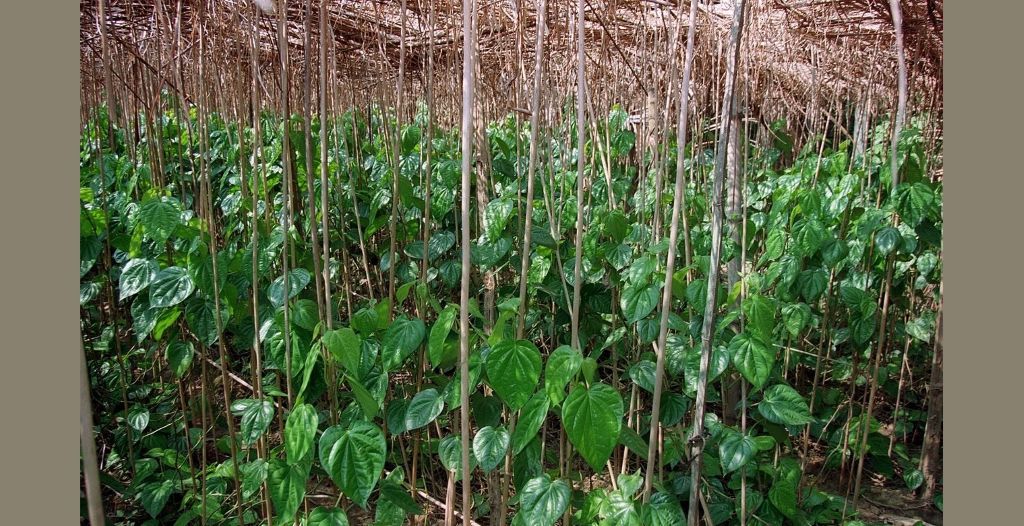
In any event, I had never seen a betel-leaf boroj from up close, so when the driver asked, I told him to stop the car. Going nearer, I saw that, in fact, fences about five feet high had been built on all sides with bamboo, wood, reeds, and thatch, with a roof-like covering above. This protected the delicate betel vines from harsh sun, rain, and wind, and kept the humidity and temperature inside under control. In that covered field, the betel vines had been carefully trained upward along rows of thin bamboo stakes or cords set about two feet apart.
बहरहाल, मैंने नज़दीक से पान का बरज नहीं देखा था इसलिए ड्राइवर के पूछने पर गाड़ी रोकने को कहा. समीप जाकर देखा तो पाया कि वस्तुतः बांस, लकड़ी, सरकंडे तथा फूस से चारों ओर लगभग पांच फुट ऊंची बाड़ें और ऊपर छाजन बनाया गया है. इससे तेज धूप, वर्षा और हवा से पान की नाज़ुक बेलों की रक्षा होती है तथा भीतर आर्द्रता और तापमान नियंत्रित रहता है. उस ढंके हुए खेत में क़रीब दो फुट के अंतर पर पांतों में लगी बांस की पतली बल्लियों अथवा डोरियों के सहारे पान की बेलों को ऊपर की ओर सावधानीपूर्वक चढ़ाया गया था.
In a nearby field, a farmer had gone inside the boroj, among the leaf-laden enclosures, and was irrigating with an earthen pot. In conversation with him, I learned that the betel plant is exceedingly tender. Strong sunlight can scorch its soft leaves, and excessive watering can rot the roots of the vines. For this reason, on the one hand, thatch has to be laid over the enclosure to protect the tender leaves from the sun; on the other, lest too much water fall on them, irrigation is carried out very carefully by bringing water from a pond in a pot.
पास के खेत में एक किसान बरज के अंदर पान से सजे बाड़ों के बीच घुसकर मटके से सिंचाई कर रहा था. उनसे बात करने पर पता लगा कि पान का पौधा बहुत ही कोमल होता है. तेज धूप पान के नरम पत्तों को जला सकती है और अत्याधिक पानी देने से बेलों की जड़ें सड़ सकती हैं. इस वजह से जहां एक ओर पान के कोमल पत्तों को धूप से बचाने के लिए बाड़े पर फूस बिछानी पड़ती है तो दूसरी ओर अधिक पानी न पड़ जाए इसलिए पान की सिंचाई बहुत सावधानी के साथ पोखर से मटके में जल लाकर की जाती है.
This traditional method of irrigating betel leaf has now almost disappeared. In the present age, the means of irrigation have undergone notable modernization. Where water was once brought by hand from ponds to water the betel vines, pumps, PVC pipelines, micro-irrigation devices, sprayers, and, in some places, solar-powered pumps are now also being used.
पान की सिंचाई की यह पारंपरिक पद्धति अब प्रायः लुप्त हो चुकी है. आज के युग में सिंचाई के साधनों में उल्लेखनीय आधुनिकीकरण हुआ है. पहले जहां तालाबों से हाथ से पानी लाकर पान की बेलों को सींचा जाता था, आज वहीं पंप, पीवीसी पाइपलाइन, सूक्ष्म सिंचाई साधन, स्प्रेयर और कुछ स्थानों पर सौर ऊर्जा चालित पंपों का उपयोग भी किया जा रहा है.
This change has saved both labor and water, and has improved both the quality and productivity of paan. Similarly, there has been considerable progress in the materials used to build the boroj. The use of fine plastic netting, synthetic ropes, galvanized wire, and RCC pillars has made the betel-leaf boroj more durable, less labor-intensive, and more convenient from the point of view of maintenance.
इस बदलाव से श्रम और जल की बचत तो हुई है पान की गुणवत्ता और उत्पादकता- दोनों में सुधार भी हुआ है. इसी प्रकार बरज बनाने की सामग्री में भी काफ़ी उन्नति हुई है. प्लास्टिक की महीन जाली, कृत्रिम रस्सियां, गैल्वनाइज़्ड तार, तथा आरसीसी के स्तंभों के उपयोग ने पान के बरज को अधिक टिकाऊ, कम श्रमसाध्य और रख-रखाव की दृष्टि से अधिक सुविधाजनक बना दिया है.
Inside the boroj, an effort is made to maintain roughly 70 to 90 percent humidity, so that through controlled, regular irrigation and ventilation a microclimate may be created in which high-quality betel leaf can be grown. Though betel leaf is cultivated in many states of the country, such as Odisha, Bihar, Assam, Uttar Pradesh, Madhya Pradesh, Chhattisgarh, Andhra Pradesh, and some other southern states as well, this boroj system of betel cultivation in Bengal is entirely distinctive.
बरज के भीतर लगभग 70-90 प्रतिशत आर्द्रता बनाए रखने का प्रयास किया जाता है ताकि नियंत्रित नियमित सिंचाई और वायु-संचार द्वारा एक माइक्रो-क्लाइमेट बनाया जाए जिसमें उच्च गुणवत्ता का पान उगाया जा सके. वैसे तो पान की खेती देश के कई राज्यों में की जाती है- जैसे ओडिशा, बिहार, असम, उत्तर प्रदेश, मध्य प्रदेश, छत्तीसगढ़, आंध्र प्रदेश और कुछ अन्य कुछ दक्षिणी राज्यों में भी, पर बंगाल के पान की खेती की यह बरज प्रणाली बिल्कुल अनूठी है.
On returning to Tamluk from the tour, I made inquiries and learned that this part of Medinipur, now East Medinipur district, is the largest betel-producing region in West Bengal. Many popular varieties are cultivated here, including Bangla, Meetha, Sanchi, Kali Bangla, and Simurali Bangla. As one would expect, Tamluk has also become a major center for the trade and marketing of paan, from where betel leaves are sent by air not only to various Indian states but also to several countries in the Middle East and Europe.
दौरे से वापस तामलुक पहुंचकर मैंने पता किया तो मालूम हुआ कि मेदिनीपुर का यह इलाक़ा (अब पूर्व मेदिनीपुर ज़िला) पश्चिम बंगाल में पान उत्पादन का सबसे बड़ा क्षेत्र है. यहां बांग्ला, मीठा, सांची, काली बांग्ला तथा सिमुराली बांग्ला जैसी अनेक लोकप्रिय किस्मों की खेती की जाती है. जैसा अपेक्षित है तामलुक पान के व्यापार और विपणन का एक प्रमुख केंद्र भी बन गया है, जहां से पान भारत के विभिन्न राज्यों के अतिरिक्त मध्य-पूर्व और यूरोप के कई देशों तक हवाई मार्ग से भेजा जाता है.
The destructive fashion of chewing gutka, which began in the 1980s and 1990s, had caused some hardship to betel farmers, but the ban on gutka production from 2012 brought relief. The use of paan declined somewhat, but in West Bengal, and especially in Tamluk, neither the cultivation of high-grade betel leaf nor the cultivators engaged in it have suffered any real change.
1980-90 के दशक में आरंभ हुए गुटका चबाने के नाशक चलन ने पान कृषकों को कुछ तकलीफ़ दी थी, लेकिन 2012 से गुटका उत्पादन पर लगे प्रतिबंध ने राहत दी. पान के व्यवहार में कुछ कमी हुई, पर पश्चिम बंगाल तथा विशेषकर तामलुक में उच्च स्तर के पान की खेती में तथा इसके खेतिहरों को कोई फ़र्क़ नहीं पड़ा है.
Over the past four decades, betel cultivation has undergone sweeping changes, but the farmers of Tamluk have not abandoned the basic structure of the paan boroj, because it is precisely that structure which creates the moist, shaded, and balanced microclimate necessary for excellent quality betel leaf.
पिछले चार दशकों में पान की खेती में व्यापक परिवर्तन हुआ है किंतु तामलुक के किसानों ने पान के बरज की मूल संरचना को नहीं त्यागा है, क्योंकि वही पान की उत्कृष्ट गुणवत्ता के लिए आवश्यक नम, छायादार और संतुलित सूक्ष्म जलवायु का सृजन करती है.
Chandan Sinha is a former Indian Administrative Service officer, writer, and translator.
(चन्दन सिन्हा पूर्व भारतीय प्रशासनिक सेवा अधिकारी, लेखक और अनुवादक हैं.)