空襲下的記者人生:當家鄉成為前線城市,3位哈爾基夫媒體人的求生和進化
In Kharkiv, local journalists remain under bombardment because their reporting is both a record of Russian crimes and a civic defense against disinformation, fear, and social fracture.
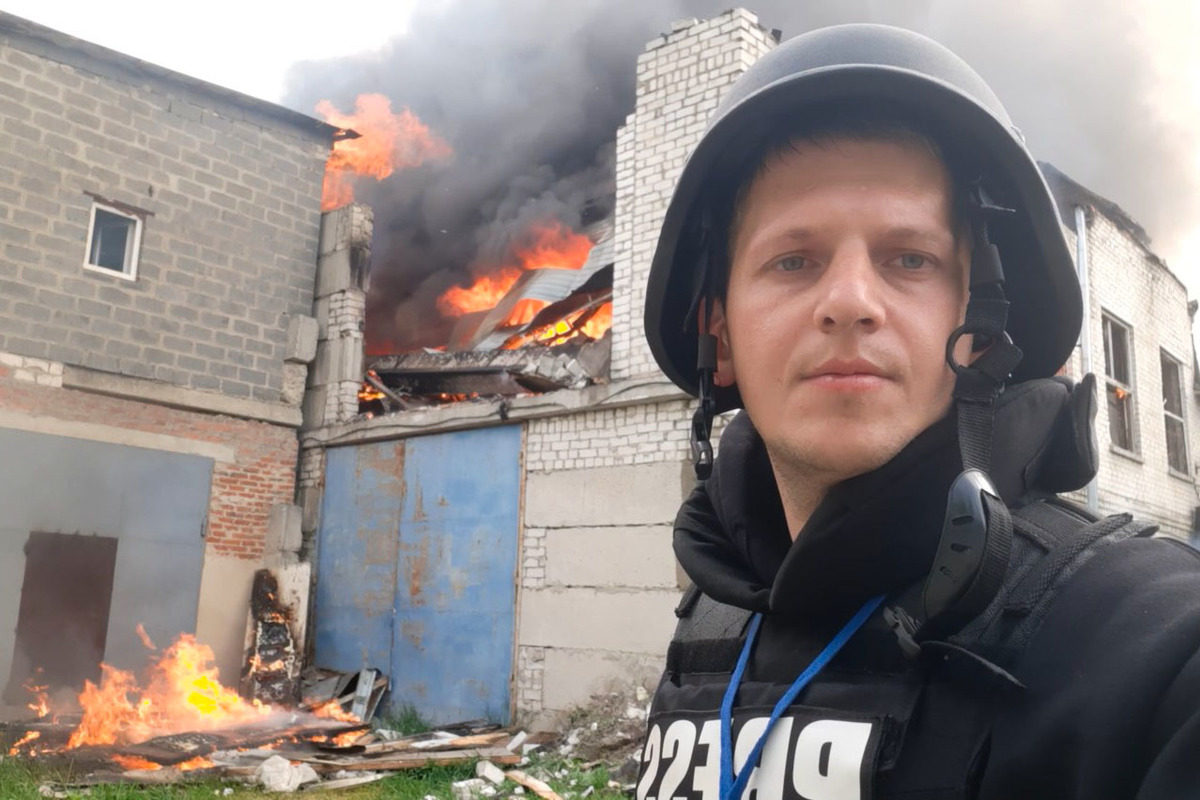
在烏克蘭抵抗入侵的前線城市哈爾基夫(Kharkiv)採訪當地媒體,會發現他們的辦公室分成兩種:被轟炸過的,和在地下的。這座仍有數十萬人生活的都市,是烏克蘭第二大城,距離俄羅斯大軍只有20、30公里。自2022年俄羅斯展開全面侵略至今,俄軍已在哈爾基夫炸毀超過13,000棟建築。以2026年1~5月為例,哈爾基夫州平均每月遭俄軍空襲198次,累積空襲警報的發布總時數,更等同於131天長。
When reporting on local media in Kharkiv, the frontline city where Ukraine resists invasion, one discovers that their offices fall into two kinds: those that have been bombed, and those that are underground. This city, where hundreds of thousands still live, is Ukraine’s second largest, only twenty or thirty kilometers from the Russian army. Since Russia launched its full-scale invasion in 2022, Russian forces have destroyed more than 13,000 buildings in Kharkiv. Taking January to May 2026 as an example, Kharkiv Oblast suffered an average of 198 Russian air attacks per month; the total number of hours under air-raid alert was equivalent to 131 days.
戰爭進入第5年後,《報導者》前往哈爾基夫,採訪留守當地的在地媒體人,理解戰火下他們如何繼續報導、為什麼繼續留在當地;他們的報導,如何成為抵禦俄軍資訊戰攻勢的堡壘?在當代戰爭中,前線城市在地媒體的存與滅,又有什麼歷史意義?
As the war entered its fifth year, The Reporter traveled to Kharkiv to interview local media workers who have stayed behind, to understand how they continue reporting under fire and why they remain. How has their journalism become a fortress against Russia’s information warfare? And in contemporary war, what historical meaning lies in the survival or extinction of local media in a frontline city?
In the fifth year of the war, Kharkiv has acquired a new name: the Brown City. Buildings bombed by Russia, including city hall, and the doors and windows around them shattered by blast waves, have temporarily been sealed with brown wooden boards, because repairs can never keep pace with wartime destruction. In February 2026 alone, Kharkiv’s municipal government recorded at least 234 buildings, 1,922 windows, and 57 roofs in the city damaged by Russian attacks.
戰事走入第5年,哈爾基夫有了一個新的名字:褐色城市(Brown city)。包括市政廳在內,被俄羅斯轟炸後的建築、四週被震波炸裂的門窗,暫時都用褐色木板封了起來,因為修復的速度總趕不上戰爭的破壞,光是以2026年2月的單月數據為例,哈市市府就紀錄了該市至少234棟建築、1,922扇窗戶、 57處屋頂因為俄軍攻擊而毀損。
The Kharkiv branch office of Ukraine’s public broadcaster, the National Public Broadcasting Company of Ukraine, hereafter Suspilne, has itself been attacked three times by Russian forces. The office can still operate, but the Soviet-style building beside it is half ruined. Unexpectedly, we were asked to enter for the interview through an inconspicuous small door in a high side wall. After passing security, we went straight down to the basement.
其中,烏克蘭公共媒體《烏克蘭國家電視廣播公司》(以下簡稱Suspilne)哈爾基夫分部的辦公室,就被俄軍攻擊過3次。辦公室本身仍能運作,但一旁的蘇聯式建築已經半毀,出乎意料的是,我們被要求從側面高牆上的一道不起眼的小門進入採訪,通過安檢,便直接走向地下室。
“Let’s just talk inside the air-raid shelter.” The person who received us was Slava Mavrichev, director of Suspilne’s Kharkiv branch. Since the Russian government put him on a wanted list, all his personal information, including photographs of his family and children, his phone number, and his address, has been published online. Because he has been followed, Mavrichev hides his movements whenever he comes and goes, and never takes a taxi to his own front door. Were it not for our interview, he would no longer come into the office to work at all.
「我們就直接在防空洞裡面聊吧。」迎接我們的是《Suspilne》哈爾基夫分部主任馬夫里切夫(Slava Mavrichev)。自從被俄羅斯政府放上通緝名單之後,他所有的個人資料,包括家人、小孩的照片、電話、住址,全被公開在網路上。因為曾被跟蹤,馬夫里切夫每一次進出都盡量隱藏行蹤,計程車也從不搭到自家門口。若不是為了接受我們的採訪,他如今也不會再進辦公室工作。
We were curious why he was wanted.
我們好奇他被通緝的原因?
“Because I report on Russia’s war of aggression against Ukraine. Twenty years: Russia sentenced me to twenty years in prison for ‘espionage.’”「因為我報導俄羅斯侵略烏克蘭的戰事啊,20年──俄羅斯判我『間諜罪』要關20年。」
Mavrichev has worked as a journalist in Kharkiv for more than twelve years, recording the many-sided threats and aggressions Russia has posed to Ukraine since the Maidan Revolution of 2014.
馬夫里切夫在哈爾基夫擔任記者超過12年,一路記錄俄羅斯從2014年廣場革命至今對烏克蘭多重面向的威脅跟侵略。
Since February 2022, when Russian forces launched their full-scale invasion and large-scale war began, Mavrichev has tried to lead his team in continuing to report local news. After every bombardment, for example, they must go to the scene of the attack to film it, to prove that the site was not a military facility, to let the world see the civilians who are suffering, and to document the war crimes committed by Russian forces.
2022年2月,俄軍全面入侵、大規模戰事開始以來,馬夫里切夫試著帶領團隊繼續報導當地新聞。例如,每一次的轟炸之後,他們都必須到遇襲現場拍攝,證明當地是並非軍事設施,讓世界看見受苦的平民,並記錄俄軍犯下的戰爭罪。
As a public media outlet, their latest reporting from the scene is not only an important channel through which the world understands the war situation; it is also the main basis on which local people grasp the reality around them. Thus, when Russian forces use bot accounts and official Russian announcements to spread false or misleading information online, such as “Kharkiv’s mayor has abandoned the city and fled,” “Ukrainian troops have retreated and deserted their positions, and the Russian army is about to storm the city,” or even claims that Russian bombardments are in fact Ukrainian forces firing wildly on their own people, residents still have a trustworthy source of information by which to judge what is real.
作為公共媒體,他們來自現場的最新報導,不光是世界理解戰況的重要管道,更是在地民眾掌握真實情況最主要的依據。於是,當俄軍透過機器人帳號和俄羅斯官宣,在網上散播「哈爾基夫市長已經棄城逃亡」、「烏軍已撤退棄守,俄軍大軍即將攻城襲來」等錯假訊息,或甚至宣稱俄軍的轟炸其實是烏軍自相殘殺的亂射砲火時,人們仍有可信賴的資訊來源能判斷現實情況。
That said, the decision to remain means confronting every sort of difficulty and murderous intent.
話雖如此,留下來的決定,就必須面對各種難關和殺意。
The Russian army understands that the existence of Ukrainian local media is itself a threat to Russia’s propaganda war. For that reason, not only has Suspilne’s office been attacked repeatedly by Russian forces; its journalists themselves are targets for Russian hunting.
俄軍明白,烏克蘭在地媒體的存在,就是對俄羅斯宣傳戰的威脅。因此不僅《Suspilne》的辦公室被俄軍反覆襲擊,記者們更是俄軍獵殺標的。
“When the war first began in 2014, we would tape the letters ‘TV’ onto our reporting vehicles, and our bulletproof vests would be marked ‘Press,’ because in the spirit of international law journalists are noncombatants, and they are not allowed to attack us,” Mavrichev said. “But now we understand that, for the Russian army, journalists are live targets. Marking ourselves this way instead exposes us to danger. They deliberately use drones to kill journalists simply because we are recording the truth, because these images will later be broadcast on television stations and social media around the world.”
「2014年戰爭剛開始時,我們會用膠帶在採訪車上貼『TV』字樣,防彈背心也會標示『Press』──因為依照國際法的精神,記者是非戰鬥人員,他們不可以攻擊我們,」馬夫里切夫說,「但現在我們明白,對俄軍來說,記者就是活靶。我們這樣標示,反而是把自己暴露在危險中。他們故意用無人機擊殺記者,只因為我們正在記錄真相,因為這些畫面之後會在全世界的電視台與社群媒體上播放。」
In the past, the high-risk zone in which journalists might be shot by Russian snipers extended roughly five kilometers from the front-line combat area. Now, however, everything thirty to forty kilometers from the front is within the range in which Russian drones hunt journalists.
在過去,記者遭遇俄軍狙擊的高風險地帶,大約是距離前線交戰區5公里以內。但如今,前線地帶的30~40公里處,全都是俄軍無人機獵殺記者的範圍。
The second murderous trap facing journalists is the Russian army’s “double-tap,” an ambush laid at the news scene. Russian forces understand that after every bombardment Ukrainian journalists will try every means to rush to the site and film it, so they calculate when reporters and rescue workers will arrive, then launch a second, backhanded wave of attacks on the same location.
對記者的第二道殺機,是俄軍「埋伏」在新聞現場的「二度轟炸」(double-tap)。俄軍明白,每一次轟炸之後,烏克蘭記者都會想方設法趕赴現場拍攝,所以他們會計算記者和救護人員抵達現場的時間,接著對同一地點發動回馬槍式的第二波攻擊。
Mavrichev said the Russian army is good at waiting, sometimes even for two hours. “They wait until the largest number of people has gathered, then launch the second bombardment. From the beginning of this year to now alone, in three months, I personally have encountered this kind of repeated attack four times.”
馬夫里切夫說俄軍擅長等待,有時可以甚至等上兩小時,「就是等到聚集了最多人的時候,再發動二波轟炸。光是今年初到現在,(3個月內)我自己就遇過4次這種重複攻擊。」
The third murderous threat, Mavrichev pointed out, “is the one you asked about at the start: I have already been wanted by Russia.” Along with that warrant, Russian security agencies also made all his personal information public. “Anyone can use that personal data. Any pro-Russian element might take action, even send someone to seize me. This is a danger that has to be kept in mind at all times.” For safety, he has sent away all his family, leaving only himself and his partner, who is also a journalist, to continue guarding their hometown.
第三道殺機,「就是你一開始問的那個──我已經被俄羅斯通緝了,」馬夫里切夫指出,伴隨著這份通緝令,俄羅斯安全部門也公開了他所有的個人資料,「任何人都可以利用這些個資,任何親俄分子都可能有所行動,甚至派人來抓我,這是必須隨時放在心上的危險。」為了安全,他已送走所有家人,只留下自己和同樣身為記者的另一半,繼續守在家鄉。
“In any case, for a journalist, simply staying here means being destined to face all kinds of murderous danger.” Mavrichev realized that, without thinking, he had listed too many risks and, afraid of taking up interview time, ended with a smile.
「反正,對一個記者來說,光是留在這裡,就注定得面對各種殺機,」馬夫里切夫意識到自己不加思索就說出了太多種風險,怕占用了採訪時間,笑笑作結。
Mavrichev wanted even more to leave time for another subject: beneath layer upon layer of lethal danger, how does Suspilne’s Kharkiv branch maintain news operations safely? Over the past five years, they have developed at least ten lessons and hundreds of pages of teaching materials, instructing every journalist on how to complete reporting assignments safely under the threats of war. This course has now been promoted across Suspilne’s branches throughout Ukraine.
馬夫里切夫更想把時間留給另一個題目:在層層殺機之下,《Suspilne》哈爾基夫分部如何安全地維持新聞運作?過去5年,他們發展出至少10堂課、上百頁的教材,教導每一位記者如何在戰爭威脅下安全完成採訪任務。這套課程如今已推廣到《Suspilne》全烏克蘭的各地分部。
First, they adopted a decentralized mode of remote work. Journalists work dispersed across different parts of the city, reducing the dangers of being followed, wiped out together in the office, or targeted on the commute. In addition, when a news scene appears or a bombardment occurs in one part of the city, the nearest journalist can arrive as quickly as possible. Beyond gaining time to capture images from the scene, this also shortens the distance they must travel under the threat of shelling. “In a combat city that faces all kinds of attacks twenty-four hours a day, around the clock, this is very important,” Mavrichev said.
首先,是採用去中心化的遠端工作模式。記者們各自分散在城市不同地點工作,減少被跟蹤、在辦公室裡團滅、通勤途中被鎖定等危險。另外,當城市不同地點出現新聞現場或發生轟炸時,距離最近的記者可以盡快抵達,除了爭取時效拍到現場畫面,也能縮短在砲擊威脅下移動的交通距離,「在一座24小時、全天候遭遇各種襲擊的交戰城市裡,這是很重要的事情,」馬夫里切夫說。
Next comes learning “risk assessment.” Journalists must know precisely how each kind of weapon causes casualties, including its speed and destructive parameters: for example, what kind of building a certain rocket can penetrate, or what type of concrete or shelter it can break through.
接著,是學會「風險評估」。記者們必須精確知道每一種武器如何造成殺傷,包括這些武器的速度、破壞力參數──例如某種火箭可以穿透什麼樣的建築,能擊破什麼類型的混凝土或掩體。
Mavrichev gave an example: if the attack is by ballistic missile, that means the Russian army already has clear coordinates and has locked on to a specific target point. Once an alert is received and they know the second attack is a ballistic missile, a journalist’s reaction time will not exceed forty seconds; it takes only forty seconds for a ballistic missile from the nearest launch site to reach Kharkiv. “Knowing this means you have forty seconds to respond.”
馬夫里切夫舉例,如果面對的是彈道飛彈攻擊,那代表俄軍已掌握清楚座標、並鎖定特定的目標點。一旦收到警報、知道第二次攻擊是彈道飛彈,記者的反應時間不會超過40秒(最近的彈道飛彈發射地飛到哈爾基夫只要40秒),「知道這件事,代表你有40秒可以反應。」
Once they have learned risk assessment, then on every reporting assignment, taking the scene of a bombardment as an example, the first thing journalists do after arriving in the attacked area is find the nearest shelter. Then they complete their filming as quickly as possible and leave the strike zone within a limit of twenty minutes. After that, through military channels, they confirm whether the Russian launch apparatus is still active. Only if it is not can they return to the scene to film supplementary images.
學會了風險評估,每一次記者採訪──以轟炸現場為例──抵達遇襲區後,首先要找到最近的掩蔽所,接著盡快完成拍攝工作,並以20分鐘為限撤離受擊區。接著,再透過軍方管道確認俄軍的發射裝置是否仍然活躍;若否,他們才能重回現場補拍畫面。
If they are facing the Russian army’s commonly used Shahed suicide drones, the enemy usually launches them in groups, with roughly fifteen minutes between each incoming drone. At such times, the journalists monitor the drones’ flight paths while using the intervals to film.
如果面對俄軍常用的「見證者」自殺型無人機(Shahed),敵方通常是成群發射,每一架襲來的間距大概15分鐘,記者們這時便一邊監控無人機的飛行路徑,一邊利用空檔拍攝畫面。
He cited a personal experience from two months earlier. “That time it was in southeastern Kharkiv. More than twenty suicide drones flew in, at an average interval of fifteen minutes. You go out and shoot for five minutes; rescue workers work for five to ten minutes; then you hear the next one approaching, or see it approaching on the monitoring screen, and you run to the shelter and sit there listening to the explosion. More or less the instant you sit down, the explosion comes. Then you rush out again and film for five to seven minutes. This is how we record the scene, running back and forth.”
他以兩個月前的親身經歷為例:「那次是在哈爾基夫的東南部。有超過20架自殺型無人機飛來,平均間隔15分鐘。你出去拍5分鐘,救援人員工作5到10分鐘,然後你聽到下一架接近的聲音,或在監測畫面上看到它接近,你就跑到掩蔽所,坐著聽爆炸聲──差不多就是坐定的瞬間,爆炸就來了──然後你再衝出去拍5到7分鐘。我們就是用這種來回奔跑來記錄現場。」
“The trouble is that these drones often use warheads packed with large numbers of lethal fragments, or even thermobaric weapons. I myself, for example, have worked under a double-tap with thermobaric munitions. It really is a terrifying weapon: it explodes into a cloud of flame that can bore into any gap, any crack. Even if you are hiding in a shelter, that cloud of fire can get inside.”
「麻煩的是,這種無人機經常使用裝有大量殺傷破片的彈頭、甚至熱壓彈(thermobaric)。例如我自己就在熱壓彈的二度轟炸下工作過──這真是非常恐怖的武器,它會炸成一團能鑽進任何縫隙、任何裂縫的火焰雲。即使你躲在掩蔽所,這團火雲也能鑽進去。」
The safety rules Suspilne has formulated for journalists give different field guidelines according to conditions such as season, time of day, and the types of weapons used by Russian forces: when to move fast, when to move slowly, when to act immediately, and when to wait. Even route planning for reaching the scene, and whether the route passes hospitals, gas stations, factories, and other locations, must all be taken into consideration.
《Suspilne》為記者制定的安全守則,會依照季節、時段、俄軍使用的武器類型等條件,給予不同的採訪行動方針:什麼時候該快、什麼時候該慢,什麼時候該立刻行動、什麼時候又該等待。甚至連抵達現場的路線規畫,沿路是否經過醫院、加油站、工廠等地點,也都必須納入考量。
The manual also includes how to reduce the harm caused by explosions, how to deal with power grids and fallen electrical wires after a bombardment, and even how to avoid being hit by fire trucks and ambulances.
接著,手冊還包括如何降低爆炸造成的傷害、如何面對被轟炸後的電網與斷落電線,甚至連如何避開消防車、救護車的撞擊等,都被寫進工作手冊裡。
It is written in such detail because every single item can mean the difference between life and death.
寫得這麼細,是因為這每一項,都決定了生死之差。
Choosing to stay here as a journalist requires one to pay almost everything in life and endure risks ordinary people cannot imagine. Mavrichev said the decision was not difficult for him. In their company manual, he said, there is a sentence: “Our mission: to defend Ukraine’s freedom.”
選擇繼續留在這裡當記者,幾乎要付出人生的所有,承受一般人無法想像的風險。馬夫里切夫說,這個決定對他並不難。他說,他們的公司手冊上寫著一句話:「我們的使命──捍衛烏克蘭的自由。」
“Before working here, I had never thought that a news organization’s ‘mission’ could be so important. It is precisely this mission that gives me the clearest possible answer to the question of why I am here.”
「在這裡工作之前,我從來沒想過一個新聞媒體的『使命』這麼重要。正是這個使命,讓我對『我為什麼在這裡』有了再清楚不過的答案。」
Mavrichev cited the example of another journalist from nearly a century ago: Gareth Jones, from Wales. In the 1930s, Ukraine was undergoing the Holodomor, the Great Famine, and Kharkiv Oblast was among the worst-hit regions; roughly two million people starved to death because of decisions made by the Soviet government. But the Soviet authorities blocked news of this crime for nearly a year, until Jones, who had come to report, deceived the Soviet authorities and walked along the railway tracks toward Kharkiv Oblast, photographing those who had starved to death in the streets of Kharkiv and those whose bodies were swollen from malnutrition. Only then could the deaths of millions no longer be concealed.
馬夫里切夫以近100年前的另一位記者──來自威爾斯的加雷斯.瓊斯(Gareth Jones)為例。1930年代,烏克蘭正在經歷「大饑荒」(Holodomor),其中最慘烈的地區就包括了哈爾基夫州,大約200萬人因蘇聯政府的決策而餓死。但當時蘇聯政府封鎖這一罪行消息將近一年,直到前來採訪的瓊斯騙過蘇聯當局,沿著鐵軌徒步走向哈爾基夫州,拍下那些餓死在哈爾基夫街頭、因營養不良而全身浮腫的照片,才讓數百萬人的死亡無法被繼續掩蓋。
“That was the work of a journalist one hundred years ago. We are now trying to do the same thing. Besides helping our compatriots here and now, telling them what is flying toward them, how long it will fly, whether they can evacuate, whether it is safe to enter or leave, and so on, we also hope our work can be like that of journalists one hundred years ago: fifty, one hundred, one hundred and fifty years from now, because of our testimony, no country in the world will be able to distort this history, and Russia will be unable to rewrite the crimes it has committed.”
「這是100年前的記者工作。我們現在試著做同樣的事──除了在此時此地幫助同胞,告訴他們什麼東西正在飛過來、會飛多久、能不能撤離、進出是否安全等等,我們還希望我們的工作能像100年前的記者一樣:50年、100年、150年後,因為有我們的見證,世界上沒有任何國家能扭曲這段歷史,俄羅斯也無法改寫他們犯下的罪行。」
For Tanya Fedorkova, a journalist at Media Port Kharkiv, hereafter Media Port, who has also worked in Kharkiv for more than twelve years, the reason for staying is just as clear: it is because of “people.”
對同樣在哈爾基夫工作了超過12年的《哈爾基夫媒體港》(Media Port Kharkiv,以下簡稱《媒體港》)記者費多科娃(Tanya Fedorkova)來說,留下來的理由一樣清晰──是因為「人」。
Media Port is a local Kharkiv outlet founded twenty years ago. Although its team now has fewer than ten people, it remains a respected local news brand. But when Fedorkova was interviewed about being a journalist in a city that once had the highest proportion of Russian speakers in Ukraine, what she spoke about throughout was local people, especially those who grew up in a Russian-language environment, and even local people whose thinking had been pro-Russian.
《媒體港》是20年前成立的哈爾基夫在地媒體。雖然團隊目前僅剩不到10人,但仍是具有聲望的地方新聞品牌。但在一座曾是烏克蘭俄語人口比例最高的城市當記者,費多科娃受訪時談的,始終都是當地民眾,尤其是那些在俄語環境中長大,甚至思想親俄的在地人。
“It has never stopped. This place is the Russian army’s training ground for information warfare. They keep spreading fear, making people weary of war.”「一切從來沒有停過。我們這裡就是俄軍資訊戰的操練場,他們不斷散播恐懼,讓人們厭戰。」
As early as twelve years ago, during the Maidan Revolution, Fedorkova witnessed Russia’s influence over Kharkiv. At the time, hundreds of thousands of people took turns occupying the square in Kyiv to protest the illegal conduct of the pro-Russian president. But in Kharkiv, four to five hundred kilometers away, pro-Russian forces directly bused people into the city, tried to occupy the municipal government, and even began shouting slogans calling for independence from Ukraine.
費多科娃早在12年前、廣場革命期間,就見證了俄羅斯對哈爾基夫的影響力。當時,數十萬民眾接力在基輔廣場上,抗議親俄總統的不法行為;但在400~500公里外的哈爾基夫,親俄勢力卻直接把人運進城市裡,試圖占領市政府,甚至喊起要從烏克蘭獨立的口號。
At the time, Fedorkova livestreamed from inside city hall and heard with her own ears these people from elsewhere, who did not even know how to get around the municipal building or what the next step after occupation would be, constantly discussing “orders from above.” Through her reporting, Fedorkova also directly exposed the truth about these outside infiltrators who claimed to be “Ukrainians.”
當時的費多科娃從市府內展開直播,親耳聽見這些外地來的人,連市政府怎麼走、占領後的下一步是什麼都不知道,卻不斷討論著「上頭下達的指令」。而費多科娃也透過報導,正面揭穿了這些自稱「烏克蘭人」的外地滲透者真相。
Twelve years later, Fedorkova said that after Russia’s large-scale invasion, more than 80 percent of Kharkiv residents identified themselves as “Ukrainians.” Russia therefore simply imitated the pages of local media and directly falsified the news, for instance turning images of Ukrainian troops rescuing monuments and statues into fabricated “evidence” that Ukrainian forces were destroying the assets of eastern Ukrainian cities and punishing Russian speakers.
12年後,費多科娃說,在俄軍大規模入侵後,哈爾基夫市民「自認為是烏克蘭人」的認同比例在當地超過8成,於是俄羅斯索性仿造在地媒體的頁面直接竄改新聞,例如把烏軍搶救古蹟、雕像的畫面,捏造成烏軍破壞烏東城市資產、懲罰俄語人口的「證據」。
Fedorkova believes national media cannot help local people everywhere resist rumors so intimate and close at hand. “One of the purposes of local media is to examine how information has been altered, how rumors have been fabricated, and to resist this.” Precisely for this reason, local media that come from the place, are located in the place, and can respond quickly are among the most important defensive forces in contemporary war.
費多科娃認為,全國性媒體不可能協助各地民眾抵抗如此貼身的謠言,「地方媒體存在的目的之一,就是去檢查資訊如何被竄改、被造謠,並對此進行抵抗。」正因如此,來自在地、位於在地,並能快速反應的地方媒體,才是當代戰事中最重要的抵禦力量之一。
Local media can also reveal the real situation outside the capital and reduce the possibility that citizens will be maliciously divided.
地方媒體也能凸顯首都外真實現況,降低國民被惡意分化的可能。
Fedorkova cited a recent tragedy: two emergency medical workers in Kharkiv Oblast were killed by a Russian drone while on their way to a call.
費多科娃以最近的一起悲劇為例:哈爾基夫州兩位緊急救護人員在出任務的路上,遭俄軍無人機攻擊身亡。
“That ambulance had absolutely no protection, none of those welded-on armor plates or shielding. It was said to have had a drone detector, but it seems they were unable to use it,” Fedorkova said. After the news was published, dozens of messages poured into the newsroom and her personal phone, all of them, astonishingly, from medical workers reporting various problems in the organization of emergency medical work, including labor rights, inadequate protective equipment, insufficient training, and so on. These messages were not complaints, but urgent searches for ways to improve things. Some people were even willing to appear in interviews at the risk of being fired, so that there would not be another victim.
「這台救護車完全沒有任何防護,沒有那種焊上去的護板、屏蔽。雖然據說有無人機偵測器,但好像他們沒能用上,」費多科娃說,這則新聞發出後,幾十則訊息湧入編輯部和她的個人電話,竟然都是醫護人員紛紛反映緊急救護工作組織的各種問題,包括工作權益、防護設備不足、培訓不足等等。這些訊息不是抱怨,而是急迫地尋求改善之道。有些人甚至願意冒著被解僱的風險露面受訪,以免再有下一個受害者。
One of them was the fiancee of one of the dead; they had originally planned to marry this autumn. Also a medical worker, she now only hopes to make visible the systemic problems encountered by her profession, and thereby save more lives.
其中一位,是罹難當事人的未婚妻──他們原本今年秋天就要結婚。同樣身為醫護人員的她,如今只希望讓同業所遭遇的系統性問題被看見,進而拯救更多人命。
Yet after the interview with the fiancee was published, the victim’s parents instead received a warning from a supervisor in the medical system. “The other side threatened them: ‘If you keep running your mouths, we won’t help with the funeral arrangements.’ It is absolutely rotten!” Fedorkova said, agitated:
然而未婚妻受訪的新聞發出後,罹難者父母反而收到了來自醫護體系主管的警告,「對方威脅『如果你們繼續多嘴,喪禮安排我們就不幫忙了』,簡直是爛透了!」費多科娃激動地說:
“So you see, people find an outlet in the local newsroom and speak out about a whole pile of problems. People use local news to look for answers to all kinds of real-world problems. Of course, truly solving problems is not easy, but media can at least point out the crux of the matter from a certain angle and draw public attention.”
「所以你看,人們在地方編輯部找到出口,把一大堆問題說出來。大家會透過地方新聞替現實中的各種問題尋找解答。要真正解決問題當然不容易,但媒體至少能從某個角度點出癥結,吸引大家注意。」
Her efforts were not wasted. Within just forty-eight hours, Ukrainian members of parliament had placed the incident on the agenda. The voices of people in a frontline city truly passed through local media and entered the national legislature.
她的努力沒有白費,短短48小時內,烏克蘭國會議員們就已把這起事件排進議程。前線城市的人民聲音,真的透過在地的媒體,傳進了國家的議場。
“For people, it is important to be able to find journalists. Because many terrible things are happening all over the country now, and only local media can continue to hold attention on these stories and write down the important stories of local people,” Fedorkova explained from a local perspective.
「對人們來說,能夠找到記者很重要。因為現在全國各地都在發生很多恐怖的事,只有地方媒體可以持續為這些故事保留關注、寫下當地人的重要故事,」費多科娃從在地視角解釋。
Another kind of reporting only local media can do is the courtroom trials of “traitors.” Even in the face of an average of three air raids a day, Fedorkova still diligently attends court hearings and reports on cases involving collaboration with the enemy and treason.
另外一件只有地方媒體才能做的報導,則是法庭上對「叛徒」的審判──即使面對平均每天3次的空襲,費多科娃仍然勤奮地到法庭旁聽,報導與通敵、叛國罪有關的案件。
“These cases are not always black and white. We often receive press releases from the Security Service of Ukraine, the SBU, and the prosecutor’s office, filled with statements about ‘how bad this person is.’ But when I attend these hearings, what I see is not necessarily always like that, because in the process you realize that the conditions and circumstances behind how this person ended up in that situation are actually very complex.” Fedorkova smiled wryly and said these reports are not appealing news topics; they are both dull and consuming of time and resources:
「這些案件不總是黑白分明。我們經常收到烏克蘭國家安全局(SBU)和檢察官辦公室寄來的新聞稿,上面都是『他這個人有多壞』之類的陳述。但我去旁聽這些庭審時,看到的卻不一定都是那麼一回事,因為過程中你會意識到,這個人之所以會落到那個處境,背後的條件與情境其實真的很複雜。」費多科娃苦笑説,這些報導都不是討喜的新聞題目,既是枯燥又耗費時間和資源:
“But we still have to track whether these punishments are just, and we must be able to distinguish between those who truly acted out of conscious choice, clearly held pro-Russian positions, and worked for the enemy, and those who were helplessly thinking only of how to survive.”
「但我們還是得追蹤這些刑罰是否公正,也要能區分那些真的是出於有意識選擇、明顯抱有親俄立場、替敵方工作的人,和那些只是無奈想著活下去的人。」
“I do not want merely to tick a box and record one more ‘collaborator’ in the statistics. What I truly hope for is a calm discussion of the moral questions and personal questions of survival inside this, especially in areas occupied by Russian forces.”
「我不想要只是打勾,把又一個『通敵者』記在統計上。我真正希望能冷靜討論這裡面的道德問題、個人生存問題,尤其是在俄軍占領區。」
Fedorkova emphasized that these discussions are serious issues from which Ukraine cannot avert its gaze, and only local journalists have the chance to open up the lower layers of society and the sites of sensitive conflict, to understand where the weaknesses exploited by the enemy actually lie. From bombing sites to courtrooms, from fake news fabricated by the enemy to the black holes in Ukrainian society, Fedorkova carries a camera lens, tripod, microphone, recorder, and notebook. She is usually alone, completing the writing, photography, video, and interviewing by herself.
費科多娃強調,這些討論是烏克蘭無法別過眼光的嚴肅課題,也只有在地記者才有機會翻開社會底層與敏感衝突之處,理解被敵人所利用的弱點究竟在哪裡。 從轟炸現場到法庭,從敵人捏造的假新聞,到烏克蘭社會的黑洞,費多科娃身上背著攝影鏡頭、腳架、麥克風、錄音筆、筆記本。她通常只有一個人,來完成文字、攝影、錄影、採訪等工作。
She laughed and said that many of the photographs she takes are sometimes only to send to her family. Fedorkova’s paternal family comes from Russia, and after her father died he was buried in Russia. Her cousin is in Russia’s National Guard; before Russian forces began harassing eastern Ukraine in 2013, he often came to Kharkiv to visit.
她笑說,自己拍的許多照片,有時候只是為了傳給家人。費多科娃的父系家族來自俄羅斯,而父親死後也葬在俄羅斯。她的表哥,則是俄羅斯國家近衛軍,在2013年俄軍開始侵擾烏東之前,表哥還經常來哈爾基夫玩。
“After the full-scale invasion began, my cousin’s mother once sent my mother a message saying, ‘Bear with it a little longer. It will soon be over. Everything will get better.’ What she meant was, ‘We are coming to liberate you,’ because at that time the Russian National Guard was advancing on Kharkiv in columns.”
「全面入侵開始後,表哥的母親曾傳訊息給我媽說:『再忍耐一下,很快就會結束了,一切都會好起來的。』她言下之意就是『我們要來解放你們了』,因為那時俄羅斯國家近衛軍正排成縱隊,朝哈爾基夫發動攻勢。」
“When Russian forces began large-scale slaughter in the city and did not even spare children, I began to feel an impulse I could not suppress: I started sending my cousin photographs documenting those horrors, wanting him to see what consequences his actions had caused. For example, once Russia attacked a gas station, and burning fuel rushed into a residential area. An entire family was burned alive inside their home, including an infant.” But her Russian-soldier cousin never replied.
「當俄軍在城市裡開始大規模屠殺、連兒童也不放過時,我心裡開始壓不住一股衝動──我開始把記錄那些慘狀的照片傳給我的表哥,想讓他看看他的行為造成了什麼後果⋯⋯例如有一次,俄羅斯攻擊加油站,燃燒的燃油衝進住宅區,一家人被活活燒死在屋內,包含一名嬰兒。」 但,她的俄軍表哥從未回覆。
“When I discovered that my blood relative had been brainwashed so thoroughly, placing obedience to Vladimir Putin above kinship, what I felt was not only shock, but intense pain and hatred.” Fedorkova lowered her head as she explained one of the reasons she stayed and works day and night without rest.
「當我發現我的血親竟被洗腦得如此徹底,把對普丁(Vladimir Putin)的服從置於親情之上時,我感到的不只是震驚,更是劇烈的痛苦與恨意。」費多科娃低著頭,解釋這一個讓她留下來、日夜不懈工作的原因。
“This city has been influenced by Russia for several hundred years. It is truly hard to change, even now. But since 2014, Nakipilo has kept trying to change that.”「這座城市受俄羅斯影響好幾百年,要改變真的很難,連現在都還是。但從2014年開始《忍無可忍》就一直試著改變這件事。」
Napolska joined Nakipilo in November 2022. Why, during a war, would she choose a profession the enemy treats as a target, and stay in a frontline city to work?
納波爾斯卡是在2022年11月加入《忍無可忍》。為什麼在戰爭中,她會選擇一個被敵人當成標靶的職業,並且留在前線城市工作呢?
The time goes back to March 1, 2022. Russia fired a missile at Kharkiv city hall; at that moment, Napolska was inside. Fortunately, she suffered only minor injuries. But the shock to her heart was such that she could no longer remain in her hometown then, and had no choice but to head straight west and try to heal.
時間回到2022年3月1日。俄羅斯發射飛彈射向哈爾基夫市政廳,當下,納波爾斯卡就在裡頭。幸運的是,她只受了輕傷。但內心受到的震撼,讓她當下再也無法待在家鄉,只好直奔西部,試著療傷。
Their broadcasts also once reached inside Russia and became popular with local listeners. “That is why comments like ‘I am going to kill you’ began to appear, along with many cyberattacks,” Napolska said with a loud laugh.
而他們的廣播內容,也一度播放到俄羅斯境內,受到當地聽眾歡迎,「所以才開始出現『我要殺死你們』這類留言,還有很多次網路攻擊,」納波爾斯卡大笑著說。
Nakipilo’s reporting mainly focuses on urban life, anti-corruption, social issues, and culture; it also reports on the shelling of the city and civilian buildings.
《忍無可忍》的報導主要關注城市生活、反貪腐、社會問題與文化,也報導城市及民用建築遭砲擊的狀況。
“Our journalists go to the front line to film soldiers’ daily lives and their stories. A considerable part of our team has also volunteered to join the army and is now serving as soldiers or officers in different branches of the military. So we also go to find soldiers, bring them supplies, and launch fundraisers.”
「我們的記者會去前線,拍攝士兵的日常生活與他們的故事。我們團隊也有相當大一部分人志願加入軍隊,現在以士兵或軍官的身分,在不同軍種服役。所以我們也會去找士兵、給他們帶物資、發起募款。」
Napolska said none of these are things traditional journalism would do, but especially in a frontline city, there is truly no way not to invest oneself, not to become involved. “This concerns your life, and your country. I think this is a very major transformation in journalism.” For this reason, Nakipilo has even launched fundraising projects in support of the army, raising more than 13 million hryvnias, approximately NT$9.25 million.
納波爾斯卡說,這些都不是傳統新聞業會做的事,但特別是在前線城市,真的沒有辦法不投入、不介入,「這牽涉到的是你的生命,還有你的國家。我覺得這是新聞業很大的一個轉變。」所以,《忍無可忍》甚至也發起支持軍隊的募款計畫,募資超過1,300萬荷林夫納(約新台幣925萬元)。
By producing content on different online platforms and providing “services” in different aspects of life, Napolska believes Nakipilo has given local people different choices in how to live, and with them the possibility of change. “Take my mother. She now comes to listen to our events about Ukrainian history, art, and women.” Napolska is the only member of her family who speaks Ukrainian, and for that reason has long kept a distance from her family. But after stepping outside the family, mother and daughter heard together at Nakipilo’s events those “facts that have always existed in our lives, but that we refused to see,” as Napolska put it.
在不同網路平台上製作內容,並在生活的不同層面提供「服務」,納波爾斯卡認為,《忍無可忍》讓在地人的生活有了不同選擇,也有了改變的可能。「像是我媽媽,現在會來聽我們關於烏克蘭歷史、藝術和女性的活動。」納波爾斯卡是家中唯一一個說烏克蘭語的成員,也因此與家人長期保持距離。但走出家庭之後,母女倆卻在《忍無可忍》的活動上,一起聽見納波爾斯卡口中那些「一直存在於我們生活中,但我們卻視而不見的事實」。
Even so, after more than four years as a media worker, when asked whether Ukrainian media have any chance of winning against the offensive of Russian information warfare, her answer is no: because the work of media is not to fight an information war.
即使如此,成為媒體工作者超過4年,問到面對俄羅斯資訊戰的攻勢,烏克蘭媒體有沒有勝算,她的答案是否定的:因為媒體的工作,不是打資訊戰。
“Because our media are not trying to change their people,” Napolska believes. Ukraine is not the aggressor, and the greatest difference between democracy and totalitarianism is the value placed on freedom of the press and freedom of speech. The work of Ukrainian media workers is not to fabricate facts, participate in official propaganda, or launch cognitive warfare or information warfare against the Russian public. It is to play the role of media well at critical moments, using good news services and professional reporting to accompany the people of Ukraine. This is different from the way totalitarian states and aggressors treat information and media as weapons.
「因為我們的媒體沒有要改變他們的人,」納波爾斯卡認為,烏克蘭不是侵略者,而民主與極權最大的不同,是對新聞和言論自由的珍視,烏克蘭媒體人的工作不是捏造事實,參與官宣,也不是針對俄國民眾發動認知戰、打資訊戰,是在關鍵時刻扮演好媒體的角色,以好的新聞服務、專業的新聞報導來陪伴烏克蘭的民眾,這與極權國家、侵略者將資訊與媒體視做武器不同。
“We, the media, only want to win our own people back. And this, I think, we can absolutely do.”「我們(媒體)只是想贏回我們自己人。而這個,我覺得我們完全做得到。」
Napolska believes that in frontline cities the importance of media stands out all the more. It must transform quickly in extreme conditions, accompany readers through the reporting of true stories and diverse forms of contact, promote public discussion, and bring people together.
納波爾斯卡認為,在前線城市,媒體的重要性更加突出,必須在極端的環境中快速轉型,透過真實故事的報導、多元的媒介接觸與陪伴讀者,促進大眾討論、凝聚人心。
She gave as their latest success an F1 livestream party held at six o’clock on a Sunday morning. Even though air raids often occur in the middle of the night, their members still appeared on time early that morning.
她舉了他們最新的成功範例,是辦在星期日清晨6點的F1賽車直播派對,即使夜半常有空襲,他們的會員一早仍然準時出現。
“So we gained one more seventeen-year-old reader. He is an F1 fan, and now he has also started watching our news videos, and has even appeared in our videos.” Whether it is gaining new readers or winning people’s hearts back, Napolska said, “It will take a long time, but one by one, slowly, it can be done.” Seeking truth in depth, walking with many voices.
「於是我們就多了一個17歲的讀者。他是F1車迷,現在也開始看我們的新聞影片,還出現在我們的影片裡了。」不管是得到新的讀者,或者找回人心,納波爾斯卡說:「會花很長的時間,但一個、一個慢慢來,是做得到的。」 深度求真 眾聲同行
The spirit of independence is the condition for free thought. Only independent media can guard the public sphere and allow free discussion and truth to emerge.
獨立的精神,是自由思想的條件。獨立的媒體,才能守護公共領域,讓自由的討論和真相浮現。
In a difficult media environment, The Reporter persists in using the model of a nonprofit organization to devote itself to investigative and in-depth reporting in the public sphere. We operate through the support of reader sponsorship, do not rely on commercial advertising placement, and, on the premise of independence and autonomy, move through all kinds of important public issues.
在艱困的媒體環境,《報導者》堅持以非營利組織的模式投入公共領域的調查與深度報導。我們透過讀者的贊助支持來營運,不仰賴商業廣告置入,在獨立自主的前提下,穿梭在各項重要公共議題中。
This year marks the tenth anniversary of The Reporter. Please support us as we continue tracking the truth of news events at home and abroad, and as we face the challenges of the next decade.
今年是《報導者》成立十週年,請支持我們持續追蹤國內外新聞事件的真相,度過下一個十年的挑戰。