Why Does Seoul Change When the Mayor Changes?
Through Nodeul Island and Sewoon Sangga, Park Kyung-sun shows how Seoul’s urban spaces have repeatedly been recast as political assets under shifting mayoral leadership.
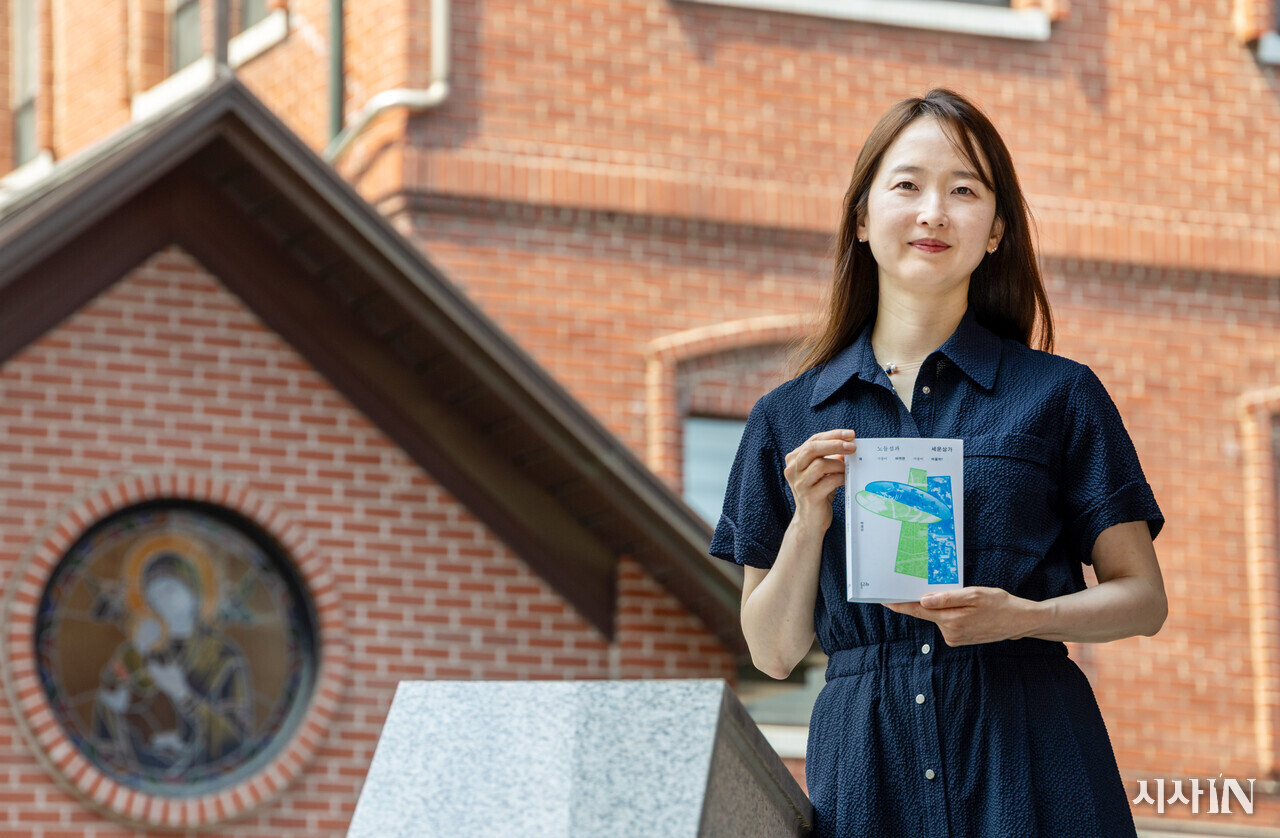
Why does Seoul change when the mayor changes? This is the subtitle of Nodeul Island and Sewoon Sangga. Park Kyung-sun, a researcher at Seoul National University’s Institute for Korean Regional Studies and the author of the book, had originally intended to use that subtitle as the book’s title. Having majored in architecture at university, she worked at an architecture firm and studied architecture and urban design at Columbia University in New York. After completing her master’s degree, she worked at a design office in New York and wanted to work on cities from within the public realm. Beginning in 2015, she spent ten years as a fixed-term civil servant for the Seoul Metropolitan Government, experiencing the administrative front line of urban space. She felt firsthand the immense influence political leadership exerts on urban space. After leaving the city government, she wrote her doctoral dissertation this year. Using the concept of the “political assetization of urban space,” she examined how urban space is produced according to the ideological policies of local government heads and becomes a political asset.
왜 시장이 바뀌면 서울이 바뀔까? 〈노들섬과 세운상가〉의 부제다. 이 책을 쓴 박경선 서울대 국토문제연구소 연구원은 애초에 저 부제를 책 제목으로 삼으려 했다. 대학에서 건축을 전공한 그는 설계사무소에서 일했고, 뉴욕 컬럼비아대에서 건축과 도시 디자인을 공부했다. 석사과정을 마친 뒤 뉴욕의 설계사무소에서 일하며 공공의 영역에서 도시를 다루는 일을 하고 싶었다. 2015년부터 10년간 서울시 임기제 공무원으로 도시공간 행정 현장을 경험했다. 정치 리더십이 도시공간에 미치는 막강한 영향력을 체감했다. 서울시를 떠나 올해 박사논문을 썼다. ‘도시공간의 정치자산화’라는 개념을 바탕으로 지자체장의 이데올로기적 정책에 따라 도시공간이 어떻게 생산되고 정치적 자산이 되는지를 살폈다.
She traced the transformations of Seoul over more than twenty years under Mayors Park Won-soon and Oh Se-hoon. When she told acquaintances the subject of her dissertation, she often heard, “Isn’t that just what always happens when the mayor changes?” She wrote the book because she wanted to speak against that taken-for-granted common sense. By carefully following the shifts in policy around Nodeul Island and Sewoon Sangga, she wanted less to present an answer than to make the question at the very beginning arise. I met researcher Park Kyung-sun on June 2, the day before the local elections.
그는 20여 년 동안 박원순·오세훈 시장이 이끈 서울의 변화를 추적했다. 지인에게 논문 주제를 이야기하면 ‘원래 시장이 바뀌면 다 그런 거 아니냐’는 말을 많이 들었다. 으레 그러려니 하는 통념을 거스르는 목소리를 내고 싶어 책을 썼다. ‘노들섬과 세운상가’ 관련 정책의 변천을 꼼꼼히 짚으며, 답을 제시하기보다 맨 앞의 질문이 떠오르게 만들고 싶었다. 지방선거 하루 전날인 6월2일, 박경선 연구원을 만났다.
The phenomenon of urban space being replaced when the head of a local government changes is not unfamiliar. In Seoul, the starting point seems to have been the tenure of former mayor Lee Myung-bak. Is that right?
단체장이 바뀌면 도시공간이 교체되는 현상이 낯설지 않다. 서울에서는 그 시작점이 이명박 전 시장 때로 보이는데?
It seems that the public felt the impact of policy most strongly under Mayor Lee Myung-bak. The Cheonggyecheon restoration and the New Town policy were examples. At the time, not only in Korea but globally, cases in which a single piece of architecture revived an entire city were in the spotlight. The Guggenheim Museum Bilbao, for example, lifted the declining Spanish city of Bilbao into the ranks of global cultural tourism cities. I think such cases became lessons for leaders of other cities as well. Civil servants went there often on study trips, and Bilbao became known as a city to learn from.
이명박 시장 때 정책에 대한 체감이 가장 컸던 것으로 보인다. 청계천 복원과 뉴타운 정책이 그랬다. 당시는 한국뿐만 아니라 세계적으로 하나의 건축물이 도시 하나를 살리는 사례가 각광받던 시기였다. 예를 들어 빌바오 구겐하임 미술관이 쇠퇴했던 스페인의 빌바오를 세계적 문화관광도시로 끌어올렸다. 그런 사례가 다른 도시의 리더들에게도 학습이 됐을 것이라고 본다. 공무원들이 답사를 많이 가고, 배워야 하는 도시로 알려졌다.
What was different about Seoul before Mayor Lee Myung-bak?
이명박 시장 이전의 서울시는 무엇이 달랐나?
I think there was no room to think about trying to do something through urban-space policy. In the early period of popular elections for local government heads, the Seoul Metropolitan Government was influenced by the policy direction of the central government. When Mayor Cho Soon took office, the Sampoong Department Store collapse had occurred just before his inauguration, and the Seongsu Bridge collapse had happened the year before that. More attention had to be paid to safety management. Mayor Goh Kun took office at a time when the whole country was struggling through the IMF foreign-exchange crisis. Seoul was also busy carrying out a national task with the hosting of the 2002 World Cup. National tasks and Seoul’s own tasks were not clearly separated, and the local government could not help but put national tasks first.
도시공간 정책으로 무언가를 해보겠다는 생각을 할 여유가 없었을 거라고 본다. 민선 초기에는 서울시가 중앙정부의 정책기조에 영향을 받았다. 조순 시장 때는 취임 직전 삼풍백화점 붕괴 사고가 있었고, 그 한 해 전에는 성수대교 붕괴 사고가 났다. 안전관리에 신경을 더 써야 했다. 고건 시장의 취임 시기는 IMF 외환위기로 국가 전체가 어려움을 겪을 때였다. 또 2002년 월드컵 개최로 서울이 국가적 과제를 수행하기 바빴다. 국가적 과제와 서울의 과제가 명확히 분리되지 않았고, 지방정부가 국가적 과제를 우선할 수밖에 없었다.
Why focus in particular on Nodeul Island and Sewoon Sangga?
특히 노들섬과 세운상가를 주목한 이유는?
Nodeul Island and Sewoon Sangga are spaces that both Mayors Oh Se-hoon and Park Won-soon made campaign pledges about. Over the past twenty years, they are places where discontinuity and conversion in policy have appeared clearly according to mayoral terms. They made it easy to observe the changes during the period when the two mayors alternated in power. The two places also differed in ownership structure and locational conditions. Nodeul Island is city-owned land, an island in the Han River. There are relatively few surrounding interests, and in a sense the city is the client, so the will of the city administration can be projected onto it with comparatively few constraints. Sewoon Sangga, by contrast, is privately owned land in downtown Seoul, a space entangled with complex interests among tenants, landlords, and landowners that have formed over a long period of time. I paid attention to the two spaces because they allowed me to watch how mayors carried through their will under such different conditions.
노들섬과 세운상가는 오세훈·박원순 두 시장 모두가 공약한 공간이다. 지난 20년간 시장 임기에 따라 정책의 단절과 전환이 뚜렷하게 나타난 곳이다. 두 시장이 번갈아 집권하는 동안의 변화를 보기에 용이했다. 또 두 곳의 소유 구조와 입지 조건이 달랐다. 노들섬은 시유지이고, 한강에 위치한 섬이다. 주변 이해관계가 상대적으로 적고, 어떻게 보면 시가 건축주인 셈이라 비교적 큰 제약 없이 시정의 의지를 투영할 수 있다. 반면 세운상가는 서울 도심에 있는 민간 소유 사유지이고, 오랜 시간에 걸쳐 형성된 임차인·임대인·토지주 간의 복잡한 이해관계가 얽혀 있는 공간이다. 이렇게 다른 조건에서 시장들이 그들의 의지를 관철해 나가는 모습을 바라볼 수 있어서 두 공간을 주목했다.
How would you explain the changes in policy around Nodeul Island?
노들섬 관련 정책 변화를 설명하자면?
Nodeul Island, located where the Hangang Bridge crosses the river, is an island created during the Japanese colonial period and was privately owned by a construction company. Under Mayor Lee Myung-bak, the city purchased it, saying it would build an opera house there. An international design competition was held, and under Mayor Oh Se-hoon the winning entry was selected. If construction had proceeded according to the original winning design, the estimated cost would have exceeded 500 billion won, so many questions were raised about the expense; environmental groups also opposed it because the island was habitat for the narrow-mouth frog, an endangered species. As Mayor Oh pursued the “Han River Renaissance Project,” he held a new design competition that would keep the opera house but add a cultural complex citizens could use. That was the “Han River Arts Island” project. The project failed to advance because of excessive budget requirements and concerns over the destruction of the narrow-mouth frog habitat, and the ordinance related to its core funding source, the Nodeul Island Arts Center Construction Fund, worth about 286 billion won, was abolished by the Seoul Metropolitan Council, then led by the Democratic Party.
한강대교가 가로지르는 곳에 있는 노들섬은 일제강점기에 조성된 섬으로 건설사의 사유지였다. 이명박 시장 때 오페라하우스를 짓겠다고 시에서 매입했다. 국제 설계공모를 했고, 오세훈 시장 때 당선작이 선정됐다. 처음 당선작대로 공사를 하면 추정 공사비가 5000억원 이상이어서 비용에 대한 문제 제기가 많았고, 멸종위기종인 맹꽁이 서식지여서 환경단체들이 반발하기도 했다. 오세훈 시장이 ‘한강 르네상스 프로젝트’를 추진하며, 오페라하우스는 유지하되 시민들이 이용할 수 있는 복합문화공간을 추가하는 새 설계공모를 했다. 그게 ‘한강 예술섬’ 사업이다. 과도한 예산 소요, 맹꽁이 서식지 파괴 우려 등으로 사업이 진척되지 않다가 핵심 재원이던 ‘노들섬 예술센터 건립 기금(약 2860억원)’ 관련 조례가 당시 민주당이 주도하는 서울시의회에 의해 폐지됐다.
Mayor Park Won-soon, who took office in 2011, scrapped the existing Nodeul Island project. His idea was not to build a huge landmark, but to discuss with citizens what kind of space Nodeul Island should become and to make the process itself central to the decision. While new uses were being discussed, Nodeul Island was used as a temporary vegetable garden. Seoul also devised, for the first time, a project method of “selecting the operator first, designing later,” but midway through, revisions to the relevant law, the Public Property Act, created difficulties in contracting with the operating company. The city decided to create a user-centered space and held a competition for the facilities; this was called the “Nodeul Dream Island” project. It also sought to reveal ecological value by planning the relocation of the narrow-mouth frogs as a citizen-participation program. In 2019, after many twists and turns, Nodeul Dream Island opened. But after the opening, COVID-19 spread, and Park’s urban-regeneration discourse, which took ecology, community, and citizen participation as its core values, also showed the limits of how difficult it was to demonstrate stable outcomes when applied to an urban space like Nodeul Island, where ordinary everyday living spaces had not been established.
2011년 취임한 박원순 시장은 기존 노들섬 사업을 백지화했다. 거대한 랜드마크를 짓는 게 아니라 노들섬을 어떤 공간으로 만들어갈지 시민들과 논의하면서 그 과정을 중심으로 결정하겠다는 게 박 시장의 생각이었다. 새 활용 방안을 논의하는 동안 노들섬은 임시 텃밭으로 이용했다. 서울시 최초로 ‘선 운영자 선정, 후 설계’라는 사업 방식도 창안했는데, 중간에 관련 법(공유재산법) 개정으로 운영사 계약에 난항을 겪었다. 사용자 중심의 공간으로 조성하기로 하고 시설 공모를 하는데 그 이름이 ‘노들꿈섬’ 사업이었다. 맹꽁이 이주 과정을 시민참여 프로그램으로 기획하면서 생태 가치를 드러내려고도 했다. 2019년 우여곡절 끝에 노들꿈섬이 개장했다. 그런데 개장 이후에 코로나19가 확산되었고, 생태와 공동체, 시민참여를 핵심 가치로 삼은 박 시장의 도시재생 담론이 노들섬처럼 일상적인 생활공간이 갖춰지지 않은 도시공간에 적용될 때 성과를 안정적으로 드러내기 어려운 한계를 보이기도 했다.
During Oh Se-hoon’s second administration, the city conducted an audit of the overall operation of Nodeul Island, and operating authority was absorbed into the city government. In April 2023, Mayor Oh again solicited designs for Nodeul Island through the unprecedented method of “design first, business plan later.” This was the “Global Arts Island” project. Nodeul Island was divided into vertical layers: the aerial level, ground level, base level, and waterfront level. The new winning plan is conceived as a structure that covers the existing Nodeul Dream Island space. A groundbreaking ceremony was held in October 2025. Over the past twenty years, a different future has been drawn over Nodeul Island again and again.
오세훈 2기 시정 때 노들섬 운영 전반에 대한 감사를 했고, 운영 권한이 시 내부로 흡수되었다. 2023년 4월, 오세훈 시장이 전례 없던 ‘선 디자인, 후 사업계획’ 방식으로 노들섬 설계를 다시 공모했다. ‘글로벌 예술섬’ 사업이다. 노들섬을 공중부, 지상부, 기단부, 수변부 등 수직적 층위로 구분했다. 새 당선작은 기존 노들꿈섬 공간 위를 덮는 방식의 구상이다. 2025년 10월에 착공식을 했다. 노들섬은 지난 20년 동안 이렇게 매번 다른 미래가 덧그려졌다.
Design competitions for the same space were overturned and repeated. Is that common?
같은 공간을 두고 설계공모가 엎어지고 반복되었는데, 이런 일이 흔한가?
It was hard to find cases like this. I do not think there is anything quite to this degree overseas either.
이런 경우는 찾기 힘들었다. 해외에서도 이 정도는 없을 것 같다.
What about policy changes related to Sewoon Sangga?
세운상가 관련 정책 변화는 어떤가?
Sewoon Sangga is bound up with a complex web of stakeholders. I wanted to focus on what kinds of spaces the mayor of Seoul tried to plan, implement, and turn into symbols. With the restoration of Cheonggyecheon, policy interest in downtown redevelopment rose sharply, and in 2004 an international design competition for Sewoon District 4 was launched on the premise of demolishing and redeveloping Sewoon Sangga. A winning design emerged, but because of various sources of conflict, including compensation for tenants and relocation measures, it did not lead to the implementation stage. During Oh Se-hoon’s first term, the Sewoon Sangga area was designated the “Sewoon Redevelopment Promotion District.”
세운상가는 이해관계자들이 복잡하게 얽혀 있다. 서울시장이 어떤 공간을 기획·실행하고 상징화하려 했는지에 집중하고자 했다. 청계천 복원을 계기로 도심 재개발에 대한 정책적 관심이 급격히 높아졌고, 2004년에 세운상가 철거와 재개발을 전제로 세운4구역에 대한 국제 설계공모가 추진되었다. 당선작이 나왔는데, 임차인 보상 및 이주대책 등 다양한 갈등 요인 때문에 실행 단계로 이어지지는 못했다. 오세훈 1기 때 세운상가 일대를 ‘세운재정비촉진지구’로 지정했다.
Mayor Oh Se-hoon stresses that redevelopment of Sewoon Sangga will create a “green axis” connecting north and south. What does that mean?
오세훈 시장은 세운상가 재개발로 남북을 연결하는 ‘녹지축’을 만들겠다고 강조하는데?
If you look at a map, downtown streets run east-west, while Sewoon Sangga appears to block the north-south direction. The idea is to connect north and south with greenery. To say one “dreams of a downtown where a forest of buildings and a forest of trees harmonize” ultimately means occupying the ground loosely while building towers high. Mayor Oh approached it by inducing private development through incentives such as higher floor-area ratios and relaxed height limits.
지도를 놓고 보면 도심은 동서 방향으로 도로가 나 있고, 세운상가는 남북 방향으로 막고 있는 모양새다. 녹지로 남북을 연결하겠다는 구상이라고 볼 수 있다. ‘빌딩 숲과 나무 숲이 어우러진 도심을 꿈꾼다’는 것은 결국 지상을 헐렁하게 점유하는 대신 빌딩을 높게 짓겠다는 것이다. 오세훈 시장은 용적률 상향과 높이 완화 등 인센티브를 제공해 민간개발을 유도하는 방식으로 접근했다.
Mayor Park Won-soon, in 2011, set out a direction for reorganizing the Sewoon Sangga area into an innovation space based on urban manufacturing. At the time, movements to revive urban manufacturing were active around the world. After the Lehman Brothers collapse in 2008, the real-estate market went through a slump, and it was also an era when regeneration appeared more reasonable than development. In 2013, the city decided to shift the existing plan, centered on wholesale demolition with the goal of recreating the downtown, into an urban-regeneration strategy based on creative cultural industries. In 2015, Sewoon Sangga was designated a leading urban-regeneration area. The key word in the Sewoon Sangga regeneration plan was set as “industry”; the city identified master craftspeople and ran many programs with occupants.
박원순 시장은 2011년에 세운상가 일대를 도심 제조업을 기반으로 한 혁신공간으로 재편한다는 방향을 내세웠다. 당시 전 세계적으로 도심 제조업을 부활시키자는 움직임이 활발하기도 했다. 2008년 리먼브라더스 사태 이후에 부동산 침체기를 겪어 개발보다는 재생이 더 합리적으로 보이는 시대이기도 했다. 2013년에는 도심 재창조를 목표로 한 전면 철거 중심의 기존 계획을 창조문화산업에 기반한 도시재생 전략으로 전환하기로 했다. 2015년에는 세운상가를 도시재생 선도지역으로 지정한다. 세운상가 재생 구상의 핵심 키워드를 ‘산업’으로 잡고, 장인을 발굴하며 입주자들과 많은 프로그램을 진행했다.
When Mayor Oh Se-hoon returned to office, the budget related to Sewoon Sangga’s hub spaces was reduced and personnel were cut. The strategy shifted back to urban development centered on creating a green axis. If Mayor Park saw Sewoon Sangga as an innovative hub for creative manufacturing industries, Mayor Oh approached it as a dilapidated downtown area urgently in need of redevelopment. Each mayor may have a different perspective and philosophy regarding urban space, but the problem is that those differences in perception operate by erasing everything that came before.
오세훈 시장이 다시 집권하면서 세운상가 거점공간 관련 예산이 줄어들고 인력이 감축됐다. 다시 녹지축 조성을 중심으로 하는 도시개발 전략으로 전환하게 된다. 박 시장이 세운상가를 창의 제조산업의 혁신거점 공간으로 봤다면, 오 시장은 정비가 시급한 낙후된 도심으로 접근하는 것이다. 시장마다 도시공간을 바라보는 관점과 철학이 다를 순 있는데, 문제는 그 인식 차이가 이전의 모든 과정을 지우는 방식으로 작동한다는 것이다.
Seoul’s total budget for 2026 is about 52 trillion won, which is large compared with other local governments. You also wrote in the book that, as of 2024, Seoul’s fiscal autonomy stood at 81.2 percent, far above the national average of 70.9 percent, meaning that compared with other local governments it can operate its own financial resources independently according to its own judgment. Are phenomena like “Nodeul Island and Sewoon Sangga” appearing in other local governments as well?
2026년 서울시 총예산이 약 52조원으로 다른 지자체에 비해 예산 규모가 크다. 또 2024년 기준 서울의 재정자주도가 81.2%로 전국 평균인 70.9%를 크게 상회해 다른 지자체보다 자체 판단에 따라 독자적으로 재원을 운영할 수 있다고 책에 썼다. 다른 지자체에서도 ‘노들섬과 세운상가’ 같은 현상이 나타나고 있나?
This is a special case unique to Seoul. To begin with, there is no other case in which two people have alternated back and forth as heads of a local government in this way. Seoul also has a larger budget than other local governments. This is another dimension of the issue, but if, for example, a landmark were built in Gyeonggi Province, would it be seen as the governor’s achievement? I think there is a symbolic particularity to the space called Seoul.
서울만의 특수 사례다. 일단 두 사람이 퐁당퐁당 식으로 지자체장직을 맡은 경우가 없다. 다른 지자체에 비해 서울의 예산이 많기도 하고. 다른 차원의 이야기이지만, 예컨대 경기도에서 어떤 랜드마크를 만든다고 할 때 그게 도지사의 업적으로 보일까? 서울이라는 공간의 상징적 특수성이 있는 듯하다.
Overseas, are there cases in which a succeeding mayor changes urban-space policy this drastically?
해외에서도 후임 시장이 도시공간 정책을 이렇게 확 바꾸는 경우가 있나?
There may be such cases, but the method of development projects differs. Usually, when large-scale development projects are carried out, the public sector does not lead with 100 percent of the budget; they are often pursued in collaboration with the private sector. Because of this, even if the mayor changes, the existing system can be maintained by other actors. In operational terms as well, in the case of New York’s Central Park, where a comparatively large amount of public money is invested, the figures may have changed, but public funding accounts for roughly 40 percent. It has a structure in which a board of directors determines the mode of operation. Because private and public actors cooperate to carry out development projects, it seems possible to maintain the existing system even when the mayor changes. My dissertation adviser said, “Because cases like this are rare, I think overseas scholars would find it interesting if you presented on Nodeul Island and Sewoon Sangga” (laughs).
그런 경우가 있을 수는 있는데, 개발 프로젝트 방식에 차이가 난다. 보통 대규모 개발 프로젝트를 할 때 공공이 100% 예산을 주도하지 않고 민간과 협업하는 형식으로 추진하는 경우가 많다. 이 때문에 시장이 바뀌더라도 다른 주체들에 의해 기존 체계를 유지할 수 있다. 운영 측면에서도 공공 예산이 그나마 많이 투입된 뉴욕 센트럴파크의 경우도 수치가 변했을 수는 있는데, 공공 예산이 40%가량 차지한다. 이사회가 운영 방식을 결정하는 구조다. 민간과 공공이 협력해 프로젝트로 개발사업을 하기 때문에 시장이 바뀌더라도 기존 체계를 유지할 수 있는 것 같다. 논문 지도교수가 ‘이런 사례가 드물기 때문에 노들섬과 세운상가에 대한 이야기를 발표하면 해외 학자들이 흥미로워할 것 같다’고 말하더라(웃음).
What measures could solve the problem of policy changing so sharply whenever the mayor changes?
시장이 바뀜에 따라 정책이 확확 변하는 문제를 해결할 수 있는 대책은 무엇인가?
It is not an easy problem to answer. If this keeps recurring within a term-centered political structure, it goes beyond the simple misuse of budgets and restricts the very possibility that citizens can accumulate their lives in urban space. We need to move beyond short-term achievements, establish long-term plans, create governance in which diverse actors participate, and prepare institutional checks on policy reversals. How to do that remains a research question. What is clear is that each citizen’s interest in and affection for urban space makes a better city. We should not simply let it pass by saying, “Isn’t it only natural that the city changes when the mayor changes?”
답을 찾기 쉽지 않은 문제다. 임기 중심의 정치구조 속에서 이런 일이 반복되면, 단순한 예산 남용 문제를 넘어 시민이 도시공간에 자신의 삶을 축적할 수 있는 가능성 자체를 제한하게 된다. 단기적 성과를 넘어 장기적 계획을 세우고, 다양한 행위자가 참여하는 거버넌스를 만들고, 정책 전환에 대한 제도적 견제 장치를 마련해야 한다. 어떻게 할지는 연구 과제로 남아 있다. 도시공간에 대한 시민 각자의 관심과 애정이 더 나은 도시를 만드는 것은 분명하다. ‘시장이 바뀌면 도시가 바뀌는 것이 당연한 거 아닌가’ 하고 넘어가지 말고.
- The Jongmyo and Sewoon District 4 Controversy: The Issue More Important Than Whether to Build or Not The controversy over “Sewoon District 4,” adjacent to Seoul’s Jongmyo Shrine, is heated. On October 30, when the Seoul Metropolitan Government published in the Seoul City Gazette its “Decision (Amendment) on the Sewoon Redevelopment Promotion District and District 4 Redevelopment Promotion Plan and Topographical Map,” the controversy...
- 종묘·세운4구역 논란, 짓느냐 마느냐보다 더 중요한 문제 서울 종묘와 인접한 ‘세운4구역’ 관련 논란이 뜨겁다. 10월30일 서울시가 ‘세운재정비촉진지구 및 4구역 재정비촉진계획 결정(변경) 및 지형도면’을 서울시보에 고시하면서 논란에 ...
- Mayor Oh Se-hoon’s Excessive “Erasure of Park Won-soon” [Freestyle] Seoul Mayor Oh Se-hoon’s “erasure of former mayor Park Won-soon” and the dogmatism he has shown in the process have crossed a dangerous line. Recently, Mayor Oh addressed the “Seoul-style Innovative Education District,” a long-standing priority education project of the Seoul Metropolitan Government and the Seoul Metropolitan Office of Education...
- 오세훈 시장의 도 넘은 ‘박원순 지우기’ [프리스타일] 오세훈 서울시장의 ‘박원순 전임 시장 지우기’와 이 과정에서 보여주는 독선이 위험수위를 넘어섰다. 최근 오 시장은 서울시와 시교육청의 오랜 교육 역점사업이던 ‘서울형 혁신교육지구 ...
- The Luxury Housing Complex in a Hillside Shantytown at Bukhansan, and the People Being Pushed Out If you walk about ten minutes uphill from Bukhansan Bogungmun Station on Seoul’s Ui-Sinseol Line, you come to a village called “Jeongneunggol.” Located in Seongbuk District, this village emerged when people lost their homes in the 1960s and 1970s through the demolition of shantytowns along Cheonggyecheon and in Bukahyeon-dong...
- 북한산 달동네의 고급 주택단지, 그리고 밀려나는 사람들 서울 우이신설선 북한산보국문역에서 10분 정도 걸어 올라가면 ‘정릉골’이라는 마을이 나온다. 성북구에 있는 이 마을은 1960~1970년대 청계천과 북아현동 판자촌 철거로 집을 잃...