New Phases in the Iran-Israel Struggle and the Balance of the Middle East
Mehmet Akif Koç argues that pressure on Iran has entered successive phases aimed at breaking the regime, while the wider Middle Eastern order is being reshaped around a dangerous imbalance in Israel’s favor.
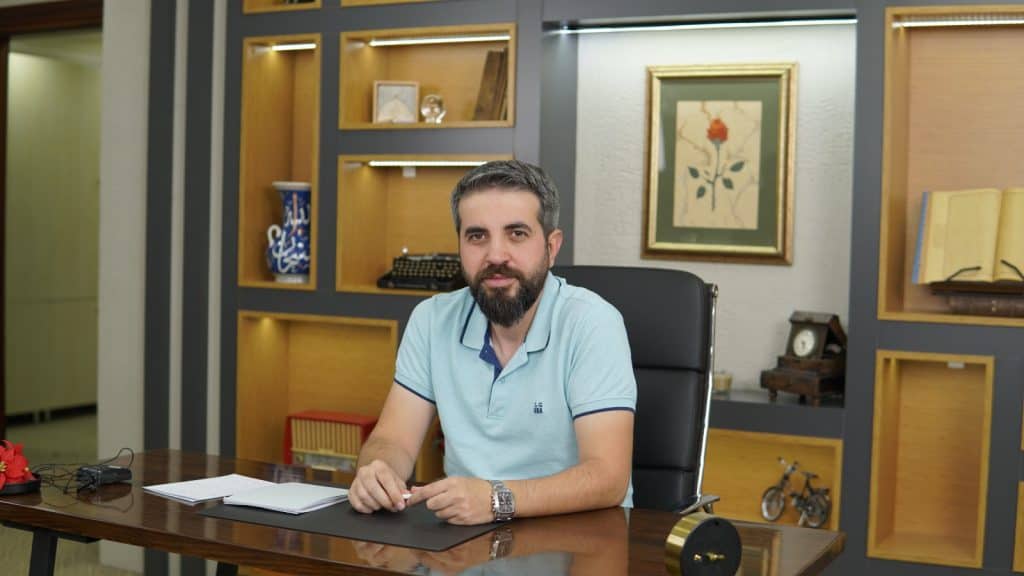
As the first week of the war drew to a close, we conducted an interview on our YouTube channel with Iran researcher Dr. Mehmet Akif Koç. We share with you the most important notes from the two-hour broadcast.
İran araştırmacısı Dr. Mehmet Akif Koç ile savaşın ilk haftası dolarken YouTube kanalımızda bir mülakat gerçekleştirdik. İki saat süren yayından önemli notları sizlerle paylaşıyoruz.
You can watch the full broadcast at this link.
Yayının tamamını bu linkten izleyebilirsiniz.
New Phases in the Iran-Israel Struggle and the Balance of the Middle Eastİran–İsrail Mücadelesinde Yeni Fazlar ve Ortadoğu Dengesi
“I read the Iran-Israel struggle through a three-phase model.”
“İran–İsrail mücadelesini üç fazlı bir modelle okuyorum”
How do you view this latest U.S. and Israeli military intervention against Iran?
ABD ve İsrail’in İran’a karşı bu son askeri müdahalesini nasıl görüyorsunuz?
In my own modeling of the Iran-Israel struggle, I assess the process in terms of phases. In my view, we are now in the third phase.
İran–İsrail mücadelesine ilişkin kendi modellememde süreci fazlar üzerinden değerlendiriyorum. Bana göre şu anda üçüncü fazdayız.
After the Baath regime in Syria fell in December 2024, Iran’s turn came quickly. Roughly six months later, the first phase took place. This was the 12-day war in June.
Aralık 2024’te Suriye’deki Baas rejimi düştükten sonra hızlı bir şekilde sıra İran’a geldi. Yaklaşık altı ay sonra birinci faz gerçekleşti. Bu da Haziran’daki, 12 gün süren savaş oldu.
Then, six months later, at the end of December 2025, protests rooted in the economic crisis broke out. These demonstrations spread rapidly, especially in Iran’s western regions, in areas inhabited by Kurds, Lurs, and Bakhtiaris. You will remember that Donald Trump also made remarks along the lines of, “How nice it would be if the Kurds went in and fought.” In fact, he was saying this quite openly.
Ardından altı ay sonra, 2025 Aralık ayının sonunda ekonomik kriz kaynaklı protestolar ortaya çıktı. Bu gösteriler özellikle İran’ın batı bölgelerinde; Kürtlerin, Lorların ve Bahtiyarilerin yaşadığı yerlerde hızla yayıldı. O dönemde hatırlarsınız, Donald Trump da, “Kürtler girip savaşsa ne güzel olur” gibi açıklamalar yapmıştı. Aslında bunu çok açık bir şekilde söylüyordu.
In that process, Israel and the United States attempted to bring down the regime on the ground, but they did not succeed. Because the Iranian state, in terms of security and intelligence, is still a strong state. They did not allow it on the ground.
O süreçte İsrail ve Amerika sahada Rejimi yıkmaya giriştiler fakat başarılı olamadılar. Çünkü İran devleti güvenlik ve istihbarat açısından hâlâ güçlü bir devlet. Sahada buna izin vermediler.
Yet the Iranian regime did all this at the cost of killing its own citizens. Thousands of people lost their lives in the streets. The Iranian leadership employed a very harsh method of repression in order not to allow the emergence of an internal turmoil that could be exploited by America and Israel.
Ancak İran Rejimi tüm bunları kendi vatandaşlarını öldürmek pahasına yaptı. Sokaklarda binlerce insan hayatını kaybetti. İran yönetimi, Amerika ve İsrail tarafından kullanılabilecek bir iç karışıklığın oluşmasına izin vermemek için çok sert bir bastırma yöntemi uyguladı.
“Iran describes this as ‘spreading corruption on earth.’”
“İran bunu ‘yeryüzünde fesat çıkarmak’ olarak nitelendiriyor”
When I explain these issues on television programs, people generally listen while nodding their heads. But when I say, “Iran did this at the cost of killing its own citizens,” there is a pause. Yet the reality is this: thousands of people were killed in the streets. That, too, is one reality of the matter.
Bu konuları televizyon programlarında anlattığımda insanlar genelde başlarını sallayarak dinliyorlar. Fakat “İran bunu kendi vatandaşlarını öldürmek pahasına yaptı” dediğimde orada bir duraksama oluyor. Ama gerçek şu: Sokaklarda binlerce insan öldürüldü. Bu da meselenin bir realitesi.
The Iranian leadership describes these events as “spreading corruption on earth.” They therefore regard such harsh interventions as legitimate and do not dwell on them very much. But when we look at it objectively, the reality does not change: people were killed in the streets, and their numbers reached into the thousands.
İran yönetimi bu olayları “yeryüzünde fesat çıkarmak” olarak nitelendiriyor. Dolayısıyla bu tür sert müdahaleleri meşru görüyorlar ve çok üzerinde durmuyorlar. Fakat objektif olarak baktığımızda gerçek değişmiyor: Sokaklarda insanlar öldürüldü ve sayıları binleri buldu.
“The first and second phases failed.”
“Birinci ve ikinci faz başarısız oldu”
Thus the first and second phases also failed. At the time, I said the following on television programs as well: after this second phase, third, fourth, and fifth phases will come. They probably will not wait six months for these. Indeed, that is what happened. About a month and a half later, we arrived at the third phase.
Dolayısıyla, birinci ve ikinci faz da başarısız oldu. O dönemde televizyon programlarında da şunu söylemiştim: Bu ikinci fazdan sonra üçüncü, dördüncü ve beşinci fazlar gelecek. Muhtemelen bunlar için altı ay beklenmeyecek. Nitekim öyle oldu. Yaklaşık bir buçuk ay sonra üçüncü faza geldik.
My view is this: if this phase also fails, and as of its first week it appears to have failed because they have not reached the objectives they wanted, then we will see fourth and fifth phases too without waiting another six months. In other words, this pressure will continue until the Iranian regime falls.
Benim kanaatim şu: Eğer bu faz da başarısız olursa —ki ilk haftası itibarıyla istedikleri hedeflere ulaşamadıkları için başarısız görünüyor— bundan sonra altı ay beklenmeden dördüncü ve beşinci fazları da göreceğiz. Yani İran rejimi düşene kadar bu baskı devam edecek.
“There are four main actors in the Middle East.”
“Ortadoğu’da dört ana aktör var”
How do you assess the debate over whether “Turkey’s turn will come”?
“Sıra Türkiye’ye gelir mi?” tartışmasını nasıl değerlendiriyorsunuz?
It is necessary to look at this question from a realist perspective. I come more from the neoclassical realist school, and I find this approach more reasonable for explaining the behavior of international actors. I wrote my doctoral thesis on this theory, and even added, in my own way, a fifth parameter to the model. It was a parameter I developed by examining the foreign policies of Iran and Turkey.
Bu soruya realist bir perspektiften bakmak gerekiyor. Ben daha çok neoklasik realist ekolden geliyorum ve bu yaklaşımı uluslararası aktörlerin davranışlarını açıklamak için daha makul buluyorum. Doktora tezimi de bu teori üzerine yazmıştım ve hatta modele kendimce beşinci bir parametre eklemiştim. İran ve Türkiye dış politikalarını inceleyerek geliştirdiğim bir parametreydi bu.
In my reading of the Middle East, there are four main actors: Turkey, Iran, Israel, and the Gulf Arabs. By the Gulf Arabs, I do not mean Kuwait or Bahrain. I mean Saudi Arabia, Qatar, and the United Arab Emirates. Although there are certain nuances among them, in international politics they often act in similar fashion. For this reason, I treat them as a single actor.
Benim Ortadoğu okumamda dört ana aktör var: Türkiye, İran, İsrail ve Körfez Arapları. Körfez Arapları derken Kuveyt ya da Bahreyn’i kastetmiyorum. Suudi Arabistan, Katar ve Birleşik Arap Emirlikleri’ni kastediyorum. Aralarında bazı nüanslar olsa da uluslararası siyasette çoğu zaman benzer şekilde hareket ediyorlar. Bu yüzden onları tek bir aktör olarak değerlendiriyorum.
“The room for maneuver of the other actors is the space left by these four actors.”
“Diğer aktörlerin hareket alanı bu dört aktörün bıraktığı boşluk”
The other actors in the region, such as the Kurds, the Druze, the administration in Syria, and states like Egypt, Jordan, and Iraq, are in fact able to move within the spaces created by the rivalry among these four main actors. That is to say, they do not possess an entirely independent capacity for agency. But these four main actors do.
Bölgedeki diğer aktörler —Kürtler, Dürziler, Suriye’deki yönetim, Mısır, Ürdün, Irak gibi devletler— aslında bu dört ana aktörün kendi aralarındaki rekabetten doğan alanlarda hareket edebiliyorlar. Yani onların tamamen bağımsız bir aktörlük kapasitesi yok. Ama bu dört ana aktörün var.
“Turkey wants a balanced Middle East.”
“Türkiye dengelenmiş bir Ortadoğu ister”
The basic approach in Turkey’s Middle East policy is this: Turkey prefers the other three actors to balance one another. That is, it wants Iran, Israel, and the Gulf countries to exhaust one another’s power and to counterbalance one another. From Turkey’s standpoint, this is the ideal scenario. Since the end of the Cold War, Turkish foreign policy has largely proceeded in this way.
Türkiye’nin Ortadoğu politikasında temel yaklaşım şudur: Türkiye, diğer üç aktörün birbirini dengelemesini tercih eder. Yani İran’ın, İsrail’in ve Körfez ülkelerinin birbirinin gücünü tüketmesini ve birbirini dengelemesini ister. Türkiye açısından ideal senaryo budur. Soğuk Savaş’ın sonundan beri Türk dış politikası büyük ölçüde bu şekilde yürümüştür.
The rise of the Gulf Arabs as a regional actor, meanwhile, took place after the 2000s. Iran and Israel were already important actors. So was Turkey. With the 2000s, the Gulf countries too became a distinct actor in this equation.
Körfez Araplarının bölgesel aktör olarak yükselişi ise 2000’lerden sonra gerçekleşti. İran ve İsrail zaten önemli aktörlerdi. Türkiye de öyleydi. 2000’lerle birlikte Körfez ülkeleri de bu denklemde belirgin bir aktör hâline geldi.
“The 2003 invasion of Iraq produced Iran’s regional domination.”
“2003 Irak işgali İran’ın bölgesel dominasyonunu doğurdu”
After the invasion of Iraq in 2003, the balances changed seriously. There are certain concrete indications that, at the time, Iran moved tacitly in the same direction as America on the question of overthrowing the Saddam regime. In the end, with the 2005 Iraqi Constitution, the Shiites, who constituted a significant portion of the population, gained political strength.
2003’teki Irak işgalinden sonra dengeler ciddi şekilde değişti. O dönemde İran’ın, Saddam rejiminin devrilmesi konusunda Amerika ile örtük bir şekilde aynı yönde hareket ettiğine dair bazı somut emareler var. Sonuçta 2005 Irak Anayasası ile birlikte nüfusun önemli bir kısmını oluşturan Şiiler siyasal olarak güç kazandı.
This situation caused Iraq to become open to Iran’s influence. Iran, for its part, was already prepared for the scenario that would follow this chaos. They armed groups close to them in Iraq, and with the stoking of Shiite-Sunni conflict as well, Iran’s regional influence increased substantially.
Bu durum Irak’ın, İran’ın etkisine açık hâle gelmesine yol açtı. İran da zaten bu kaos sonrası senaryoya hazırlıklıydı. Irak’ta kendilerine yakın grupları silahlandırdılar ve Şii-Sünni çatışmasının da körüklenmesiyle İran’ın bölgesel etkisi ciddi şekilde arttı.
“Iran used to say it controlled four and a half capitals.”
“İran dört buçuk başkenti kontrol ettiğini söylüyordu”
From 2003 to 2023, Iran established a serious domination in the region. Indeed, Iranian officials themselves said this openly. They said, “We control four capitals.” I add Gaza to this and call it “four and a half capitals.”
2003’ten 2023’e kadar İran bölgede ciddi bir dominasyon kurdu. Hatta İranlı yetkililer kendileri bunu açıkça söylüyordu. “Dört başkenti kontrol ediyoruz” diyorlardı. Ben buna Gazze’yi de ekleyerek “dört buçuk başkent” diyorum.
One of the figures who voiced such statements was Ali Reza Zakani, an influential name in Iran’s foreign policy circles. Similar statements also came from other Iranian officials. A message Qasem Soleimani sent around 2010-2011 to David Petraeus, commander of U.S. Central Command, illustrates this situation very well. In his message he says: “If you are going to discuss an issue concerning Iraq and Syria, you will speak with me.” In other words, he is saying that they should speak not with Iraq’s prime minister or Syria’s leader, but directly with him.
Bu söylemleri dile getiren isimlerden biri de İran’da dış politika çevrelerinde etkili bir isim olan Ali Rıza Zakani’ydi. Benzer açıklamalar başka İranlı yetkililerden de geldi. Kasım Süleymani’nin 2010–2011 civarında ABD Merkez Kuvvetler Komutanı David Petraeus’a gönderdiği bir mesaj da bu durumu çok iyi anlatır. Mesajında şunu söylüyor: “Irak ve Suriye ile ilgili bir mesele konuşacaksanız benimle konuşacaksınız.” Yani Irak’ın başbakanıyla ya da Suriye’nin lideriyle değil, doğrudan kendisiyle konuşulması gerektiğini söylüyor.
“This domination disturbed the other actors.”
“Bu dominasyon diğer aktörleri rahatsız etti”
Iran really did possess such a domination, and this seriously disturbed the other actors in the region. Israel and the Gulf countries, as well as Turkey, were disturbed by it. So what happened in the end?
Gerçekten de İran’ın böyle bir dominasyonu vardı ve bu durum bölgedeki diğer aktörleri ciddi şekilde rahatsız ediyordu. Türkiye de dahil olmak üzere İsrail ve Körfez ülkeleri bundan rahatsızdı. Peki, sonunda ne oldu?
The Syrian civil war that began in 2011 lasted about 14 years. It continued until the end of 2024. And at the end of the war, the other three actors, Turkey, Israel, and the Gulf countries, united against Iran under American coordination and toppled the Baath regime in Syria.
2011’de başlayan Suriye iç savaşı yaklaşık 14 yıl sürdü. 2024’ün sonuna kadar devam etti. Ve savaşın sonunda diğer üç aktör —Türkiye, İsrail ve Körfez ülkeleri— Amerika’nın koordinasyonunda İran’a karşı birleşti ve Suriye’deki Baas rejimini devirdi.
“After October 7, this time Israel’s domination emerged.”
“7 Ekim’den sonra bu kez İsrail’in dominasyonu ortaya çıktı”
Between 2003 and 2023, Iran had an abnormal domination. But this was in fact an anomaly. It was a sphere of power beyond Iran’s capacity to absorb. After October 7, however, this time Israel’s abnormal domination emerged.
2003–2023 arası İran’ın anormal bir dominasyonu vardı. Fakat bu aslında bir anomalidir. İran’ın hazmetme kapasitesinin üzerinde bir güç alanıydı. 7 Ekim’den sonra ise bu sefer İsrail’in anormal bir dominasyonu ortaya çıktı.
When we look at the region’s airspaces today, the picture is as follows:
Bugün bölgedeki hava sahalarına baktığımızda tablo şöyle:
- Britain controls Jordan’s airspace, with indirect Israeli influence.
- Ürdün’ün hava sahasını Britanya kontrol ediyor, dolaylı olarak İsrail etkisi var.
- Israel directly controls Lebanon’s airspace.
- Lübnan’ın hava sahasını doğrudan İsrail kontrol ediyor.
- Israel directly controls Syria’s airspace.
- Suriye’nin hava sahasını doğrudan İsrail kontrol ediyor.
- America controls Iraq’s airspace, and this gives Israel an advantage.
- Irak’ın hava sahasını Amerika kontrol ediyor ve bu da İsrail’e avantaj sağlıyor.
In the June 2025 war, the fact that Israeli aircraft could take off from Tel Aviv with 200 planes and strike Tehran from roughly 1,600 kilometers away became the most concrete indication of this domination. And they did this for 12 days.
Haziran 2025 savaşında İsrail’in 200 uçakla Tel Aviv’den kalkıp yaklaşık 1600 kilometre öteden Tahran’ı vurabilmesi bu dominasyonun en somut göstergesi oldu. Ve 12 gün boyunca bunu yaptılar.
“Turkey does not want the balances to be upset.”
“Türkiye dengelerin bozulmasını istemez”
This picture points to a serious imbalance of power in the Middle East. Yet the order Turkey prefers is one in which the actors in the region balance one another. Turkey does not want any actor to gain excessive power over the others. Therefore, when assessing the question of whether “Turkey’s turn will come,” it is necessary to take this four-actor balance into account.
Bu tablo Ortadoğu’da ciddi bir güç dengesizliğine işaret ediyor. Oysa Türkiye’nin tercih ettiği düzen, bölgedeki aktörlerin birbirini dengelemesidir. Türkiye, hiçbir aktörün diğerlerine karşı aşırı güç kazanmasını istemez. Dolayısıyla “sıra Türkiye’ye gelir mi?” sorusunu değerlendirirken bu dört aktörlü dengeyi dikkate almak gerekir.
The United States has now thrown its support entirely behind Israel and is trying to create a regional design in Israel’s favor. Within this design, much of the structures in the Middle East that have kept their distance from America and Israel since the Cold War have been eliminated. From this standpoint, the Iranian regime is the only actor still standing, and they are now trying to bring it down as well.
ABD şu anda desteğini tamamen İsrail’den yana koymuş durumda ve İsrail lehine bir bölgesel dizayn oluşturmaya çalışıyor. İşte bu dizayn içinde de Orta Doğu’da, Soğuk Savaş’tan beri Amerika ve İsrail’e mesafeli olan yapıların büyük kısmı ortadan kaldırılmış oldu. İran Rejimi de bu açıdan ayakta kalan tek aktör ve şu anda onu da yıkmaya çalışıyorlar.