Who buys Rwanda’s smuggled coltan? The global journey of conflict coltan from DRC to the world's electronics
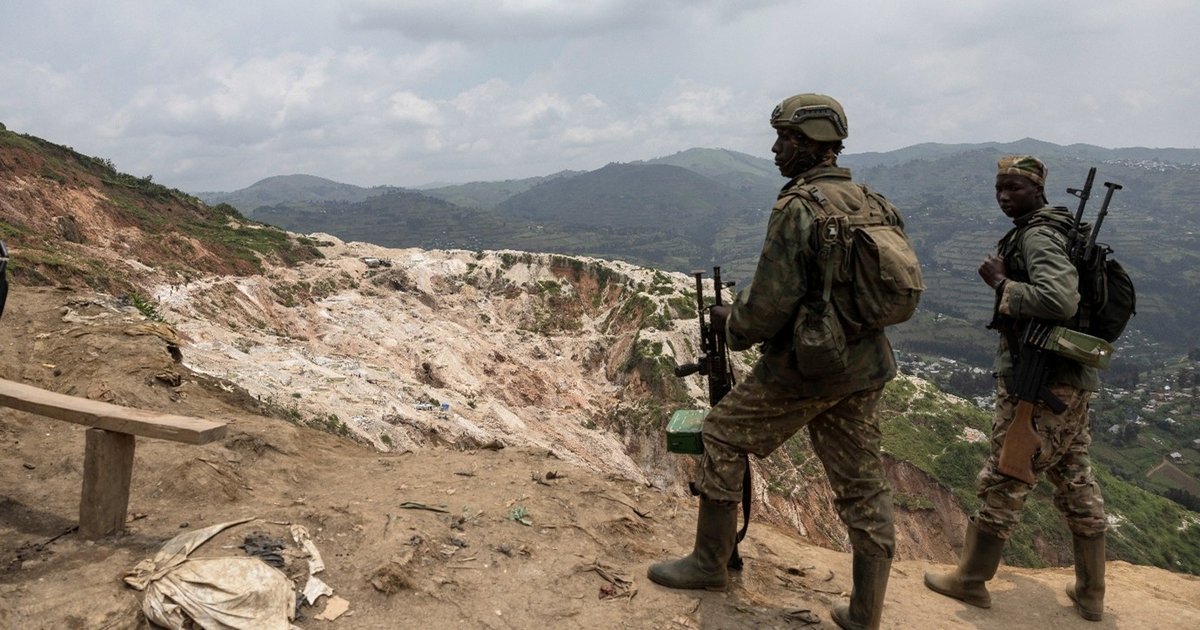
Conflict coltan smuggled from the war-torn Democratic Republic of the Congo (DRC) is finding its way into global markets and popular consumer products, despite due diligence systems Who buys Rwanda’s smuggled coltan?
Download ResourceWhere have over 2,000 tonnes of smuggled conflict coltan gone?
These looted minerals come from mines in Rubaya in the Democratic Republic of the Congo (DRC), which produce 15% of the world’s tantalum, a key ingredient for electronic products found in smartphones, laptops and cars around the world.
The Rubaya mines have become a main revenue source for M23’s brutal warfare in DRC. Seizing vast areas of territory, the armed group backed by Rwanda’s military has killed thousands and displaced hundreds of thousands of civilians, abducting and torturing with impunity.
But once the coltan is smuggled to Rwanda, little is known about who buys it or where it goes.
In a year-long investigation, Global Witness followed the DRC’s conflict coltan from the mines across the border and into global supply chains. We established the complicity of Rwandan officials, as smuggling reached “unprecedented” levels.
With Rwanda’s coltan exports more than doubling over the past three years, we identified the seven companies that exported 85% of the coltan.
Through interviews with coltan smugglers, we found that at least five of these seven companies buy conflict coltan from DRC, selling it on through middlemen to smelters in China and Kazakhstan.
In the smelters, the coltan is processed into tantalum. From there, it is used to manufacture the capacitors that are essential components in electronic devices.
We found that conflict coltan may have unwittingly found its way to global brands including Microsoft, Vodafone, Sony, Amazon, Nvidia, LG Display, Ericsson, Toyota and Apple – and into products we use every day.
Around 15 years ago, a system took shape in the African Great Lakes Region that was designed to put an end to minerals financing conflict.
The recent war in DRC is a test case. Our investigation reveals that the due diligence and traceability systems have failed to break the link between conflict and natural resources.
Instead, the traceability system known as ITSCI that many international companies rely on to keep their supply chains conflict-free is being used to launder a large share of smuggled coltan. Coltan connected to the conflict has also likely been introduced into an alternative system called Better Mining.
The Responsible Minerals Initiative’s audits have failed to detect conflict coltan in smelters’ supply chains.
Meanwhile, as the war in eastern DRC continues, the international community is failing to take significant action.
Data provided by IPIS research, updated 12 December 2025.
Note: the shaded area indicates approximate extents derived from available reporting and may change. It is not a confirmed frontline or fixed territorial border.
Coltan financing the conflict
Since 2023, the lucrative Rubaya mines have become a war prize for various armed groups, as they have in previous phases of the wars in DRC. The UN reported incursions in the mines throughout 2023.
In late 2023, the M23 rebel group seized control of main transport routes around Rubaya. By April 2024, it had captured the Rubaya mines, monopolising coltan exports.
Since then, coltan has become a major – if not the main – source of funding for M23.
M23's parallel administration in North Kivu has selected M23-friendly traders to smuggle minerals to Rwanda and has run a taxation system at mining and trading sites.
Traders pay “taxes” on coltan which includes US$4 per kilo to M23 and US$3 per kilo to the Rwandan government.
By collecting taxes on coltan production and trade, M23 has generated US$800,000 every month since May 2024 according to a UN estimate.
Coltan smuggle to Rwanda
Rwanda is not only supporting M23’s military operations in DRC with between 7,000 and 12,000 Rwandan troops and advanced weaponry but Rwandan officials also facilitate the smuggling.
Previously, much of the coltan was smuggled through lightly monitored border areas. But since M23’s takeover of Goma, much of it now crosses there in plain sight of Rwandan border officials. Global Witness has even observed officials recording coltan coming from the DRC.
UN experts estimate that between May and October 2024 over 120 tonnes a month were trafficked to Rwanda, creating the “largest contamination of mineral supply chains” in the Great Lakes Region in a decade.
Smuggling has likely grown even further in 2025. Within a year of M23’s takeover, at least 1,400 tonnes of coltan – and probably much more – have been smuggled from DRC to Rwanda.
Global Witness found no evidence that Rwandan officials had confiscated any smuggled coltan in the last two years.
Rwandan official figures show that coltan exports have increased more than 2.5 times between 2021 and 2025, reflecting the smuggling boom.
Coltan is an important revenue stream for Rwanda, which levies a 5% tax on exports. Since 2023, it has become the country’s second-largest export earner, after gold.
The UN, mineral experts and NGOs have continuously pointed out that Rwanda’s mineral export figures do not correspond with its actual production, even before the latest surge in exports. The Rwandan government doesn’t publish production figures at the mine level that would allow experts to check its claims.
Rwanda has repeatedly refused to apply the analytical fingerprint (AFP), a tool developed by Germany to check the origin of minerals based on their geochemical composition, according to a natural resources expert involved in the matter. This means that the tool, which cost millions of dollars to develop, has never been applied for its purpose.
Failed due diligence and traceability
There is a legal requirement for Rwandan minerals to be traced before being exported.
ITSCI is the dominant due diligence and traceability system in Rwanda and until early 2025 all major coltan exporters were members.
The scheme works by assigning tags with unique numbers to bags of coltan and other 3T minerals that are supposedly free from conflict and human rights abuses. ITSCI also reports and manages incidents along supply chains. (3T minerals are coltan, cassiterite and wolframite, named after the metals tantalum, tin and tungsten which are derived from them.)
Yet our investigation has found that ITSCI is instead undermined and used to launder a large share of smuggled coltan into supposedly legitimate supply chains. Global Witness revealed in a 2022 report that, ever since the scheme was set up in 2010, it has been used by major Rwandan exporters to launder large volumes of smuggled minerals from the DRC.
Four traders who sell smuggled coltan from Rubaya to exporters who are ITSCI members told Global Witness that that coltan is tagged by the scheme, indicating it has no conflict links.
The [exporting] company in Kigali comes and puts the tags on the coltan from Masisi and thus it becomes Rwandan coltan
A coltan smuggler explained that when he has smuggled minerals he can just call the Rwandan mining authorities and they bring as many tags as he needs.
ITSCI-tagged coltan exports increased almost precisely as much as Rwandan coltan exports between 2023 and 2024 and made up almost 100% of total Rwandan coltan exports.
Yet, coltan imports reported by other countries from Rwanda appear to have increased even more than Rwanda’s official coltan exports in 2024, suggesting that a share of the coltan may have been smuggled out of Rwanda.
Analysis of ITSCI’s data shows that the tantalite share of ITSCI-tagged 3T minerals exports increased from 21% in 2020 to 31% in 2024. The surge is difficult to explain without taking the increased coltan smuggling from Rubaya to Rwanda into account.
ITSCI’s incident reporting also indicates that its members may source smuggled material. In 2025, ITSCI reported 70 incidents related to plausibility concerns and misuse of tags.
All exporters for which Global Witness has found evidence of buying conflict coltan have been ITSCI members, although three have been suspended since by ITSCI. In early 2026, ITSCI told Global Witness that three additional exporters were under review and at risk of expulsion and suspension.
In total, ITSCI has suspended or expelled six coltan exporters since 2024.
SLR Consulting’s Better Mining increased its foothold as an alternative traceability system in Rwanda in 2025. At least two companies Better Mining works with, and a further one that is going through its onboarding process, are former ITSCI members that have been suspended by ITSCI.
Two of them, Space Mining and Philbert Trading Minerals, have sourced conflict coltan during the time they worked with Better Mining, according to traders we spoke to. We also suspect Sunrise Metal Company, which is going through Better Mining’s onboarding process, to have bought conflict minerals.
Unlike ITSCI, Better Mining doesn’t publish the names of its members nor any risks it has identified in supply chains.
Better Mining has tried to establish itself as an alternative traceability and due diligence system to ITSCI for over a decade, and Global Witness has reported about how ITSCI has used unfair means to keep its near monopoly position.
An alternative traceability provider could play a positive role, if it helped to push the bar higher. Yet, if Better Mining takes on board companies that source conflict material and have been suspended from ITSCI, it has the opposite effect.
Who sells and buys Rwandan coltan?
From January 2023 to September 2025, just seven Rwandan companies exported almost 85% of coltan from Rwanda, according to customs data seen by Global Witness.
From Rwanda, coltan is brought to the ports of Dar es Salaam in Tanzania or Mombasa in Kenya from where it is shipped. Since the start of 2023 until September 2025, seven companies have been the direct buyers of almost 80% of the coltan exported from Rwanda.
Which companies are buying conflict coltan?
Global Witness has found direct evidence that at least five of the seven largest Rwandan coltan exporters have bought conflict coltan from DRC’s Rubaya mines: African Panther Resources, Sunrise Metal Company, Boss Mining Solution, Kanzamin and Philbert Trading Minerals
We found that smaller exporters Space Mining and Rani Mining also bought conflict coltan from Rubaya.
There are indications that other companies may also have sold conflict coltan to international markets. ITSCI has reported incidents indicating fraudulent practices about several exporters. Furthermore, a few companies have in the past been involved in smuggling minerals.
In the chart below, we set out evidence of the connections between these Rwandan coltan exporters and the Rubaya mines in the DRC and show the relations with the companies buying the coltan.
Due diligence requirements
The OECD Due Diligence Guidance for Responsible Supply Chains of Minerals from Conflict-Affected and High-Risk Areas is the internationally recognised standard for responsible sourcing, which has been developed in the context of the wars in DRC.
The Guidance sets out a five-step process that companies are supposed to follow when sourcing minerals from conflict and high-risk areas. Companies need to immediately disengage from suppliers that have a reasonable risk of being connected to conflict and/or serious human rights abuses.
The smelters processing the coltan
The buyers of coltan directly from Rwanda that we profiled in the previous section are mainly based in the United Arab Emirates (UAE), China, Hong Kong and Luxembourg.
But all these locations, with the exception of China, are transit hubs, where traders sell coltan on to smelters and refiners elsewhere.
These processors extract the metal tantalum from coltan by removing impurities with high heat and acid, and refiners purify the tantalum. Smelters and refiners turn coltan into products like tantalum powder, wire or ingots, which are used for manufacturing heat-resistant capacitors, surgical implants and alloys used in jet engines.
Global Witness has identified eight smelters that processed the bulk of the coltan exported from Rwanda from 2023 to September 2025:
- Ningxia Orient Tantalum Industry Co. (OTIC) (China)
- Jiujiang Jinxin Nonferrous Metals Co. (China) - Jiujiang Tanbre Co. (China)
- Jiujiang Zhongao Tantalum & Niobium Co. (China)
- Ximei Resources (Guangdong) Limited (China)
- Hengyang King Xing Lifeng New Materials Co. (China)
- Ulba Metallurgical Plant (Ulba) (Kazakhstan) - Taniobis (Thailand)
China is the top destination for processing coltan from Rwanda, both in terms of volume and the number of smelters. Every major Rwandan exporter sends at least part of its coltan there.
Rwanda became China’s second-largest coltan supplier after Nigeria in 2023. China imported 1,571 tonnes of coltan from Rwanda in 2023, which jumped to 2,286 tonnes in 2024.
Customs data suggests that Ulba Metallurgical Plant (Ulba) in Kazakhstan also received coltan exported from Rwanda between 2023 and 2025.
Taniobis, a tantalum smelter based in Thailand, also imported coltan from Rwanda until the end of 2023.
Smelters are considered the pinch point in the supply chain as their number is limited and traceability is lost in the smelting process.
…the piece continues at the source.