The Life and Safety Framework Act, born twelve years after the Sewol ferry disaster, makes the right to live safely a legal principle and now obliges the state to turn that principle into institutions, plans, and practice.
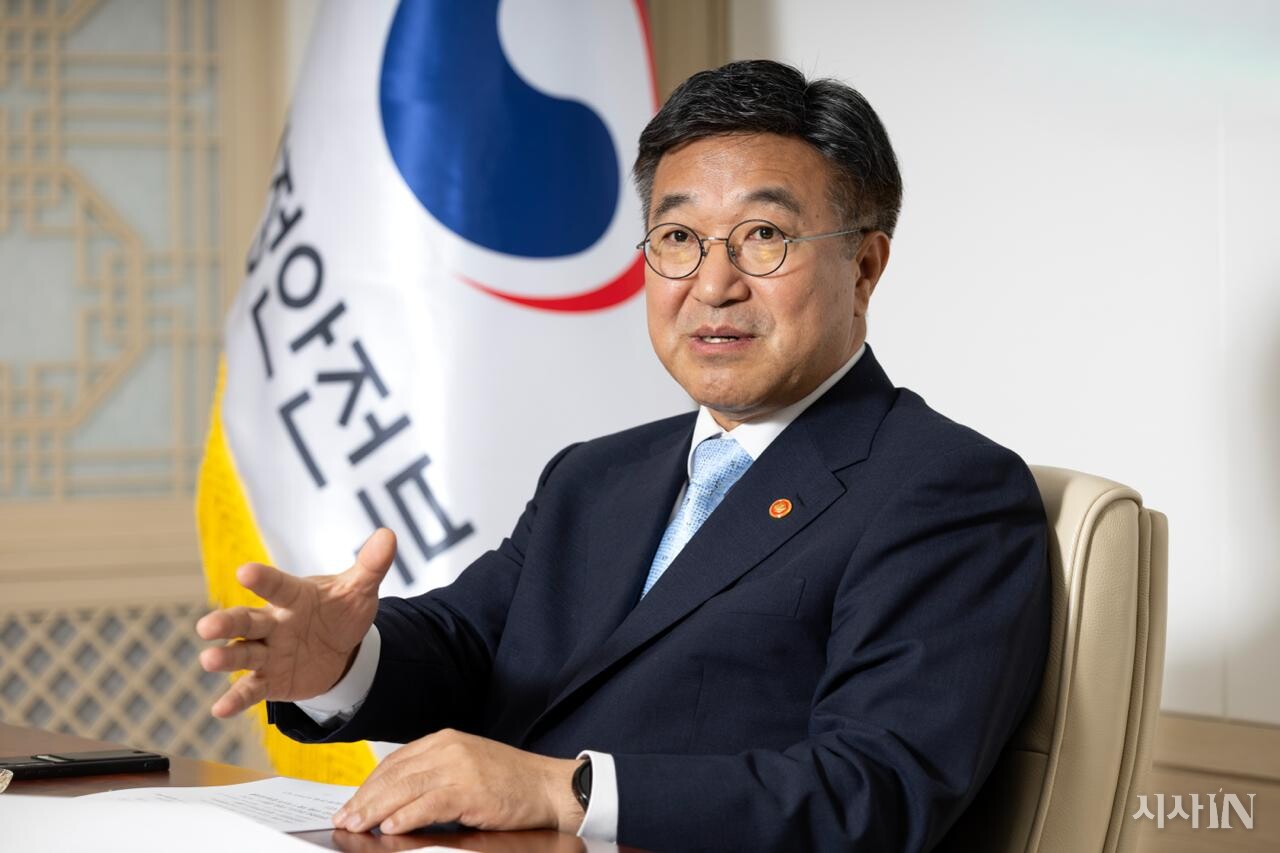
On May 26, the State Council approved the promulgation of the Basic Act on Life and Safety. The law explicitly sets out, in statute, every citizen’s “right to live safely,” and assigns the state responsibility for guaranteeing that right. It comes twelve years after the need for such a law was first raised in the wake of the Sewol ferry disaster. After a six-month preparatory period, the Basic Act on Life and Safety will take effect this December. As befits a “framework act,” there is a mountain of follow-up work for the government to put in place. On the afternoon of May 26, SisaIN met with Minister of the Interior and Safety Yun Ho-jung to ask about the meaning of the Basic Act on Life and Safety, and about his plans and outlook for the many tasks that must follow.
5월26일 국무회의에서 ‘생명안전기본법’ 공포안이 의결되었다. 모든 국민이 ‘안전하게 살 권리’를 법으로 명시하고, 이 권리를 보장할 책무를 국가에 부여하는 내용이 담겨 있다. 세월호 참사 이후 이 법의 필요성이 제기된 지 12년 만이다. 생명안전기본법은 6개월 준비기간을 거쳐 올해 12월부터 시행된다. ‘기본법’의 특성상 정부가 마련해야 하는 후속 과제가 산적해 있다. 〈시사IN〉은 5월26일 오후 윤호중 행정안전부 장관을 만나 생명안전기본법의 의미와 각종 후속 과제에 대한 계획 및 전망을 물었다.
As it happened, the interview took place on the same day that Chung Yong-jin, chairman of Shinsegae Group, issued a public apology over Starbucks Korea’s controversial “May 18 disparagement event.” On May 21, Minister Yun wrote on social media, “From now on, the Ministry of the Interior and Safety will not provide, as gifts for public-facing events, products from companies that treat the history and values of democracy lightly or use them as commercial material,” opening the way for a boycott of Starbucks within the government. In the interview, we were also able to hear Minister Yun’s assessment of Chairman Chung’s apology.
마침 인터뷰 날은 스타벅스 코리아의 ‘5·18 폄하 이벤트 논란’에 대해 정용진 신세계그룹 회장이 대국민 사과를 한 날이기도 했다. 윤호중 장관은 5월21일 SNS에 “행정안전부는 앞으로 민주주의의 역사와 가치를 가볍게 여기거나 상업적 소재로 활용한 기업의 상품은 (각종 대민 이벤트 선물로) 제공하지 않겠다”라고 밝히며, 정부 내 스타벅스 불매 움직임의 포문을 열었다. 인터뷰에서 정용진 회장의 사과문에 대한 윤 장관의 평가도 들을 수 있었다.
Today, May 26, Chung Yong-jin, chairman of Shinsegae Group, released a public apology. How did you view it?
오늘(5월26일) 정용진 신세계그룹 회장이 대국민 사과문을 발표했다. 어떻게 보셨나?
This is a matter in which there are victims. He must apologize until the bereaved families of those who died during the May 18 Democratization Movement, or the citizens of Gwangju, say, “That is enough.” We, in a sense, are not the direct parties, are we? For the people directly concerned to accept it, Chairman Chung’s apology today still seems somewhat insufficient.
이 문제는 ‘피해자가 있는 일’이다. 5·18 민주화운동 당시 희생된 분들의 유족이나 광주 시민들이 “그 정도면 됐다”라고 할 때까지 사과를 해야 한다. 우리는 어떻게 보면 직접적인 당사자는 아니지 않나. 직접적인 당사자들이 수용하기에는 (오늘 정 회장의 사과가) 아직은 좀 부족한 것 같다.
Should we understand that the ministry’s May 21 measure not to use Starbucks gift certificates and the like will remain in place?
5월21일 행안부 차원에서 스타벅스 상품권 등을 이용하지 않도록 조치한 것도 유지된다고 봐야 할까?
Yes. But I do not think of it as a “measure.” It is a kind of procurement policy for the products the Ministry of the Interior and Safety purchases. Our ministry has purchasing discretion, and I expressed the view that “this much seems rather difficult.” The officials in our ministry who actually make procurement decisions will presumably take the minister’s opinion into account when deciding.
그렇다. 다만 그것을 ‘조치’라고 생각하진 않는다. 행안부가 구매하는 (상품에 대한) 일종의 ‘조달 방침’이잖나. 구매 선택권을 가지고 있는 우리 부에서 ‘이 정도는 좀 곤란한 것 같다’는 의견을 이야기한 것이다. 우리 부에서 실제로 (조달) 결정을 하는 담당자들이 장관 의견을 참고해서 결정하지 않겠나?
At today’s State Council meeting, the promulgation of the Basic Act on Life and Safety was approved. You also emphasized this law during your confirmation hearing as minister of the interior and safety.
오늘 국무회의에서 생명안전기본법 공포안이 의결됐다. 행안부 장관 청문회 당시에도 이 법을 강조했는데.
The law has been made twelve years after the Sewol ferry disaster, and I think the very fact that it came so late is itself a tragedy. It is no exaggeration to say that the bereaved families of Sewol, along with the bereaved families of many other disasters, brought this law into being on the asphalt. They must also have felt their own anger toward the previous administration, which, despite major disasters, never looked back at public safety at all. Only after the People’s Sovereignty Government came in, twelve years later, can we say that the government finally responded to the requests of disaster victims’ families.
세월호 참사 이후 12년 만에 법이 만들어졌는데, 늦게 이뤄진 것 자체가 비극이라고 생각한다. 세월호 유족뿐만 아니라 각종 참사 유족들께서 아스팔트 위에서 이 법을 만들어냈다고 해도 과언이 아니다. 대형 참사에도 불구하고 국민 안전에 대해 전혀 뒤돌아보지 않았던 지난 정권에 대한 나름의 분노도 있었을 것이다. 국민주권정부가 들어선 후에야 12년 만에 정부가 참사 유족들의 요청에 응하게 되었다고 봐야 한다.
What changes will come immediately with the promulgation and enforcement of the Basic Act on Life and Safety?
생명안전기본법 공포와 시행으로 당장 어떤 변화가 찾아올까?
A framework act does not, in itself, create any particular change. But government, and of course the public officials responsible for this law, feel the tremendous weight of the provisions it sets out. A Life and Safety Committee will be formed immediately, and a Comprehensive Life and Safety Plan will be established. In the process of drawing up that comprehensive plan, one can say that all public officials involved in safety, whether in central or local government, will take part. In the process of carrying out the plan thus established, people will feel, “Ah, this is the effect of having enacted a framework act.”
기본법은 그 자체로 어떤 변화를 만들지는 않는다. 그러나 기본법이 정하는 규정에 대해 정부는 물론 이 법을 담당하는 공직자들은 엄청난 무게감을 느낀다. 당장 생명안전위원회가 구성될 것이고, 생명안전종합계획이 수립될 예정이다. 종합계획을 수립하는 과정에서 중앙·지방 정부를 막론하고 안전과 관련된 모든 공무원들이 종합계획을 세우는 데 관여한다고 보면 된다. 그렇게 수립된 계획을 집행하는 과정에서 ‘아, 이게 기본법이 제정된 효과구나’라고 느끼실 것이다.
An independent accident investigation committee will also be established.
독립적인 사고 조사위원회도 설치된다.
We plan to establish the National Safety Accident Investigation Committee under the prime minister by next May. Until now, whenever a major disaster or accident occurred, it always took about six months to a year to make a special law and create an investigative body. Because investigations took place only long after the disaster had occurred, there were problems: materials were hard to find, or the memories of those involved had grown dim. I believe this can remedy that. The essential point is that, through the enforcement of the framework act, an independent investigation committee has been made permanent. From the very moment an accident occurs, it will be possible to proceed with follow-up measures for the disaster and to offer victims and bereaved families proper solutions.
국무총리 소속으로 국가안전사고조사위원회를 내년 5월까지 설치할 예정이다. 지금까지 항상 대형 참사나 사고가 나면, 특별법을 만들고 조사 기구를 만드는 데 6개월에서 1년 정도가 소요되었다. 참사가 발생하고 한참 시간이 지난 뒤에야 조사가 이뤄지는 바람에 자료를 찾기 어렵거나, 관련자들의 기억이 가물가물해지는 문제가 있었는데, 이를 보완할 수 있으리라 본다. (기본법 시행을 통해) 독립적인 조사위원회가 상설화되었다는 게 핵심이다. 사고가 난 그 시점부터 참사의 후속 조치를 해나갈 수 있고, 피해자나 유족들에게 제대로 된 해법도 제시할 수 있을 것이다.
At the memorial ceremony for the twelfth anniversary of the Sewol ferry disaster, you said, “We will eliminate blind spots in the disaster management system.” What disaster and safety blind spots concern you most right now?
지난 세월호 참사 12주기 추모식에서 “재난관리 체계의 사각지대를 없애겠다”라고 말했다. 지금 당장 우려되는 재난·안전 사각지대는 무엇이 있을까?
For now, I am most worried about summer disasters such as torrential rain and extreme heat. With the introduction of various technologies, we have identified landslide-prone areas in advance and created manuals for the number of residents who must evacuate when damage occurs, evacuation methods, and so on. But some elderly people cannot evacuate on their own. For them, we are organizing resident evacuation support groups from among local residents, and also setting up voluntary disaster-prevention units.
당장 폭우나 폭염 같은 여름철 재난이 가장 걱정스럽다. 각종 기술 도입으로 산사태 취약 지역을 미리 파악하거나, 피해 발생 시 대피해야 하는 주민 규모, 대피 방법 등을 매뉴얼화했다. 다만 연세 드신 분들은 혼자 대피하지 못하는 경우가 있다. 이런 분들은 주민들 속에서 주민 대피 지원단을 구성하고, 자율방재단도 마련하고 있다.
During last year’s wildfires in the Yeongnam region, three specialized wildfire prevention and suppression workers died, all of them older people in their sixties. Even if systems are put in place at disaster response sites, how should we address the problem of a shortage of younger people?
지난해 영남 지역 산불 당시 산불전문예방진화대원 3명이 사망했는데 모두 60대 고령층이었다. 재난 대응 현장에서 시스템을 갖추더라도 젊은 인구가 모자란 문제는 어떻게 대응해야 할까?
That is why we are placing importance on one-to-one matching. It is not necessarily a structure in which young people rescue the elderly, but one in which a healthy neighbor looks after a neighbor with limited mobility. Of course, improvements are also needed. In rural areas there are facilities such as nursing hospitals, and we are studying and preparing ordinary-times disaster response systems so that people in such facilities can be evacuated in advance when wildfires occur.
그래서 일대일 매치를 중요시하고 있다. 꼭 청년이 노인을 구하는 게 아니라 건강한 이웃이 거동이 불편한 이웃을 챙기는 구조다. 물론 보완점도 필요하다. 농촌에 요양병원 같은 곳이 있는데, 산불 발생 시 이런 시설에 계신 분들을 미리미리 대피시킬 수 있도록 평상시 재난 대응 체계를 연구하고 준비하는 중이다.
There are various concerns about the Serious Crimes Investigation Agency, which is to launch on October 2. Some point to differences with the Ministry of Justice over staffing levels. With little time left before the agency opens, is there a possibility that it will use existing prosecution facilities or buildings?
10월2일 출범하는 중대범죄수사청(중수청)에 대한 다양한 우려가 있다. 인력 규모를 두고 법무부와 이견이 있다는 지적도 나온다. 개청까지 시간이 촉박한데, 현 검찰 시설이나 건물을 이용할 가능성도 있는 것인가?
It is not yet at the stage where we can announce anything, but differences with the Ministry of Justice over staffing levels have narrowed considerably. The Prosecutorial Reform Task Force under the Prime Minister’s Office has been discussing the appropriate scale, and there will be no problem with launching the Serious Crimes Investigation Agency on October 2. But if the agency simply uses the current prosecutors’ offices as they are, how would the public see that as a separation of investigation and prosecution? I do not think that should happen.
아직 발표할 단계는 아니지만, 인력 규모에 대해서는 (법무부와의) 이견이 많이 좁혀지고 있다. 국무총리실 소속 검찰개혁추진단에서 (적정 규모에 대해) 논의를 해왔고, 10월2일 중수청 출범에는 아무 문제가 없을 것이다. 다만 중수청이 현 검찰청을 그대로 이용하면 국민들이 보시기에 그게 무슨 수사와 기소를 분리한 것이겠나. 그렇게 되면 안 될 것이라 생각한다.
- A Photo Outing to “Carry Forward Memory” on the Twelfth Anniversary of the Sewol Disaster [Perspective] “Could those of you who learned about the Sewol ferry disaster only after coming to university raise your hands?” asked Jang Dong-won, father of Jang Ae-jin, a survivor of the Sewol ferry disaster. No one raised a hand. Ju-yeong, who had just turned twenty...
- 세월호 참사 12주기의 ‘기억 잇기’ 출사 [시선] “세월호 참사를 대학교 와서 안 학생, 손 한번 들어보시겠어요?” 세월호 참사 생존자 장애진씨의 아버지 장동원씨가 질문했다. 아무도 손을 들지 않았다. 이제 막 스무 살이 된 주영...
- The Daughter Who Lost Her Father Wrote the Press Release Herself [PeopleIN] The first email from Moon Hye-yeon, 34, arrived on December 5 last year. On January 22 of that year, her father, Moon Yu-sik, then 72, fell while doing plastering work at a construction site and died seven days later...
- 아버지를 잃은 딸은 직접 보도자료를 썼다 [사람IN] 문혜연씨(34)로부터 첫 번째 메일이 온 것은 지난해 12월5일이었다. 그해 1월22일 아버지 문유식씨(당시 72세)는 공사 현장에서 미장 작업을 하던 도중 추락해 7일 뒤 세상을...
- Construction That Began After Ten Years [Fragments of a Photograph] February 13, 4:16 p.m. Some six hundred people gathered at the parking-lot site in Hwarang Recreation Area in Danwon District, Ansan, Gyeonggi Province, where the groundbreaking ceremony for the April 16 Life and Safety Park was held. The 300 seats were nowhere near enough...
- 10년 만에 시작된 공사 [사진의 조각] 2월13일 오후 4시16분. 4·16생명안전공원 착공식이 열린 경기도 안산시 단원구 화랑유원지 주차장 부지에 600여 명의 사람들이 모여들었다. 좌석 300개는 턱없이 부족했다. ...
- The Tenth Spring, a Renewed Vow to Remember [PhotoIN] It took 10 minutes and 40 seconds to call out all the names of the 250 children who died. Each time the names were called of the second-year students from Danwon High School in Ansan who had set off on a school trip one spring day ten years ago, yellow...
- 열 번째 봄, 다시 기억을 다짐하다 [포토IN] 희생된 아이들 250명의 이름을 다 부르는 데 10분40초가 걸렸다. 10년 전 봄날에 수학여행을 떠난 안산 단원고 2학년 아이들의 이름이 불릴 때마다 엄마·아빠 어깨에 앉은 노란...
- Ten Years of Walking, and Walking Again [PhotoIN] Mothers and fathers came to the school-trip destination where their children should have arrived ten years ago. On the morning of February 25, at the ticket office for Seongsan Ilchulbong in Jeju, the “Committee for the Tenth Anniversary of the Sewol Ferry Disaster,” made up of bereaved families and citizens...
- 10년을 걷고 다시 걷는다 [포토IN] 10년 전 아이들이 도착했어야 할 수학여행지에 엄마·아빠들이 왔다. 2월25일 오전 세월호 참사 유가족과 시민들로 구성된 ‘세월호 참사 10주기 위원회’가 제주 성산일출봉 매표소 ...
- Why Bereaved Families from Akashi, Japan, Came to Korea Bereaved families of the pedestrian-bridge crush in Akashi, Hyogo Prefecture, Japan, visited Korea for three days and two nights from March 16 to 18. Shimomura Seiji, 65, chair of the Association of Victims of the Akashi Pedestrian Bridge Disaster, and Miki Kiyoshi, 54...
- 일본 아카시 유족이 한국에 온 이유 일본 효고현 아카시시 육교 압사 사고 유족들이 3월16일부터 18일까지 2박3일간 한국을 찾았다. 시모무라 세이지 씨(65·아카시 육교 희생자 모임 회장)와 미키 기요시 씨(54)...
- If We Value Life and Safety, the Basic Act on Life and Safety Is the First Step [There Is Such a Law] On September 14, a woman in her twenties was murdered in a restroom at Seoul’s Sindang Station after being relentlessly stalked by a coworker. We read articles every day about people dying in incidents and accidents, yet this pain and grief are simply...
- 생명과 안전 중시한다면 생명안전기본법이 첫걸음 [세상에 이런 법이] 9월14일 20대 여성이 회사 동료한테 집요한 스토킹을 당한 끝에 서울 신당역 화장실에서 살해당했다. 매일같이 사건사고로 사람들이 숨지는 기사를 접하지만, 이런 고통과 슬픔은 도무...