15 June 2026Focus · Latin America · South & Southeast Asia12 Items · 4 Translated · Shelf › · Archive ›
— The Dragoman's Note —
Borders are everywhere this week, but less as lines on a map than as systems that decide who counts and who is watched. Milei’s Argentina offers itself to Palantir and the Thiel world as an anti-bureaucratic AI test bed, while India turns migration and fertility into a security file and Taiwan converts daycare trust into cloud-stored surveillance footage. The same pressure runs through Nepal’s women farmers, Toronto’s Tibetan diaspora and Switzerland’s 10-million cap: movement keeps economies alive, then institutions pretend the moving people are the problem. Even culture becomes a border technology, from Gangneung roasting imported beans into local identity to Sirat’s damaged bodies refusing the romance of desert escape.
Lines of dispatch · Edition XXIX
Ten voices, gathered to the desk this week — each filed in its own tongue, from far afield.
Argentina is being offered as a test case for what happens when austerity, platform power and national development strategy become the same project.
The Automated Republic
Milei’s Argentina becomes a laboratory for technolibertarian statecraft: Palantir, Peter Thiel’s circle and the president’s anti-bureaucratic ideology converge around a country recoded as infrastructure for AI. The useful question is not whether the plan is futuristic, but which parts of sovereignty get handed to private platforms when the state defines itself as an obstacle to be automated away.
Sin embargo, es la creciente presencia de Peter Thiel en Argentina —quien compró una casa en Buenos Aires e inscribió a sus hijos en una escuela— la que mejor permite comprender el lugar que Milei imagina para su país en el mundo.
Why it leads: Milei is trying to make Argentina a test bed for the Thiel-Musk-Altman imagination of politics: deregulation as national strategy, AI as industrial destiny, and Buenos Aires as the capital of techno-libertarian exit.
Spanish · yesterday · 11 min · Deep
The Brief
The Brief follows sovereignty as it leaks into platforms, markets, migration files, consumer labels and cultural rituals.
Raksirang and Nepal’s feminised farm economy, from the article’s figures.
Measure
Figure
Why it matters
Raksirang cluster
~50 houses
Village now feels emptied out
Wider area
~25,000 people
Population exists largely on paper
Women in agriculture
>80%
Women are central to farm labour
Female-headed households
Nearly doubled, 2012-22
Migration has shifted household roles
Male labor migration is remaking Nepal’s countryside: women are doing more of the farming, but land titles, credit, extension services and public policy still assume a male farmer. Climate stress tightens the contradiction, because the people adapting fields and households have the least formal access to the tools meant to support adaptation.
“Compared to 20 years ago, we now see women, who were primary workers in the family, now turning into primary farmers, a role that was previously held by men,” Rachana Upadhyaya, a researcher at the Southasia Institute of Advanced Studies and the University of Bristol, said.
Taiwan and New Zealand face different hazards but similar institutional problems: warning systems, local trust, indigenous land knowledge, evacuation routines and infrastructure maintenance decide whether a disaster becomes a catastrophe. The comparison turns resilience from a slogan into a chain of practical capacities that either exists before the storm or does not.
In the days after the flood, tens of thousands of volunteers streamed from across the island into Guangfu, armed with food, cleaning supplies, and spades. They set to work shovelling mud out of buildings and roads. Three weeks later, I spent a weekend helping locals deliver furniture around the neighbouring Tafalong village.
जनसांख्यिकीय बदलावों का अध्ययन कर रही समिति को अमित शाह का निर्देश- सीमावर्ती जिलों का दौरा करें
Membership of India’s demographic-change committee, as described in the article.
Member
Background
Demography expertise
P.P. Naolekar
Retired judge; chair
Not stated
Durga Shankar Mishra
Former UP chief secretary
Not stated
Balaji Srivastava
Former BPR&D director general
Not stated
Shamika Ravi
Economist
Not a demographer
India’s demographic-change committee is being pushed toward border districts, metros and industrial cities, but the reported absence of demography specialists makes the exercise look more like security politics than population science. The mechanism is familiar: migration and fertility become administratively legible as threat before they are empirically understood.
The Wire has previously analysed the fact that the committee does not include a single demography expert, or demographer. This raises questions not only about the credibility and quality of the conclusions on the basis of which future policy changes may be made, but also about whether this process is an attempt to bypass the formal mechan…
Gangneung became a “coffee city” without growing coffee: imported beans were turned into local identity through roasting cultures, coastal leisure, festivals, cafe clustering and municipal branding. The interesting mechanism is place-making after globalization, where origin shifts from raw material to ritual, scenery and repeated consumption.
Not at all. This is because the place where the terroir of raw materials is absent is filled instead by the “terroir of experience.” In what space, with what story, and through whose hands do you encounter that cup and that slice?
The Swiss vote on a 10-million population ceiling turns migration, housing pressure, infrastructure capacity and ecological anxiety into a single demographic number. The initiative’s logic is less anti-growth in the abstract than an attempt to make the social costs of openness visible through a hard cap.
Si l’initiative vise à limiter la population résidante à 10 millions de personnes, les mécanismes qu’elle propose ne permettent pas de garantir le maintien de ce seuil.
Kunsang Kyirong’s film uses Toronto’s Tibetan community to puncture the glamour story migrants project back home. Diaspora appears as a social bargain with emotional costs: economic escape, family distance, cultural maintenance and the pressure to perform success for those who stayed.
Since the 1990s, Canada has become home to one of the largest Tibetan communities outside Southasia. Toronto’s Parkdale neighbourhood has emerged as a major centre of settlement following successive waves of arrivals from Nepal and India.
Indonesia’s government is being forced to trade political ambition for market credibility as pressure on the rupiah, bonds and investor confidence narrows Prabowo’s fiscal room. The “bitter pill” is the old emerging-market constraint: sovereignty is real, but financing conditions decide how much of it can be exercised at once.
A supermarket can of tuna encodes species, fishing grounds, Spanish labeling habits, price hierarchy and quality claims. The practical distinction between claro, rojo and bonito del norte becomes a small map of how global fisheries are translated into consumer categories.
Simon Kuper vreest dat zijn tiende WK het slechtste wordt
Simon Kuper’s empty Paris sports bar is treated as a symptom of a World Cup whose political and logistical shadow has overtaken its carnival function. The tournament still commands attention, but the old soft-power bargain around football looks weaker when fans arrive already cynical.
Trump, however, is no sportswasher. He sees the tournament as his chance to play guest star in the biggest television show on earth. He was formed by reality TV, where conflict carries the show. He does not want to conceal his hostility toward immigrants. On the contrary, he is proud of it. It is his political house brand.
Taiwanese childcare workers resist a rule requiring daycare surveillance footage to be uploaded to cloud storage, turning child safety into a labor-control and privacy conflict. The state’s answer to abuse risk is more monitoring, while workers see a system that expands liability without fixing staffing, pay or trust.
Nevertheless, childcare workers have raised privacy concerns for not only themselves but also the children. Concerns have been raised about the recording of when children are being fed or changing.
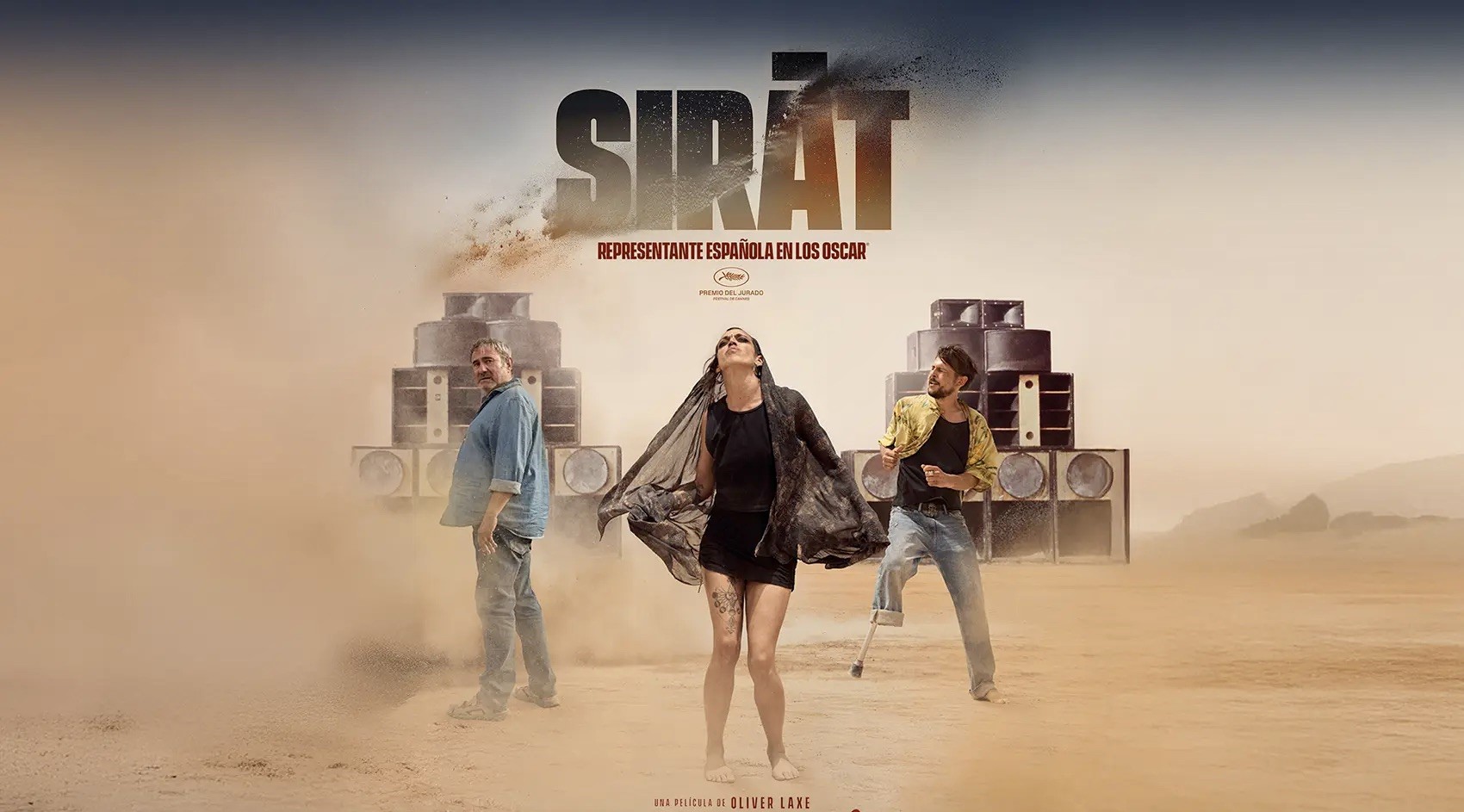
Oliver Laxe’s Sirat is read through bodies marked by rave culture, injury, marginality and trauma rather than as exotic desert spectacle. The film’s social world sits where ecstasy, damage and escape become hard to separate.
The sirat, finally, perhaps the central idea, which gave the film its title. We are told what it is at the beginning of the film, as the titles fall. According to the Qur’an, it is the bridge that separates paradise from hell. Thin as a thread and sharp as a knife.
Bilingual · 17d ago · 5 min · Skim
Many Views
Many Views puts China’s power between two clocks: the near risk of U.S.-China escalation and the long theatre of 2060 military futurism.
Many tongues on one question
China’s route to strategic power
An American strategic-stability lens starts with Trump-Xi talks and the danger of a U.S.-China slide into war. A French read of Chinese military futurism looks further out, to a 2060 imaginary where state media sells a space-edge aircraft carrier as the future of war.
Michael Swaine returns to his 2024 warnings after recent Trump-Xi talks, treating the central problem as preventing U.S.-China rivalry from becoming armed conflict. War on the Rocks · English
China’s military-industrial imagination is already being staged through the Nantianmen project, a science-fiction vision of war in 2060 promoted by state television. Le Grand Continent · French
Deep Research
Deep Research asks who can still occupy institutions when war contracts, nuclear finance, presidential rule and national stages decide the terms of public life.
One fault line, many vantages
The War as a Set of Contracts: Death Pay, Oil Imports, Ceasefire Arithmetic, and Kharkiv’s Newsrooms
War by Ledger
The war is being sustained by contracts, not just slogans: oil rents reopen import channels, death payments move state money into poor Russian regions, Ukrainian ceasefire politics follows battlefield arithmetic, and Kharkiv’s local media operate as emergency infrastructure under drone threat. The fault line looks different when the unit is a household budget, a recruitment contract, a front-line newsroom, or a drone team rather than a capital-city press conference.
Ру · Russian-language macro view of the wartime economy and sanctions leakage.
Военная экономика заболела голландской болезнью: рост цен на нефть и доходов экономики ведет к «обратному импортозамещению»
High oil prices and a stronger ruble are not producing self-reliance; they are reopening the import channel, especially from China, while defense-linked sectors set the statistical baseline. Rosstat’s move to 2023 as the base year quietly turns a militarized industrial structure into the benchmark, so recovery figures can hide the contraction of civilian industry. Re: Russia · Russian
Укр · Ukrainian front-line soldier-intellectual; left politics, army mood, peace mechanics.
Між фронтом і полем дискусії: Тарас Білоус про війну та перспективи миру
From a Ukrainian leftist historian now serving in aerial reconnaissance, the ceasefire debate is not a morality play about peace versus victory. By spring 2024, soldiers around him spoke of 1991 borders mostly with irony; a freeze became thinkable because battlefield arithmetic and exhaustion changed society’s risk calculation, while Russia’s refusal of an unconditional ceasefire kept diplomacy trapped in enforcement, not intent. Commons · Ukrainian
Fr · French strategic-institute view via Vladislav Inozemtsev; Russian social contract and fiscal politics.
Moscow has turned death into a regional redistribution scheme: high salaries, enlistment bonuses and posthumous payments make military service a rational wager for indebted men and families in poor regions. The Kremlin buys lives with low market value, pushes cash into depressed towns, and lets the social shock of casualties arrive wrapped as household income. Ifri · French
中 · Taiwanese Chinese-language reporting from Kharkiv, built around Ukrainian local journalists.
In Kharkiv, local media are civil infrastructure: after each strike they verify that targets were civilian, counter rumors of abandonment or friendly fire, and preserve evidence before Moscow can overwrite the record. The craft itself has changed under drones and double-tap strikes: Press markings have become targeting cues, and the danger zone for reporters now reaches tens of kilometers behind the line. The Reporter · Chinese
What they said would happen
Fukushima Did Not End Nuclear Power. It Changed Who Could Still Build It.
Fukushima’s afterlife is split in two: at the plant, 14 years of work have produced a first debris sample measured in grams; in energy policy, the retreat became institutional and regional rather than global. Merkel and Norbert Röttgen’s 2011 wager that Germany could exit nuclear by 2022 and raise renewables to 35% mostly landed, though the last reactors closed in April 2023 and the coal/gas/import critique never disappeared; Naoto Kan’s 2011 demand to scrap Japan’s 53%-by-2030 nuclear buildout came true, but his larger anti-nuclear turn did not survive LDP energy-security policy, with Japan now again targeting roughly 20% nuclear. The IEA’s 2011 “Low Nuclear Case” warning that less nuclear would make climate and energy security harder was right for Japan and Germany’s fossil-backfill years, but renewables grew faster than that frame allowed; George Monbiot was right that Fukushima was not the mass-radiation death event many feared and that coal was the dirtier fallback, but too optimistic if read as a market case for nuclear revival; Mycle Schneider and Antony Froggatt were right that Fukushima accelerated a decline in nuclear’s global share and that renewables would outrun it, but wrong if read as worldwide exit: China, Russia, India, South Korea, and now Japan kept nuclear alive where the state can carry the financing, permitting, and supply-chain burden.
日 · Fukushima local broadcaster; plant tour plus local fishing economy.
“Final stage” is almost a euphemism: 0.7 grams of debris has come out, 880 tonnes remain, spent fuel still lacks a final destination, and high-dose waste grows as cleanup proceeds. The fishery section gives the local mechanism: data can establish safety, but Fukushima seafood recovers only when safety becomes trust. Tereport Plus · Japanese
日 · Japanese multilingual public-affairs outlet, reporting from inside the plant infrastructure.
The ratio is the story: the 0.7-gram sample is about 1/125,000,000 of the estimated debris inventory. Unit 5 becomes a full-scale rehearsal space for Unit 2, turning “decommissioning” into a concrete sequence of 55-cm penetrations, camera failures, masked short-window work, robot arms, and worker skill formation. Nippon.com · Japanese
日 · Tokyo-based renewable-energy policy institute, anti-nuclear but numerically explicit.
Japan’s revived 20% nuclear target only works in the author’s “maximum” scenario: nearly every existing reactor returns, long lifetime extensions hold, and new units arrive. The middle scenario gives nuclear only 7-8% of generation in 2040, making the government target less a forecast than an industrial-policy wish. Renewable Energy Institute · Japanese
En · Independent global nuclear-industry tracking project with country chapters, including Japan and Fukushima.
The global scorecard: nuclear did not disappear, but it lost the speed, cost, and investment comparison to renewables while its fleet aged. China is the structural exception: where the state can standardize finance, construction, licensing, and supply chains, nuclear still expands; where projects compete one by one, the industry mostly extends old reactors. World Nuclear Industry Status Report · English
After the cameras left
After Saied’s Coup, Only the Presidency and the Street Remained
Tunisia did not settle into a clean dictatorship after July 2021. It became a thinner political system: parties discredited or jailed, courts turned punitive, NGOs cast as foreign agents, the UGTT squeezed, and local protest forced to do the work that institutions no longer do.
Fr · Tunis-based independent media, close to civil society and media-regulatory actors inside Tunisia.
Saied’s project is not just presidential overreach; it is a war on mediation itself. Anti-corruption bodies, media regulators, migrant-aid groups, access-to-information institutions, unions and NGOs are treated as rival claimants to public authority, so the state strips them of money, offices, legal standing and narrative space. Nawaat · French
ع · Regional Arabic outlet interviewing Tunisian rights actors, opposition analysts and detainees’ families.
المعارضة تحت الترهيب... كيف تعيد السلطة صوغ الحياة السياسية في تونس؟
The new order runs through legal fear: Decree 54, conspiracy trials, anti-terror labels, exceptional sentencing and administrative harassment make ordinary political work look criminal. The useful section is the reporting from Ramadan Ben Amor and Hatem Nafti: civil society is being attacked whenever Gabes, unions or detainees create a pressure point, while opposition unity remains mostly urban, elite and reactive. Raseef22 · Arabic
Fr · Inside-Tunisia labor politics, with named union factions, legal procedure and interviews with union historians.
The regime found the UGTT’s soft underbelly: not ideology, but payroll mechanics. By suspending automatic dues deductions while the union is split over leadership, statutes and old factional habits, Saied can starve the last mass intermediary without needing to ban it outright. Nawaat · French
Fr · Ground-level southern Tunisia, built from Gabes activists, local environmental history and the October 2025 strike wave.
Gabes turns Saied’s slogan “the people want” against him: residents demand the dismantling of polluting chemical units, while the state answers with commissions, denial and revived prosecutions against activists. The strongest mechanism is local: a decade-old environmental movement has outlasted parties because cancer, suffocation and poisoned water are harder to demobilize than ideology. Nawaat · French
A standing interest, freshly read
Who Gets To Occupy the Stage of the Nation?
These four pieces treat live performance as a machine for producing public belonging: Catholic history parks in France, anti-racist rehearsal rooms in Germany, trans folk-Catholic testimony in Peru, and Southeast Asian dramaturgy around indigeneity and plurality. The common question is not whether theatre is political, but who controls the conditions under which bodies, wounds, rituals, and national memory become visible.
De · German-speaking theatre insiders: actress Ilknur Bahadir and diversity agent Yuvviki Dioh, from Berlin and Zurich institutions.
A cancelled Schaubuehne project becomes a map of how anti-racist theatre can fail inside the rehearsal room: institutions ask performers for traumatic autobiographical material, then treat support structures as optional. Yuvviki Dioh’s procedural point is the sharp one: safer rooms, conflict tools, and outside expertise are part of dramaturgy when a theatre turns marginalised lives into public memory. nachtkritik.de · German
Es · Lima cultural reporting close to the Casa Yuyachkani run and the performers.
A Peruvian trans testimony piece turns Catholic iconography, marinera, Tunantada, and biblical language into a fight over public belonging. The value is in the stage mechanics, not just the cancellation scandal: folklore holds trans history and conservative assault in the same frame, so the performance becomes a struggle over who owns religion and national tradition. TVRobles / La Mula · Spanish
En · A Malaysian theatre educator and dramaturg moving through Southeast Asia, Australia, New Zealand, Japan, and Britain after the pandemic.
A Malaysian dramaturg’s travel letters use performance to puncture the lazy comfort of “multiculturalism”: First Nations ceremony in Brisbane, Asian-Kiwi theatre in Auckland, Malaysian autobiographical performance, and Bangkok arts pedagogy all test what policy categories flatten. The strongest thread is indigeneity: plural societies often learn to celebrate difference while leaving the first peoples offstage. ArtsEquator · English