12 June 2026Focus · MENA · Africa12 Items · 4 Translated · Archive ›
— The Dragoman's Note —
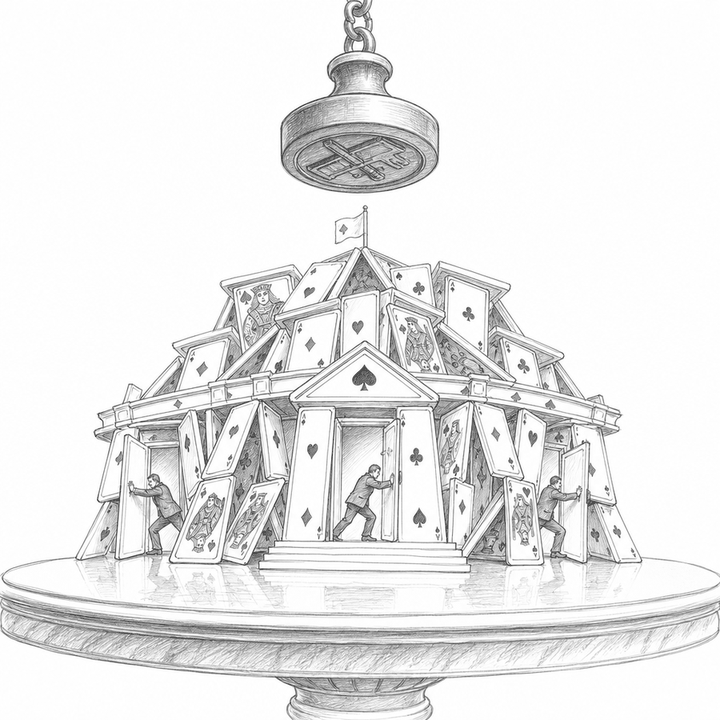
This week’s pressure point is not collapse but controlled narrowing: Cairo’s legal opposition learns how little dissent can be performed under Sisi, Hong Kong turns the chief executive’s certificate into a judicial fact, and Delhi’s NewsClick case shows how financial law can be made to do political work until a court interrupts it. Infrastructure is the other sovereign: New Taipei’s bridges become safer when a bad divider disappears, Europe’s factories live or die by cheap power, Kharg Island turns oil export capacity into a war target, and Pentagon barracks decay because maintenance has less glamour than weapons. Sudan is the hard version of the same lesson, where checkpoints, gold, banks and rear bases are already drawing a state before diplomats name one. Even the cultural pieces return to institutions that once promised emancipation and now ration meaning: the Pompidou, Habermas’s public sphere, feminism confronting Bad Bunny’s market pleasures, and clinical language around autism. Across languages, the old question of freedom keeps arriving as a design problem: who controls the pipe, the road, the certificate, the museum, the cash desk, the diagnostic frame.
Lines of dispatch · Edition XXVI
Six voices, gathered to the desk this week — each filed in its own tongue, from far afield.
Egypt’s opposition crisis is institutional, not simply a failure of courage or leadership.
The Permitted Collapse
Egypt’s legal opposition is splintering under the pressure of co-optation, personal rivalries and the narrow permissions of Sisi-era politics. The Civil Democratic Movement looks less like a coalition than a set of parties negotiating how much opposition can be performed without inviting annihilation.
Why it leads: Egypt’s opposition crisis is institutional, not simply a failure of courage or leadership.
English · 2d ago · Deep
The Brief
The Brief is about systems that claim neutrality while quietly deciding who can move, speak, build, sell, remember or be understood.
The Reporter’s accident map finds that New Taipei bridge sections became far safer after physical motorcycle-lane dividers were removed: crashes fell by roughly 70-80 percent, and comparable mixed-traffic bridges saw two-to-four times fewer accidents than divided motorcycle-lane bridges. The mechanism is road design, not rider virtue: segregation creates blind spots, forced merges and collision traps.
Almost all casualty crashes on the six bridges marked in this article were motorcycle crashes. From January 2020 through April 2026, motorcycles were involved in 2,548 of the 2,621 casualty crashes, as high as 97 percent; only 3 percent of casualty crashes had nothing to do with motorcycles.
The Pompidou was both the emblem of French cultural democratization and the place where that model began to rot: public ambition became mass attendance, then budget pressure, branding and commercialized culture. The museum’s crisis is a map of French cultural policy after the state stopped knowing whether it wanted access, prestige or market performance.
Mais, comme le souligna par ailleurs Claude Mollard, l’influence Beaubourg fut plus profonde encore. L’ancien secrétaire général du Centre Pompidou entre 1971 et 1978 y voyait même, en forçant un peu le trait, la « matrice de la politique culturelle française », tout au moins celle des années 1980 et 1990 [5].
European industry cannot regain competitiveness by treating electricity as a side issue while energy costs dominate production decisions. Electrification helps only if power is cheap, reliable and paired with policy that lets firms substitute away from fossil inputs without losing margin.
Energy costs shape Europe’s industrial competitiveness, yet electricity still plays a limited role. This analysis shows that electrification can make industry more competitive if conditions align, and affordable power prices will become increasingly decisive.
Habermas appears through Martin Jay as a thinker of modernity’s unfinished institutions, not just communicative reason in seminar-room abstraction. The useful question is how public reason survives when the public sphere is fragmented, commodified and politically exhausted.
What Habermas exemplified then and in the countless public debates in which he later took part was the ideal of the “engaged intellectual.” But this was not engagement in the conventional sense made famous after the war by Jean-Paul Sartre’s call for intellectuals to be engagé.
Animal cultures the essay says global heritage bodies overlook.
Community
Practice
Transmission
Bighorn sheep
Migration routes
Ancestors, peers
Sperm whales
Group dialects
Clan culture
Chimpanzees
Stone tools, rain dances
Community learning
Forest elephants
Congo pathways
Matriarch elders
Heritage is usually treated as human inheritance, but ecosystems, animals and nonhuman continuities also carry memory across time. The conservation problem changes when heritage is not just monuments and archives but the living conditions that allow forms of life to persist.
Some intangible practices on the list involve millions of participants, such as the sacred Kumbh Mela festival, where oral traditions and knowledge are shared every few years in cities along the Ganges River. Others, like Iran’s fabled Bakhshi music traditions, have only a handful of remaining practitioners.
Scale of the U.S. military infrastructure problem described in the piece.
Measure
Figure
Why it matters
Facilities
700,000+
Huge maintenance portfolio
Sites
~5,000
Domestic and abroad
Pre-1970 installations
~80%
Aging baseline
Buildings over 50 years
~1/3
High renewal need
American military infrastructure fails through a procurement and maintenance system that rewards deferral until breakdown becomes scandal. Barracks, utilities and bases decay because the Pentagon can buy platforms more easily than it can sustain the physical conditions of service life.
According to the Department of Defense’s reporting, the United States owns and operates more than 700,000 facilities across nearly 5,000 sites at home and abroad. Much of this infrastructure is aging.
न्यूज़क्लिक के ख़िलाफ़ पुलिस और ईडी के केस रद्द, कोर्ट ने कहा- क़ानून का घोर दुरुपयोग, निराधार दावे
The Delhi High Court quashed police and Enforcement Directorate cases against NewsClick, calling the foreign-investment case an abuse of legal process and finding core claims unsupported. The case reads as lawfare against a media institution rather than ordinary financial regulation.
New Delhi: Quashing the Delhi Police and Enforcement Directorate (ED) cases against NewsClick, the Delhi High Court said that allowing the police’s foreign-investment case against NewsClick to proceed would be a “gross abuse of the process of law.” It also said the ED’s action rested on claims that had no foundation and did not “remotely”
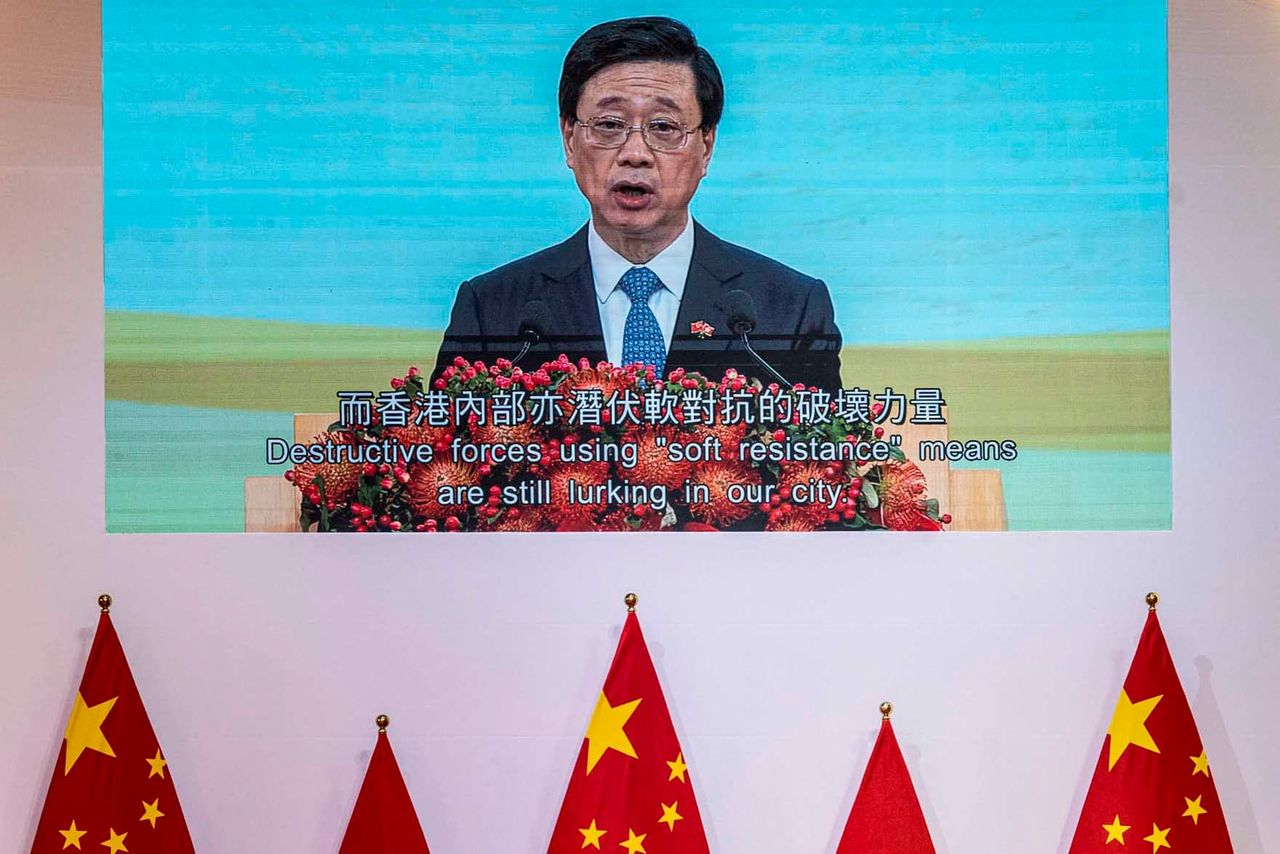
Hong Kong’s new national-security subsidiary legislation gives the chief executive’s certificate decisive force in classifying cases as national-security matters. The speed of passage and the procedural design narrow the space where courts can independently contest the executive’s security framing.
According to the gazetted document, the subsidiary regulation has three main points: in criminal cases determined to be national security cases, investigation and trial procedures will be made more stringent; the Chief Executive’s certificate cannot be overturned by the courts or challenged under any other law; and the certificate will ap…
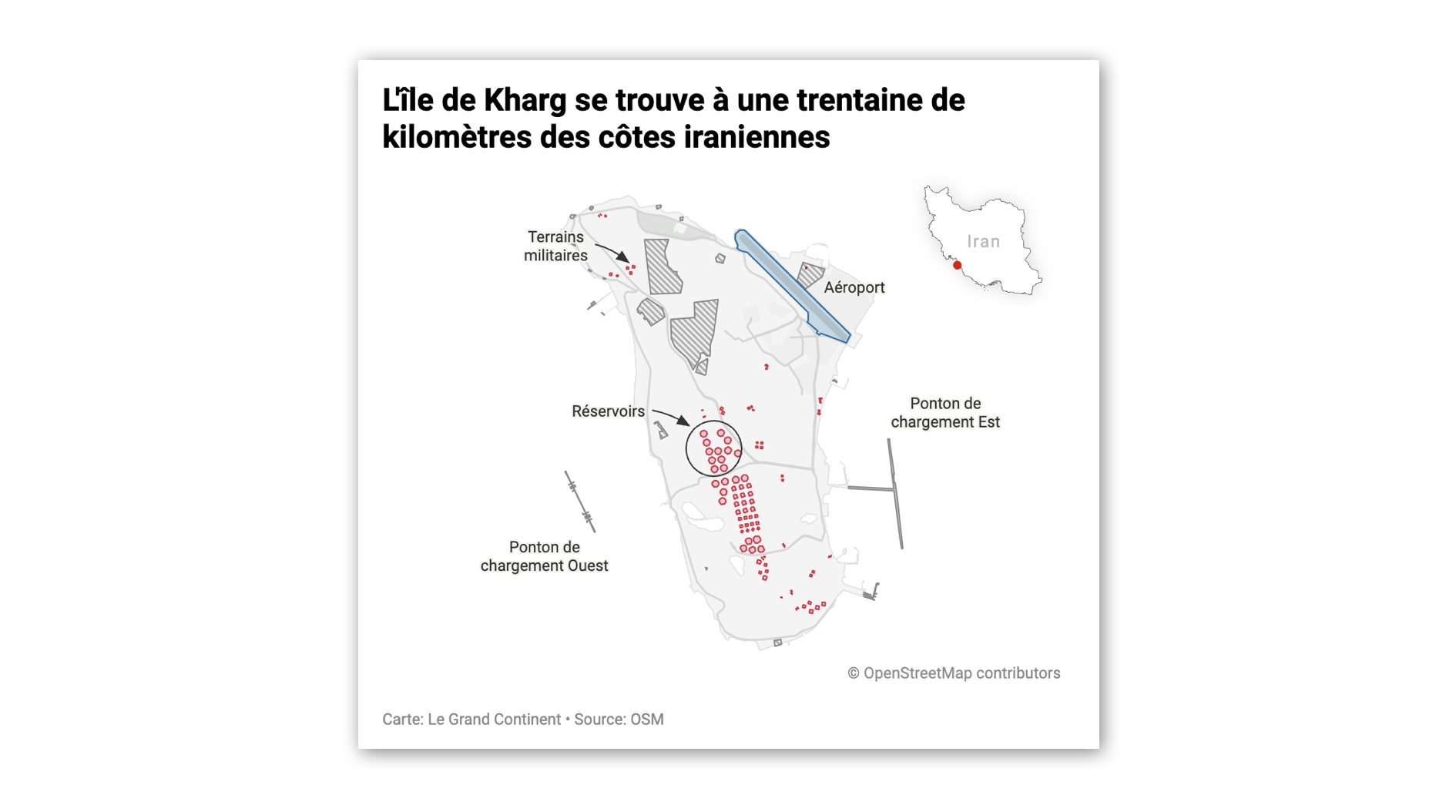
Trump’s threat to bomb Iran and seize Kharg Island puts oil infrastructure back at the center of escalation logic. The target is not symbolic: Kharg is the chokepoint where Iranian export capacity, war signaling and global energy risk meet.
L’administration étudie au moins depuis le mois de mars des plans visant à occuper ou à bloquer l’île de Kharg. Située à une trentaine de kilomètres des côtes iraniennes dans le fond du golfe Persique, celle-ci représente 90 % à 96 % des exportations de brut iranien, avec une capacité de 7 millions de barils/jour.
Bad Bunny becomes the entry point for a fight over beauty norms, voluntary sexualization and feminism’s weak grip on mass culture. The tension is that critique of normative beauty has not displaced the market pleasures and status games that keep reproducing it.
4. Dado que el impulso sexual posee un origen natural, su control a través de la cultura solo puede tener un éxito parcial. Ocurre que gran parte del feminismo es culturalista: entiende que la realidad humana puede explicarse de manera exclusiva –o casi– a partir de normas sociales que juzga infinitamente modificables.
Autism is not only deficit, overload and social exclusion; autistic experience can include intense curiosity, pattern pleasure, deep focus and sensory delight. The reframe does not deny disability, but it breaks the clinical monopoly on what autistic life is allowed to mean.
English · 3d ago · Skim
Many Views
Many Views watches spectacle and empire from the side entrances, where football logistics and Russian power look less triumphant than overextended.
Many tongues on one question
the compromised 2026 World Cup
Russian, French and Dutch writers circle the same tournament and see less a football festival than a stress test for the sport: border interrogations, heat, fan costs, Trump’s politics and FIFA’s silence crowd the pitch before the first whistle.
Экстремальная жара, допросы игроков и колоссальные траты для болельщиков. 8 причин, почему чемпионат мира по футболу 2026 — катастрофа
The Russian exile view counts the tournament’s scandals one by one, from hours-long border questioning and intensified searches to an African referee kept out of the country and costs that punish supporters. Novaya-Europe · Russian
The French read starts with a blunt yes, then treats the controversy as more complicated than a simple scandal roll-call. Le Grand Continent · French
Another question, several views
Russia's imperial reach under strain
A Russian reading of the Ukraine war sees Putin’s manpower doctrine running out of road; a Polish-inflected Georgian essay sees the same imperial pressure from the other side of the border, where protest becomes a fight against life as Russia’s colony.
End of the Doctrine: Why even a new mobilisation will not enable Russia to achieve victory
Russia’s old advantage, the capacity to pour men into a war of attrition with little political pain, has lost the decisive force Putin counted on in Ukraine. Re:Russia · Russian
Georgia’s year of mass protest appears as a revolt against the fate of an old culture trapped beside Russia and treated as a colony by a crude empire. Eurozine · English
Deep Research
Deep Research follows the institutional plumbing of power: money, security services, taxation, slavery, heritage and state fracture beneath the public slogans.
Many tongues on one storm
Sudan’s Partition Is Being Built in Cash, Checkpoints and Rear Bases
Sudan’s war now looks less like a duel between two generals than a state-splitting machine: markets taxed by armed men, cash systems breaking into rival zones, a Darfur-based parallel authority, and foreign logistics corridors keeping the RSF alive. Follow the money and the map changes: ceasefire diplomacy has to reach traders, border states, gold buyers, aid routes and the new institutions forming behind the front lines.
ع · Arab regional policy analysis from Doha, close to Sudanese elite-transition debates rather than Western humanitarian framing.
الجيش السوداني والدعم السريع: سياق الاقتتال واتجاهاته
Two days after the war began, the central problem was already visible: Sudan had two armies, one formal and one legalized-paramilitary, both with foreign links, money, and political ambitions. The useful move here is the security-sector anatomy: the framework agreement weakened SAF’s monopoly without settling RSF integration, while RSF gold, Yemen service, UAE/Russia ties and Darfur depth made a quick defeat unlikely. Al Jazeera Centre for Studies · Arabic
En · Sudanese policy tracker watching institutions, finance and wartime governance from close range.
The RSF zone is developing its own monetary plumbing: cash conversion commissions, a Transitional Monetary Council, a new central-bank governor, and the Future Bank app. Partition is not waiting for a peace conference; it is arriving through banknotes, digital balances, exchange spreads and the administrative need to make RSF territory governable. Sudan Transparency and Policy Tracker · English
En · Sudan-focused OSINT and reporting collective tracking combatant media, satellite imagery, border logistics and regional alignments.
The RSF is not isolated; its rear areas run through Chad, South Sudan, CAR, Libya and now Ethiopia, with the UAE as financier, organizer and advanced-weapons supplier. The Blue Nile front and the reported Ethiopia training hub make the war a Horn-wide logistics contest, not a purely Sudanese battlefield. Sudan War Monitor · English
After the cameras left
Tunisia After the Coup: Why the Silence Held, and Where It Is Cracking
The 2021 power grab hardened into a system by 2024: elections without real contest, media without real pluralism, civil society treated as foreign intrusion, and opposition pushed into courts and prisons. Read together, these pieces explain why many Tunisians did not rush back to defend the transition: the post-2011 order lost social credibility before Saied crushed its institutions.
ع · Imad Daimi, opposition politician and former presidential-security insider; partisan but institutionally specific.
كيف نفهم أجهزة الأمن التونسية وما الذي يقلقها هذه الأيام؟
The security apparatus is not treated as a single junta: parts welcomed July 25 as a rescue from political chaos, but now fear personal rule, social explosion, and future accountability. Gabès, water, unemployment, and the collapse of mediating bodies are the scenarios that worry them more than an orderly political transition. Al Jazeera · Arabic
A standing interest, freshly read
Antiquity Without Ancestry Claims
These four pieces make Greece, Rome, and the premodern past less a storehouse of origins than a set of constraint systems. Taxes work when citizens retain leverage; slavery stops looking like one Atlantic legal form; heritage becomes an invented relation to dead material; Roman occupational complexity may still shadow modern development.
It · Italian literary-archaeological criticism, written from a country where Romanita and Renaissance heritage still sit inside streets, coins, museums, and political reflexes.
The useful past is not an inheritance certificate. Cabiale uses Daniele Manacorda on archaeology and Alessandro Giammei on the Renaissance as a zombie to attack the Italian habit of turning antiquity into bloodline, identity, and fascist material scenery; the better relation to the dead is philological, archaeological, and uncomfortable. Le parole e le cose² · Italian
Fr · French political economy, using Roman fiscal history against today’s French rearmament and tax-consent debate.
Rome after 167 BCE cuts against the standard “war made the fiscal state” story. The tributum was suspended not because war became cheap, but because elite and plebeian veto power made extraction a negotiated bargain; once empire funded war from outside the citizen body, military decisions lost a fiscal check inside the republic. The Conversation France · French
De · German scholarly review culture, close to current dependency-and-slavery studies debates in Bonn and the wider global-history field.
Slavery becomes analytically poorer when it is defined through one modern Western property model. The review’s force is in the comparative architecture: Mediterranean, Atlantic, African, Asian, Russian, and post-slavery cases make “slavery” a family of asymmetric dependencies, markets, kinship regimes, state uses, sex, debt, violence, and liberation paths. sehepunkte · German