8 June 2026Focus · MENA · Africa12 Items · 4 Translated · Archive ›
— The Dragoman's Note —
Power keeps appearing this week as a permission system: a score, a convoy route, a curriculum, a banking apartment, a nickel concession, a chess pairing. Jakarta’s nickel policy pushes Chinese capital toward Madagascar; Sirte turns Gaza aid into a checkpoint drama; Sudan’s gold, drones and hired soldiers make war look less like ideology than procurement. Legitimacy is being manufactured and contested at the same time, from Tajrish’s pro-state gatherings to Israel’s public-consciousness machinery and Seoul’s split verdict on Lee Jae-myung’s Democrats. The ecological and economic question underneath is blunt: who gets to convert land, memory, data, minerals, gender norms or antiquity into authority, and who pays when the conversion fails.
Lines of dispatch · Edition XXII
Five voices, gathered to the desk this week — each filed in its own tongue, from far afield.
For universities, welfare states, firms, and governments, the fight is not metrics versus judgment but who gets to define the score and audit the capture.
The Measure Takes Power
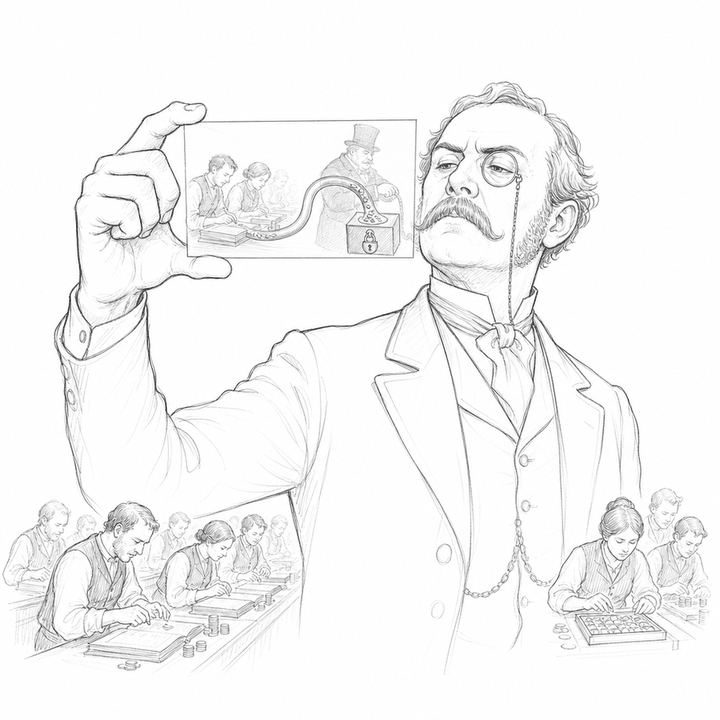
Scoring systems are not just bureaucratic nonsense: once captured, they can launder power, but they can also expose where value is being siphoned off. Runciman’s useful move is to treat metrics as political instruments whose meaning depends on who designs them, who games them, and what they make visible inside institutions.
Nguyen writes like an analytic philosopher. He values definitional clarity and his book pursues ever sharper distinctions between the games that add value and the forms of gamification that take it away. The result is an argument that soon becomes repetitive.
Why it leads: Scoring systems now follow us from newspaper puzzles to workplaces, apps, etiquette, and politics; Runciman’s review asks when a game becomes a trap, and why consent is the line that decides it.
English · 17d ago · 20 min · Deep
The Brief
The main feed follows institutions at the moment their neutral surfaces crack and the machinery of rent, loyalty, shame or chance becomes visible.
Chinese firms that built Indonesia’s nickel surge are looking at Madagascar and other alternatives as Jakarta changes the terms of the boom. The supply chain logic is blunt: once a host state pushes for more rent, processing, or control, capital starts mapping the next frontier.
Even before that plan, tighter nickel ore mining quotas, proposed tax hikes and a sharp upward revision to Indonesia’s benchmark mineral price had unsettled investors and led the China Chamber of Commerce in Indonesia to write a strongly worded letter to Prabowo warning the measures could deter future investment.
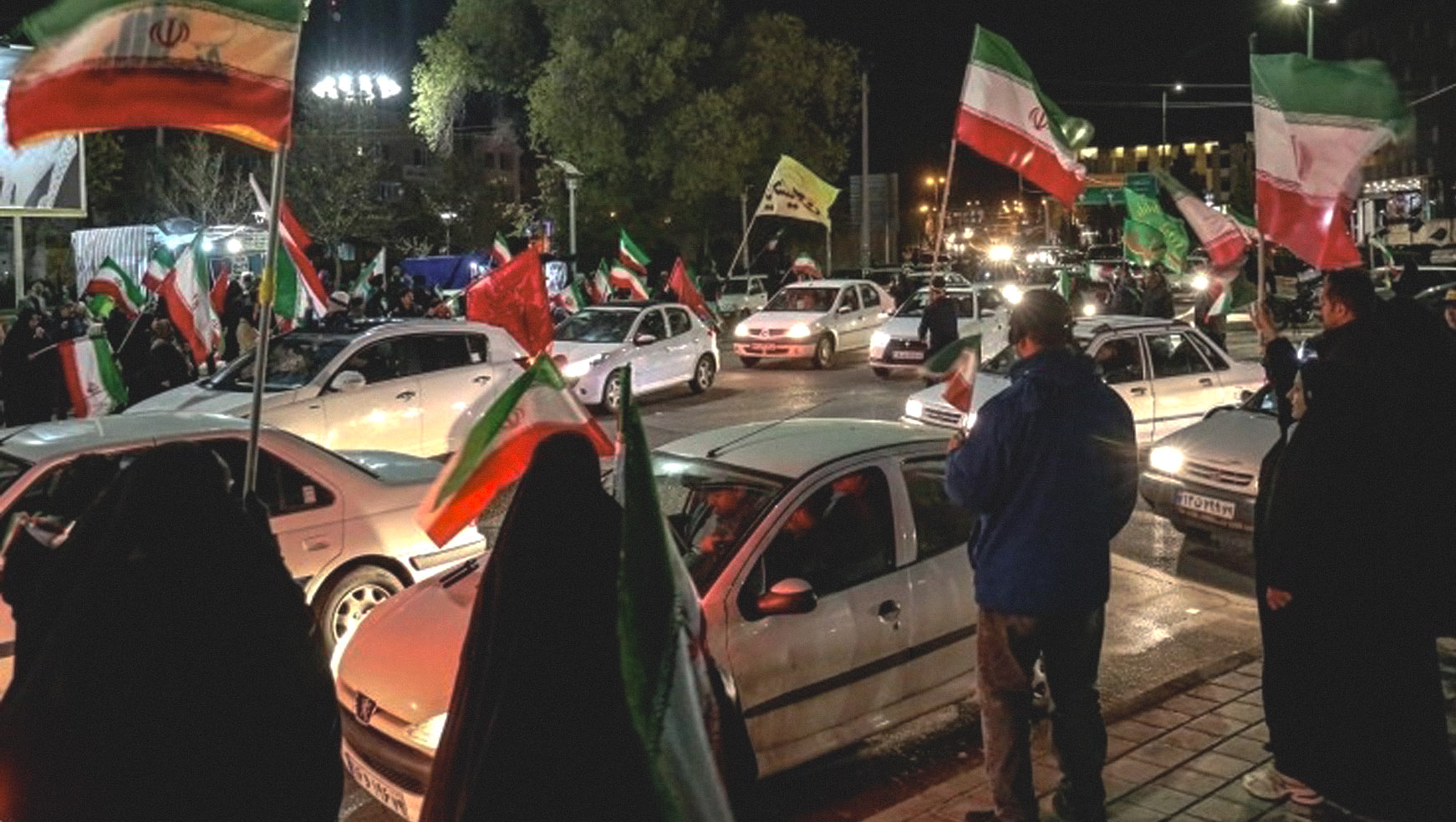
Scenes from pro-government gatherings in Tajrish after dark
Tajrish after dark offers proximity to the Iranian state’s social base rather than another outside description of “the regime.” The value is in the texture: who attends, what symbols bind them, what anxieties and loyalties survive under sanctions, repression, and regional war.
A little farther up the street, a pickup truck waits at a red light, enormous speakers stacked in its bed. Revolutionary songs pour loudly into the street. A couple of boys, perhaps ten or twelve years old, sit among the speakers, waving Hezbollah flags and Iranian flags at passing cars. The driver wears a white turban and clerical robes.
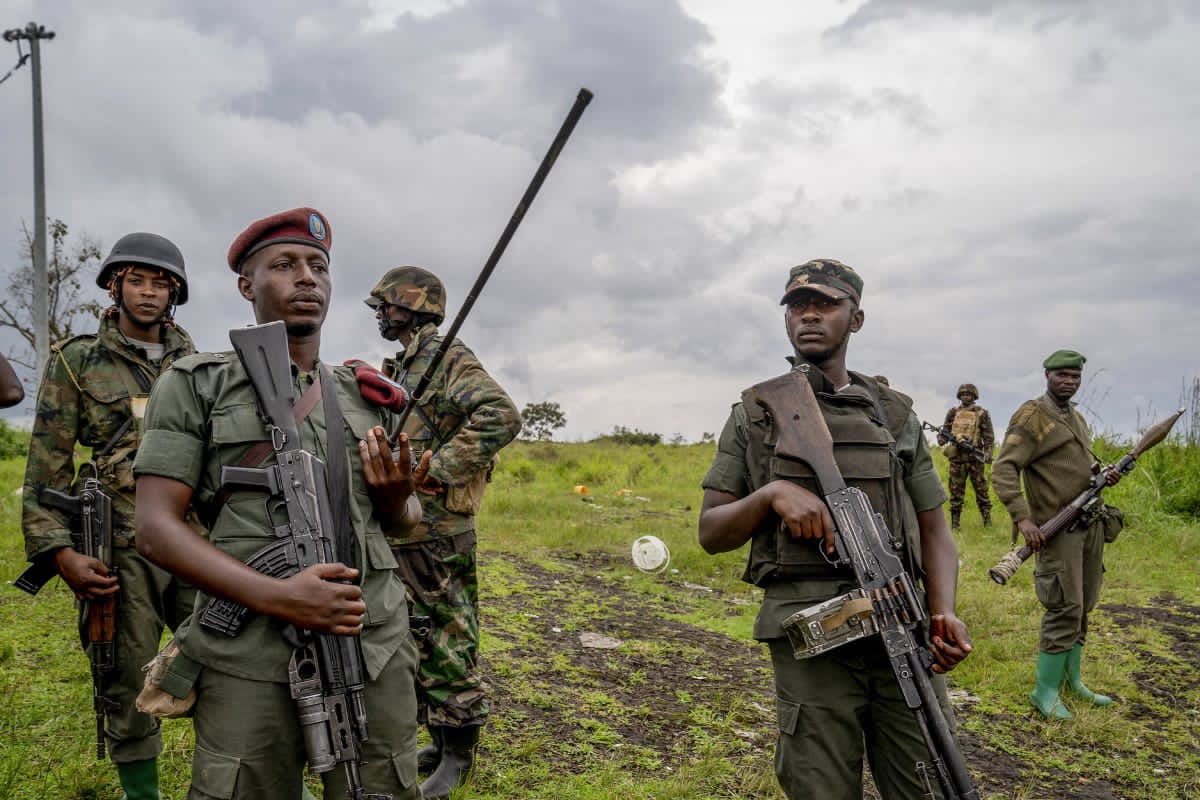
M23’s advance is presented from the Congolese side as a failed momentum campaign: 204 fighters reportedly surrendered between April and May across Lubero, Rutshuru, Masisi, and Kalehe. Even if the sourcing is partisan, the numbers point to morale, logistics, and territorial overreach as the pressure points behind battlefield reversals.
C’est dans ce contexte que le désespoir commence à s’installer dans les rangs des combattants. Selon la 34e Région militaire, 204 combattants du M23 se sont rendus aux FARDC entre avril et mai 2026. Ils viennent de différentes zones comme Lubero, Rutshuru, Masisi et Kalehe.
Reported patterns of AI-enabled or image-based abuse in India.
Case or source
What happened
Scale
Dimple Adiwal
Morphed LinkedIn image shared on Telegram
Feb. 4 complaint
Shalin Maria Lawrence
Threat emails with morphed images
23 emails in 2024
TechSakhi helpline
Tech-facilitated gender violence cases
1,100+ since 2022
TechSakhi review
Cases with image-based abuse component
~40%
Synthetic image tools amplify old gendered harms because the social norms around shame, evidence, and sexual reputation were already hostile to women. The mechanism is not “AI danger” in the abstract but cheap production plus platforms, weak enforcement, and communities that punish victims for the existence of abuse.
Anecdotally, easy access to AI tools has led to an increase in digital abuse but there is not enough research to cement that argument. However, what is undeniable is AI has made image, audio, and video morphing extremely accessible.
Larry McMurtry’s West is not a heroic frontier but a machine for turning selfishness, gender myth, and violence into nostalgia. The useful correction is against readers who mistake anti-myth for myth: cowboy individualism appears as social impoverishment, not freedom.
The most striking thing about Dead Man’s Walk is the clarity of its view of American conquest and expansion. Every adventure is undertaken by stunted men who consider cruelty and hardship ends in themselves. McMurtry expertly plays on the reader’s sense of dread whenever the Rangers embark on another doomed errand.
The European Commission staff document appears to diagnose a rich, service-led economy whose prosperity rests on very high value added, labor productivity, and external orientation in finance. Dry EU prose can still be valuable here because it encodes the institutional view of what makes a small European economy work and where its vulnerabilities sit.
South Korea’s ruling party won broadly in local executive races, but Seoul stayed outside its grasp. The result functions as a midterm map of Lee Jae-myung’s first year: national strength can coexist with metropolitan resistance where housing, class, and mayoral power concentrate.
After securing another term as mayor, Oh Se-hoon delivered his victory remarks, saying that credit for the win belonged to the voters, not to him personally. He emphasized: “The citizens have once again affirmed democracy’s principle of checks and balances.
Ciro pediu "mais uns três meses" no apartamento de Vorcaro
Messages reportedly place Senator Ciro in a banker Daniel Vorcaro’s apartment shortly before Vorcaro’s arrest. The value is patronage sociology in miniature: housing, favors, and proximity reveal political-financial intimacy more cleanly than formal lobbying records.
“Just to give you an explanation,” the senator wrote to Vorcaro. “I’ve just bought an apartment for Flávia [...] so that [I] can go back and return [your] apartment. But they still have to put in flooring, those things, so it’ll take about three months. But if you need the place before then, let me know and I’ll sort something out.
Haftar’s forces detained international Gaza aid convoy members in Sirte, turning humanitarian passage into a test of Libyan territorial control. The episode is less about the convoy itself than about who can authorize movement across Libya’s fragmented security map.
More than 200 activists with the Global Sumud Convoy entered the 5+5 security zone near the Libyan city of Sirte, a contested area established under the country’s October 2020 ceasefire agreement, hoping to negotiate safe passage onwards to Gaza.
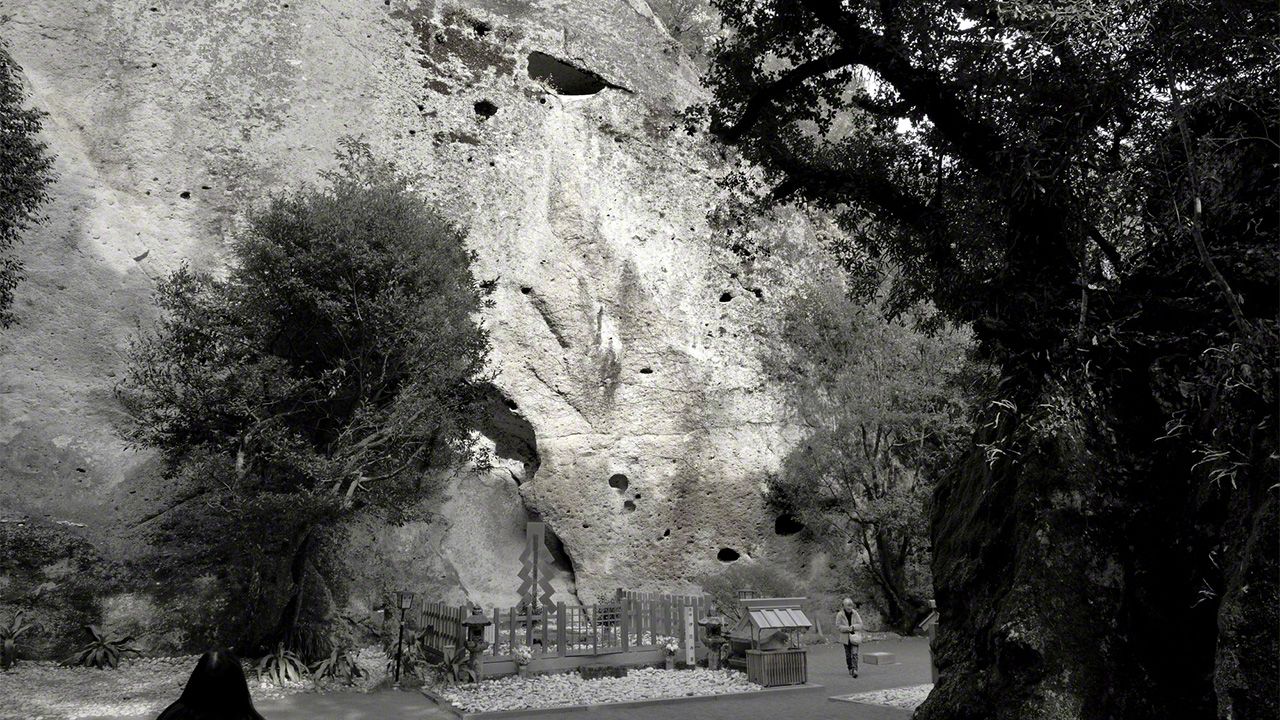
Hana no Iwaya: The Cave of Izanami, Japan’s Mother Creator
Hana no Iwaya preserves an older layer of Japanese religiosity in which rock, cave, death, and creation remain tied to place. Its value is cultural archaeology: Shinto appears not as neat doctrine but as a landscape practice anchored in Kumano’s material geography.
Hana no Iwaya, the “flower cave,” counted among Japan’s oldest shrines, stands on the Shichirimihama coast of the Kii Peninsula, facing the Pacific. Unlike most Shinto shrines, it has no worship hall. Pass beneath the torii and follow the path inward, and a sheer wall of stone rises before you to a height of forty-five meters.
Indian chess success is usually narrated as genius, discipline, and national rise, but luck complicates that clean meritocratic story. In competitive systems, tiny pairings, sponsorship accidents, family resources, and institutional timing can decide who becomes visible as a prodigy.
In contrast to poker or backgammon, chess has a reputation as a game where luck plays no role. But favours or curses from Caissa—the chess goddess sacred to GMs—can play a decisive role in the climb to the ranks of genius. The appellation “genius”
English · 118d ago · 3 min · Skim
Many Views
Israel’s legitimacy fight now runs through elite U.S. liberalism, Holocaust memory, and a deliberate apparatus for shaping consciousness.
Many tongues on one question
Israel's war over legitimacy
A French MENA journal, a Brazilian left outlet and an Israeli-Palestinian magazine track the same struggle over Israel's moral standing: one watches U.S. Democratic elites loosen, another returns to Norman Finkelstein's attack on Holocaust memory as political weapon, and the third follows the machinery built to steer public consciousness.
Ezra Klein's break with the old pro-Israel consensus signals a possible turn in U.S. foreign policy as progressive Jewish voices gain force after October 7. Orient XXI · French
Norman Finkelstein's charge is blunt: Israel turns Jewish catastrophe into power, money, lobbying leverage and a tool for silencing critics. Outras Palavras · Portuguese
A leaked Defense Ministry tender points to a formal army program for shaping opinion inside Israel and abroad, making persuasion part of the security apparatus. +972 Magazine · English
Deep Research
The dossiers trace sovereignty as supply chain: Sudan’s war economy, Tunisia’s shortage politics, and antiquity’s modern owners all depend on who controls circulation.
Many tongues on one storm
Sudan’s War Is a Supply Chain With Armies Attached
War By Invoice
Sudan’s war is no longer just Burhan against Hemedti; it is Dubai bullion, Gulf rivalry, Colombian ex-soldiers, drone corridors and European compliance paperwork. Follow the money and labor, and the ceasefire problem changes: the buyers, transit states and contractors are inside the war, not outside observers.
ع · Sudanese Center for Policy Studies researcher, published through an Arab regional reform platform.
معلّق، لم يُحل: التنافس السعودي-الإماراتي والحرب في السودان
The Iran war forced Riyadh and Abu Dhabi to manage the optics of unity, not their structural rivalry. In Sudan the asymmetry remains: Abu Dhabi reroutes support to the RSF through Ethiopia and Libya corridors, while Saudi backing for the SAF gets more cautious because Burhan’s Islamist-Iranian dependencies have become reputationally expensive. Arab Reform Initiative · Arabic
De · Sudanese environmental and social research centre, in a German-language dossier aimed at European corporate accountability.
A destroyed, RSF-seized Sudan Gold Refinery still appears in Volkswagen’s 2024 raw-materials reporting under smelter ID CID002567. This is not only a Volkswagen problem; it is a due-diligence hole where conflict gold can remain inside global industrial supply chains as paperwork residue after the physical refinery stops operating. Centre for Environmental and Social Studies (CESS) · German
Es · Colombian public broadcaster reading Sudan through Colombia’s export of retired military labor and ad-tech/OSINT traces.
Colombian phones moved from Bogotá to Puntland, Abu Dhabi or Chad, Kufra, Nyala and then El Fasher; Spanish-language drone networks and logistics nodes line up with the RSF assault. Sudan’s foreign sponsorship is not only money and weapons: it buys a transnational labor force trained by Colombia’s long counterinsurgency war and plugged into Emirati logistics. RTVC Noticias · Spanish
After the cameras left
Tunisia After the Coup: Rule by Decree, Life by Shortage
The reversal did not settle into a stable dictatorship with a working bargain. Saied closed the political intermediaries, then tried to govern social pain through rationing, conspiracy talk, prosecutions, and direct presidential arbitration; by late 2025, the pressure was returning through Gabes, the UGTT, migration politics, and everyday shortages.
En · Tunisian political economy from Hamza Meddeb, focused on the material mechanics under the populist surface.
Saied’s economic model is not reformist statism; it is delay financed through domestic debt, unreformed subsidies, rationing, and selective patronage. The social bargain now means queues for sugar and semolina, black-market trade with Algeria, underpaid substitute teachers waiting on promises, and state-controlled “communitarian companies” offered to poor regions as loyalty machines. Carnegie Endowment for International Peace · English
En · Labor-history and institutional analysis of Tunisia’s main union as battered counterpower.
Saied is not only attacking parties and NGOs; he is trying to strip Tunisia’s old labor counterpower of its bargaining machinery: secondments, dues collection, tripartite negotiation, public legitimacy. The sting is that the UGTT’s own factionalism and weakened internal democracy make it less able to replay its historic role as the organized bridge between street anger and political settlement. Arab Reform Initiative · English
Es · Spanish academic journal, using Tunisian and francophone sources to trace migration securitization under the new regime.
The anti-migrant turn was not just imported from Europe or dictated from Carthage. Saied’s state discourse fused with bottom-up nationalist mobilization, especially around the Tunisian Nationalist Party, until Black African migration became a daily political boundary between the protected people and the threatening outsider. Revista CIDOB d Afers Internacionals · Spanish
A standing interest, freshly read
Who Owns Antiquity Now?
Antiquity is doing political work in two opposite registers: as a prestige code for hierarchy, and as a comparative archive for worlds not governed by one center. The strongest current writing here is not asking whether Greece and Rome are still “relevant”; it is tracing who gets to define the classical, which institutions preserve it, and what ancient systems make visible about ours.
En · Global IR and Asian maritime history, with the Mediterranean forced into comparison rather than treated as default model.
The classical eastern Indian Ocean becomes the anti-Rome: a long-lived order without a single hegemon, held together by trade, mandala polities, and Southeast Asian agency rather than Chinese command or “natural” Indianization. It is ancient history against the lazy Pax Romana template for world order. Asian Review of Books · English
中 · Chinese academic interview with German ancient historians Sven Günther and Kai Ruffing; a view of European classics from outside the anglophone university circuit.
German Altertumswissenschaft comes out as an institutional machine, not a mood: chairs, corpora, inscriptions, papyri, philology, legal method, and the old fight over whether ancient history studies words or social realities. The live question is whether AI, English as academic lingua franca, and shrinking humanities funding destroy that machinery or make its slow arts of Verstehen more necessary. 澎湃新闻 / The Paper · Chinese
Es · Spanish left-historical blog, reading US tech politics and far-right symbolism from outside the US media loop.
Rome, Sparta, SPQR, Molon labe, Tacitus, Sulla and Stoicism form a shared meme-kit for Silicon Valley libertarianism and street-level reaction: hierarchy gets dressed as heritage, self-mastery as life-hack, and anti-feminist politics as “the West.” The useful move is the class bridge: antiquity links billionaire self-fashioning to militia aesthetics. Ser Hist rico · Spanish
En · US humanities institution-builder, but with a serious global-antiquity program rather than another defense of the Western canon.
“Classics” is too small and too proprietorial for the archive it claims: ancient studies should be built across Africa, Asia, the Americas, the Near East and the Mediterranean, with preservation of the global archive as the central public task. The essay’s pressure point is institutional, not rhetorical: departments, enrollments, languages and archives decide which pasts remain usable. D dalus / American Academy of Arts & Sciences · English