11 June 2026Focus · MENA · Africa12 Items · 7 Translated · Archive ›
— The Dragoman's Note —
The week’s common instrument is not the slogan but the switch: Egypt turns bread into an auditable cash ledger, Russia turns hospital networks off, Gaza turns treatment into a one-way permit, and Prayagraj turns fire-safety paperwork into pressure on student politics. Energy transition enters through the same machinery: Aqaba’s green ammonia and Egypt’s Suez textiles promise export value, while “critical minerals” reminds us that green demand still lands as dispossession where ore, water and labour are cheapest. In Mali and Sudan, the state is being fought through corridors: roads, fuel, gold, drones, kitchens, border posts, and the buyers who make each route pay. Even the cultural pieces return to administered bodies, whether girls in Petrópolis, disabled people sorted by “ability,” addicts denied agency by pity or blame, or women’s freedom pulled between sex, law and public force. Read together, the edition is about who gets converted into a manageable category, and who controls the ledger after conversion.
Lines of dispatch · Edition XXV
Three voices, gathered to the desk this week — each filed in its own tongue, from far afield.
When bread support becomes cash support, Egypt’s social contract shifts from cheap staples to managed poverty relief.
The Loaf Becomes Ledger
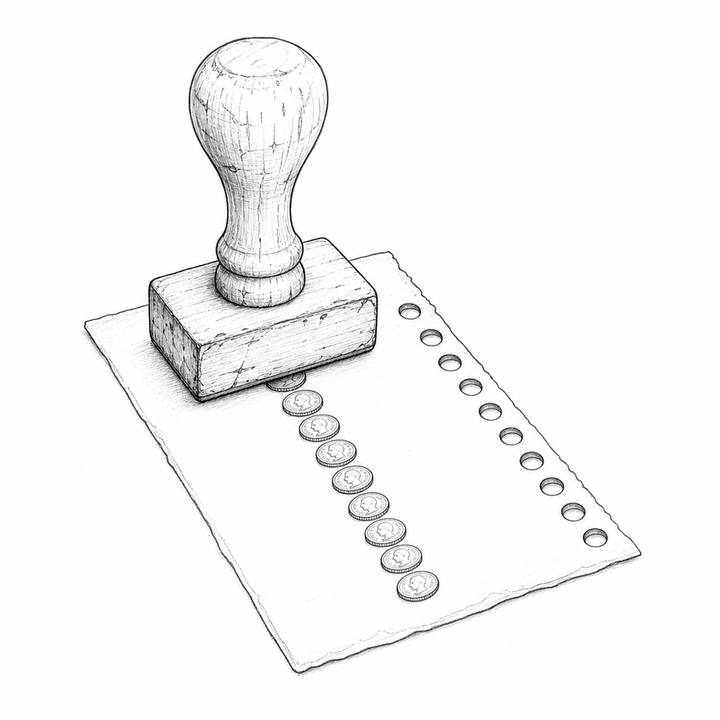
Egypt is folding the bread subsidy into a cash-transfer ration card system and preparing to remove around 10 million people from a food-support architecture that has anchored the republic since Nasser. The mechanism is fiscal compression through administrative redesign: a universal-ish bread entitlement becomes a targeted cash ledger, easier to cap, audit, and erode under inflation.
Why it leads: When bread support becomes cash support, Egypt’s social contract shifts from cheap staples to managed poverty relief.
English · yesterday · Deep
The Brief
The Brief follows institutions as they move power into technical systems: subsidy cards, shutdowns, permits, compliance notices, supply chains and cultural prestige.
مشروع بمليار دولار: من سيشتري الأمونيا الخضراء من الأردن؟
Jordan has signed a near-billion-dollar green ammonia project in Aqaba, but the hard question is not production capacity; it is who will buy the output, at what price, and under which European carbon rules. The project sits at the intersection of Gulf capital, EU decarbonisation demand, Jordan’s water and energy constraints, and the politics of exporting “green” value while local industry remains thin.
The agreement, worth around one billion dollars and intended to produce 100,000 tons of green ammonia in Aqaba, is the first of its kind in Jordan. It was signed between the Ministry of Energy and the Jordan Green Ammonia Company, in the presence of Prime Minister Jafar Hassan, while 11 similar projects remain under development.
«Прошлый век вместо цифровой медицины». Как постоянные отключения интернета влияют на скорость и качество оказания медицинской помощи
How internet shutdowns disrupt medical work
Setting
What breaks
Workaround
Ambulance crews
Routes, charts, hospital paperwork
Phone calls; paper notes
District clinics
Records, prescriptions, lab barcodes
Duplicate paper files
Diabetes care
Glucose-monitoring apps
No reliable substitute
Russia’s expanding internet shutdowns are turning digital medicine back into paperwork, phone relays, and delayed decisions across dozens of regions. Hospitals built workflows around online records, referrals, prescriptions, and diagnostics; when the network disappears, the failure is not inconvenience but a collapse in the hidden infrastructure of care.
“In May it became impossible to go out on calls,” Irina complains. “Around the Third Ring Road the internet would reliably disappear, and after that you were on your own. The driver gets angry because it is unclear how to get there. Because of that, we sometimes wandered around courtyards before finally pulling up to the right building.
A child from Jabalia travels for treatment while his father is told, with bureaucratic coldness, that return to Gaza means death. The visible wound is the injured leg; the deeper wound is the administered geography of evacuation, permission, exile, and a future in which medical survival can require social disappearance.
On the road to Ramon Airport, before traveling to Luxembourg in search of treatment for his son’s leg, two Israeli officers entered the ambulance and, with utter coldness, wished the child Fayez a recovery, then said that if the child and his father returned to the Strip, they would find nothing there but death.
The clean-energy and AI mineral boom is being built through familiar colonial patterns: land dispossession, low local processing, export dependence, and environmental risk borne by communities far from the end users. “Critical” names the buyer’s need, not the miner’s rights, which is why cobalt, lithium, nickel, and rare earth supply chains reproduce old extraction geographies under green language.
Geopolitical competition and escalating military conflicts mean that for some governments, mineral security has evolved from an economic strategy to a matter of national security. This approach is increasingly leading states to deregulate and fast-track mining projects, at the expense of human rights and environmental protections.
यूपी: पेपर लीक आरोपों का विरोध कर रहे छात्रों के समर्थन में आए कोचिंग सेंटर योगी सरकार के निशाने पर
After coaching centres in Prayagraj backed students protesting alleged exam leaks, local authorities sealed several premises on fire-safety grounds. The immediate paperwork is regulatory compliance; the political mechanism is pressure on a private education ecosystem that has become an organising base for angry job-seekers in Uttar Pradesh.
Then Vimal suddenly changed the direction of his remarks. Speaking almost as if to himself, he said, “These days some people are telling teachers to focus only on their work of teaching. But one must remember that if something wrong is happening, we should raise our voice against it.”
Addiction is treated through pity, blame, or clinical management, but each stance can strip the addict of agency in a different way. The stronger question is how social injury, habit, pleasure, compulsion, and moral responsibility coexist without reducing the person to either victim or delinquent.
Dehumanization, then, enables us to conceive of certain groups of people as subhuman creatures.[9] Perceptions of others as subhuman or less than human are conveyed, perpetuated, and strengthened through language and visual representations that depict them as such.
Translated from Persian · yesterday · 14 min · Deep
Singapore’s lesson for small states is not generic efficiency but strategic constraint turned into institutional design: disciplined bureaucracy, credible neutrality, human-capital investment, and a constant search for niches larger powers need. The model is less “be Singapore” than build state capacity around what vulnerability actually permits.
When Singapore became independent, Foreign Minister S. Rajaratnam was asked to hold a press conference. Unsure of what to say, he turned to Prime Minister Lee Kuan Yew for guidance. Lee’s reported reply was: ‘Never mind, Raja, just wear a tie and you’ll think of something.
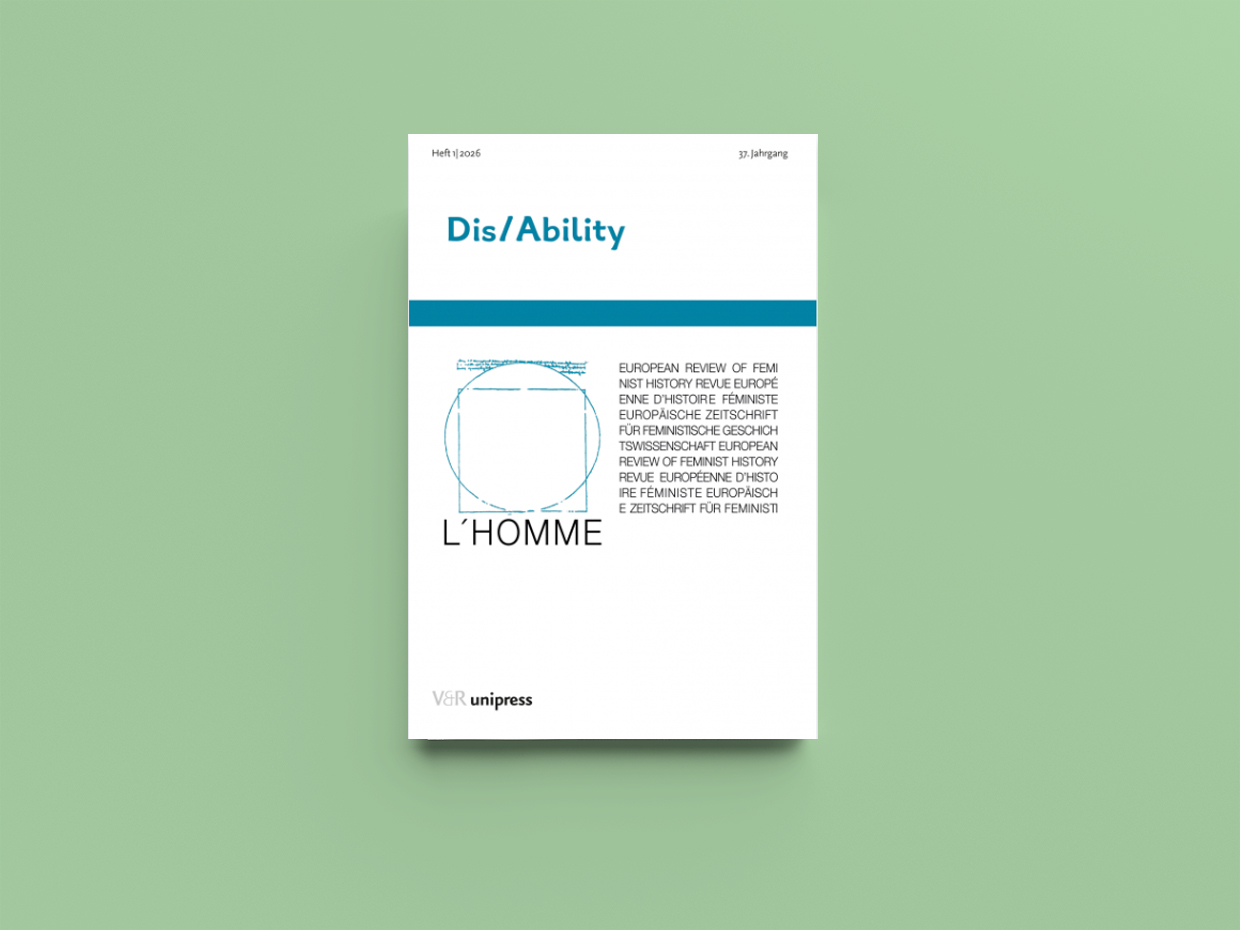
Disability is traced through demonised mental illness, eugenics, gender, socialist Bulgaria, ageing, family ideology, and the contemporary identitarian right. The shared structure is that “ability” has repeatedly been a political sorting device, not a neutral description of bodies and minds.
Although Weyer intended to mitigate persecution by portraying elderly women as ‘pitiable’, his medicalised image of the melancholic old woman reinforced connections between femininity, irrationality and evil, creating an understanding of melancholy as a precursor to devil worship that ultimately contributed to the persecution and executio…
As histórias de assédio das meninas cantoras de Petropólis
Former members of a famous 1990s girls’ choir in Petrópolis describe harassment that was hidden beneath performance, prestige, and adult control. The story is about more than individual abuse: cultural institutions can turn children’s talent into reputational capital while making complaint socially expensive.
It was on one of those outings that Carla Magno, now a writer and journalist, began to suspect that something in that choir was out of order. “The first time I became aware that something strange had happened to me was when, on one of those trips, I was chosen to sit next to him,” she said. Carla was between 12 and 13 years old.
Egypt’s Suez Canal Economic Zone has drawn more than half a billion dollars in textile investment this year, trying to reposition the country between Asian manufacturing, European markets, and regional logistics. The underlying bet is that location, labour, and trade access can rebuild a sector hollowed out by import competition and weak industrial upgrading.
Симулякры интернета. «Закулисье реальности» — главный хоррор сезона, основанный на ютуб-сенсации. Это фильм, точно передающий опыт современной цифровой среды
A24’s hit horror film built from a YouTube-born universe is treated as a document of the digital environment: endless rooms, unstable images, derivative myths, and fear generated by circulation itself. The commercial success matters less than the form, where internet folklore becomes cinema without losing the texture of platforms.
The central trauma lies in the loss of interpretation. Clark and Marie keep moving forward, but every action they take produces a new problem. Each attempt to escape the situation only enlarges it.
Bilingual · yesterday · 1 min · Skim
Many Views
Many Views turns feminism into a jurisdictional argument over where coercion actually sits: sex, courts, markets, public force or the right to pleasure.
Many tongues on one question
feminism between sex, power and law
A Hebrew legal-political column, a French feminist essay and a Brazilian Sontag reading all start from women’s emancipation, then split over where power sits: in the penal code, in sexual freedom, or in entry into public force.
The Israeli left vantage treats repeal of the “nuisance by prostitution” offense as a rare Knesset act for the most vulnerable, not a tidy morality fight. Local Call · Hebrew
The French feminist vantage locates the quarrel inside feminism itself: everyone sees sexual politics controlling fertility, but not everyone accepts women’s sexual flourishing as a feminist cause. AOC · French
The Brazilian literary vantage reads Sontag against rights-only emancipation: equality means power, and power requires women’s participation in its institutions. Portuguese · Portuguese
Deep Research
Deep Research tracks political order through its material routes, from Mali’s fuel arteries and Sudan’s bullion corridors to antiquity’s reuse as a toolkit for modern power.
Many tongues on one storm
Mali’s War Has Become a Contest for the State Itself
The State Under Siege
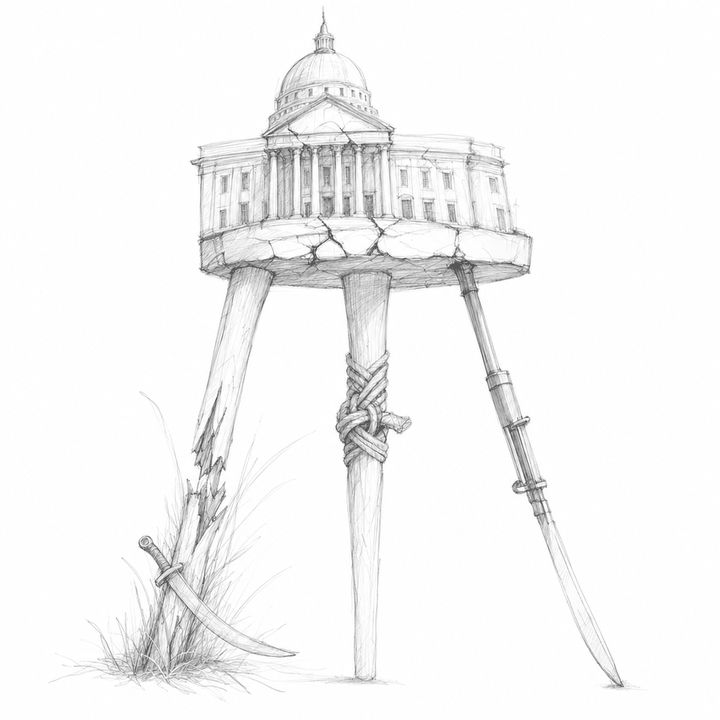
The April offensive was not only a battlefield shock. Read together, these pieces make Mali look like a state being attacked through three linked systems: a Tuareg-jihadist bargain in the north, economic strangulation of Bamako’s road arteries, and a Russian-backed junta whose survival strategy has hollowed out the security claim that brought it to power.
En · Wassim Nasr, a French-Arabic jihadist movements specialist with direct sourcing into Sahel armed-group politics.
The FLA-JNIM pact was not a battlefield improvisation: the secular Azawad camp accepted a softer sharia framework because JNIM could supply Fulani fighters and pressure Bamako, while JNIM gained a route into urban governance without repeating 2012’s crude occupation model. Russia’s role also gets stripped down: not counterinsurgency, but regime insurance for juntas that have made political life impossible. Combating Terrorism Center at West Point · English
En · Open-source conflict investigation from outside the daily news cycle, focused on roads, fuel, satellite traces and propaganda channels.
JNIM’s war on tankers turned Mali’s geography into a weapon: a landlocked capital dependent on Senegalese and Ivorian fuel routes can be pressured without taking the city. Satellite imagery, geolocated convoy attacks and fuel queues show the blockade as economic warfare against the junta’s claim to control the country. Bellingcat · English
After the cameras left
Sudan After the Cameras: Bullion, Drones, and Communal Kitchens
The war did not fade; it reorganized. These four map a state split into corridors and welfare substitutes: bullion to Dubai, cargo through Libya, South Sudan, Kenya, Uganda and CAR, drones over supply lines, and food kitchens where ministries used to be.
Fr · Organized-crime and Sahel supply-chain view, with attention to transit states rather than only Sudan’s generals.
El Fasher’s fall was not a battlefield miracle. The RSF survived non-recognition through corridors: Chad became contested, Libya and Kufra rose, Kenya, Uganda, South Sudan and CAR became alternate logistics or gold routes, and makeshift airstrips near extraction sites turned Darfur into import-export infrastructure. Global Initiative Against Transnational Organized Crime · French
ع · Arabic ground reporting from Khartoum/Omdurman, built from interviews with kitchen organizers and local residents.
Survival moved into neighborhood kitchens. In Omdurman and Bahri, takaya fed families when markets, incomes, water, clinics and roads failed; diaspora money, Facebook transparency and chronic-disease medicine became a parallel welfare system, then shrank where people could return to work. Al Jazeera Net · Arabic
En · Conflict-data and military-tactics view from ACLED, focused on the current drone-supply cycle.
The front is now also a logistics contest. SAF uses diversified drone pipelines to hit Nyala, fuel shipments and Libya convoys; the RSF uses fewer but longer-range UAE-backed Chinese systems against ports, power and air defenses. Drone-on-drone combat and weak air defenses mean the war can persist below the level of conventional frontlines. ACLED · English
A standing interest, freshly read
Who Gets to Use Antiquity Now?
Antiquity is not returning as marble nostalgia; it is being recruited as a live political technology. Rome supplies tech oligarchs with a vocabulary of empire, China separates Greek antiquity from liberal modernity, Italy fights over Latin and epic as school-state formation, and a new Roman-economic model asks whether productive capacity can persist for two millennia.
En · China-facing education reportage, centered on Chinese classicists, the 2024 World Conference of Classics, and Western scholars caught inside a geopolitical humanities project.
Beijing’s new classics boom treats Greece and Rome as the ancient West without the modern West: Socrates and Confucius can meet as civilizational peers while liberalism, constitutionalism and multiparty democracy remain outside the frame. The most interesting tension is inside Chinese classicists themselves, who must choose between state-backed cultural confidence and the messier, post-classical field they encountered in American departments. ([newyorker.com](https://www.newyorker.com/news/annals-of-education/how-china-learned-to-love-the-classics)) The New Yorker · English
En · Computational economic history from archaeologists/network scientists, using epigraphy to test very long-run European development.
Roman inscriptions become a proxy for occupational specialization by province, and the map that emerges overlaps strikingly with today’s complex economies. The cautious punchline is stronger than a civilizational boast: development capabilities may be brutally path-dependent, surviving regime collapse, language change and religious transformation. ([arxiv.org](https://arxiv.org/abs/2508.19892)) arXiv · English