14 June 2026Focus · MENA · Africa10 Items · 4 Translated · Shelf › · Archive ›
— The Dragoman's Note —
Power in this edition is less a flag than a system of maintenance: who commands Mogadishu’s armed men, who keeps Spain’s reserve squadron seaworthy, who makes Greek farms productive when land, water and subsidies pull in opposite directions. The climate thread is equally unsentimental: Iceland’s clean electricity does not erase consumption, German transport works because coverage beats spectacle, and migration at 35 million annual movers has become a standing pressure on labor markets and borders. Across Sudan’s gold, Rubaya’s coltan, Russian oil logistics and Gulf bases, geography becomes finance once a road, mine, port or airfield can be turned into leverage. Even the softer archives — dinosaur dinners, Churchill’s landscapes, ancient Athens — ask who gets to stage authority and make the past useful. The week’s common verb is not “collapse” but “govern”: children’s feeds, AI agents, neutral states, rebel mines and city transit all expose the same fight over the rules beneath daily life.
Lines of dispatch · Edition XXVIII
Eight voices, gathered to the desk this week — each filed in its own tongue, from far afield.
If the capital’s elite pact breaks, counterterrorism policy and Gulf-Turkish-Western state-building money start feeding rival armed camps instead of a state.
The Bargain Splinters
Mogadishu’s renewed clashes are not a stray security incident; they expose a split inside Somalia’s governing coalition and the foreign-backed bargain holding the capital together. The key question is who can command force in the city, and which outside patrons can still treat Somalia as a stabilizable partner rather than a negotiated battlefield.
Why it leads: If the capital’s elite pact breaks, counterterrorism policy and Gulf-Turkish-Western state-building money start feeding rival armed camps instead of a state.
English · 3d ago · Deep
The Brief
The Brief tracks institutions under load, where capacity is built or lost long before crisis makes it visible.
Greek agriculture is mapped as a policy system under strain: fragmented landholdings, water stress, aging producers, weak cooperatives and EU subsidy dependence lock farmers into low productivity even when export demand exists. The likely value is the institutional diagnosis, not the usual complaint that rural Greece is merely underfunded.
Despite the promising picture of exports and its significant scale, the Greek Agricultural Sector appears to display a deeper and especially persistent problem: low productivity. On the one hand, as we saw above, in 2024 the total value of production reached almost 15.
Spain’s naval defeat is treated as an institutional failure prepared during peace: procurement, training, maintenance and political complacency mattered before the first shot. The useful frame is military readiness as a slow administrative product, not battlefield heroism or cowardice.
At the institutional level, political short-sightedness resulted in service-level atrophy. By the 1890s, the Spanish navy was a costly and top-heavy bureaucracy, not a credible combat organization. Threadbare annual operational funding covered only 34 tons of coal per day, enough for a large battleship to steam at nine knots for one day.
من المنع إلى تطويع المحتوى: كيف نحمي أطفالنا على مواقع التواصل الاجتماعي؟
Jordan’s debate over banning children from social media sits between moral panic, parental exhaustion and platform design. The stronger answer seems to be content adaptation and child-specific governance, because prohibition leaves algorithms, advertisers and family habits untouched.
"Sometimes she may sink into sadness and tears because her friend got more likes and comments than she did." Najwa worries that other people's opinions and their digital reactions have become the basic measure of value for her daughter, and that the desire to impress her peers is the only motive behind the photos she takes and shares, whe…
Annual migration flows have risen from about 13 million people at the start of the century to 35 million in 2023. The useful angle is scale and structure: migration is no longer an episodic border crisis but a standing demographic, labor-market and climate-pressure system.
Un nuevo estudio publicado el miércoles 10 de junio en la revista Nature estima que el número de migrantes que abandonan cada año su país casi se ha triplicado en el último cuarto de siglo, hasta alcanzar los 35 millones de personas al año en 2023, frente a los 13 millones de 2000. 1
Swedish neutrality during the Cold War was less moral distance than managed ambiguity: public non-alignment, private Western coordination, domestic social-democratic legitimacy and fear of Soviet power all had to coexist. The interesting structure is how small states make sovereignty out of contradiction.
Today it is a fact that Russia has the largest nuclear arsenal in the world, which is worrying, but generally it is not close to the political, economic and military power that the Soviet Union had during the Cold War.
German transport is approached through density rather than speed: trams, regional rail and walkable transfers make a city legible by repetition and coverage. The likely contrast is with car-centered or mega-project thinking, where mobility is measured by spectacular velocity rather than ordinary access.
The purpose of railway development is not simply to increase speed or elevate technological capability. High-speed operation and technological advancement should contribute within a plan to shift a road-centered transport system to rail, and, as far as possible, to replace aviation with rail.
Við erum ekki laus undan ábyrgð þótt við eigum hreina orku
Iceland’s Emissions Picture, 2024
Measure
2024 figure
Change
Total emissions incl. land use
11m tonnes CO2e
+1.4% y/y
Direct-responsibility emissions
Not specified
+2.0% y/y
Stationary industry
Not specified
+4.2% y/y
Iceland’s clean electricity does not cancel its climate obligations; renewable abundance can become an excuse for high consumption and political delay. The central correction is that energy source and total ecological footprint are separate problems.
We have not reached the technical limits of responsibility. We have reached the political limits of excuses.
Edward Dolnick’s dinosaur story likely uses one scientific dinner as a window onto nineteenth-century paleontology, prestige, rivalry and the public staging of knowledge. The social mechanism is how science becomes authoritative through institutions, spectacle and gentlemen’s networks, not discovery alone.
Come scrisse l’antropologo Loren Eiseley e riporta Dolnick: “Il concetto di estinzione nel passato geologico era come uno spiffero freddo da una cantina buia. Gelava l’anima. Faceva nascere sospetti sulla natura di quel mondo confortevole, il migliore di tutti i mondi, creato a misura d’uomo”.
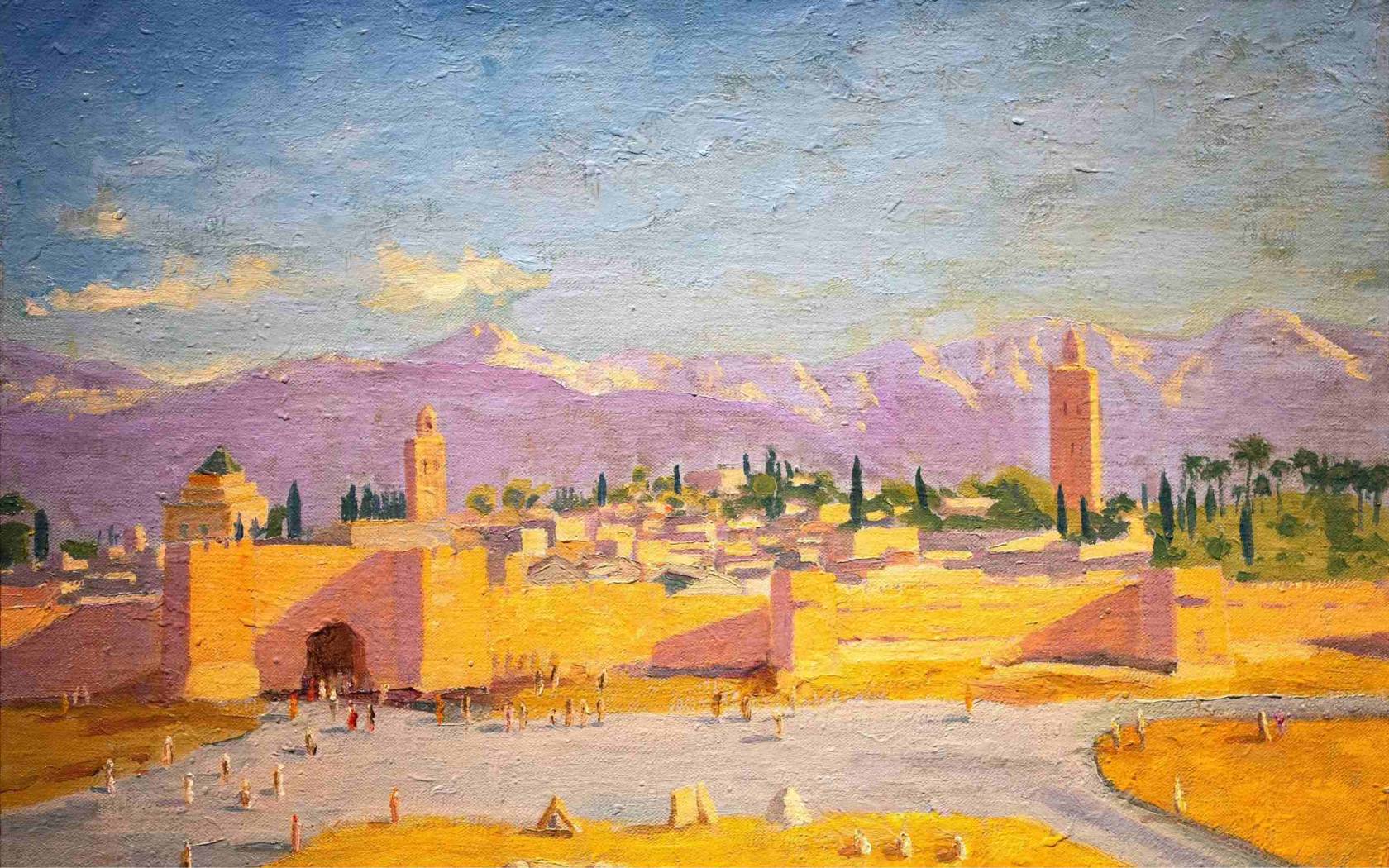
Churchill’s paintings offer a way into his imperial imagination, leisure class habits and self-fashioning away from war rooms and speeches. The visual archive may complicate the statesman mythology by showing what landscapes, possessions and scenes he chose to make permanent.
Churchill was passionate enough about his hobby to write a delightful essay in 1921, Painting as a Pastime, later expanded into a slim volume. In later life, he admitted: ‘If it weren’t for painting, I could not live. I couldn’t bear the strain of things.
English · 9d ago · 12 min · Skim
Many Views
Many Views treats AI speed as a political race: existential alarm in France, productivity anxiety in Mexico, and industrial combat in China.
Many tongues on one question
AI power and speed
A French reading of Anthropic’s alarm, a Mexican view of AI agents, and an American strategic lens on China all ask who adapts fastest as AI capability accelerates. One sees a species-scale exponential problem; another sees a productivity race Mexico cannot sit out; the third sees Beijing’s ambitions being forged less by orderly state planning than by brutal domestic competition.
Anthropic’s chief executive casts AI as an exponential problem for humanity, urgent enough to be translated, annotated, and debated as a civilizational warning. Le Grand Continent · French
AI agents need not replace people: they can multiply human capacity, and the edge will go to those who learn, decide, and act faster, including Mexico if it prepares. Letras Libres · Spanish
China’s AI rise is not just Beijing’s 2030 plan and patient state direction; its companies are being hardened by fierce domestic competition. War on the Rocks · English
Deep Research
Deep Research follows the hard circuits of war and legitimacy: oil routes, Gulf bases, Congolese ore, Sudanese bullion and antiquity turned into present power.
One fault line, many vantages
The War as Chokepoints, Routines, and Social Lifts
War Finds Its Levels
Read together, these pieces move the war out of weekly battlefield narration. Ukraine is trying to turn Russian oil logistics into a balance-sheet problem; Russian society keeps the war livable through routine and imagined consensus; China watches the same war economy as a class-making machine; Turkey turns geography and treaty law into alliance leverage.
Укр · Ukrainian data-journalism and military-economy view from Kyiv
Куди б’є Україна по Росії: географія, логіка та пріоритети ударів
Ukraine’s long-range campaign is less about spectacular explosions than export bottlenecks. Ports, oil terminals, refineries, transport nodes and Moscow-area airports are treated as one system: damage a few chokepoints and Russia spends air-defense missiles, loses sleep, reroutes oil, and earns less hard currency. Texty.org.ua · Ukrainian
Ру · Russian-language analytical/exile view of Russian domestic society
Российское общество и война: стратегия коллективного избегания и иллюзия нормальности
War compliance is not just enthusiasm, fear, or atomization. The stabilizer is social synchronization: citizens manage uncertainty by preserving ordinary routines and aligning with an imagined majority, so dissatisfaction can coexist with behavior that keeps the war socially reproducible. Re: Russia · Russian
A Chinese Academy of Social Sciences Russia specialist reads Russia’s war economy as an “opportunity economy” for poorer regions: contract service, military pay, compensation, jobs and veteran promotion convert peripheral men and security-sector people into a loyal new middle stratum. The cost is budget crowd-out, inflation, weaker civilian welfare and a more conservative social order as veterans enter administrations, universities and United Russia structures. 爱思想 · Chinese
Tr · Turkish Black Sea, Montreux and NATO view from Ankara
Rusya-Ukrayna: Türkiye’nin Reel Politikaya Dönüşü ve NATO’da Artan Rolü
Ankara’s decisive move was applying Montreux and closing the Straits to warships, blocking Russia from shifting non-Black Sea naval assets into the theater. The war pushes Turkey back toward strategic autonomy inside NATO: sell drones to Kyiv, keep Russian grain and diplomacy channels open, and turn Black Sea geography into alliance leverage. YetkinReport · Turkish
One fault line, many vantages
When Deterrence Starts Drawing Fire
The old shelters are becoming liabilities. Gulf bases make neutrality look fake to Tehran; Hezbollah no longer reliably keeps war away from Iran; Israeli strategists are already recoding Turkey as the next structural threat; Tehran reads the whole campaign as an attempt to build an Israel-led regional hierarchy.
صمود الحياد الخليجي في الحرب الأمريكية-الإسرائيلية-الإيرانية
Gulf neutrality breaks down when American bases, logistics, air defense and intelligence infrastructure sit inside Gulf territory. Iran’s logic is blunt: a state can declare neutrality, but if the war machine runs through its soil, that neutrality becomes incomplete and targetable. Middle East Council on Global Affairs · Arabic
Hezbollah has shifted from forward-defense shield to costly second-front instrument. Tehran needs the organization to split Israeli pressure and preserve the grammar of “resistance,” but the closer Iran ties itself to Hezbollah, the more Lebanese backlash and direct Israeli strikes become part of the price. İRAM Center · Turkish
An Israeli security reading recasts Turkey as “a new Iran”: not a tactical irritant but an industrial Sunni power with Syria, Libya, the Eastern Mediterranean, drones, missiles and nuclear-threshold ambitions in one strategic package. Read beside the Turkish piece, the symmetry is sharp: Ankara fears Israeli overreach after Iran; Israeli hawks fear Ankara as the next regional cage-builder. Jerusalem Institute for Strategy and Security · English
Ру · Iranian academic voice on a Russian strategic platform
Война Израиля против Ирана: опасные амбиции по перекройке Ближнего Востока
Israel’s real target is not just enrichment or missiles but Iran’s ability to obstruct an Abraham-Accords regional order; U.S. policy, in this telling, has moved from guaranteeing Israeli security to underwriting Israeli superiority. The text pushes into maximalist claims about Israeli foreknowledge of October 7, so its value is as Tehran-facing strategic grammar, not neutral chronology. Valdai Club · Russian
Many tongues on one storm
When a Mine Becomes a Border: Rubaya and Rwanda’s War Economy
Rubaya forces three files onto one map: an armed movement governing mines and roads, Rwanda turning Congolese ore into export paperwork, and a Congolese citizenship bargain around Rwandophone communities that keeps generating the pretexts for proxy war. Follow the coltan to Kigali and the smelters, then back to land chiefs and roadblocks in North Kivu, and the ceasefire problem stops looking like a rebel-demobilization file.
En · Belgian and Great Lakes conflict scholars writing into the European policy world; the antidote to a pure resource-war story.
Minerals now finance M23, but they did not by themselves cause the latest escalation. Goma is better read through failed Kinshasa-Kigali bargaining, Congolese Tutsi grievances, FARDC-FDLR entanglement, Rwanda’s fear of Uganda-linked projects in eastern Congo, and the EU’s willingness to treat Kigali as a critical-minerals and Mozambique security partner. Egmont Institute · English
Fr · French-language Congo specialist intervention aimed at diplomats and media narratives that flatten the conflict into symmetry.
The FDLR are real and dangerous to Congolese civilians, but treating them as M23’s equal mirror turns Rwanda’s intervention into a defensive reflex. The causal sequence is usually harsher: M23 and Rwandan pressure push Kinshasa back toward the FDLR, then that alliance becomes the next justification for Rwandan pressure. Congo Research Group / Groupe d’étude sur le Congo · French
Fr · ASSODIP, DIIS, and IPIS with field interviews in North Kivu; closest to the ground in the dossier.
North Kivu interviews move the war from proxy politics to local government: land law split between statutory title and customary chiefs, Rwandophone and Tutsi claims to protection, roadblock taxation, forced labor, timber and charcoal rents, and Kinshasa’s legalization of Wazalendo armed groups. One road corridor’s estimated $69,500 per month in M23 taxes gives the scale: this is a fiscal state in miniature, not only a mine grab. IPIS · French
After the cameras left
Sudan’s War Runs on Bullion; Its Civilians Run on Rooms
The war did not fade; it settled into balance sheets: mines, smuggled shipments, arms contracts, and Dubai property. Against that finance machine sits a thinner survival machine: emergency rooms, communal kitchens, diaspora transfers, local ceasefire brokers, and the old Sudanese practice of nafeer.
En · Sudanese peace-tracking/reporting from the SAF-controlled side of the economy, close to Port Sudan’s official and mining networks.
Official 2024 gold output should have yielded far more than the revenue Port Sudan recorded; the missing value is where public finance becomes military liquidity. The useful detail is the Port Sudan sourcing: miners, traders and officials describing a fiscal state hollowed out by commanders, smuggling, and weapons purchases paid in bullion. Sudan Peace Tracker · English
En · Financial-forensics view from leaked UAE property records, sanctions files and corporate links around Hemedti’s network.
The RSF’s regional backing is legible in property records, not only weapons routes: Dagalo relatives, sanctioned advisers and linked companies sit inside a roughly $24 million Dubai real-estate portfolio. Dubai is not a background location here; it is an asset shelter where war power can survive sanctions, negotiation failure, or battlefield loss. The Sentry · English
ع · Arabic-language humanitarian analysis built from Sudanese local initiatives, social-media traces, and interviews inside and around Sudan.
Survival is organised through WhatsApp groups, pharmacists extending credit, traders, water technicians, neighborhood committees, mosque and church shelters, diaspora crowdfunding, and local truces. The anti-romantic warning is as important as the solidarity: these networks can outmaneuver the aid system, but they cannot be asked to replace political responsibility, protection, or money. Humanitarian Practice Network · Arabic
A standing interest, freshly read
Who Gets to Make Antiquity Useful?
Antiquity here is not a storehouse of origins; it is a machine for sorting legitimacy. Athens, Rome, “the West,” Greek comedy, and Greek schooling all become present-tense institutions: invoked, cleaned up, mistranslated, nationalized, staged, and fought over.
中 · Chinese political-theory review of Wilfried Nippel, written from Shanghai’s intellectual press rather than the usual Anglo-American classics circuit.
Athenian democracy spent most of two millennia as a warning against mob rule before becoming modern democracy’s prestigious ancestor. The useful correction is institutional: ostracism, jury pay, illegality indictments, slavery, and liturgies were not timeless democratic essences but changing political devices later recruited by Constant, Grote, Mill, Arendt, and others for their own fights. / The Paper · Chinese
中 · Chinese theatre criticism on a Shanghai adaptation of Lysistrata, with the Greek comic form treated as a working device rather than a museum object.
Aristophanes works on a modern Chinese stage only if his obscenity, chorus, agon, bodily exaggeration, and civic ridicule survive as theatrical machinery. The split audience response is part of the evidence: old comedy was never polite heritage, but a public technology for making war, gender, desire, and authority ridiculous together. / The Paper · Chinese
En · Ukrainian-inflected European review essay, useful as a counter-panel to Chinese and Greek discussions of classical inheritance.
“The West” is not a straight line from Greece and Rome to NATO; it is a nineteenth-century political category built partly to separate western Europe from Russia. Forostyna’s borderland reading of Varouxakis makes the ancient claim unstable: Rome and Greece did not found a finished West so much as get repeatedly “westernized” after the fact. The European Review of Books · English